Storm
Late November 2005
My memory is of peace and tranquility during those months on the Findhorn Estuary. It would be hard for it to be otherwise.
My beautiful environment held me safe in a quiet cocoon of sanity.
Has this been properly taken into account, in the treatment of mental health? Do we consider, when designing psychiatric hospitals, the importance of beautifully laid out gardens, lovingly draped curtains, dancing open fires? Do we train psychiatric nurses in the courtesy and kindness so crucial to psychological welfare?
Bink has often said, if only she could live somewhere quiet and peaceful, by the edge of the sea or side of a lake, with none of the pollution of modern life drumming in her ears, she might be whole.
And yet there was a curious end to my stay in that loveliest place on the edge of the world.
A friend from university days – then archdeacon: now bishop – had booked me as the after-dinner speaker for some diocesan event, hundreds of miles away in the South. I rang, explained we were homeless, said I was at the top of Scotland. He didn’t even comment on our situation, or what the church had done to us. It was a reaction I often encountered: our circumstances were so unbelievable, it was as if friends hadn’t heard.
He was obviously expecting me to be there. He didn’t offer to pay for flights so I could return to Scotland afterwards. I would have to go back. To what, I knew not.
Oh well. Louis needed his house for Christmas. And Bink – who had rejoined Rosie and me – needed to be back for Cambridge interviews.
After-dinner speeches must be two things. Short. And funny.
We have always been able to find humour in the blackest of circumstances. Alex’s Asperger’s syndrome. Bink’s madness. There’s always something to laugh about.
“Tell me,” I rang Shaun. “What is amusing about our situation? I’m giving a talk,” I mentioned our friend, “and need some jokes.”
I’d never heard him say this before. I hope never to again.
“There is absolutely nothing funny about it. At all. Whatsoever.”
Shortly before we had to leave, there was a storm.
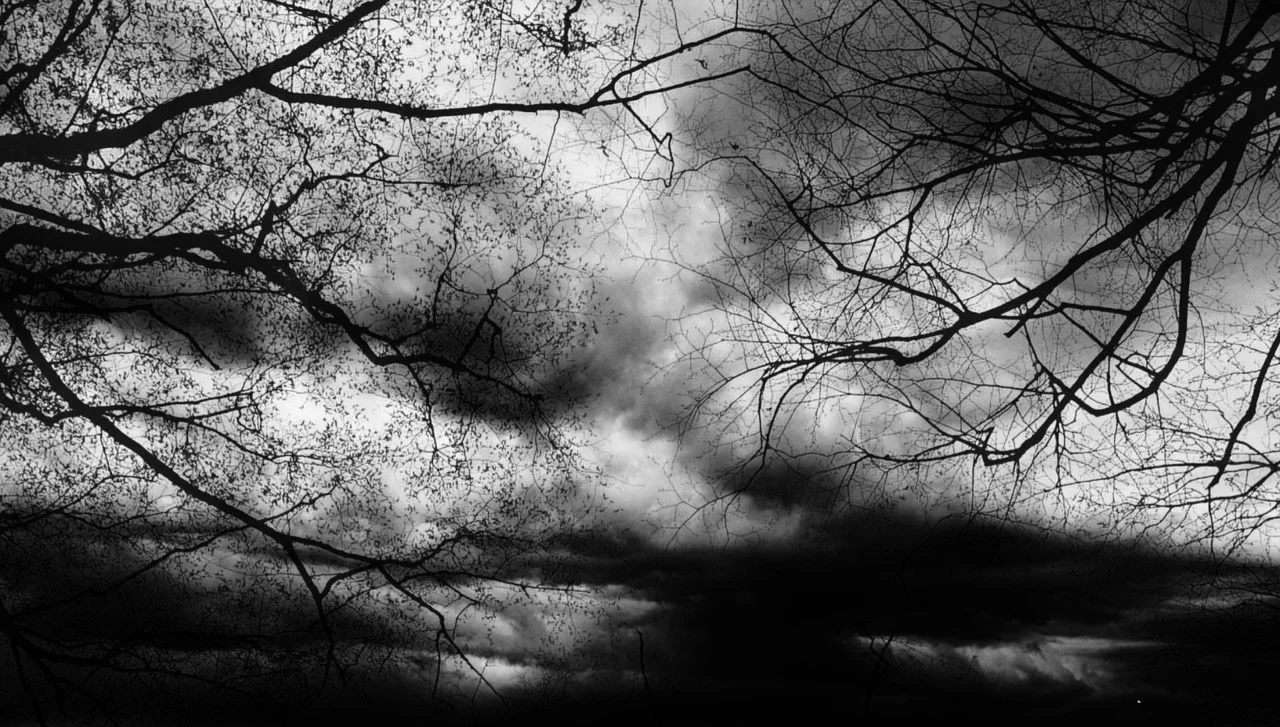
Wind tore the trees. Rain shook the windows. Darkness raged around the house as an evil force, while the black sky bore down on the wild treetops. We were as safe as houses in Louis solid, spacious mansion that has stood for hundreds of years.
And I was terrified. I knew it was utterly illogical. My emotions were simply worn out.
Suddenly, I was glad to be leaving.
The next day I booked our train tickets.
We had ten large cardboard boxes. All the books I had bought during our three month stay, so that Bink could study for Cambridge. The toys Rosie had been given by the little church. The few clothes we arrived with. Most of it, simply books.
How do you travel by train, with a two-year-old and ten boxes? And two dogs. And a couple of shotguns, in canvass bags slung over your suitcase.
Every time we had to change trains – which was several, between Forres and King’s Cross – I would ask half a dozen people in the carriage if they could kindly each take a box or two off the train and place them on the platform for me, please? And the same again, of different strangers, from the platform onto the next train. People are kind, when you don’t know them.
While Bink held Rosie’s hand for safety.
After twelve hours or so we pulled into London. Whilst I organised more passengers to help me get the boxes off the train and shouldered the shotguns off the rack, Bink must have lifted two-year-old Rosie out of the carriage.
She saw her Daddy at the other end of the platform, and ran the entire length of it into his so willing and wide embrace.
Even now, well over a decade later, I often lie my face on Shaun’s shoulder, when he is fast asleep, and reiterate the promise I made myself that autumn 2005, which I have not quite managed to keep.
That I will never again have to sleep alone, without his shoulder beneath my head.