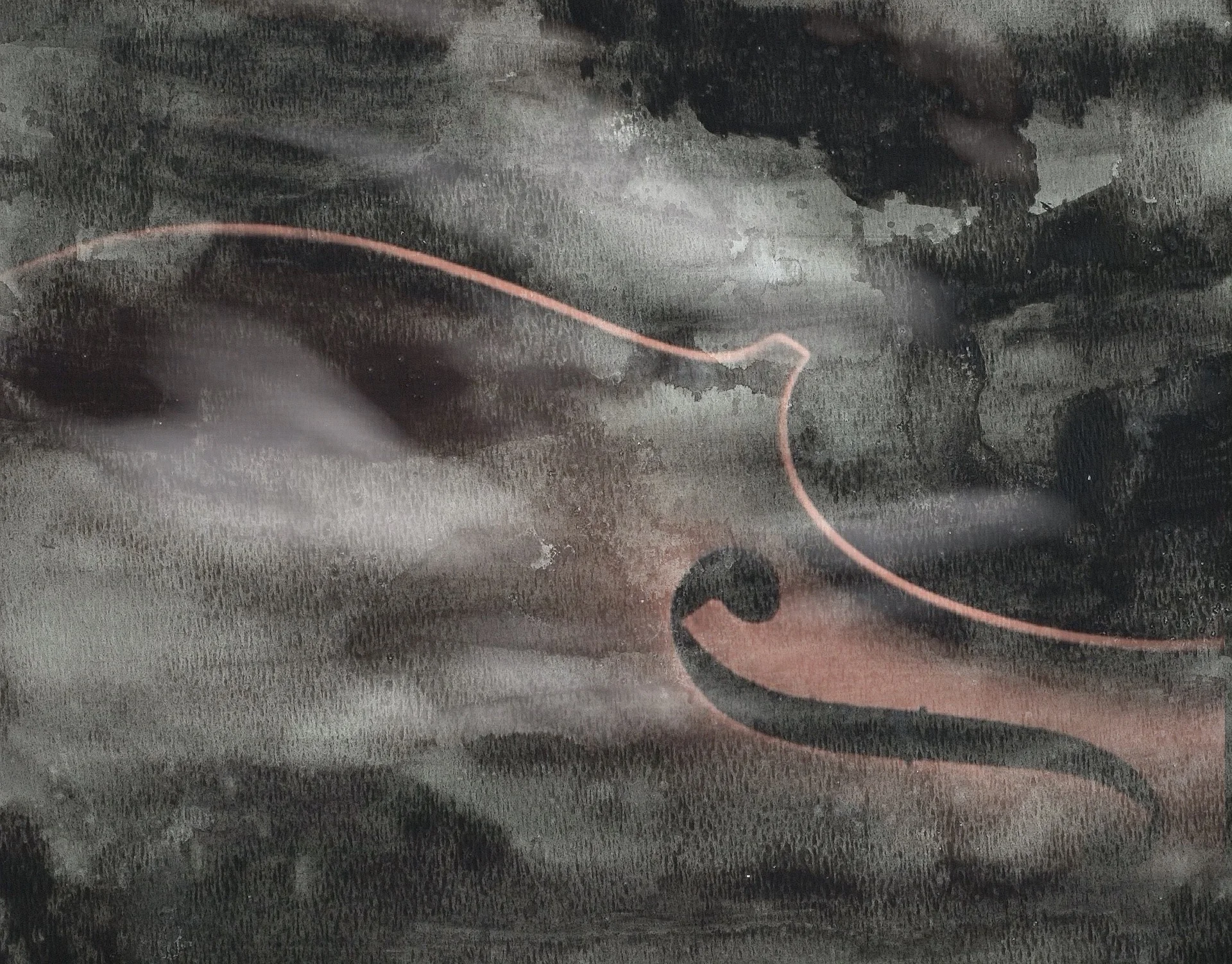
Despair
Early 8th December
When we eventually went upstairs to bed, we left a large, burly policeman (why are they always large and burly? Do they get undressed for bed, take off all the police paraphernalia and turn into normal people, like a wizard taking off a cloak and shrinking to human size?) standing in our kitchen. Keeping watch, by night.
Given that he was still standing in exactly the same place the next morning, my impression was that he barely moved.
Our large bedroom looked East, over Parson’s Green. It was two or three in the morning, sleep out of the question: I sitting up in bed, hugging my knees; Shaun standing at the window, looking out.
Just so had he stood, when we first moved in just before Christmas 1990, looking out at the night over Parson’s Green, having just been appointed its parson, muttered, “Oi. Get orf my green, you riff-raff.”
Not now. Have you been in that situation, when you wonder if you will ever be able to joke again? I have a friend who lost her son to mental illness, and I’m not sure she is ever truly happy, through and through and down to her heart, in the way we all used to be, once.
When he turned back into the room we never said it out loud. We both knew the same thought, and knew it together.
The police don’t search the Thames, their dogs scour a cold church, for nothing.
Bink was dead. We would never see her again.
Safe at last, in the arms of the One who loved her even more than we did.
The aspect which seemed saddest of all to me – I have no idea why – was that her dancing, sparkling, mischievous fiddle would fall silent for ever.
Perhaps it was the essence of quirky, incomparable, quicksilver Binkness.
Writing about this now, I feel all the terrible loss I felt then. Tapping our story out on the train, on the way to a London party which I don’t want to go to a all, now, as then, I feel too sad even to cry.
Now, unlike then, I can see all the sorrow we have been through since, losing Bink slowly over twenty-one years instead of the twenty-one hours or so that she had been missing.
Now, unlike then, I know if she is ever to be found there is too much loss even to feel much celebration.
A hundred years ago this autumn we were supposed to dance in the streets. Ring the bells. The war was over.
But what was there to dance about? For every village, every street, every family in England it seemed, the war would never be over again. The bells tolled for us all.
Her fiddle did fall silent, didn’t it? She became too ill to touch it…