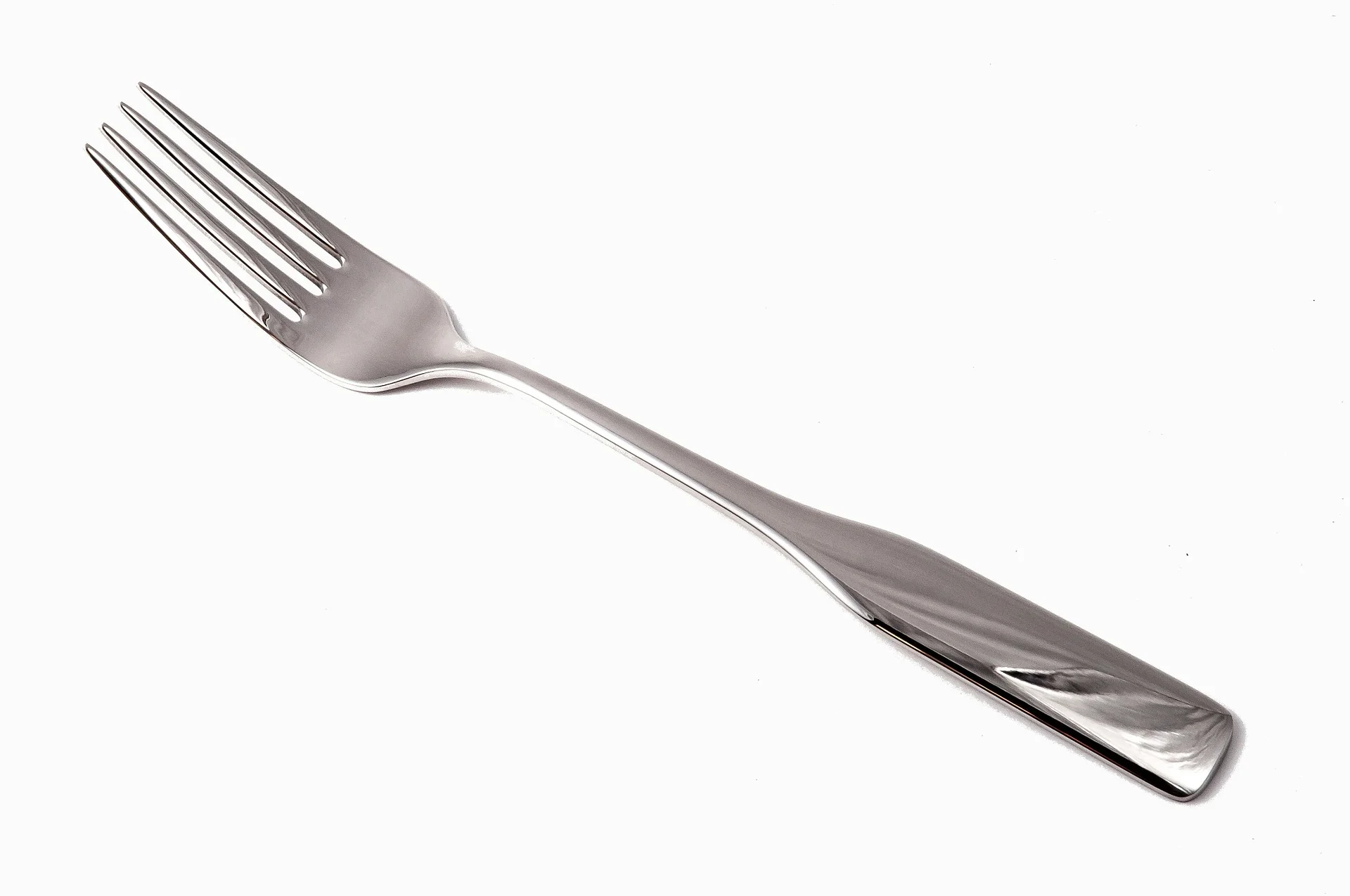
Like a fork
Serena (our eldest) tells me I must stick to the narrative of Bink at the age of 16, and the oh-so-inappropriately-named Florence Nightingale Unit she found herself incarcerated in with no exit route.
Otherwise, she says that you (kind reader) can’t possibly appreciate the momentous surge of hope we experience now as we contemplate still waters shimmering on the horizon, if you haven’t been through the valley of the shadow of death through which we have come. Why would you be excited about proper, good treatment at last, giving real hope of the best life can be for Bink, if you haven’t seen how bad the abusive treatment could get, destroying all life had on offer for her at the time?
Easy for Serena to say! If I hate revisiting that time myself, I argue, why will any reader want to come with me?
Just do it, she says. People need to know.
Autumn 2001
To recap: we had been duped – it was indeed so – into allowing Bink to go into hospital “for a night or two.” Only to discover on arrival that we could never take her home again. Legally (we were told – mendaciously we discovered many years later) that she was “adult,” at 16 years. Which meant that we, her parents, had no rights at all. You might think, then, that these rights had been transferred to Bink herself. You would be wrong.
For one thing, 16 isn’t adult anyway: we all know that. Shaun's father joined the tank regiment at 16 and was never the same again. For another, because of her illness Bink was as vulnerable as a 12- or 13-year-old.
For a third, they treated her as if she were about 6.
She had not been sectioned. Nevertheless she was never allowed out (unless she was smoking, for 10 minutes in every hour). She wasn’t consulted over her treatment. She certainly wasn't respected when it came to her wishes. Bink wasn’t given any choices in the matter either.
But even when we've been lost in the darkest of clouds we've always tried to find the amusing lining, so let me start with a light-hearted memory or two...
Every so often, the psychiatrist summoned us for meetings. She must have asked for the whole family, because I remember all six of us sitting in her consulting room together.
One of the power games which mind-quacks (shrinks, therapists, counsellors &c.) sometimes like to play concerns the furniture in the room. They prefer to dominate proceedings. (Nothing disconcerts a family therapist more than musical chairs. Try it sometime...) On at least one occasion however, Bink managed to get the better of the room dynamic and seat herself so she could make faces at us behind the shrink's back. With her eyes crossed and her tongue up her nose – and the psychiatrist wondering whether we were all verging on the loony given the ripples of inexplicable suppressed spluttering – it was hard to believe Bink could be completely beaten by the system. Yet.
At another session, the shrink asked if we had any shrink-info on our other children. As it happened I could comply with this. Clergy children can find themselves an anomaly: at a working-class school they stand out as posh; at a middle-class one, as poor. One solution is to find private schools willing to give clergy scholarships or bursaries. Essential arsenal in my armoury was that an old friend of my parents, an ex-pupil’s mother, was a psychologist, and had kindly given, free, each of our children a pukkah WISC test, with IQ scores... for what IQ scores are worth. (Which turned out to be quite a lot, translated into school fees, when I touted them around prep school proprietors.)
I had these reports anyway, so why not? I faxed them over.
“My goodness,” she said, next time we went in. “You have quite a bright family, haven’t you?” I got the distinct impression she was not particularly pleased with this intelligence.
What did she think? A qualified psychiatrist, and she assumed anyone with a mental illness must be intellectually sub-normal? Surely basic shrink-training should include the knowledge that mental illness, like cancer, can strike anyone? It doesn't necessarily mean you haven't been eating your greens.
My favourite memory is when Alexander turned to her and said, all solemn and matter-of-fact like: “I think like a fork.”
Now, any sensible person confronted with one of Alex’s incomprehensible comments, says, “Eh? What??” And possibly, “That's nothing: I think like a set of six egg spoons crossed with a multiway Swiss penknife... You freak, Alex.”
This shrink, without batting the proverbial, nodded sagely and said, “I know exactly what you mean.”
That was the moment at which I should have known everything she would ever say would be coming out of the other end.
(As it happens, if you're interested, he didn't mean like in a cutlery drawer as the rest of us assumed. He meant like a split in a block chain of crypto-currency. That sort of fork. Obvious. If you're Aspergic. I mean, come on: how could anyone think like a fork-fork?
Here is a picture I took earlier of Alex having a thought. And yes, it is as scary as it looks.)

And yet, when the shrink told us the worst lie of all, I still wanted to believe her.
Not that we could have done anything about it, if we didn't...