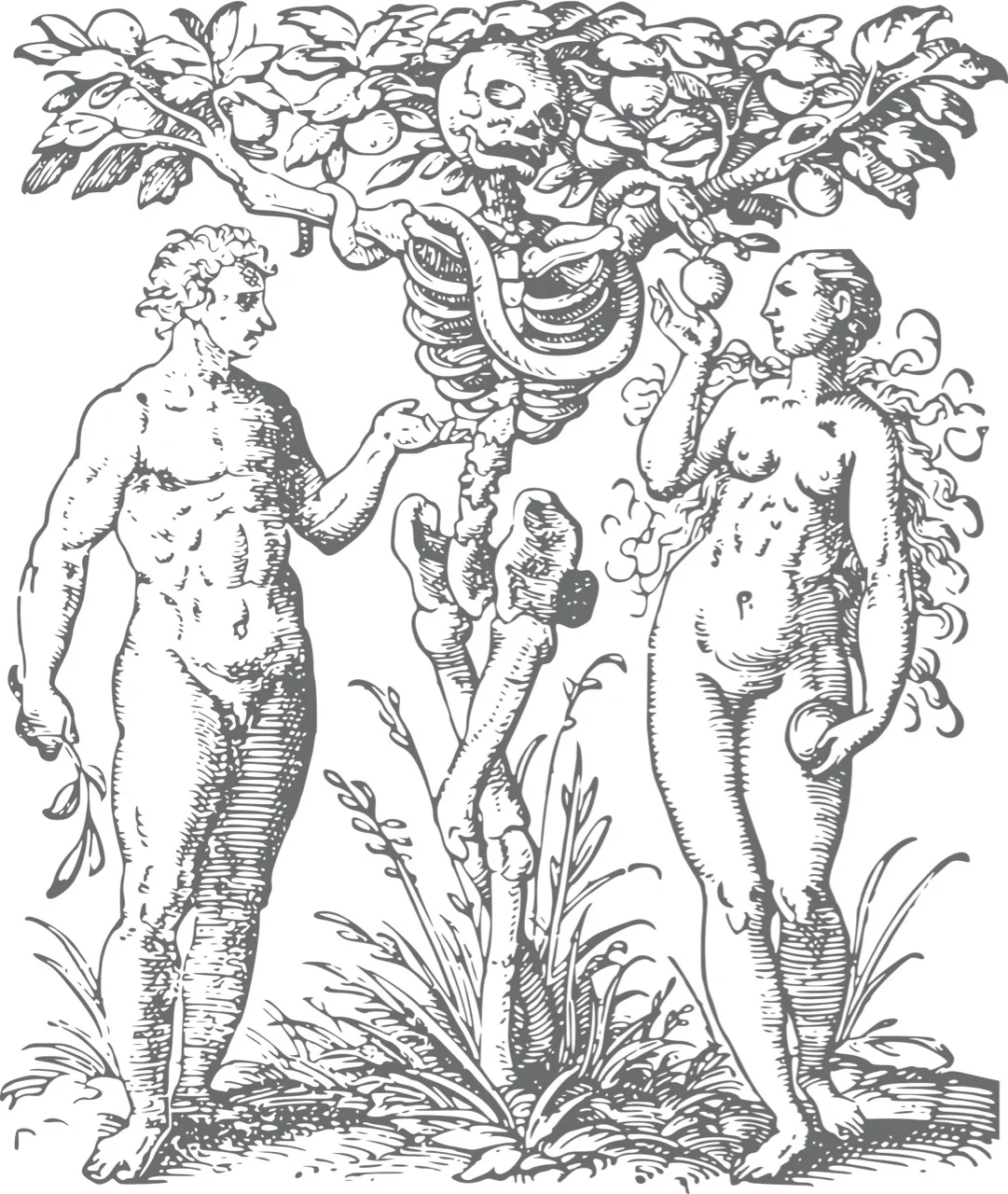
The strange case of Dr Jekyll and Mr Hyde... and BEE's perceptive comment.
You raise a very interesting issue, Bee. Thank you!
(And apologies for the delay: as you know but others don’t, a generous friend and reader of this blog had been offering, for a year, to pay for me to go on a retreat. At last, I took a last-minute place on an Arvon course... where there was no WiFi at all, and no telephone signal without walking to the top of a hill, usually in the rain. Bliss. One writing challenge solved, in theory if not in practice: I had about ten extra hours in every day...)
This is something I have discussed a number of times with a friend you also know very well. She has a daughter who is huge fun: witty; brilliant; funny. The life and soul of the party.
Except when depressed... when – like most of us – she is very challenging to live with and can be extremely cruel to those who love her most. No blame. That’s what pain does. Hurts so much, all energy goes on survival.
Her mother, my friend and yours, was told she had to recognise her daughter’s depression as being much as part of her nature as the happy side, and learn to accept and love both.
I can see the force of this. It’s even possible the advice may have helped the mother to cope.
And yet, I told her, I passionately disagree. For theological and philosophical reasons. (Though, as always, belief is also a choice.)
From time to time I have heard Christians preach about the universal depravity of humankind. We are all sinners. Every motive for everything we ever do is selfish. The heart is deceitful above all things.
Again, I understand where this comes from. And that it, too, has truth in it.
But there is another truth far more fundamental and important, in my view. Let’s call it a deeper truth, like the deeper magic of Narnia. Look at the first three chapters of Genesis, right at the beginning of the story.
God made us.
(Forgive my expounding this from a Judeo-Christian point of view. I will look at it from the other end in a minute, but this is how I arrived at my belief so I might as well start there.)
Repeatedly, in the first chapter of the Bible, God surveys His handiwork and finds it good. Eventually, he creates something which is very good. You and me. Humanity. Adam and Eve: the woman and the man.
We are made very good. That is the real us. Our proper, created nature, through and through, is... well, perfect. And healthy. And equal. And all sorts of other lovely things.
In Chapter Two the same story is told in a different way, with different imagery, but the message is the same.
I remember someone once saying to Shaun, of something selfish or wrong or undesirable (was it infidelity? I can’t remember): “It’s only natural.”
“No,” Shaun said. “Understandable, yes. Common even. But not natural. That’s not our true nature, at all.”
God’s world is made without flaw: beautiful and wonderful and functioning and well and designed to live for ever. Without any illness or unkindness or war or death.
This – is my understanding – is the real us.
...
Then comes the dismal Chapter Three.
In which Adam (not Eve, incidentally: read my first book), representing all of us, does something so spectacularly and destructively stupid, that:
1. Work becomes tough.
2. Men dominate women.
3. Childbirth becomes painful.
4. We get ill.
And sooner or later...
5. We die.
I don’t accept any of this as the way we are meant to be. Our true nature, as we are created and designed.
You also sometimes hear Christians talking as if death is a good thing. It can end terrible suffering. It certainly brings relief from the indignity of old age. It takes us home at last.
But death is the Last Enemy! It is terrible and dreadful. Always. (Though of course, like divorce, it can sometimes be better than the alternative.)
So there you have it. My philosophy of life. (I even gave a Thought for the Day on this recently, just to be thoroughly annoying.)
(I said I’d give you my other reason for believing this, not just to do with faith. Think of the happiest, most generous, joyful, loving and life-giving person you know. You and I, Bee, were both extremely fortunate in knowing Granny, my mother. Was there ever anyone who enhanced life more than she did? She always saw the best in everyone and good in everything and believed every phase of her life to be the happiest. She was the world’s most optimistic optimist.
In my experience, the most life-enhancing people generally are.
The ones who focus on the depravity of all mankind – who believe children are naturally evil and their natures must be disciplined out of them, for instance – tend to be the most miserable b****** I know.
Which is why my philosophy is also a choice.)
I’m not saying we shouldn’t be realists. Nor am I saying we shouldn’t accept and embrace those we love, unconditionally. I believe your side of the coin is true too.
I agree and disagree with you: both.
And just as we fight pain in childbirth; inequality between the sexes; the drudgery of work and its thorns and thistles... so we fight disease and illness and even death, as best we can. To do that, don’t we have to hate pain; and drudgery; and disease; and illness; even death?
Refuse to accept them?
Here’s another example.
Alex’s Asperger’s syndrome is part of who he is. He was born Aspergic, and indeed was Aspergic before he was born. (Have I told you Simon Baron-Cohen’s delightful insight, when I asked him whether Alex’s delayed birth might have somehow caused his AS? There does seem to be a correlation, Professor Baron-Cohen agreed... but which brought about the other?? Perhaps his birth was delayed, because he was already Alex. Even before he was born, he was doing things at his own, very different, pace.) Thus the idea of Alex being “cured” is offensive in the extreme. Alex is not ill. Which is why I won’t use the word “disability” of Alex’s AS (except to procure his rights).
But my impression from two decades’ observation is that your illness causes you (far, far more than anyone else) extreme suffering. Would I find a “cure” for you, if I could? For your anxiety, and panic, and pain, and all the dreadful things you have to endure?
I would give almost anything.
The ideal of loving the sinner without the sin is not just a pious and sickening cliché of pompous self-righteousness.
I love the invalid. That doesn’t mean I have to love the illness.
(Nor do you – of course – have to agree with me, Bee! After all, you know more about this than anyone... You, above all, are welcome to respond.)