Anne Atkins

  • Home
  • Bink Bonkers
  • Non-Fiction
  • Novels
  • Journalism
  • Speaking
  • Broadcasting
  • Biography
  • An Elegant Solution
  • Thoughts for the Day
  • Anthem for Mary and David Briggs
  • Love Strong as Death
  • Contact
cemetery-2802233_1920.jpg

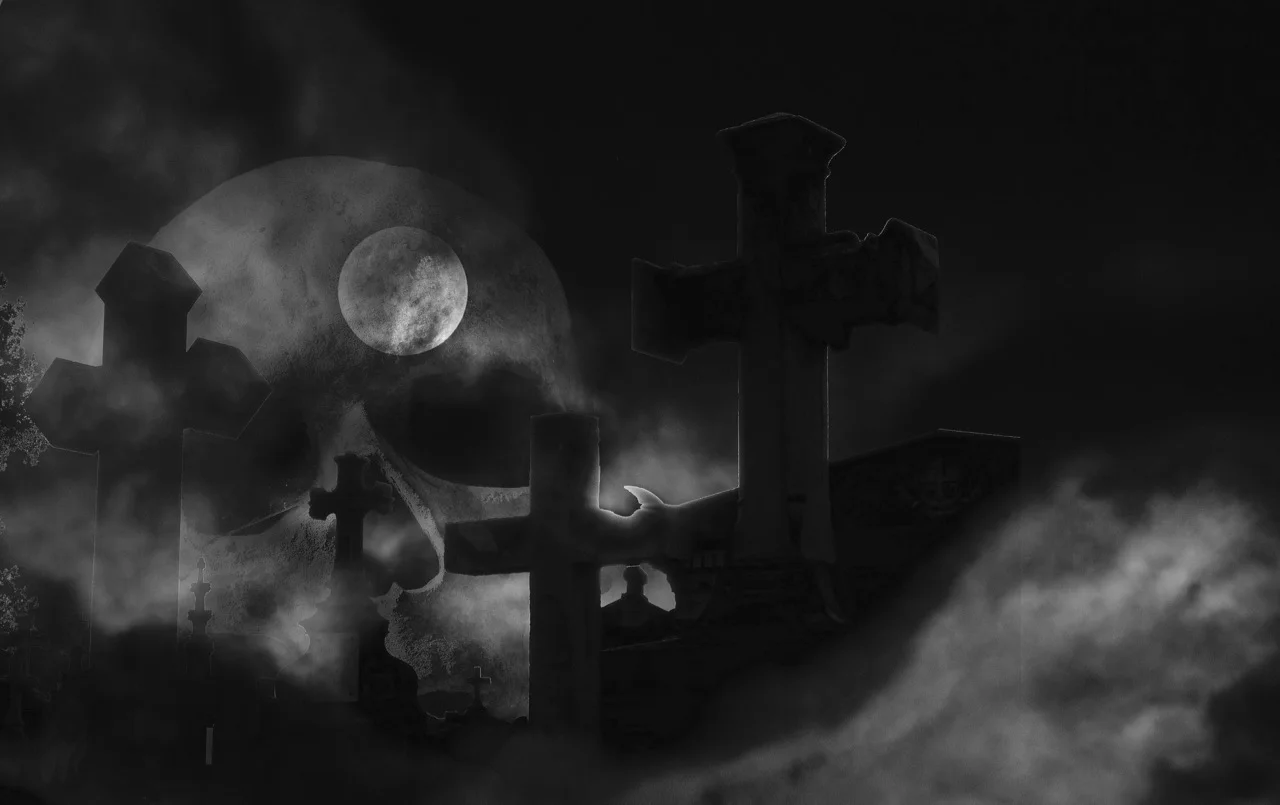
Tombstones in the mist

December 20, 2018 by Anne Atkins

Monday 8th December 1997.

[Bink, about ten years ago, cont…]

‘In the middle of the night, I woke up. The cemetery was all misty and completely silent. I could see the gravestones all around me. I knew I should be scared but I wasn’t. I just looked around at all the tombstones looming out of the misty dark, thought: “Oh right, graveyard, dead people, ghosts,” and then went straight back to sleep. I didn’t feel anything at all.

‘When you have a very strong emotion, it overwhelms your capacity to feel anything else. This is why very perturbed people are able to self-harm, though under normal circumstances it’s almost impossible to hurt yourself even slightly. (Try sticking a pin into your skin.) When I was in the graveyard, I was unable to feel any fear because of that overwhelming sadness.

‘But something very interesting happened after I came home. That first night as I lay in my warm bed again, I remembered the night-time graveyard and became absolutely terrified. It was as if my emotions suddenly caught up and made me feel what I should have felt that night but couldn’t. It wasn’t an abstract sense of fear: after the sadness had subsided, I felt genuine and present fear of the dark graveyard.

‘Early on Monday morning, I was woken up by a gardener pruning the trees or something nearby. I lay still in my sleeping bag behind the bush. I think he probably saw me, but he pretended not to. After he had gone, I packed up my stuff and left the cemetery. There were lots of commuters walking on the path through the cemetery on their way to work, and they stared at me coming out from the bushes and walking across the grass. I hoped they would just think I was on my way to school and for some reason had gone behind the trees to look at something. Then I went to Hammersmith Broadway, which is a big shopping centre and Underground Station near my school. On the way I passed my school.

‘There were several police cars outside it. I thought there must have been a problem at the school; but I crossed to the other side of the road anyway.

‘When I got to the Broadway, I went upstairs to the bus shelter and just sat there for several hours. Eventually an old lady came up to me and asked me if I was OK. I said, “Yes, I’m just waiting for my friend.”

‘I thought I looked normal.

‘She gave me £5 to get myself a meal...’

December 20, 2018 /Anne Atkins
Missing persons, Living with mental illness
Comment
pawel-czerwinski-776800-unsplash.jpg

Found

December 19, 2018 by Anne Atkins

[Forgive my posting a little late this morning: worries about Bink. I will update you when the news is more encouraging. It will be. The Shepherd never stops searching…]

Monday 8th December 1997, evening.

Around 7 o’clock that night Serena, and Shaun’s two sisters, arrived back at the Vicarage, escorted by the police. With the best present I’ve ever had... before, since or ever.

A (slightly sheepish) Bink. Not harmed. Not hurt. Not murdered or thrown in a ditch. Not even run away for ever.

Just Bink. 

Just dear, wonderful if slightly baffling Bink.

The police, in the way of the wonderful British Police, made a quiet and unobtrusive exit, leaving us to enjoy being together again: all six of us, now the boys had been brought home. Alas, the slightly less unobtrusive British press were still camped out, if not quite in our front garden, then certainly on the road beside it.

The police had smuggled Bink through the door of the church, a long way down the next road; through the unlit vestry; through what we called “the secret passage” – the little vestibule between vestry and Vicarage – into our house. But the press weren’t fooled, and were now ringing our doorbell incessantly.

Thank goodness for our neighbours beyond our garden wall!

Thank goodness, too, that we had left a gap in the trellis above for our children to scramble between our gardens. We all climbed through it that night, over the wall, leaving the press still leaning on our doorbell.

Never before had we ignored anyone calling at our door. Not on Shaun’s day off, nor at three in the morning. Not when the children were having supper, nor at nine o’clock on a Sunday night when we had at last finished for the week, poured a glass of wine and turned the telly on to watch an Agatha Christie and relax together at last.

Never did we ignore wayfarers at our door. So we had to get out of the house, to stop me feeling guilty...

When have we ever celebrated as much before or since?

This our child had been dead and was alive again: had been lost and was found.

(We had no idea that she might die to us and be lost again many times before today...)

When we got back some hours later, they were still camped on the street outside. With uncanny instinct, though we never turned on any lights, they knew we were back and starting ringing the doorbell again.

All we could do was go to bed and try not to take any notice. We had the advantage of being very tired. Some time in the night they gave up the game, and the last car drove off.

The didn’t give up for long, though.

The next day was when the onslaught really started. Bink had been lost and found all in one day, leaving the papers cheated of their story.

The last thing we wanted, now, was press attention. We just wanted to be left alone. To find out why Bink had disappeared.

But that didn’t seem fair. We had to give the papers what we could, to thank them for Bink’s homecoming. The rest of the week was spent on a gruelling round of press calls and photographs.

Had it helped?

I often wondered that afterwards. Wouldn’t she have come home anyway, without all that intrusion? Well, it was certainly how she was traced so quickly: a teacher saw the lunchtime news, saw Bink walking past, and rang the police.

No doubt she would have been found, and brought home again, eventually. Probably safely. But she might have spent another night on the streets... and who knows what danger that might have brought?

The irony was that she herself had walked past a news placard saying a West London schoolgirl was missing... and it never even crossed her mind that she was that lost child.

Still. That lost child.

December 19, 2018 /Anne Atkins
Living with mental illness, Missing persons
Comment
girl-1246525_1920.jpg

Alone

December 18, 2018 by Anne Atkins

Monday 8th December 1997

Dictated by Bink about ten years ago:

‘When I was twelve, I ran away from home. I left a note which said: “I’ll be back soon, so don’t worry.” This was supposed to have a double meaning: at first my parents would think I had just gone for a walk and left a note saying that I would be back shortly. Then, when they realised that I had run away, they would reinterpret the message and realise I would come back one day soon.

‘I planned everything in advance. I decided that the best time to leave would be on a Saturday night, because with church on Sunday morning my parents might not notice that I wasn’t around, so it would give me the longest possible time to get as far away as possible.

‘I packed a sleeping bag and a rucksack full of food - at least, it was supposed to be full of food, but the only thing I could find in our fridge was a jar of cooked cabbage. I also took my Post Office Account book, in case I needed to take money out.

‘I left the house at about 5 in the morning and walked to Hammersmith, which was about two miles from our house and the area my school was in.

‘I spent the whole day just walking around Hammersmith. I didn’t have a coat and I think it was quite cold, but I didn’t really notice that. I didn’t feel like eating anything all day either. I wasn’t really thinking about anything - in the same situation now, my brain would be whirring round and round, turning everything over consciously - but I had a huge, deep feeling of sadness. The sadness was because there was something very badly wrong with my life. I didn’t know what it was but I knew there was.

‘On Sunday night I went to a cemetery which was on the route of my bicycle journey to school. I knew that the cemetery gates were locked each night at dusk, so I thought I would be pretty safe. I wondered why homeless people didn’t shelter there at nights. I hid in the cemetery and waited until the gates had been locked, and then I looked around for a place to sleep. There were bushes lining the cemetery walls. I chose a tree by the wall to sleep under and I got my sleeping bag out.

‘Several times during the night, I heard helicopters flying overhead...’

December 18, 2018 /Anne Atkins
Missing persons, Living with mental illness
sholto-ramsay-73277-unsplash.jpg

Still waiting

December 17, 2018 by Anne Atkins

Monday 8th December 1997, afternoon.

By the afternoon I was too tired to think.

The Telegraph journalist – was it Judith Woods? Jan Muir? Whoever it was, she was tactfully trying to keep out of the way whilst also doing her job – was the last one left in the house. Someone had sent all the others away (though they didn’t seem to have got much further than our front garden). A neighbour, a member of our church, was telling even her to go. I felt guilty: surely I had to be loyal to my own paper?

The same friend told me, firmly and kindly, to go upstairs and lie down.

I suspect she then sent the Telegraph journalist away.

All the while my father, fifty miles away in Cambridge, was sitting in his vicar’s study.

I didn’t appreciate my parents’ vicar much. He once preached a sermon which had upset me so much (he referred to “keeping the rumour of God alive”, as if our Heavenly Father were no more than a conspiracy of idle gossip) that straight after the service, without waiting for tea or coffee, I went for a vigorous walk before going back to my parents’ house. I’m not sure I ever attended a service in their church again: I certainly didn’t want to.

After that incident my father had told me the vicar was quite open about having lost his own faith. He stayed on in his post “to give the unbelievers in the parish a voice”. Which seemed to me suspiciously like taking money from the Meat Association to propagate one’s own veganism.

Nevertheless he was there for my father when he needed him. He offered him a haven in his storm.

A safe study to weep in; a sympathetic shoulder to cry on; somewhere to mourn his lost granddaughter.


Some time in the late afternoon, Gordon called Shaun and me aside again.

“There is nothing definite,” he warned us, “and you mustn’t say anything to anybody. Not a word, not even to your other children.

“We are tentatively hopeful. We think there may have been a sighting. It has not been confirmed yet and it could be a case of mistaken identity, so please don’t pin any hopes on it.” 

How could we not? How could any parent go from such dark despair of death to even the most tentative glimmerings of life, and not be overwhelmed with joy?

We did as we were told. We didn’t breathe a word. Not even to my poor father, sobbing (unknown to us) in his unbelieving vicar’s study.

We simply waited...

As we wait now, twenty one years later, still hoping for good news.

By early evening, Shaun’s sisters had arrived.

Gordon said he couldn’t involve Shaun and me. If the sighting was indeed Bink, seeing us might frighten her away.

They could take Shaun’s two sisters and Serena with them.

While we continued to wait.

December 17, 2018 /Anne Atkins
Missing persons, Living with mental illness
Comment
press-2333329_1920.jpg

Press

December 15, 2018 by Anne Atkins

8th December 2007

By mid-morning, so many Fleet Street snappies and scribblers had crowded into our (large Victorian) Parson’s Green Vicarage that they couldn’t fit in and were beginning to fill our front garden.

How did we feel? When did she disappear? Would I comment for the lunchtime news?

Shaun’s secretary was in our kitchen. I went in, shut the door and howled onto her shoulder for several minutes.

Then pulled myself together.

“They will not see my like this,” I said, drying my face brutally. I loathe the voyeuristic fashion of filming sobbing parents over pitiful diminutive bloody stretchers in a war-torn zone.

I went upstairs to put fresh makeup on.

Not before Shaun had noticed the – burly, large, as aforementioned – member of the Met. Still standing guard in the same place, in the window, where he had stood all night.

Tears streaming down his face, like a small child’s.

Shaun’s secretary asked me what she could do to help.

Pick Alex and Ben up, please. They were at boarding school twenty miles away. If Bink was gone for ever, we would all face it together.

Someone was fighting his way through the milling crowds, into our hall, flashing ID.

Gordon. We knew him slightly. He had helped on teenagers’ Christian camps with Shaun’s previous boss, the vicar in the next parish, a close and dear friend. Since then, they had all played football together.

He beckoned us into Shaun’s study.

“I’m your liaison officer,” he explained. “What on earth’s going on?”

“The person I spoke to at the station said publicity might help,” I explained.

If he didn’t quite sink his face into his hands, it was certainly that kind of gesture.

“He meant,” he said slowly, “if we haven’t found her by about Thursday,” (this was Monday) “we might contact the local rag.”

All three of us stared at each other.

“Not all the national press by mid-morning!”

Oh well.

There are some genies you can’t put back in the bottle.

Our neighbours, over the wall at the bottom of our garden, were good friends. When we first moved in I had glanced into their fascinating garden, thinking their home charmed and magical. How wonderful to play there...

I didn’t know until much later that they thought the same of us.

By then their son was swimming, with our children, in our above ground pool every summer’s evening while we shared a drink with his father, watching them.

That day they called round, having passed the fashionable Fulham delicatessen between our two houses and brought two of their lovely quiches for our lunch. I had often looked through the window and longed to taste them: they were too expensive for us.

One was stilton and spinach. The other, walnut and something.

I noticed them with regret, knowing I couldn’t swallow a mouthful.

The – large, burly – policeman wolfed them down appreciatively. Presumably he needed something to keep him so large and burly.

December 15, 2018 /Anne Atkins
Missing persons, Living with mental illness
Comment

Puff

December 14, 2018 by Anne Atkins

8th December 1997, morning

Perhaps we slept for two or three hours: I’m not sure. Faced with any challenge, my mind races, looking for something, anything to overcome it.

Long before seven I was down in the kitchen asking that same burly policeman who still hadn’t moved, standing to attention as he was in front of the window, what we could do to help.

There was nothing, of course. I knew that. What could I offer, compared with the resources of the Metropolitan Police? Nevertheless, I had to ask.

He knew there was nothing, too. But just as I had to ask, so he had to answer. To be kind, and give the question consideration.

He suggested I should ring his superior back at the station, and ask him.

“I know there’s nothing we can do,” I said. “But what can we do?” I racked my brains for my scant usefulness. “Publicity, perhaps?”

“Well, publicity always helps,” he agreed.

Right. Publicity. Puff. That was something I could do.

For over a year, I had been a regular contributor to Thought for the Day on Radio 4’s flagship Today Programme. For nearly as long, the Daily Telegraph’s agony aunt.

It was not yet 7 am. I didn’t expect to reach him for a while but I rang the Telegraph anyway and left a message for its editor, Charles Moore. Please could he ring me back?

Then David Coomes, editor of Thought for the Day: I had his home number, for script edits which can take place any time of the day or night.

David and I enjoyed a ragging, teasing relationship: he always pulled my leg about my scripts ending with a Billy Graham altar-call, so he always had to take the last line out. Before long I started adding a spurious cod last line, “Repent of your sins, today!” just so he could have the pleasure of excising it.

There was none of that now. He heard me in swift and solemn silence, and said he would do what he could.

As soon as I hung up the telephone rang. Charles Moore, returning my call, barely seven in the morning.

“What can I do for you?”

Charles was and is perhaps the most quintessential, chivalrous, charming Christian gentleman I’ve ever met, straight as a die and as honest as the day. I would trust him with my life.

And, as was becoming evident, our most sensitive family privacy, before the world.

“What am I doing, Charles?” I said, aghast at my own indiscretion. “Is it insane to go public with this? Will I regret it dreadfully?”

Charles had twin children of his own, younger than Bink.

world-map-3234901_1920.jpg

“When she walks through that door,” he said, “you won’t care about anything else in the world.”

December 14, 2018 /Anne Atkins
Missing persons, Living with mental illness
Comment

Seeking

December 11, 2018 by Anne Atkins

7th December 1997

It was Serena who was the most use to the police that afternoon.

Aged 14, she was already more than competent to answer all their questions and supply any information they needed. Shaun and I were probably too dazed to be much help, anyway.

We are not, naturally, the worrying kind. Or not till then. Compared with most parents, we’ve always been pretty laid back. Shaun’s secretary at the time called ours the Free Range Children. Barefoot, unrestricted, encouraged to be independent.

Experiences change you.

Believe me, when you realise the police are worrying more than you are, you adapt your attitude pretty fast.

Serena showed them round the bedroom Bink then shared with Alex and Ben. She supplied a list of Bink’s friends and their telephone numbers. She found the note Bink had left which we hadn’t even thought to look for. Saying she was going... but would be back.

She even found Bink’s diary, in her desk, which showed clearly, in her neat, childish and still unjoined-up handwriting, for that day’s entry: “Hodie,” she wrote, was the day.

We didn’t know what to make of any of this.

We knew what to make of the sound we heard over the Vicarage at around 4 o’clock, though.

Some eight years earlier, in 1989, when we lived in our previous home not half a mile away, we had been woken by a raucous chuntering above our heads in the early hours of an August morning.

On and on, for hours it seemed, ratatatatatah!

Inconsiderate and extremely annoying. Noise pollution and traffic of the night city sky. Idiots keeping all the rest of us awake.

It wasn’t until we woke the next day to the terrible news of the Marchioness disaster, fifty of the young and the good and the great and the beautiful drowned in seconds in a birthday party on the river, that I felt ashamed of my appalling attitude.

These were some who would never wake again.

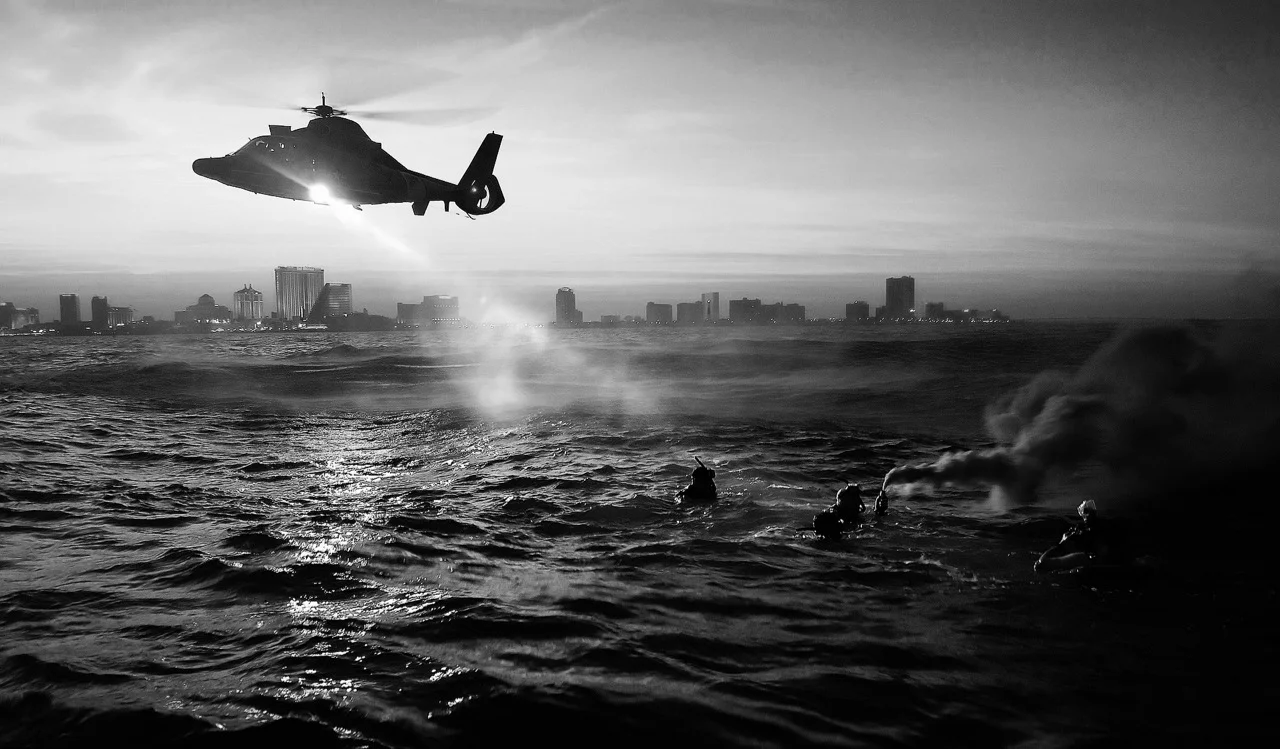
That sound again. Unmistakable. Rattle and blatter and clatter and rattle, above the cold and deadly deep Thames.

Nearly above our Vicarage and garden.

Heatseeking helicopters, sweeping up and down. Looking for Bink’s still warm body.

You worry then, I tell you.

More than worry. You start to say goodbye…

December 11, 2018 /Anne Atkins
Living with mental illness, Missing persons
1 Comment

Powered by Squarespace