Al fresco
2004
Memories from the rest of our time at the Vicarage drift and float like leaves, golden and brittle, shifted by random breezes.
The terrifying zombie that eventually escaped from the Florence Nightingale Unit in early 2002 was still extremely ill, and still a lot more ill than she had gone in, three months earlier. But by dint of endless love and patience over two years – we had nothing else to fight with: no other expertise – we had nursed her back to something a little more human.
When she first emerged she could do nothing, touch nothing. Not leave her room sometimes, let alone the house. Like a caged animal, unable to wash (or occasionally use a bathroom at all, for any purpose) for months on end. She couldn’t eat anything resembling a biscuit, say, which would crumble when picked up with a knife and fork. Glass was untouchable: when she started managing rare social events, she had to take her own mug.
Gradually, however, she had begun to study again; make a few friends; progress towards A levels.
And as for us? With hindsight I’m not sure I could say I was recovering as well as she was. I don’t know how much I aware of this at the time.
In 1996, for the first time I my life, I had begun earning a living wage; more than Shaun, not that this is saying a great deal. My writing career was taking off. Which, as with any work, had taken years of passion and dedication as well as the occasional – probably overrated – flash of serendipity. When the tide had at last turned for me that year of 1996, I had woken every morning with a smile on my face, blessed with the sunshine of good fortune.
It lasted just six months, until Alex nearly took his own life, aged ten, bullied by teachers. A year until Bink went missing, aged twelve. After she came out of the Unit in 2002, spending several hours a day as I was simply trying to coax her out of bed, I lost it all. My income went down by over two thirds.
Writing fiction became impossible. How could I care about anyone other the people under my roof?
And not one of the many professionals involved in our lives – not our GP, nor any of the shrinks we were occasionally referred to, nor any therapist, nor our MP – gave us information that would actually have helped: that there is financial support for carers and the disabled; grants to apply for so Bink could have had her own bathroom.
When I discovered this years later, far too late to change our lives, and asked how we could have known, I was told it was the duty of each and every one of them to have told us.
I sometimes longed for friends, old or new, to ask us how things were. An elderly couple came for supper. They had been missionaries, in Japan I think. We didn’t know them well but when I was a drama student I was commissioned to write daily dramatic sketches – my first real writing – for a week’s addresses he was giving. They were lovely warm people, and he was fiercely intelligent. Please, ask us! I pleaded silently all evening as we fed them round our friendly Vicarage kitchen table. I just wanted the slightest invitation to talk. Not even to ask for help: just to share the pain.
How could they possibly have known, if I didn’t tell them?
One friend continued, for years, with a kindness I will never forget. Jonathan Ruffer is a most extraordinary man: Christian; financier; who has invested a fortune in his Northern homeland. As busy as anyone I know. He made time, every few weeks without fail, simply to ring and ask how Bink was, even though there was nothing to say. A precious act of love to last a lifetime. “One day,” he said during one such conversation, “this will just be a footnote in her biography.” Bless you, Jonathan!
We were friends with another clergy family near us, also with teenage children, whose son was at school with Alex. They invited us to dinner: venison; a rare treat. I can’t imagine it was the only time we completely forgot something that was just for pleasure. They rang us half way through the evening. Most unusually, Shaun had cooked an early supper for me and we were ready for bed. I was distraught. They kindly renewed the invitation (though not, sadly, the venison). I excused myself from the table half way through the meal, sat on the floor of their loo and cried and cried and cried.
A month or two later I invited them to our Vicarage in return, and did something very unusual for me. Instead of feeding everyone together, I set a table for the teenagers in the garden: six of them, three from each family.
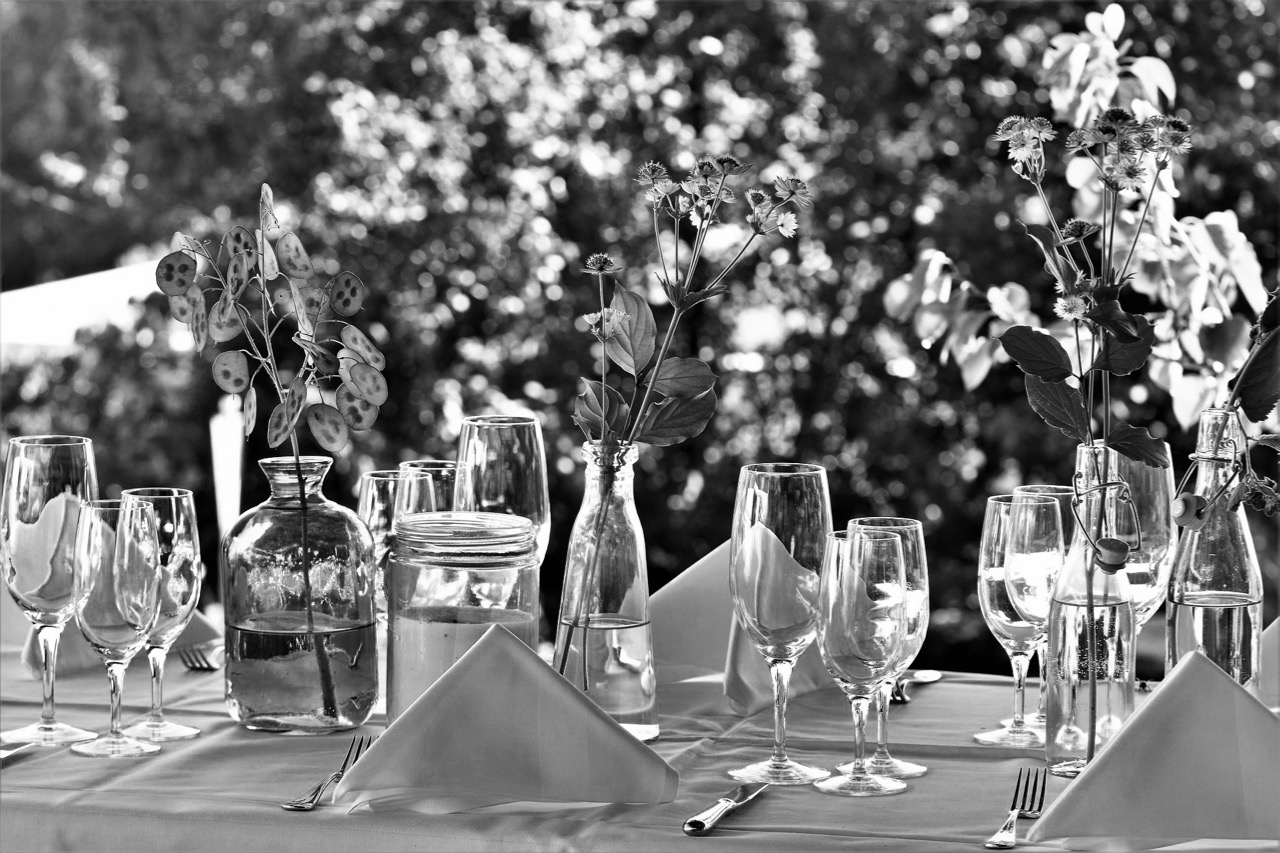
I had been to the candle shop in the New King’s Road and bought pretty holders for an outdoor dinner table: I have them still. I laid the table with excitement: flowers in little vases; napkins and silver; twinkling tealights.
Bink even managed a shower, and appeared – not much later than everyone else – in a short, moss-green denim skirt. Her hair had grown enough for an attractive bob.
I waited on them outside, while we ate indoors where I could see them. I had no interest in the conversation around me. I simply wanted to watch my daughter enjoying herself. Being a teenager. With friends.
All I wanted.
The worst was behind us now. Surely.
Oftentimes over the last twenty years I’ve had reason to be grateful that God doesn’t show us the future.