Anne Atkins

  • Home
  • Bink Bonkers
  • Non-Fiction
  • Novels
  • Journalism
  • Speaking
  • Broadcasting
  • Biography
  • An Elegant Solution
  • Thoughts for the Day
  • Anthem for Mary and David Briggs
  • Love Strong as Death
  • Contact
rain-2538429_1920.jpg

Toppling…

March 30, 2019 by Anne Atkins

26th January 2012

What do you mean, Bink?

“Got to be out”?

The College isn’t making you leave, surely? Slinging you out?

If I’m going, if I’m degrading, it’s best that I go straight away. Apparently. Otherwise I’ll end up paying another term’s rent. And it will get complicated. So my DoS wants me out immediately. And if I’m not gone by Sunday, he’ll...

Tears of distress and panic overwhelmed again.

What? Evict you? I was angry now.

I don’t think so, Bink!

We had been here before, don’t forget. Twice, as it happened. 

The church can be a wonderful... what? Institution to work for? Let’s say, family to give your life to. You make friends for ever. Your contribution can have eternal significance. The rewards, as they say, are out of this world…

However, as a member of the clergy of the CofE your boss, strictly speaking, is not the Diocese; not the Bishop; not even – as I understand is the case in some non-denominational churches – the congregation which pays you.

But God Himself. Legally. I believe. And great though God though obviously is to work for, His channels of delegation can sometimes be a little messy...

His choice of representatives, as ambassadors for His perfect Justice and Righteousness – and, one assumes, divine efficiency – occasionally seems to us mere mortals a tad… eccentric, shall we say?

Thus it has come to pass that twice, during the course of what we laughably refer to as Shaun’s clerical career, an attempt has been made to evict us.

The first time I absolutely believed the vicar, Shaun’s line-manager under God, verbatim. And would honestly have moved out, as he asked us to, on the button, without demur.

Except that:

  1. The first intimation I had of this entertaining little whim was on a Monday. That he wanted us out by Thursday.

  2. While Shaun was away on a reading week. Before the days of mobile telephones and instant contact.

  3. When we had three children under four. Who were not, as it happens, on Shaun’s reading week with him. But at home with me. Meaning I had one or two things to do in my spare moments.

  4. With a houseful of furniture.

  5. And nowhere to move any of it to, except possibly the garage of my parents’ seaside cottage some hundred miles away or more. And no car: I used to transport the children by tricycle.

  6. And just by chance I was not particularly well that week and had my first ever deadline on a paid piece of writing, an article for a magazine.

I did my best. Truly I did.

I rang the new vicar who had just interviewed Shaun for his second curacy, and talked him into giving it to him. In Shaun’s absence. On the grounds that otherwise we’d be homeless by Thursday. So the fact that said kind vicar had thought his curate-accommodation too small for three children, a large dog, an au pair, a wife and the curate himself, really didn’t seem quite such an obstacle as it had a moment ago.

That done, doing anything more to get us all of out the house by Thursday (for no apparent reason whatsoever, since a replacement curate hadn’t yet been appointed) was so patently absurd... well, I’m not usually given to giving up... but I did.

Give up.

When Shaun got home at the end of the week, he told me that evicting your curate before he has a new post (and house) to go to was so completely and utterly illegal that I needn’t have worried at all.

So by the time of the second attempt – which you will have read about, here, some months ago if you’ve been with us that long – I’d got wise to being evicted by law-flouting vicars, and all Hannibal’s elephants wouldn’t have evicted me out of our home until we had somewhere to be evicted into next.

Apart from anything else, not only is it quite difficult to evict someone anyway; not only had I learnt to become a lot more stroppy when being pushed around or seeing my children pushed around; but I’d also done a spot of journalism myself by then, and become a lot more savvy not to say cynical about what you could do to an institution like the CofE, through the pages of (say) the Daily Mail, if you camp all your children out on the pavement, sit them on bin-bags and tell them to look forlorn..

(And then ring the Picture Desk.)

So these two experiences were behind us now…

Bink, it wouldn’t be legal for the college to kick you out by Sunday. Not even remotely. You’re not well!

But suppose he sends the porters round to move all my stuff?

She was terrified.

You don’t need to have the law on your side or send legitimate bailiffs to Bink’s room, in order to scare the wits out of her. You just have to threaten to touch her possessions the wrong way... and you can catapult her into orbit for years.

Gatsby did it, some years later.

She still hasn’t landed.

Her DoS had struck me as such an intelligent man.

Could he not imagine? Did he not see what the threat of this alone would do to her? The very thought of her belongings all being muddled up and dirtied and moved without her being in control. Dumped outside on the street. The screaming anxiety she must be going through, just at the idea of it.

She burst into tears again.

He wouldn’t have dared treat me like that if you’d been there... And the reason I didn’t ask you to come with me... it’s so silly... I didn’t want to raise your hopes.

My hearing quickened.

I’ve started an essay. I just wanted to finish it before I leave. But I didn’t want you thinking and hoping I might be able to finish it, and stay.

Bless you, Bink!

I rang the college chaplain.

I remembered his telling me, with exquisite poetry, of the day he decided to live again, in the devastating wasteland after death took his partner. There simply came a day, he said, when I woke up and a blade of grass was green again...

He struck me as someone who understood pain.

He had a visitor with him but would be free in fifteen minutes. Or indeed, he kindly invited, if we arrived before that, we could meet his visitor too. 

March 30, 2019 /Anne Atkins
Living with mental illness, Living with OCD
1 Comment
adult-3211086_1920.jpg

College breakfast

March 29, 2019 by Anne Atkins

January 2012

The following Thursday morning, 26th January, I was broadcasting Thought for the Day from the BBC studio in Cambridge.

I offered to call on Bink (now back in college) for breakfast afterwards. The previous week I’d breakfasted with Ben, so it was Bink’s turn. We arranged to meet as soon after 8 o’clock as I could get there.

Throughout the Christmas holidays Bink had kept saying she needed a psychiatrist. She had even rang someone in America, whom she’d met once on college High Table, because she was married to some top shrink.

I thought she needed one like a hole in the head, myself. Psychologist Professor Paul Salkovskis’s approach sounded much safer, healthier and more likely of effecting healing than any psychiatry I’d ever come across. But, unless she is clearly having an off-her-head episode, I prefer to believe Bink knows what is best for her, and try to help in whatever way she believes in.

If I had stopped to think for five minutes – instead of rushing around finding solutions – I might have asked myself why she wanted someone whose speciality is chemicals, brains, and the effect of the one on the other…

But then we all might ask ourselves all sorts of things. Had we but world enough and time.

And hindsight.

Instead of having the tiny studio to myself as usual that morning, I found myself sharing it with an academic psychiatrist doing the item after mine.

I stayed to listen.

And then stayed to talk.

Yes, she happened to know the best psychiatrist in the country (in her view) for OCD. Yes, of course she would put me in touch.

So I was a few minutes later for Bink than usual. It didn’t matter. We were still in plenty of time for college breakfast.

Smoked salmon. Buttery scrambled egg. Luke warm tea. Thank you, Bink.

At nine o’clock she had a meeting with her Director of Studies.

I rose to go.

Don’t, she said. I’ll only be half an hour. Wait for me.

I am not a patient person. Doing nothing for half an hour, used to be (before I learnt to waste my life, with Bink’s illness and other aggravations) unbearable agony for me. It still doesn’t sit easily...

Unless I have a book.

I had.

Suppose I’d left my book in my overnight bag? Suppose the car had been too far away to fetch it?

Suppose I’d decided it was silly to stay? That I needed to get back home, to my desk, to my poor abandoned writing, stranded with the driftwood of Bink’s madness so many years ago...

I sat reading in the college bar till half past, then went to meet her out of her DoS’s room.

Coffee? I said, as we walked round Henry VI’s gracious courtyard, his fountain sprinkling the winter sunlight.

She nodded and burst into tears.

Oh, if only I had asked you to come with me! She cried and cried. Surely he wouldn’t have treated me like that, if you’d been there?

Tell me, I said when we had our coffees and were sitting by the window, overlooking the lawn and Chapel.

I have to be out by Sunday...

March 29, 2019 /Anne Atkins
Living with mental illness, Living with OCD
Comment
IMG_2931.JPG

Still hoping...

December 22, 2018 by Anne Atkins

Fourth Sunday in Advent

I passionately believe in being cheerful.

I also believe in being honest.

When there is a conflict, truth trumps optimism every time. There is absolutely no point whatsoever in any writing which lies to the reader.

Some years ago, a clergyman friend criticised one of my novels. I love feedback, so I welcomed this. And was intrigued and taken aback when I heard the reason.

I hate spoilers so I won’t tell you the full story, but the crux of it was that he said I shouldn’t have written a novel in which a believing, practising Christian turned out to be the baddie. I gave this much thought... until he told me he also thought CS Lewis shouldn’t have written A Grief Observed. A work I very particularly admire.

Lewis, my friend said, should have rejoiced when the love of his life died. He let the side down by being open about such searing and brutally honest grief. Where was his faith?

I have nothing in common with such a view. Absolutely nothing at all. Lewis faith was howling, as his heart was breaking, on the grave of Joy Davidman, where any man’s love would surely be. Where my father’s was – a man whose Christian example I have looked up to all my life – when my dearest mother was laid in the cold, dark earth and battered and soaked with the winter winds and bitter rain.

The truth will set you free. I genuinely believe this. (And on a much more humble and personal level, that being honest, describing exactly what I see and feel and know, will set my writing free.)

Was Saint Peter a good example? Such cowardice and deceit! Or indeed, Mary and Martha, with their petty domestic quarrels; Martha’s lack of faith in the resurrection; Mary’s selfishness in leaving Martha to do all the work?

Do we really believe these friends of Jesus should have been sanitised and smartened up into better rôle models for us?

At its most basic level, would they then really be more helpful models, such perfect plaster saints we could never emulate?

A few days ago, I couldn’t imagine anything positive I would be able to bring myself to say about Bink’s situation, when it came to today’s post.

I had pinned so much hope on her having treatment at last... This year had promised such a game-changer... Everything apparently about to be torn up and lost…

Today, the future still looks stuck somewhere between uncertain at best and bleak at worst.

Nevertheless, there is still much to be optimistic about:

  1. Bink came to the theatre with us on Thursday. Romeo and Juliet, Barbican. She claimed to be bored... but noticed when both title rôles deviated from well known lines. “A rose by any other word would smell as sweet.” “I deny” (not “defy”?) “you, stars!” We sat over tea afterwards, discussing whether this was a difference between the Quarto and Folio as the opening chorus is… or simply a mistake. How bored can you really be, if you are listening? 

  2. And she is coming home for Christmas Day. Here is her list of instructions:

    a) Buy new bed linen for her.

    b) Not from Primark, because it must be in packets.

    c) Clean the table of whatever room she is sleeping in. (Which mustn’t be her own room.)

    d) Clean the shower.

    e) Again.

    f) Buy all the following: loo paper (in unopened packet); kitchen paper (ditto, distinct from loo paper); hand-wash; flushable wet-wipes; clean bottle of water (no good from the tap); sanitary products.

&c.

Good news. Really. She is coming home.

See? It is possible to be positive. (Whilst also being honest...)

(PS Oops: I seem to have pre-scheduled this a day early by mistake. I am getting the hang of this technology thingy, really. Anyway, you all knew this was today’s post, right? I will now attempt to preschedule tomorrow’s, so I can start thinking about Christmas presents. After which there will be silence from me, for twelve days.)

December 22, 2018 /Anne Atkins
Living with OCD
3 Comments
fashion-605508_1920.jpg

Click, ticks and rituals, cont...

December 22, 2018 by Anne Atkins

Circa 1996

Bink about ten years ago:

‘The final rituals were to do with coming out of the water: for some reason that I can’t quite remember now, it was very important to move each part of my body from being in the water to being in the air in exactly the right way. One aspect of the logic behind this was that I wanted to whip my body up out of the water as fast as I could so that there would be no soup suds left on my skin (you know how if you stand up slowly from a soapy bath it leaves bubbles on your body, but if you quickly plunge down and up again it doesn’t). Another part of the “getting out” process was to get my hair in the exact right position (slicked back by lying on my back in the bath and then coming up out of the water face first). The main part of my “getting out” ritual was, from sitting up, to lie back down in the bath, touching my head on the bottom of the bath, and then sit up again. I had to do this as fast as possible, and smacking my head on the bottom of the bath as hard as I dared, and I would do it over and over again until it felt right. Then after that, the final ritual was a very long one to do with lifting my genital area out of the water. I can’t even remember now what the original logic was behind this process, but it was the most important part of the bath and eventually this one thing in itself became the most enormous, vital task, which sometimes took me up to half an hour (making me very late for things).

‘After I got out of the bath, my hair was not allowed to touch anything until it was dry, apart from when I put on my T-shirt and jumper, which was another ritual to get them over my head exactly straight so as not to mess up my hair. There were rituals for getting dressed too. It could take me ten minutes to do up the zip on my trousers. I wore slip-on shoes because laces or Velcro would have been to hard to do up exactly right. Putting on underwear was a big task: I had to pull it up in the exact right way so that it would be exactly straight, with the label in the very middle of my back and the side-seams in symmetrical positions. I would pull them up and down over and over again, until it felt right. Of course, I also had to do all these rituals every time I used the loo (as well as all the wiping rituals). I remember one time when I was about thirteen, when I changed my underwear before going to bed. At least, I meant to change my underwear, but after spending about twenty minutes pulling up what I thought was the clean pair and finally getting them on “right”, I then discovered that I had actually put my dirty underwear back on. So I had to choose between wearing dirty underwear all night, which made me extremely uncomfortable, or having to do the ritual all over again. I wouldn’t have minded the extra twenty minutes, but the main annoyance of the rituals was not that they were time-consuming, but that they were extremely stressful.

‘So I kept the dirty underwear on.’

December 22, 2018 /Anne Atkins
Living with OCD
Comment
bathing-918720_1920.jpg

Beginnings...

December 21, 2018 by Anne Atkins

Circa 1996

Bink, about ten years ago:

‘One day when I was about eleven, I wrote a list of all the things I had to get done that evening (homework, music practice, brush teeth etc.) and then ticked them off as I did them. Because I found the list useful, I used it again the next day, adding a second column of ticks as I did the things. I kept the list for about ten days, each day ticking the things off, until there was no more room on the page. Then I wrote up a list on my mother’s computer, so that I could print one each day. I used these lists every day for several years, until I was fourteen. I had two separate lists. One was a list of daily tasks, which included sensible things like homework, but also various things that I had to do each night before I went to bed, including: brush teeth, wash face, use loo and set alarm clock. The other list was a set of things that I had to do in the bath (which I had every morning before school, getting up at 6.30 to give myself a good hour or so before leaving the house at 8.15). I had a whole set of rituals that I did in a certain order each time I had a bath, and each of these rituals had to be ticked on the list. They included washing each individual part of my body, as well as: wet hair, put shampoo in hair, rinse hair, check hair. Of course, “wet hair” doesn’t just mean get hair wet; it meats a complicated ritual to make sure that hair is completely wet. “Check hair” involved rubbing the bit of hair in the very middle of my forehead, next to the scalp, between my thumb and finger to hear it squeak (when I was little, my mother told me that clean hair squeaks when you do this). I had to make seven squeaks, and if they weren’t satisfying enough they didn’t count. Then I had to do the same thing with the hair at the nape of my neck. Another thing I had to do was hold my body under the water for a certain length of time (a few minutes); with my face, of course, I dipped it underwater several times and timed how long each dip was. The longest ritual was that I had to sit in a certain position in the bath for fifteen minutes. The point of this ritual was to clean my anus, and the special position was intended to make my legs be spread as wide as possible. There was a difficult ritual to get into the right position, which I then held for fifteen minutes. As well as this, I spent a long time each morning cleaning out the inside of my vagina (they never tell you useful things in those school sex education lessons, such as that it’s a bad idea to wash inside yourself). I saw my genitals as by far the dirtiest part of the body, which I think was because of being bullied in a sexual way at primary school, and I was very anxious about getting them completely clean. In fact, genitals were not just a particularly dirty part of the body; they were actually in the category of “dirty objects”, such as poo…’

[Continued…]

December 21, 2018 /Anne Atkins
Living with OCD
2 Comments
paradox-2953474_1920.jpg

Paradox

December 07, 2018 by Anne Atkins

Academic year 2006-7.

That first Michaelmas Term showed Bink at her deepest Binkness.

On 7th November 2007, just over a month after she started at Cambridge, my father was due to turn ninety years old.

The trouble Bink went to – whilst also getting to grips with a new and extremely intensive academic course – was simply stunning. I wouldn’t be surprised if she spent ten or twenty hours a week, for that first half of term, setting it up.

She consulted me as to who were my parents closest friends. She made contact with them all to find out when they were free. She did the same with everyone in the family, including cousins, to find when the most people could be available. One guest was particularly difficult, and Bink changed the date half a dozen times to accommodate everybody.

She then overcame the logistical hurdle of booking so many guests into college dinner: students were normally only allowed two or three guests each. She organised it all with the catering staff, so that her dozen or more could have two long tables and we could all sit together in one party. 

She paid for all this herself.

She liaised with her College Principal, to arrange for my father to meet her over drinks before dinner in the Common Room, along with other members of the academic staff she she thought he would like to talk to. I remember seeing a letter in her room from the Principal’s secretary, saying how much she was looking forward to meeting Bink’s family and particularly her father.

She devised a careful seating plan for dinner itself.

Finally, she wrote the invitations. By hand. On college card. Over and over again. Before she was satisfied that they were sufficiently symmetrical and contained all the right information and were beautiful enough.

The only thing I helped with – apart from providing numerous consultations, and fluff up a few cushions in her tiny bed-sitting room: guests were invited there first, before official drinks; as well as for coffee after dinner – was to ensure that the ridiculous little piano I’d had lugged into her room was properly tuned. One of the guests was the musician Sir David Willcocks, a friend of my father’s from university as well as colleague of many years’ standing.

The piano tuner was very nervous when I told him this, lest he didn’t get it right.

He really needn’t have worried. That piano provided quite enough excuses of its own.

As so many, many times before and since, I am struck by the paradox that is Bink – or has been since her early adolescence.

Mental illness is the most selfish sickness there is. You only have to have experienced a mild bout of depression to know that the first thing it does is turn you in on yourself. You become completely absorbed in your own sorrow. Blind to anything and everyone other than your own desperate need to survive and dogging, dreary pain.

Being as mentally ill as it is possible to be – and still continue to breathe – Bink is as capable of this as anyone else.

And yet this is not who she is. She gleams with the richest seams of pure golden kindness. No one else, in my father’s whole extended family of many capable people, bothered to arrange a ninetieth birthday party for him.

I think of other things she did in that first year at Cambridge. Providing a family close harmony group for the college garden party, for instance; as well as numerous other kindnesses, some too personal to mention.

All the while, covering the requirements to do respectably in the Cambridge English Tripos.

Whilst being very ill.

December 07, 2018 /Anne Atkins
Living with OCD
5 Comments

New beginnings

December 06, 2018 by Anne Atkins

Michaelmas 2006

That October, improved as she was by her treatment at the Bethlem Hospital (albeit not enough of it) Bink started at Cambridge University.

I felt so guilty that she hadn’t got into her college of choice – that she had funked her interview because she lost her medication; that she lost her medication because we were homeless; that we were homeless because Shaun and I had been so gullible in believing that a church and a vicar we had known so long would keep their promises – that I spent half the summer shopping for accessories to beautify her room. And half a week helping her settle in, and arranging them.

Throws and cushions, pictures and a clock, mugs and teapots. In co-ordinating blues and greys.

Her college had given her two rooms, because she still couldn’t share her bathroom with anyone else, which meant that she alone of all the students had both a sitting room and a bedroom. Which was presumably why I bought throws and cushions, to turn the second bed into a sofa.

Yet again as if I needed it, I am reminded how disability discriminates against all the others in the family. I didn’t spend a week helping Serena move in, when she had started a Cambridge a few years earlier, did I? I never bought her cushions and a throw for her room.

Nor Alex, come to think of it.

I was probably up to my eyes helping Bink with something else at the time...

I even bought her a piano, for a joke.

Ok, I realise this sounds a bit OTT. Put like that. It honestly did seem perfectly reasonable. At the time.

“Do you want us to bring a piano? Given that you’ve got two rooms?” (We had two pianos. We’d been given our upright for £25. When all four of them were doing piano practice straight after school it was handy to have two.)

“No,” Bink said. “There isn’t room.”

So I found a compact piano on eBay. Going for the proverbial song. So small it fitted in the car. An estate car. Boot of. Just.

And turned up with it. And put it in her room when she was out. With Alex’s help. And a few other blokes I grabbed because they were hanging around, as students do, looking as if they needed to help lift a solid iron-framed piano.

Like I said. For a joke.

Well I laughed a lot, anyway…

Now, come on: whatever the rest of the family still says, the only thing wrong with that piano, apart from that it was the sort you’d sell on eBay for a song, was that it only had three octaves.

Bits of Bach, lovely. If you’re not too particular on tuning.

Rachmaninov? Hmm. Bits missing.

Still, as I say, I laughed.

Because Bink was at a modern college, with modern security; and because she had a room on the ground floor, looking onto the garden; and because Bink seldom has a telephone clean enough to touch, so the porters couldn’t easily ring and ask her to verify a visitor... Because of all these things, Alex and Serena both found it far quicker and simpler to visit Bink through her window rather than bother with all the palaver of going round through the Porters’ Lodge. I even did it once or twice myself.

Which meant that sometimes one would be sitting in Bink’s room, or presumably she might be asleep in bed, and a great thump would appear from nowhere, as Alex dropped on to the floor like an extremely incompetently-noisy burglar.

Probably not quite the intended purpose of all that security at the Porters’ Lodge.

And although in truth she was still far too ill to have shared a bathroom, and every time I visited there was piles of washing up because despite her twelve weeks in the Bethlem she didn’t know how to do it, and the fact that she was still extremely vulnerable as was to be rather shockingly demonstrated before the year’s end, Bink seemed so much better to us, who had seen her so much worse, that it was almost as if she was living a normal undergraduate life.

December 06, 2018 /Anne Atkins
Living with OCD
Comment
Fireworks

Bedford pre-Christmas fireworks, November 2018

Celebrations

November 25, 2018 by Anne Atkins

Sunday

Despite our time – in that pretty cottage, in that pretty village, opposite that pretty church – being very challenging all the time we lived there, we have lots of lovely memories.

Our neighbours were the best in the world.

2nd April, 2006

On that very first Sunday, the day after Bink’s 21st birthday, I tipped everyone out of bed and said from now on we’d be supporting our new tiny village church, barely a hundred yards from our door.

The one with the glorious bells.

There were a few grumbles and some extra snores. But we all made it.

Apart from Shaun, of course, who was employed to be at a different church altogether. (A church which, incidentally, still expected us to be attending it. I had told the vicar before we even left London that if we were housed outside Oxford I would attend our parish church, wherever that might be. And the children would probably follow me. He hadn’t believed me, perhaps because it didn’t occur to him that some people do what they say they will. Far less important was that we only had one car, that church was seven miles away and Shaun would need to be there an hour or two earlier than anyone else.)

The Atkins family soon swelled the electoral roll of the village church by nearly 50%. Within eighteen months Radio 4’s Sunday Worship programme was broadcast from it.

That very first morning we were warmly befriended by Muriel and Bob, retired farmers, who invited Rosie to play at their house any time she liked. They were only a couple of minutes away, and she quickly learnt the lane to their cottage.

9th April 2006.

Soon, too, we were invited to the Manor House: ours was the humble Manor Cottage, in the once Manor grounds. Would we like coffee on Sunday morning? I said we’d be at church – a very slight, “oh!” – but we’d love to call in afterwards.

The lady of the Manor would obviously be gracious and elderly, with grey hair and perhaps a bun. A sort of friendly Miss Haversham.

I dressed carefully.

And, wow! Met one of my now bestest friends. Blonde and gorgeous and vivacious and full to the brim and overflowing with love. That very first morning together we started organising a joint fête, to span our two gardens and raise money for the struggling church. Soon, there was a hole in the wall between our tiny patch and their spacious grounds, making the gardens one.

Rose told me last night that she went through it, as we often did, tripped down the stone steps to their barbecue and had an egg on her forehead for Easter.

Joanna and her adorable (slightly quieter, more academic) husband filled our spirits all the time we lived there. With spirits, mostly.

Gin when the going was bad. Champagne when it was good.

We got through a lot of gin.

But actually, a fair bit of champagne, too. Joanna can turn anything to celebration.

And tomorrow, they are hosting a party at their Manor House to launch my new novel, not even (quite) out yet – though beginning to garner some interest.

I am expecting a lot of bubbly...

Bink will not be at the party. She is still on the Priory’s bootcamp, and not allowed out.

Am I sad? Yes and no.

Mostly no.

Of course I’m sad that she won’t be popping the corks with us. Of course I’m sad because she herself is sad to be missing two of our dearest friends and their very dear home, which meant so much to us and kept us cheerful for so long.

But am I sad she is getting treatment? Am I sad she is on a strict programme to enable her to overcome her OCD?

Was I sad to hear these words: “Oh well. I probably shouldn’t be partying for a while yet anyway.”

Is the Chief Rabbi circumcised?

jonathan-daniels-385121-unsplash.jpg

(To be honest, I’ve never asked him.)

November 25, 2018 /Anne Atkins
Living with OCD, Addiction Treatment Programme, Priory Hospital
1 Comment
andrew-neel-98872-unsplash.jpg

Shame

November 22, 2018 by Anne Atkins

January 2006

Living on the edge of Cambridge, Bink and I were able to see Serena (at Trinity) and Alex (at Peterhouse) often, for tea in the Grad Pad or a drink in the Eagle. Though without a car or child seat on my parents’ bikes, not easily and only when we could leave Rosie behind or she was attending nursery school.

It was late January. Serena rang me, early afternoon. “Can you come immediately?” All she could tell me was that Bink was with her in her rooms, extremely distressed. She had begged Serena not to tell me but she had somehow gently persuaded her it would be ok.

I had to promise though, absolutely, not to breathe a word to Shaun. 

Shaun is hardly the fierce pater familias. What could Bink possibly be so frightened of?

Pregnancy. Must be. There is nothing else that scary.

It was twenty minutes by bike, leaving immediately and pedalling as hard as I could.

Bink was in a dreadful state, sobbing uncontrollably.

Poor child! How long she had coped without telling any of us...?

When the children were much younger, my dear mother had given each of them two hundred pounds. I had taken all four to the Post Office, so they could each open an account. A couple of years later she gave them all the same again.

So Bink, like the others, had four hundred pounds carefully saved over ten years, with interest, waiting for something important enough to spend it on. Serena had been allowed to invest half of her nest-egg buying chickens, when she was twelve and had first expressed an interest in becoming a farmer. She had to keep accounts, and sell the eggs, and kill any surplus cocks herself... and discover, by doing everything herself, what a very expensive hobby farming can be.

The other three had not touched their precious pots. As far as I knew.

What I didn’t know was that for years, Bink had needed up to a hundred pounds’ worth of toiletries every single week. Her savings had disappeared very quickly. And then the rest of Serena’s, with Serena sworn to secrecy.

And then what? She knew we couldn’t afford that kind of expenditure. What else was left to her to do?

So she had no option but to help herself. Without paying. For years. Until that fateful day when she was caught.

First in Boots. And then, because she had unpaid-for goods from the previous shop and she was searched, Sainsbury’s too. She had been told she wouldn’t be arrested and charged on this occasion, but banned from both shops indefinitely. 

The shame couldn’t have been greater if she had been an unmarried teenager in Catholic Ireland half a century earlier.

And poor little Bink did it out of concern for her parents. Knowing we couldn’t afford to pay for her habit. Her addiction. To cleanliness.

Serena and I reassured her, and loved her, and calmed her, and somehow persuaded her that Shaun would understand. Then I rang both shops and explained.

They were lovely. Both managers very understanding. Both assured me they wouldn’t take it any further.

Neither offered to lift the bans.

What was Bink to do? She couldn’t survive without toiletries! Without ever going into Boots...

She would have to rely on the rest of us.

It wasn’t until she was about to start at Cambridge University six months later that I rang both shops again and she was allowed to use them once more.

Years later, Serena commented on the way it was handled.

Bink had been beside herself, scared out of her wits. I, in my naïvety, assumed the shops were being generous and charitable in not pressing charges. I was almost as relieved as she was.

Serena thought otherwise. Bink had a registered and very severe disability. She was about to be hospitalised for several months. Any attempt at prosecution wouldn’t have survived five minutes’ scrutiny.

“I doubt it was even legal, to frighten her like that...”

November 22, 2018 /Anne Atkins
Living with OCD
Comment
Dominos

Not single spies but in battalions

November 20, 2018 by Anne Atkins

Don’t you love today’s news story?

Pretend doctor practises for 23 years without the appropriate qualifications, no one noticing anything untoward. Not her patients: not her colleagues.

You can’t imagine a brain surgeon faking it in the operating theatre, can you? Or a cardiologist pretending to know how to fit a pacemaker? Any more than you could pretend to be a violinist when you don’t know an A string from an E: because that is a real, measurable skill.

There is only one medical discipline, of all of them, which you could make up as you go along. And nobody notice.

(And as Ben said, quite possibly do a lot less damage than the real thing...)


But back to

January 2006

and how was Bink coping with all we were going though?

I estimated at the time that it set her back five years of her previous recovery. Which turned out to be a lot more than five years of her future development, in the effect it had.

I learnt, over and over again during that dismal time, why sorrows come not single spies. One knocking another knocking another in a long and overwhelming line throughout our family.

She was absolutely right that losing her medication had lost her a place at the college she had applied to. Nevertheless, she was pooled and offered a place at another Cambridge college. 

She wanted to turn it down and apply again the following year.

It sounds absurd, I know – and everyone told her it was – but I understood her reasoning. It was at a single sex college, for mature students: she would be 21 by the time she started. She should have got into the college she’d applied to; and if she hadn’t lost her medication just before her interviews, probably would have done. And she would have been really happy there.

Bink was not one of those who socialised more naturally with her own sex: she hated being at a girls’ senior school, after a mixed prep school where all her friends were boys. (Like me at her age, she was a tomboy. Like me too, if we’d both lived in a later age, she would almost certainly have identified as a boy. Either of us quite possibly opting for transition. Thank goodness we lived when we did: what a scary thought…)

And a mature college more or less shuts down at the weekends.

But everyone told her it would be irresponsible. So she gave in and agreed to start at Cambridge the following Michaelmas.

She went to London for an interview at her old school and was offered a smashing job: an extremely well-paid post as a teacher’s assistant. It would have covered a substantial proportion of her expenses at university. And spring-boarded her into work afterwards.

But she also went for an OCD assessment at the Bethlem Hospital and was told yes, she was easily ill enough to bypass a GP’s referral and be admitted as soon as they had a bed, probably in April.

She couldn’t do both. She chose hospital.

It was wise – and remained, until this year, almost the only effective treatment she has ever been offered for her OCD, giving lasting help.

But the other side of it was is that, to this day, she has never done a day’s paid work. Having that on her CV would have enabled her a number of times since. She offered herself for voluntary work in a church primary school, for instance, but was turned down when the head discovered she had no experience.

So being homeless, by robbing her of the recovery which she, and we, had worked so hard for since the Florence Nightingale Unit, also robbed her of any work she could have done for many years to come.

Domino effect.

November 20, 2018 /Anne Atkins
Living with OCD, Living with homelessness, Florence Nightingale Hospital
Comment
park-1590553_1920 (1).jpg

On the move again

November 13, 2018 by Anne Atkins

December 2005

It would soon be the end of term and we still had nowhere to live.

My brother had friends returning from Malawi – doctor couple, Christians – who had just bought a house in Oxford for their young family and kindly agreed we could have it till they got back.

Then wrote to cancel, having realised it would be bare of furniture.

I didn’t know these people at all. Please, I said. A roof over our heads, being together for a few days is all. Floor, fine. Just, please.

Well of course they understood. They’d been ten years in Malawi.

In which case could we do them a favour, and direct the removal men where to put everything? At the last minute, another email. “Make sure they put the piano in the room near the front door!”

I can’t now remember what gave me insight into this surgeon I’d never met, who had founded several orthopaedic hospitals.

“Too late,” I replied. “They said it would look better on the third floor. I thought it best to be guided by the professionals. Don’t worry,” I added kindly. “it’s lovely for parties up there.”

He was thrown into enough panic to go in search of an e-café in the middle of the Malawian night... His wife was overjoyed. “For once,” she said, “the butt of a joke, not its instigator!”

They are good friends still, he one of the funniest people we know, and is interviewing Alex and me for the Oxford launch of my new novel.

A member of Shaun’s employing church, a musician, rang and asked me for help. I had no idea what we could find left in common, but I invited her for tea. (She had once given us dinner with the bishop...)

While the church had been providing accommodation for us at the beginning of the year, I had been asked to take over the music for the eleven o’clock service. Known as the “graveyard slot”: mostly grey-haired members of the flock; no children screaming through the aisles; no endlessly repeated choruses. Shaun told me I raised eyebrows by choosing this service to attend, when all the trendy people went to the early family or evening young people’s services.

But it proved handy when they wanted help with the music.

Within weeks we had a four-part choir and a chamber group. Bink had made a number of musical friends; she Alex contributed to both; while Rosie sat quietly listening, in a pretty frock and straw hat, charming the old ladies. Causing wonder by not screaming down the aisle herself, pushing a truck, never having had this example set her.

When our accommodation ran out, so did my help. I don’t know what happened after I left. But now we were back in Oxford, presumably I could help again.

To my shame, my memory is that, very rudely, I spent most of the time on the telephone: almost certainly, something to do with the increasingly pressing and many needs of my children. By now I had so many demands on me, so much more life-saving that this was going to be, I had little enough time for good manners.

It is no excuse for discourtesy but it happened that, a few months earlier, my visitor’s husband had acted extremely unprofessionally towards Bink, severely compromising one of her A levels. I was learning quickly that, when you are treated badly by one, it soon catches on for others.

Eventually I must have hung up and apologised.

Could we help with the various carol services, she asked?

“How?”

“By playing.” Obviously.

“What?”

“Your instruments!” What was the matter with me?

“What, specifically, did you have in mind?”

She was clearly stumped. “Well... harp, ’cello, violin...”

I stared at her. This woman was on the PCC. The body which had made us homeless.

I still, all these years later, have no words with which to answer her.

When we lived in our Vicarage in Parson’s Green, a man lived in a red car opposite. (Until he had to go into hospital, and some cruel and unfeeling authority towed his home away.) Chatting, Shaun discovered he had once been a concert pianist, and invited him to play the church piano any time. Which he did. Superbly.

In all the time he lived over the road from us – when we gave him mugs of tea, or hot filled baked potatoes, or just the time of day – it never once occurred to any of us to ask whether he had his concert piano about his person.

However mad Bink is, she is nowhere near as mad as many of the sane people out there.

November 13, 2018 /Anne Atkins
Living with OCD, Living with homelessness, Living with mental illness
Comment
syringe-1884784_1920.jpg

Withdrawal

November 12, 2018 by Anne Atkins

December 2005

Over those few months between late summer and mid-autumn, Bink calculated that we had fifteen addresses in a hundred days.

Somewhere between around the dozenth and the last, and a couple of weeks before her Cambridge interviews, she lost her medication. Perhaps travelling salesmen and soldiers get the hang of this, but I certainly never did: packing up and moving on every few days meant I eventually lost almost everything I needed for day-to-day living.

So for several days she wasn’t able to take any pills: you also have to register with a GP every time you need a prescription, which is hard to do on the move too. After a week without, she asked my advice. Should she find a doctor and get more?

More than anything else – more even than the gene lottery which made her susceptible in the first place – it is prescription medication that has wrecked Bink’s life. I don’t say this out of knee-jerk Ludditery: Bink would have died as an infant (of infected adenoids) without modern medicine; my father is 101, and you don’t get there without some pretty skilful doctoring (and a family to care for you); and I have witnessed first-hand the benefit of mind-pills in at least containing, if not curing, mental ailments from depression to schizophrenia. 

In Bink’s case, however, medication – mostly given in place of treatment – has proved utterly devastating. She was forced onto pills in the Florence Nightingale Unit, aged 16, and we had to witness the dreadful dulling and disturbing effect drugs had on her previously sharp and lucid mind. I weaned her off them as soon as she came home, though some of the confusion remained.

But with treatment still not forthcoming, after six months our GP persuaded her back onto them.

In the long term, quitting medication was more important even than her Cambridge interview. I had sometimes made the mistake, in the past, of putting my children’s immediate academic welfare above what would last them a lifetime. When Rosie was born, I didn’t recall Ben immediately from boarding school to welcome his new sister and celebrate with the rest of us, because he was about to sit Latin GSCE: an error of judgement I regret still. He won’t remember his Latin GCSE grade on his deathbed, will he?

I knew Bink would never be fully well while on medication. And no doctor we’d ever found – all so happy to get her addicted to the stuff – would help her come off it.

She had already gone a week without. If I went to a chemist and got another bottle just to get her through her interviews, it could be years, it could be half her life, before she tried to survive without again.

“No,” I advised. “Stay off them.”

I just wouldn’t have chosen the timing.

I knew nothing about the shelf-life, and how long it would be for withdrawal to take effect.

(As I was to discover next time she stopped, neither does anyone, really. A GP friend told me that what Bink experienced – unbearable symptoms of withdrawal months after she seemed to have got through – was impossible.)

The day before her interview she was shaking like a pneumatic drill. She was very obviously not well.

I rang the child psychologist she had seen as an outpatient at the Maudsley a few years earlier who, although firmly espoused to chemical cures, had seemed sympathetic.

Not any more.

“Well yes, the medication has a long half-life. There will have been traces in her system until now, so she’s only just feeling the effects of withdrawal.”

Should I get her an emergency supply?

“Bit late now,” she said sharply. There was no mistaking her annoyance. “I can’t help her, if she goes on and off medication without medical supervision.” And she hung up.

Thanks. You have no idea, have you?

She got through the morning interviews, despite being now very ill indeed, by spending fifteen minutes beforehand breathing deeply, and ruthlessly calming herself down.

I took her off for lunch, and got her back punctually for the afternoon interviews, but with no time to spare. She was called straight into the room with no opportunity of performing the same ritual.

“It was a disaster.” She was distraught. “I couldn’t even hear what they were saying.” The room was a fog of confusion. She had intelligent answers to all the questions, but couldn’t drag herself from her place of panic and jangling agitation, into the same space as her interviewers.

Everyone wants to make excuses after a bad interview. There was nothing worth saying to the college. How could they understand what even close friends couldn’t: that as well as her disability, Bink had nowhere to live?

Definitely the wrong time to come off the meds.

November 12, 2018 /Anne Atkins
Damaging effect of SSRIs, Living with mental illness, Living with OCD
Comment
book-863418_1920.jpg

Application

November 07, 2018 by Anne Atkins

Autumn 2005.

Bink was studying for her Cambridge interview.

I ordered dozens of books, costing hundreds of pounds, though I had them all, every single one, back in England: stored in boxes with all our other belongings, or those which hadn’t been destroyed by ecclesiastical mismanagement and deliberate cost-cutting neglect. It echoed the time a few years earlier, when I’d had to buy duplicate copies of numerous texts I had already; though for a different reason.

Anglo-Saxon prose and poetry. Victorian verse. Children’s fairy tales. All laid out on the long dark antique dining table, overlooking the garden leading down to the Findhorn Estuary, so Bink could study and read and write.

I couldn’t do any of work of my own. Every so often I would start a poem. Or outline a children’s story… in which a little girl called Rosie come across a hidden door in Louis’s exquisite garden, which she opens to find all her siblings, and a home for them all to share together again – and her Daddy back! But soon my mind drifted over the mist to the sea and I thought of what we’d loved and lost, and tried not to think of our bleak future.

It was enough to be there for Bink, and help her to the place at Cambridge she was so obviously worthy of.

She needed to talk to the Admissions Tutor of the college she’d applied to. But she hadn’t been able to touch a telephone for years. And this was before hands-free.

I can solve this: of course I can!

Hmm.

I rang the college and left a message. He needn’t know she hadn’t done this herself. Asking the Admissions Tutor to return the call.

Then I set to, cleaning the telephone. Try it. You can do this at home. Imagine... ok, let’s say... your telephone has to perform a surgical operation and needs to be completely sterile. Or maybe you’ve committed a murder with it, and need to remove all forensic evidence. It’s amazing how many packets of wet wipes you can get through, just cleaning one handset. All the nooks and crannies you’ve never had to notice before. The lines in the plastic where earpiece joins handle joins mouthpiece. Right down inside that tiny little crack there. The little holes you speak into, twisting a wet wipe into a tiny screw to clean down inside.

And then you have to dry it. Reams and reams and miles of loo paper. An entire roll, piling up into an enormous snowman in front of you in discarded lengths. Though you can then gather it all up and put it in the loo to be used there in the normal way. As long as it’s not Bink’s loo, obviously.

Half a day’s work, easily.

Parts of a telephone you don’t know exist, until you have OCD. Or someone you love has.

It is arguably the most infectious of mental illnesses. After this, you wouldn’t touch the telephone again, would you? You’d contaminate it, and have to start all over again...

I then had to insist Bink spent the entire day within arm’s reach of the room where the telephone was plugged in.

I mean, suppose she wandered off, and the Admissions Tutor chose that moment to get in touch?

Ring ring. Ring ring.

“Bink! BINK! BINNNKKKK!!!!”

Ring ring.

“What?”

Ring ring.

“Come! Quickly!!”

Ring ring.

“I’m on the loo.”

Ring ring. Ring ring.

Rising panic.

If I ignore it, he might not ring again for another day, and we’ll be stuck in this room for yet another twenty four hours, not knowing when he might ring back... or even whether it was him.

If I answer it... I’d have to start the cleaning process all over again. Bink won’t be able to take the call once I’ve touched the telephone, will she?

What’s that you say? Why not just be straightforward, and tell the Tutor the truth?

Oh yeah. That’s a good idea.

“Um. Right. You see. It’s like this…

“Ok, my daughter – who is hoping to be given a place at your extremely competitive college in an extremely competitive subject in your extremely competitive university – is too loony to touch a telephone. As one is. You know. Doesn’t mean she’s stupid. Just means she’s. Well, there we are. Anyway, may I take a message for her, please?”

Or shall I just take that as a ‘No’?

To everything?

bible-1868070_1920.jpg


November 07, 2018 /Anne Atkins
Living with OCD
Comment
Homeless

Homelessness...

November 05, 2018 by Anne Atkins

Summer 2005

The church continued negotiations to buy the house I knew I could never live in. I continued with the only alternative I could think of, to go home to my parents’.

Driving back to the city I once loved so much, with Alex – who, because of his Asperger’s syndrome, can be much more attuned to mood than many neurotypicals, having taught himself the language of emotions as we analyse the grammar of a foreign tongue at school – as we neared the environs of Oxford, he commented on how tense and miserable I had become, without noticing it myself.

One or two members of the church PCC knew of my reaction to the house they were buying for us. (And of course, thanks to Bink, the vicar and churchwardens had known all along.) But it wasn’t the kind of church where it was easy to speak out.

In our church in Parson’s Green, with an electoral roll of 150, what happened next would have been impossible. But once numbers reach five or six hundred, an institution starts to behave more like a business serving a clientele, than a family run by its members.

We went to the seaside that July, to my parents’ holiday house, as we always do.

The Mail on Sunday, knowing of Bink’s OCD, asked if I would watch the two-part series, The House of Obsessive Compulsives, and write about it for the paper. (I had to buy a video player especially. It proved well worth it, eventually.)

Bink and I watched the two programmes together.

Since the devastating damage done to her by the Florence Nightingale Unit two and a half years earlier, Bink had eschewed all conventional treatment. Who could blame her? Not I.

We observed the protagonist of the series, Professor Paul Salkovskis: psychologist not psychiatrist; curing his patients not drugging them. Sufferers with the same symptoms as Bink’s were experiencing near miraculous cures, thanks to good treatment.

“Would you agree to that?” I asked tentatively, after the second episode.

To my astonishment, “If it works, yes,” she said.

Important though this was, it wasn’t as urgent as impending homelessness.

The church would soon be exchanging contracts on a house I knew I couldn’t live in.

Two people we hugely respected – my mother; and the extremely generous Christian financier mentioned already – both told us we must somehow tell the whole PCC. The congregation was about to make the significant purchase of a house for a minister and his family, which very purchase would drive that minister and his family away. We had a duty to let them know.

Fearful of the consequences but feeling the force of this, we wrote to the PCC, scrupulously not asking them to pull out of the sale: it was their money not ours. But of course, it was difficult to explain that if they bought this house for us Shaun would be looking for a post elsewhere, without such a construction being put on it.

It was also impossible to hide the fact that some people had known all along…

Within days the imminent purchase was aborted. Several thousand pounds wasted. Instead of a few hundred thousand.

Within hours I had found somewhere within the budget that we could move into immediately. And a number of us had found the same permanent solution: an ideal house for rent coming up nearby.

The vicar had other ideas. Our current accommodation was now at an end.

“You’re camping out,” he said.

Laughing. And meaning it.

November 05, 2018 /Anne Atkins
Being homeless., Living with OCD
2 Comments
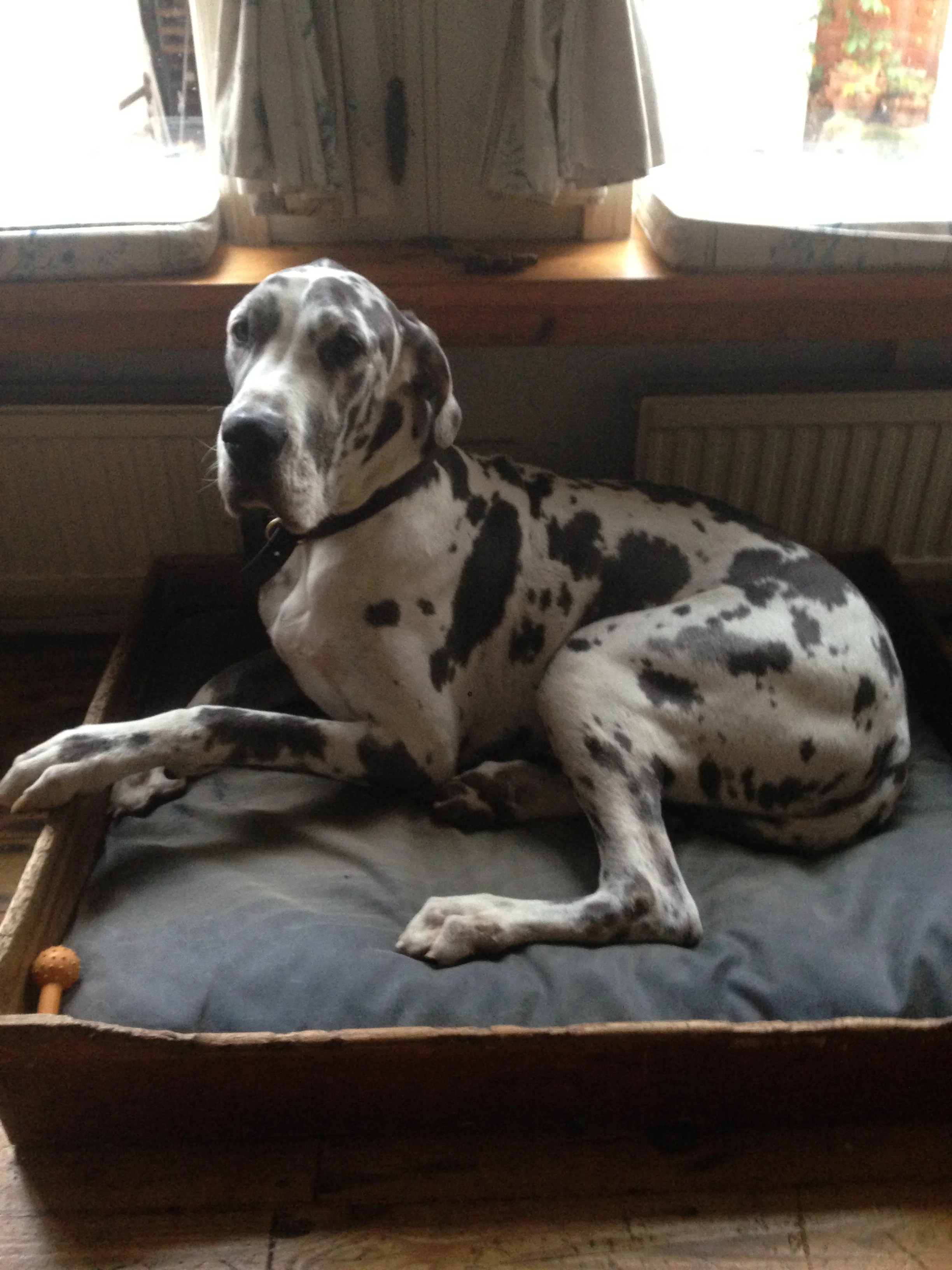
Horatio in his bed

Miracles

November 04, 2018 by Anne Atkins

Sunday

Imagine, you are bounded in a nutshell. 

Suppose, for the last fifteen years or so – or half your life, if that’s easier – you have been confined in one of those cage things which people who have an Aga and old boots in their kitchen have for their dogs to escape into, to keep them safe from un-doggy guests.

A bit like Horatio’s comfy bed (above) only with bars around it. The size of Wandsworth Prison, in Horatio’s case, obviously, because Shaun’s dog is about ten foot high when he stands up. Except that this cage we’re talking about, unlike a friendly doggy-cage, is one you can’t stand up in.

And it hasn’t made you feel safe, because you’ve been locked in it. Asking, for as long as you can remember, for someone, anyone, to help you escape.

At last, someone with a key comes to help you. The cage is unlocked and you are eased out, to stand on your feet for the first time in half a lifetime.

What do you feel? A sense of exhilarating freedom? Or howling, excruciating pain? The agony of muscles unused for years…

Perhaps also terror and apprehension, at learning to walk again. Very likely a terrible sense of loss.

Last Sunday our eldest, Serena, went to visit Bink in the Priory. Also Serena’s Viking husband, and little rampaging, amok-running, chaos-making and general-reorganising-of-the-world, fruit of the six-foot-something-Viking’s-loins, Serena’s one-year-old mini Viking. Who apparently left the hospital intact, on this occasion. Mysteriously. Must have been plotting the overthrow of something else I suppose.

They had a lovely, long and leisurely day together.

But Serena also said Bink was tearful. She has lost so much of her life; so many opportunities have passed her by; so many snows of yesteryear have melted leaving nothing on the bare, beaten grass beneath.

Bink has no little Vikings, of any nationality, to run amok at her childless feet.

At Bink’s age, I had four. (Five, if you count my first book.)

Every day, I wake grateful that Bink is getting treatment at last. But that doesn’t mean it won’t hurt. Probably a very great deal.

Mind you, staying ill hurts a lot too.

Five years ago we didn’t know where Bink was. We didn’t know she had just been in a psychiatric hospital for a month, having been found with ligatures round her neck. We didn’t know where she spent that Christmas. Nor that she eventually, very deliberately, made herself homeless, in a desperate and very dangerous – and unsuccessful – bid for treatment.

By the time I asked a handful of friends if they would pray with me, a few years ago, and started sending them regular email updates, she hadn’t been in touch with home for longer than I can remember.

Last week she rang every day. Until Wednesday, when she rang just to “sign off”, and tell me what I knew already: that she was starting the Priory’s ATP bootcamp the next day and wouldn’t be allowed any contact for a week.

And to wish her grandfather a happy 101st birthday this coming Wednesday, because she won’t be allowed to ring on the day.

How’s that for a turn up for the books? God does sometimes answer prayer.

Miracles do happen. 

Just… sometimes you have to wait a while…

dog-1539523_1920.jpg

PS Many apologies. I was in Cambridge this morning, recording some scenes from my forthcoming book, so I scheduled today’s post in advance – for 10pm by mistake. (You can’t be good at everything, can you? Or indeed, anything perhaps… As I said, sometimes miracles take a while.)

November 04, 2018 /Anne Atkins
Living with OCD
Comment
boat-1378635_1920.jpg

Brave Bink

November 03, 2018 by Anne Atkins

Summer 2005

By midsummer Shaun’s employing church was no nearer solving its legal requirement to house us. And our rented accommodation was almost at the end of its term.

Unusually for the CofE there was no shortage of money. But the will wasn’t there. The vicar was right to have recognised his need for Shaun on his team. But he had failed to explain this need to his congregation. And as he had considerably less brain (which was why he needed Shaun) and a very great deal less money (he was only the vicar) than a number of powerful personalities in his flock, he wasn’t in charge of much. Neither church nor budget.

One way to cope with feelings of inadequacy is to bully those under you. And one of those under him now, was me: we had given up our home on the assurance that we would be provided with another. By trusting, we had put ourselves at the mercy of others.

All the affordable suggestions I put forward – if the church invested differently and rented instead of buying, we could be housed easily – were ruled out. Partly on principle, see above. And partly because the vicar couldn’t understand the arithmetic. See above.

So Shaun himself was tasked with the impossible: to find a house, within the budget and the city, large enough for his family.

After months of viewings – he was visiting houses most days, as well as fulfilling his work commitments – each emphasising more than the last the inadequacy of the sum agreed, he found a house with the specified number of bedrooms. 

I was too demoralised to view it. If we had no choice, what was the point? I was teetering on the abyss already. Adequate unto the day would be the evil thereof: I knew I’d cope better if I faced it when we had to move, not before.

With more cunning than compassion, the church’s administrator tricked me into seeing it. I went up into the bedroom that was to be ours – windows just below the ceiling, as in a prison – and sat on the bed heaving in despair. The kind old lady selling stayed tactfully downstairs. Shaun came up, put his arms around the wreck that was now his wife and promised me we needn’t live there.

But what alternative?

I could only think of one thing. I would have to move back to my parents’. I could not hold onto my increasingly struggling sanity, continuing to care for my family, if I stayed where I was, feeling so bullied and manipulated.

I could bear the burdens God Himself put on me. Not more.

Better leave, than drown in the deep despair opening up beneath me. Shaun would have to find work elsewhere. We would be together again when he could.

It was Bink who had the moral courage to write to the Parochial Church Council.

“If you buy this house, you will split my parents,” she told them. “My baby sister Rosie will lose either her mother or her father.”

You think this might ring alarm bells? One of the first requirements on a church minister is to model family life.

The letter never reached its intended recipients. The vicar shared it with his churchwardens. All three agreed to ignore it.

I draw two lessons.

However the dæmons torment her, Bink is still the dear, true, indomitable Bink. Sometimes she can do nothing but scream – as you would, stretched on a rack. But she is not destroyed. Injustice, unkindness, most of all harm to a child, all rouse her to fight for others.

When dementia crept into my dearest mother’s finest brain, she was still my mother: she loved us as much as ever; smiled at the sun in happiest gratitude as she ever had.

And when Bink is healed and whole again, she will emerge. You read it here first.

She will stun the world.

The other concerns discrimination.

In a few days’ time, my father will be 101. Some time ago I employed a mother-and-daughter team to clean his rooms. After they left he couldn’t find the Victorian casserole pot which had been his mother’s, which he and my mother had used for potato peelings throughout their thirty years’ retirement together. It should have been full of vegetable parings, under his sink, needing cleaning.

First the claimed they had never seen it… and when pressed, that he had told them to throw it away.

Far more infuriating even than the loss of the pot (I found a replacement on eBay) was the insult. My father’s brain is as sharp as a pen. Every evening he puts me through Virgil or Sophocles, incisive as a laser.

But, “She can’t challenge what her dotty old father might have said,” I could hear them thinking.

The same towards Bink. “She’s nuts. We needn’t listen to her.”

The next day, however, the vicar called round with a present for her.

trojan-horse-277525_1920.jpg

A trout he had caught himself (he might have done better tending his sheep) and a bottle of Liebfraumilch.

I grilled the trout for supper but Bink wouldn’t touch it. 

lunch-2148346_1920 (1).jpg

And Bink, of course, was right.

If they had listened to her, the church could have saved itself years of pain, a six-figure loss on a house which plummeted in value, much more again on another employment expense and one of the finest members of staff they ever had.

She was right about the trout, too.

I never throw an apple core away. But when the he turned up again, much later, with a brace of pheasant he had shot himself (time better spent preparing his sermons, perhaps?) I didn’t expend energy plucking or gutting it.

retrieve-1753023_1920.jpg

It went straight in the bin.

November 03, 2018 /Anne Atkins
Living with OCD
Comment
house-557297_1920.jpg

Misplaced trust

November 01, 2018 by Anne Atkins

First half of 2005

No illness takes place in a vacuum, certainly not a mental illness. I was soon to estimate that Bink lost five years of recovery as a result of that move at the end of 2004.

The – very serious – mistake we made was to trust. Where no trust was due.

The most fundamental aspect of a Church of England minister’s remuneration is housing. Even more fundamental to what is known as a priest’s “living” than the stipend designed to be just enough to live on, is the housing in which the priest’s family is to live. So fundamental is it, that many positions of employment within the CofE now offer only housing, no more: known as “house” [in exchange] “for duty”.

So when Shaun was told that, although the new church employing him didn’t have a house for us yet it would soon, he trusted. ’Specially as the person doing the telling and offering him the post was not just a Christian but a member of the clergy himself; and not just a clergyman but a very old friend, going back decades.

And naturally, when Shaun told me all would be well (even though all looked very far from well indeed) I chose to trust him, as I always had.

And at first all did seem well; with Bink at least, if not with our situation. We moved into rented accommodation for the first eight months, with the idea that the church would buy a house for us before it ran out. (We had stipulated a house with two bathrooms, so Bink could have her own.)

Being in a very large (and rich) church in the centre of Oxford, our children soon made lots of new friends. Bink in particular: in place of a tutorial college for the last two terms of her A level course, I found tutors for her from within the congregation. Two of whom have remained close.

(This wreaked havoc with her disability benefits for about the next ten years. Despite her being registered to sit A levels that summer, someone somewhere refused to recognise that she was still pursuing the same course of education. This is neither here nor there except to demonstrate how utterly ball-crushing the benefits system is made to be. Shaun and I accompanied her to several tribunals, and even after it had been conclusively demonstrated and agreed in more than one of these that she was indeed still studying the same subjects with the same syllabus, it proved impossible to reinstate what she had been receiving and was entitled to.)

When the challenges in a family become tough, the emotional wellbeing of the whole often derives from the mother. How often have you read biographies in which she was the glue which held everyone together?

Two of our five children were now diagnosed disabled. We had a toddler. We were also responsible for two dogs, a cat and an au pair. (Our poultry had all been taken by a fox in the muddle which constituted our move.)

We were standing on a shrinking island with nowhere to live from the summer onwards.

We had brought clothes and books with us to our temporary accommodation. Everything else we owned, our new church had agreed to move and put in storage till we had permanent housing. Until it dawned on the treasurer that it would be cheaper to do nothing. So all our furniture and everything else we loved and treasured was still in our old Vicarage, waiting for our new church to move it all.

After a while, the London Diocese threw a considerable amount of it on a skip.

I rang a lawyer friend, crying too much for him to work out what I was asking. We did indeed have grounds for a claim… And by the time I had the resources to follow it up, it had timed out by several years.

More and more of Shaun’s working time was being spent viewing houses. Every suggestion I made – almost immediately, for instance, I’d found a large Vicarage with a peppercorn rent sitting empty in the centre of Oxford, considerably cheaper and more suitable than the house we were in – was dismissed.

Why? I truly believe, because I’m a women. That’s the kind of church it was.

A committee asked Shaun if he was enjoying the work. “The work, yes,” he replied. “I love it. But would you enjoy waking every morning to find your wife in tears?”

Initially it had seemed that the move could do Bink good. And if we’d had a suitable house to move into, I’m sure it would have done. But a looming fear of homelessness isn’t good for anyone’s mental health.

I was falling apart at the seams. And Bink’s seams were a lot more loosely sewn together than mine were.

I am not one to be coy about my daughter’s illness. But even I draw the line at details which compromise her dignity.

She had exciting and interesting new friends. She was doing very well at her studies. She was playing in the chamber orchestra, and singing in the choir, I had put together when asked to take over the music for the 11 o’clock service.

But privately, behind closed doors, she was reverting to the sanitary recourses of a trapped, desperate and very frightened feral animal.

November 01, 2018 /Anne Atkins
Living with OCD
Comment
magnolia-1314398_1920.jpg

Leaving home...

October 31, 2018 by Anne Atkins

2004

It is a truism that loving a child does not mean you give it everything it asks for. We all know that.

Nevertheless if you did, the damage would usually be fairly limited. How much harm can you do by giving a three-year-old enough sweets to be sick; or a six-year-old, a pony? (Or our current one: a fifteen-year-old a pierced cartilage?) Not a lot, really.

The call is far harder when that child is not a child at all but a grown-up, so ill she needs looking after as if she were.

Much of the time, fortunately, Bink does seem to know what is good for her. Which makes it all the harder when she doesn’t. (Particularly when Data Protection emerges as considerably more obsessive than the patient, so you find yourself legally barred from helping the one you love and care for. In fact, it can be agonising... but I pre-empt.)

By 2004 Bink wanted us to move from our Vicarage.

I am not a moving-house kind of person. Serena is like me, I suspect. Indeed, in general Bink may be, too.

I become attached to a place, a city, a home, so much that I never, ever want to leave. When Shaun went on placement for a few weeks to Yorkshire soon after we were married, I became so acutely homesick in the first few days I had to go back down South again. It was pathetic. The people, the scenery, both utterly lovely; and they offered Shaun a permanent post. But I would have found it easier to relocate to Pokhara or Lusaka than to the beautiful Dales.

Our Parson’s Green Vicarage was not ours – in any way recognised by the Land Registry – but I loved it like another member of our family. So when Mrs Thatcher introduced a law against ageism and ruled out a compulsory age of retirement, I truly dreamt we might live there for the rest of our lives – or Shaun’s life, at any rate. Time was when vicars never retired...

In truth, Shaun had been itching to leave for some years. He – and we, with him – had rescued a dying church and filled it with children and young families, a Sunday School and music group, prayer meetings and home-groups and a choir, and much more besides. That very church for which the Bishop had instructed Shaun to “manage the decline” was now many times the size and thriving, and had been for some time. Shaun felt he had done his job. For a while now he had been staying on for the family, because we all loved it so much: the church particularly, but also Parson’s Green and the house itself.

And now, suddenly, Bink wanted to move.

She had been getting slowly, steadily better ever since she left the Unit. She was now attending MPW regularly, and doing well at her A levels. And she wanted a fresh start, in a new place.

It happened that year, that Shaun was offered his “dream” job, in our beloved city of Oxford: a post almost certainly designed around him. They hadn’t got accommodation for us yet, but it was a large and very rich church, easily able to buy a house for us and promising it would.

Bink’s desire to move wasn’t the only factor. But it may have swung it for me.

I’m not sure I ever sat down with her and ask exactly why she wanted to move. If I had, I would have discovered it was because she now considered the Vicarage “contaminated”. Not exactly the thinking of a well person, is it? Nor a very good reason for leaving...

So at the end of 2004, we left.

The worst decision we ever made. Bar none. For Bink herself as much as anyone. Even including the decision to let Bink go into the Florence Nightingale Unit.

(Though many years later even more harm was done to Bink, by giving her what she asked for.)

October 31, 2018 /Anne Atkins
Living with OCD
Comment
jason-leung-478507-unsplash.jpg

Telling the story

October 30, 2018 by Anne Atkins

Spring 2002

Our church AGM was not long after that church weekend away.

Normally I would prefer to have my toenails gouged slowly out with a blunt teaspoon to the accompaniment of the entire Ring Cycle played on rusty bedsprings, than attend an AGM. But our church AGMs went against the trend. Indeed, they were not to be missed. Shaun would whizz through the obligatory brief biography of the roof guttering at whistling speed, and then give a beefy Bible reading.

After which, refreshments.

It was the social highlight of the church year. Everyone came.

Except me. That year. The only time I ever missed it.

Although our much-loved friends (mentioned yesterday) had apologised and there was no rancour whatsoever, I simply didn’t feel up to it. It wasn’t that I consciously feared further criticism. I just felt too fragile, I suppose.

Which, as it turned out, was a pity. I lost count of the number of people who said to me afterwards, “Such a shame you weren’t there.”

When you first meet Shaun you tend to assume you’ve been introduced to a typical reserved type of up-tight Englishman. Possibly one who has been putting in extra practice on the fortification of his loftier lip since early childhood.

After about a decade and a half it will suddenly dawn on you, with the shock of a dénouement at the end of a gripping page-turner specialising in the most unlikely possible final twist, that this apparently conservative Anglo-Saxon exterior is merely a front for about as wild and poetic a rebel Celtic Irishman as it is possible to get. He is no more British than Swift, Sheridan or Shaw, Oscar Wilde or CS Lewis.

You will realise this because he has just said something astonishing. Which, on balance, was probably worth the wait.

It wrong-footed me so much – when this least likely of all my contemporaries at Oxford, who showed absolutely no interest in women and hadn’t had a girlfriend since he was at nursery school (and whom, moreover, I barely knew), told me one Monday morning in late Lent that he was madly and passionately in love with me... and of course that we must never see each other again – that I lost my balance and agreed to marry him.

That AGM was one of those. 

After the riveting narrative of how much quota the C of E was fleecing us for and when the alto pipes on the organ were due for their next bicentennial de-mousing, he swept away all business and, in place of the usual in-depth look at the Book of Esther, said to the assembled throng, “Let me tell you what it’s like, living with a daughter who is out of her mind.”

He thanked all those kind members of the church who had said to us, comfortingly, “We all know what it is to have rebellious teenagers,” and patiently explained that you don’t get hospitalised for normal adolescent defiance. Or even pretty hard core mutiny.

Bink was ill.

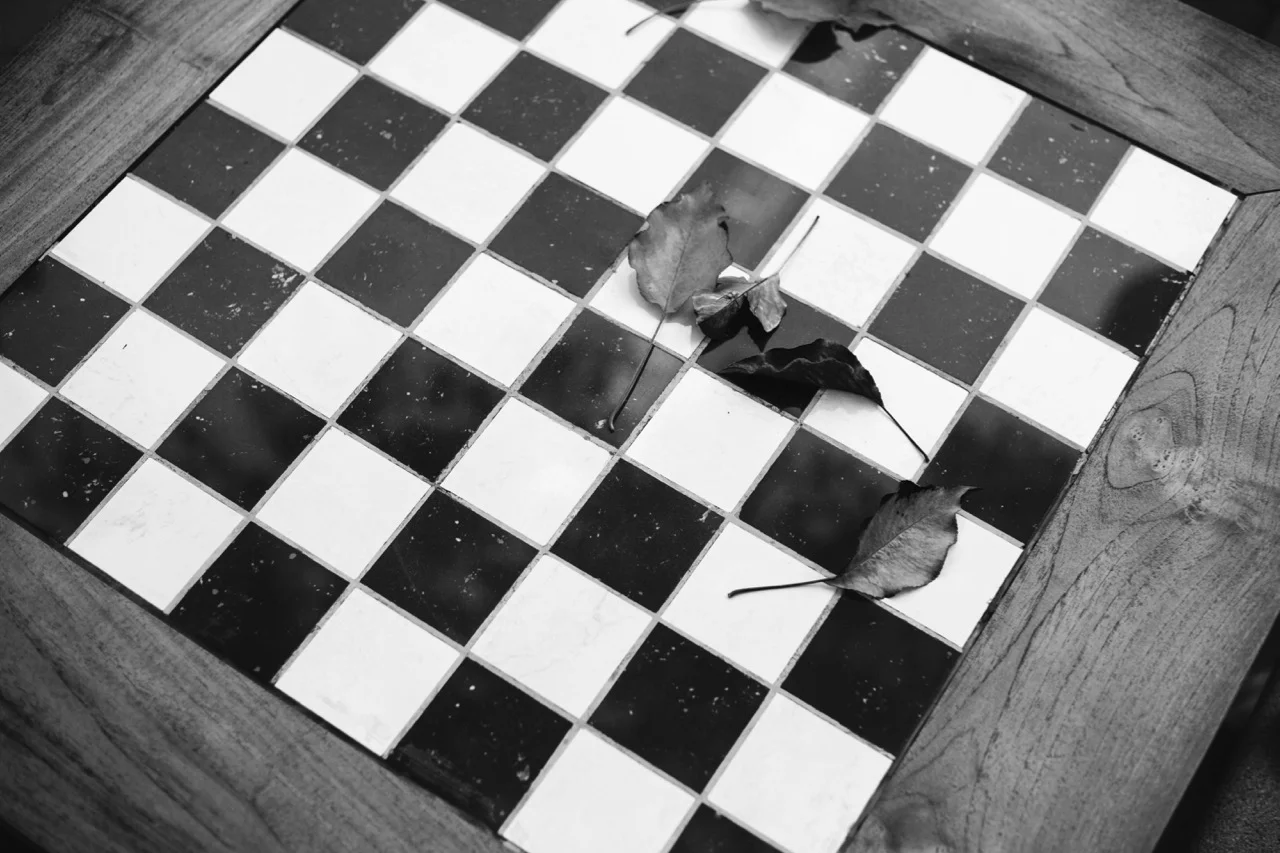
He then described sitting down to play a game of chess with one of your children... and realising way down the line that all along she has been playing draughts. And you have no idea of the rules, what the moves are or how to engage with or understand what she is doing.

I don’t know what else he said because, sadly, I was next door in the Vicarage, spending the evening alone: the one member of the church not there. I just know that people came out stunned, profoundly moved... and realising that our boat was sailing on a different sea altogether.

It is the same old challenge.

There is such a taboo around insanity, still now, that often your friends can’t bear to acknowledge your child isn’t there any more. Just as the bereaved experience the crossing-the-road-to-avoid-you syndrome because people don’t know what to say, so those blighted with lunacy encounter denial as if it were kindness.

“She’s just being a teenager,” they console.

Would that she were!

When I’m asked my about my children I’ve stopped saying our middle daughter is mad, because people think it’s a joke and titter politely. Or say proudly, “Yes, my daughter’s completely mad too!”

If I say she has OCD, though, they’re likely to respond, “Tell me about it! You should see my sock drawer...” In which case how are you here, behaving as if you can function?

If, Heaven forbid, you had to tell your friends your child had leukaemia... Well, I realise it’s absolutely no consolation whatsoever, but you probably wouldn’t receive these pat responses.

We need to tell the story. The story starts here.

October 30, 2018 /Anne Atkins
Living with OCD
Comment
party-3655715_1920.jpg

Al fresco

October 27, 2018 by Anne Atkins

2004

Memories from the rest of our time at the Vicarage drift and float like leaves, golden and brittle, shifted by random breezes.

The terrifying zombie that eventually escaped from the Florence Nightingale Unit in early 2002 was still extremely ill, and still a lot more ill than she had gone in, three months earlier. But by dint of endless love and patience over two years – we had nothing else to fight with: no other expertise – we had nursed her back to something a little more human.

When she first emerged she could do nothing, touch nothing. Not leave her room sometimes, let alone the house. Like a caged animal, unable to wash (or occasionally use a bathroom at all, for any purpose) for months on end. She couldn’t eat anything resembling a biscuit, say, which would crumble when picked up with a knife and fork. Glass was untouchable: when she started managing rare social events, she had to take her own mug.

Gradually, however, she had begun to study again; make a few friends; progress towards A levels.

And as for us? With hindsight I’m not sure I could say I was recovering as well as she was. I don’t know how much I aware of this at the time.

In 1996, for the first time I my life, I had begun earning a living wage; more than Shaun, not that this is saying a great deal. My writing career was taking off. Which, as with any work, had taken years of passion and dedication as well as the occasional – probably overrated – flash of serendipity. When the tide had at last turned for me that year of 1996, I had woken every morning with a smile on my face, blessed with the sunshine of good fortune.

It lasted just six months, until Alex nearly took his own life, aged ten, bullied by teachers. A year until Bink went missing, aged twelve. After she came out of the Unit in 2002, spending several hours a day as I was simply trying to coax her out of bed, I lost it all. My income went down by over two thirds.

Writing fiction became impossible. How could I care about anyone other the people under my roof?

And not one of the many professionals involved in our lives – not our GP, nor any of the shrinks we were occasionally referred to, nor any therapist, nor our MP – gave us information that would actually have helped: that there is financial support for carers and the disabled; grants to apply for so Bink could have had her own bathroom.

When I discovered this years later, far too late to change our lives, and asked how we could have known, I was told it was the duty of each and every one of them to have told us.

I sometimes longed for friends, old or new, to ask us how things were. An elderly couple came for supper. They had been missionaries, in Japan I think. We didn’t know them well but when I was a drama student I was commissioned to write daily dramatic sketches – my first real writing – for a week’s addresses he was giving. They were lovely warm people, and he was fiercely intelligent. Please, ask us! I pleaded silently all evening as we fed them round our friendly Vicarage kitchen table. I just wanted the slightest invitation to talk. Not even to ask for help: just to share the pain.

How could they possibly have known, if I didn’t tell them?

One friend continued, for years, with a kindness I will never forget. Jonathan Ruffer is a most extraordinary man: Christian; financier; who has invested a fortune in his Northern homeland. As busy as anyone I know. He made time, every few weeks without fail, simply to ring and ask how Bink was, even though there was nothing to say. A precious act of love to last a lifetime. “One day,” he said during one such conversation, “this will just be a footnote in her biography.” Bless you, Jonathan!

We were friends with another clergy family near us, also with teenage children, whose son was at school with Alex. They invited us to dinner: venison; a rare treat. I can’t imagine it was the only time we completely forgot something that was just for pleasure. They rang us half way through the evening. Most unusually, Shaun had cooked an early supper for me and we were ready for bed. I was distraught. They kindly renewed the invitation (though not, sadly, the venison). I excused myself from the table half way through the meal, sat on the floor of their loo and cried and cried and cried.

A month or two later I invited them to our Vicarage in return, and did something very unusual for me. Instead of feeding everyone together, I set a table for the teenagers in the garden: six of them, three from each family.

I had been to the candle shop in the New King’s Road and bought pretty holders for an outdoor dinner table: I have them still. I laid the table with excitement: flowers in little vases; napkins and silver; twinkling tealights.

Bink even managed a shower, and appeared – not much later than everyone else – in a short, moss-green denim skirt. Her hair had grown enough for an attractive bob.

I waited on them outside, while we ate indoors where I could see them. I had no interest in the conversation around me. I simply wanted to watch my daughter enjoying herself. Being a teenager. With friends.

All I wanted.

The worst was behind us now. Surely.

Oftentimes over the last twenty years I’ve had reason to be grateful that God doesn’t show us the future.


October 27, 2018 /Anne Atkins
Living with OCD
Comment
  • Newer
  • Older

Powered by Squarespace