Telling the story
Spring 2002
Our church AGM was not long after that church weekend away.
Normally I would prefer to have my toenails gouged slowly out with a blunt teaspoon to the accompaniment of the entire Ring Cycle played on rusty bedsprings, than attend an AGM. But our church AGMs went against the trend. Indeed, they were not to be missed. Shaun would whizz through the obligatory brief biography of the roof guttering at whistling speed, and then give a beefy Bible reading.
After which, refreshments.
It was the social highlight of the church year. Everyone came.
Except me. That year. The only time I ever missed it.
Although our much-loved friends (mentioned yesterday) had apologised and there was no rancour whatsoever, I simply didn’t feel up to it. It wasn’t that I consciously feared further criticism. I just felt too fragile, I suppose.
Which, as it turned out, was a pity. I lost count of the number of people who said to me afterwards, “Such a shame you weren’t there.”
When you first meet Shaun you tend to assume you’ve been introduced to a typical reserved type of up-tight Englishman. Possibly one who has been putting in extra practice on the fortification of his loftier lip since early childhood.
After about a decade and a half it will suddenly dawn on you, with the shock of a dénouement at the end of a gripping page-turner specialising in the most unlikely possible final twist, that this apparently conservative Anglo-Saxon exterior is merely a front for about as wild and poetic a rebel Celtic Irishman as it is possible to get. He is no more British than Swift, Sheridan or Shaw, Oscar Wilde or CS Lewis.
You will realise this because he has just said something astonishing. Which, on balance, was probably worth the wait.
It wrong-footed me so much – when this least likely of all my contemporaries at Oxford, who showed absolutely no interest in women and hadn’t had a girlfriend since he was at nursery school (and whom, moreover, I barely knew), told me one Monday morning in late Lent that he was madly and passionately in love with me... and of course that we must never see each other again – that I lost my balance and agreed to marry him.
That AGM was one of those.
After the riveting narrative of how much quota the C of E was fleecing us for and when the alto pipes on the organ were due for their next bicentennial de-mousing, he swept away all business and, in place of the usual in-depth look at the Book of Esther, said to the assembled throng, “Let me tell you what it’s like, living with a daughter who is out of her mind.”
He thanked all those kind members of the church who had said to us, comfortingly, “We all know what it is to have rebellious teenagers,” and patiently explained that you don’t get hospitalised for normal adolescent defiance. Or even pretty hard core mutiny.
Bink was ill.
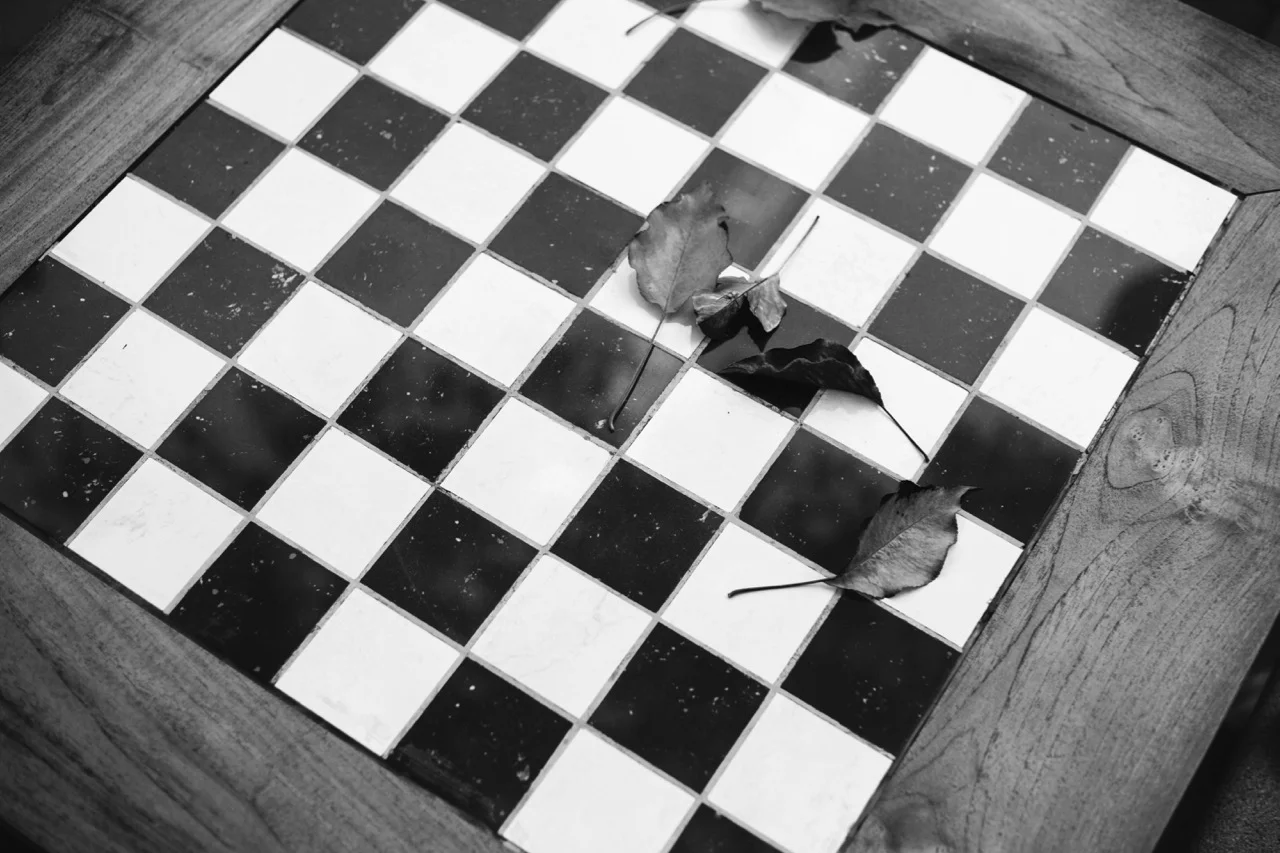
He then described sitting down to play a game of chess with one of your children... and realising way down the line that all along she has been playing draughts. And you have no idea of the rules, what the moves are or how to engage with or understand what she is doing.
I don’t know what else he said because, sadly, I was next door in the Vicarage, spending the evening alone: the one member of the church not there. I just know that people came out stunned, profoundly moved... and realising that our boat was sailing on a different sea altogether.
It is the same old challenge.
There is such a taboo around insanity, still now, that often your friends can’t bear to acknowledge your child isn’t there any more. Just as the bereaved experience the crossing-the-road-to-avoid-you syndrome because people don’t know what to say, so those blighted with lunacy encounter denial as if it were kindness.
“She’s just being a teenager,” they console.
Would that she were!
When I’m asked my about my children I’ve stopped saying our middle daughter is mad, because people think it’s a joke and titter politely. Or say proudly, “Yes, my daughter’s completely mad too!”
If I say she has OCD, though, they’re likely to respond, “Tell me about it! You should see my sock drawer...” In which case how are you here, behaving as if you can function?
If, Heaven forbid, you had to tell your friends your child had leukaemia... Well, I realise it’s absolutely no consolation whatsoever, but you probably wouldn’t receive these pat responses.
We need to tell the story. The story starts here.