The Sun King
August 2005
We were now homeless.
Fortunately, we had some very kind friends. Technically, therefore, we should be described (I know this now) as “middle-class homeless”. This means that instead of sleeping on the streets (very much not recommended) you sleep on other people’s sofas, in their spare rooms, or – our immediate port of call – in their children’s rooms while their children sleep in a tent in the garden. Or indeed anywhere.
(Also not recommended, actually. Certainly not for longer than a night or two... But very, very much better than the street option: I know this too, because we had a number friends with only this latter, when we lived in Vicarage; your life expectancy is not good out there under Putney Bridge. We will be forever grateful to the two families who took us in straight away, both displacing their children for us. Specially as Serena’s lovely, gentle, extremely well-trained Great Dane, who had never before hurt a fly but who was by now as distressed and traumatised as the rest of us, responded by ripping our hosts’ dog’s stomach.)
You think fast, when you have to. I asked Serena’s and Alex’s Cambridge colleges if each could take up residence a month early. Ben was soon due back to school. Shaun would have to remain in Oxford, where his work was. He didn’t have anywhere to live either, but sofa-surfing (whilst also not recommended when combined with a job which requires books and a study and space to think) is very much more manageable if you are on your own with no dependents to break your heart.
Leaving Rose, aged two; Bink, who was not at all well; and me. And two dogs and a cat.
I gave my cat, which Serena had given me in a happier year, to my brother’s family: I’d always thought they needed a proper pet to look after them.
Oh yes, and I sent the au pair home to Holland. She wanted to stick with us, wherever we went. I considered the dogs enough to worry about.
Then I asked a dear, kind, generous friend from university if we could borrow his house on the Findhorn Estuary. I knew he didn’t do dogs... but I also knew his magnanimous heart.
It was at this point that Shaun’s sister rang to say their father wasn’t well. Shaun was due to see the vicar, his boss, that evening: relations between us now so strained he didn’t consider it wise to postpone.
He left to see his father the next morning. Half a day too late.
How low had we sunk, that Shaun’s last goodbye to his father had become an unaffordable luxury?
So we set off one evening, dogs in the boot, with what few possessions we could fit in.
The remote and ravishing North our home for the foreseeable.
I must have been so concerned for two-year-old Rosie to repay this so-kind liberality by caring for such a beautiful home, that the last leg of the journey, through the Highlands, was spent explaining over and over again that she mustn’t put anything on Louis’s antique tables, or spill anything on Louis’s heirloom carpets, or scrape chairs across Louis’s parquet floors... or even pick Louis’s flowers or the fruit from his garden.
Yes, these trees are Louis’s too, sweetheart, so be appreciative. And the woods, yes. And this long drive along the water. And the little cottage before the house and the fields. All Louis’s, and we must care for it all much better than if it were ours.
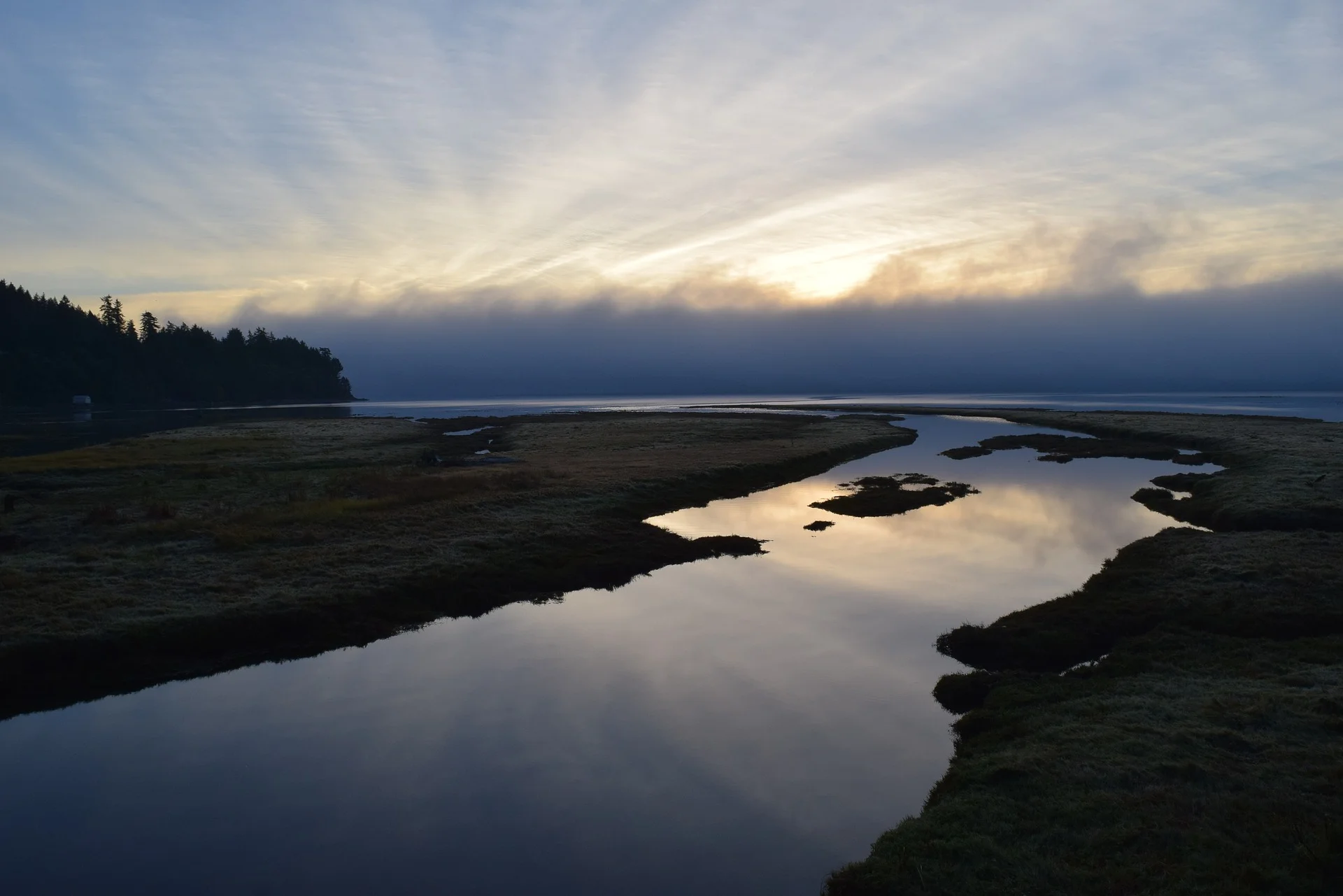
The yellow dawn was just beginning to warm the backs of the osprey gliding over the sparkling estuary, gilding the tops of the almost-turning trees.
“Look!” I said. Gold just starting to nudge the day.
“Is the sun Louis’s?” Rose asked.
It is axiomatic that writers find manifestations of mental illness, even their own, fascinating.
Rape survivor Jill Saward, an old friend of ours, attracted criticism in 1997 when she called for different degrees of assault to be recognised: a date which goes awry, she argued, being very different from a brutal, violent, gang-rape effected with the use of a knife. Unfortunately, she would know.
Perhaps a similar distinction should be made about degrees of mental illness, which category now includes any form of depression.
In which case I’ve been round the bend for much of the last twenty years.
Only, I haven’t.
The searing, furious grief which overwhelmed my father when my mother died nine years ago no doubt classifies as a mental illness now. It’s not, though, is it? If you knew my mother, you’d consider it the only sane way to respond.
Similarly if you don’t go a bit loopy at finding all your children homeless, you must have been pretty darned loopy to begin with.