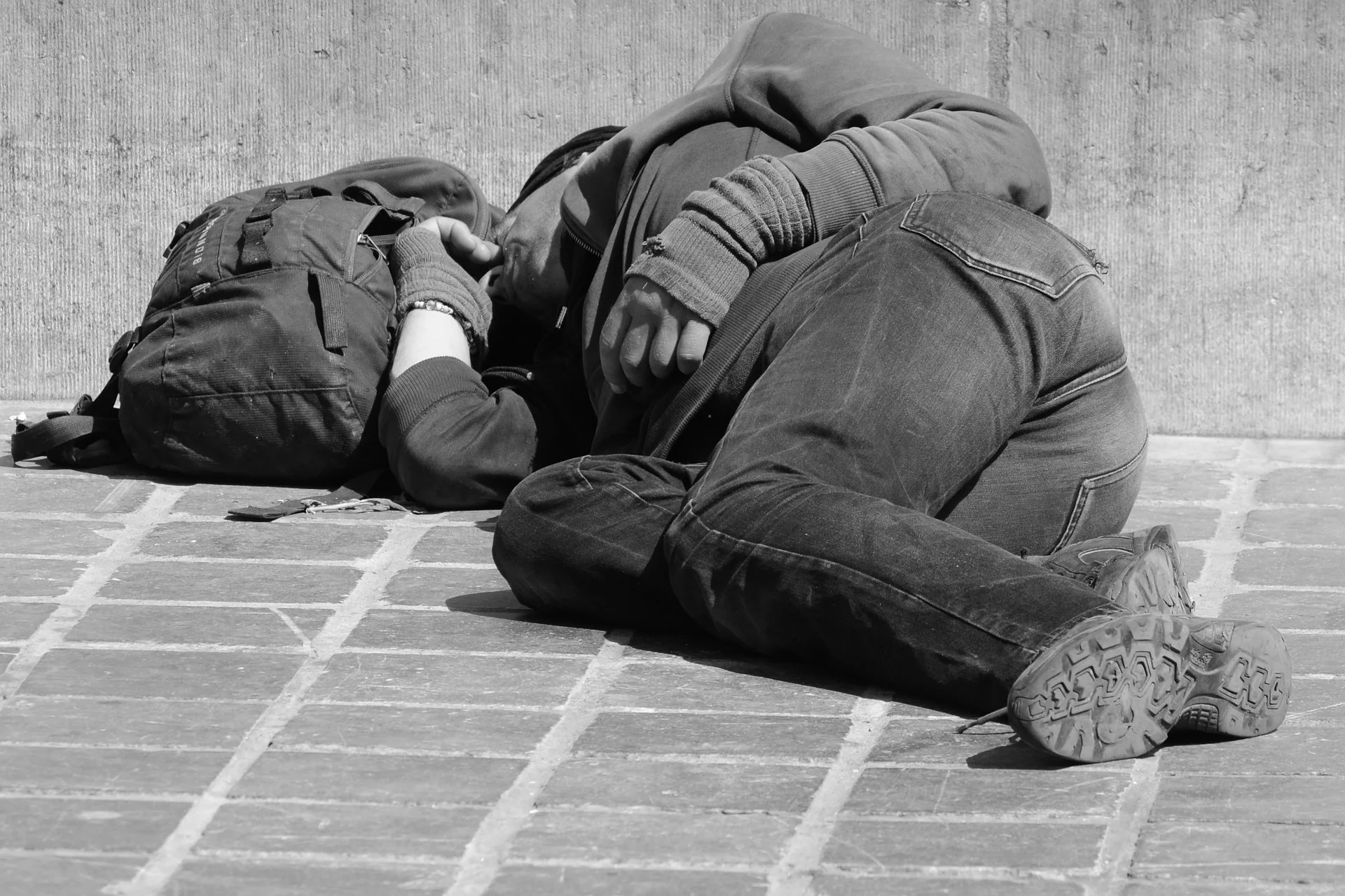
Homelessness...
Summer 2005
The church continued negotiations to buy the house I knew I could never live in. I continued with the only alternative I could think of, to go home to my parents’.
Driving back to the city I once loved so much, with Alex – who, because of his Asperger’s syndrome, can be much more attuned to mood than many neurotypicals, having taught himself the language of emotions as we analyse the grammar of a foreign tongue at school – as we neared the environs of Oxford, he commented on how tense and miserable I had become, without noticing it myself.
One or two members of the church PCC knew of my reaction to the house they were buying for us. (And of course, thanks to Bink, the vicar and churchwardens had known all along.) But it wasn’t the kind of church where it was easy to speak out.
In our church in Parson’s Green, with an electoral roll of 150, what happened next would have been impossible. But once numbers reach five or six hundred, an institution starts to behave more like a business serving a clientele, than a family run by its members.
We went to the seaside that July, to my parents’ holiday house, as we always do.
The Mail on Sunday, knowing of Bink’s OCD, asked if I would watch the two-part series, The House of Obsessive Compulsives, and write about it for the paper. (I had to buy a video player especially. It proved well worth it, eventually.)
Bink and I watched the two programmes together.
Since the devastating damage done to her by the Florence Nightingale Unit two and a half years earlier, Bink had eschewed all conventional treatment. Who could blame her? Not I.
We observed the protagonist of the series, Professor Paul Salkovskis: psychologist not psychiatrist; curing his patients not drugging them. Sufferers with the same symptoms as Bink’s were experiencing near miraculous cures, thanks to good treatment.
“Would you agree to that?” I asked tentatively, after the second episode.
To my astonishment, “If it works, yes,” she said.
Important though this was, it wasn’t as urgent as impending homelessness.
The church would soon be exchanging contracts on a house I knew I couldn’t live in.
Two people we hugely respected – my mother; and the extremely generous Christian financier mentioned already – both told us we must somehow tell the whole PCC. The congregation was about to make the significant purchase of a house for a minister and his family, which very purchase would drive that minister and his family away. We had a duty to let them know.
Fearful of the consequences but feeling the force of this, we wrote to the PCC, scrupulously not asking them to pull out of the sale: it was their money not ours. But of course, it was difficult to explain that if they bought this house for us Shaun would be looking for a post elsewhere, without such a construction being put on it.
It was also impossible to hide the fact that some people had known all along…
Within days the imminent purchase was aborted. Several thousand pounds wasted. Instead of a few hundred thousand.
Within hours I had found somewhere within the budget that we could move into immediately. And a number of us had found the same permanent solution: an ideal house for rent coming up nearby.
The vicar had other ideas. Our current accommodation was now at an end.
“You’re camping out,” he said.
Laughing. And meaning it.