Anne Atkins

  • Home
  • Bink Bonkers
  • Non-Fiction
  • Novels
  • Journalism
  • Speaking
  • Broadcasting
  • Biography
  • An Elegant Solution
  • Thoughts for the Day
  • Anthem for Mary and David Briggs
  • Love Strong as Death
  • Contact
Dominos

Not single spies but in battalions

November 20, 2018 by Anne Atkins

Don’t you love today’s news story?

Pretend doctor practises for 23 years without the appropriate qualifications, no one noticing anything untoward. Not her patients: not her colleagues.

You can’t imagine a brain surgeon faking it in the operating theatre, can you? Or a cardiologist pretending to know how to fit a pacemaker? Any more than you could pretend to be a violinist when you don’t know an A string from an E: because that is a real, measurable skill.

There is only one medical discipline, of all of them, which you could make up as you go along. And nobody notice.

(And as Ben said, quite possibly do a lot less damage than the real thing...)


But back to

January 2006

and how was Bink coping with all we were going though?

I estimated at the time that it set her back five years of her previous recovery. Which turned out to be a lot more than five years of her future development, in the effect it had.

I learnt, over and over again during that dismal time, why sorrows come not single spies. One knocking another knocking another in a long and overwhelming line throughout our family.

She was absolutely right that losing her medication had lost her a place at the college she had applied to. Nevertheless, she was pooled and offered a place at another Cambridge college. 

She wanted to turn it down and apply again the following year.

It sounds absurd, I know – and everyone told her it was – but I understood her reasoning. It was at a single sex college, for mature students: she would be 21 by the time she started. She should have got into the college she’d applied to; and if she hadn’t lost her medication just before her interviews, probably would have done. And she would have been really happy there.

Bink was not one of those who socialised more naturally with her own sex: she hated being at a girls’ senior school, after a mixed prep school where all her friends were boys. (Like me at her age, she was a tomboy. Like me too, if we’d both lived in a later age, she would almost certainly have identified as a boy. Either of us quite possibly opting for transition. Thank goodness we lived when we did: what a scary thought…)

And a mature college more or less shuts down at the weekends.

But everyone told her it would be irresponsible. So she gave in and agreed to start at Cambridge the following Michaelmas.

She went to London for an interview at her old school and was offered a smashing job: an extremely well-paid post as a teacher’s assistant. It would have covered a substantial proportion of her expenses at university. And spring-boarded her into work afterwards.

But she also went for an OCD assessment at the Bethlem Hospital and was told yes, she was easily ill enough to bypass a GP’s referral and be admitted as soon as they had a bed, probably in April.

She couldn’t do both. She chose hospital.

It was wise – and remained, until this year, almost the only effective treatment she has ever been offered for her OCD, giving lasting help.

But the other side of it was is that, to this day, she has never done a day’s paid work. Having that on her CV would have enabled her a number of times since. She offered herself for voluntary work in a church primary school, for instance, but was turned down when the head discovered she had no experience.

So being homeless, by robbing her of the recovery which she, and we, had worked so hard for since the Florence Nightingale Unit, also robbed her of any work she could have done for many years to come.

Domino effect.

November 20, 2018 /Anne Atkins
Living with OCD, Living with homelessness, Florence Nightingale Hospital
Comment
haley-powers-370168-unsplash.jpg

Clean socks or a Bible?

November 19, 2018 by Anne Atkins

January 2006

That meeting, between the vicar and me in Oxford, spelt the end of the peace and tranquility I’d experienced at our friend Louis’s beautiful house in Scotland. From then on I was overwhelmed by a raging, roaring vortex of drowning depression.

(Warning: never interfere with quick-fix simplistic panacea for complex ongoing issue. Particularly pertinent on subject of mental health.)

I longed to stay in Cambridge, the city of my so-happy childhood and teen years. Near my children (Serena and Alex were at the university) after their recent experiences. And my parents, now nearly ninety and increasingly frail. But our only chance would be for Shaun to find another post with accommodation…

Meanwhile we needed somewhere, anywhere, to live. The Oxford church was still determined to buy, not rent for us. Over the New Year, Shaun had taken us to view a new-build some miles out of the city.

Almost immediately I’d had to run out of the house again and sit in the car. There was a room right in the middle of it with no windows at all. Even if I never entered it, simply knowing it was there – like Bink’s illness, a black hole at the centre of our family – would suck all the light from our lives. 

I said nothing to the others. How could I? But as we drove away, Shaun pointed out a sweet little thatched cottage, right on the pavement, also within the budget but not yet available to view.

“Stop the car!”

“Please,” I asked the woman at the door. “Will you let us see round?”

“Not now. It’s a terrible mess.”

“Please.”

It was a terrible mess. Cat food on the carpet; dirty laundry sprawling off the sofa; teenagers in bed; filthy plates everywhere. About a quarter the size we needed.

“This one,” I told Shaun. It was far, far too small. And miles from his parish. But oh-so pretty. Next to the gracious Manor House and just up the lane from the little church.

I don’t consider myself particularly fragile in other ways, so I wonder how unusual this is: my mental health being so dependent on place and environment? (I’d be interested to know if any readers are the same.) When I first bicycled past our Parson’s Green Vicarage, long before Shaun was vicar there, I’d experienced a falling in love, just as with a person…

The meeting was some time after this. And a disaster.

The friend who’d so fiercely promised justice for us suddenly shifted ground without warning, and simply asked the vicar and me to tell each other what we’d done wrong and say we forgave each other. I had no difficulty with the forgiveness: I didn’t wish him harm, nor any evil on his head.

I just wanted us to escape. Since we now knew the church wouldn’t house us in any way that would enable Shaun to do the job properly.

And meanwhile, urgently, somewhere for my children to live. 

I didn’t care about his forgiveness one way or the other, not knowing any way I’d wronged him. It was our children we’d sinned against, by being so recklessly trusting, and leaving their previous home.

He asked if the cottage we’d suggested was right for us. It had come back with the kind of survey you’d expect of a thatched seventeenth-century cottage, and was no use to the church for anything else.

What could I say? I’d made all my much more sensible suggestions a year earlier, when I’d found two large Oxford vicarages, one already empty and with a peppercorn rent. I knew buying the cottage would spell the end of Shaun’s employment with the church: gorgeous though it was, it was miles out the parish, and tiny. But the last time we’d said a house wasn’t appropriate we’d been put out on the streets.

So I said nothing.

And that was the end of the meeting. All I heard afterwards was that they were all shocked at how wrecked I looked. The most useless insult I’ve had in my life was the vicar (who had apparently expected to breeze in, all charm and bonhomie, and give me a kiss) advising Shaun that I didn’t seem at all well and should see a doctor.

I went back to my parents’ in Cambridge. Rose and Bink and I. And the dogs, to live in the car.

Sometime later my clergyman friend, who had called the meeting, sent me a Biblical verse to be helpful.

“Can’t look it up,” I replied. “Lost my Bible many moves ago.”

He told me to do myself a kindness and get another.

Well, yes… Up to a point, Lord C.

But believe me, when you’ve lost all your socks apart from the ones on your feet, which you wash in your bath every night so you can leave them to dry for the morning, it’s not a Bible you need.

One lasting blessing to come out of that Christmas was our friendship with the doctors from Malawi who’d lent us their new home. She, too, had suffered years of debilitating depression and spotted it immediately. I barely knew her, but every day she sent me a text, from her home in Oxford, asking how I was, in Cambridge.

Her kindnesses became unbelievably precious.

As, however, did my sleep. When you’re depressed, it’s one of the first things to go. You might, if you’re lucky, fall asleep at the beginning of the night. Then wake at one. Or two. Or three. Or all of them... if you’re fortunate enough to sleep in between. Or you might be awake for hours... and, again if you’re blessed, fall asleep around breakfast time.

The telephone I had at the time would bleep when it got a text. And go on bleeping. Every few minutes. Until it was attended to. Something which is quite challenging – depressed or not – is sleeping through chronic, persistent, continual bleeping.

“How are you?” came another solicitous message.

“Well, I was a little better... Until a text message woke me up.”

On one of Shaun’s weekly visits we walked past David’s Bookshop (secondhand). I nipped in and asked for the cheapest Authorised Version he had.

Sadly, he didn’t sell socks.

November 19, 2018 /Anne Atkins
Living with homelessness, Living with depression
4 Comments
justice-2060093_1920.jpg

Guilt

November 16, 2018 by Anne Atkins

2003... and 2006

I’ve just remembered another go I gave to counselling, for the struggles I’d had since my entire family imploded into Bink’s illness.

Talk about hope over experience...

I’ve indicated already that the kind of “mental illness” I’ve experienced, on and off for the worst part of twenty years, is so different from what Bink suffers that the two are barely on the same spectrum.

Mine was a disease of malnourishment, starving from without. Bink’s, one of cancer, devouring from within. Both make you feel pretty lousy. But their diagnoses and treatments, properly miles apart.

Nevertheless this is a blog about being nuts. And for a long time, thanks to our circumstances, I qualified.

Our Parson’s Green GP’s surgery would fund up to six counselling sessions. Given what I’d discovered when researching psychotherapy a few years earlier – after our devastating experience of marriage counselling, when I learnt what scant hard proof there is of its effectiveness – I found this curious. Doctors are scientists, used to assessing evidence. After all our surgery wouldn’t pay for the osteopathy, or indeed hypnotherapy, I was advised to procure for myself.

In the interests of fairness I should say Shaun found his six sessions very helpful, being able to offload what we were going through onto someone who had nothing to do with our parish.

Mine were dismal.

Many years earlier I’d been pronounced 100% resistant to hypnosis. (This was because I didn’t like the hypnotist: he told me a fork was hot when it was very obviously not. Now, if he’d asked me to imagine it was hot I would have done, probably better than most.) I seem to be equally impervious to counselling. I find reiterating sorrows usually makes them worse.

The first session, naturally, was spent filling my counsellor in on Bink’s illness.

“Do you feel guilty?”

“I’m sorry?”

“Do you feel very guilty?”

I was shocked. “Do you think I should feel guilty?”

“Your daughter has a severe mental illness. As her mother, you might be expected to feel this is your fault in some way.”

Know what? Until you put the idea in my head, it had never occurred to me.

I expect I will now, though…

New Year 2006

So by the time we became homeless in the summer of 2005, the Black Dog and I had become old sparring partners.

What was curious was that all the time I was living in Louis’s beautiful house on the Findhorn Estuary, I seemed mercifully free of symptoms. Looking back, I strongly suspect I should have been diagnosed as depressed: I was barely functioning, except to get my children through each day.

But I felt almost nothing.

That was the mercy of it. No joy, true. But no wild despair either. No helpless hours of sobbing.

Just a numbness, in the beauty of my surroundings.

All that was to change, at the beginning of 2006.

What tipped me over the cliff was do-good-interfering.

From the moment Shaun’s employing church put my children out onto the streets for us to fend for ourselves, various members of the congregation had been exhorting me to forgive.

Reader, I know as well as the next sinner what Jesus taught on the subject. Why would there be any place for me in God’s wide and bountiful mercy, given all my transgressions, if I can’t find a place in my heart for those who have done far less to me?

I have no issue with this. I can’t afford to.

What I did have considerable issue with, was a cheap and simplistic form of Christianity: painted by numbers just for the look of the thing. 

You forgive me. I forgive you. Hunky-dory.

No repentance. No justice. No addressing of the wrongs.

Far less putting any of them right.

November 16, 2018 /Anne Atkins
Living with mental illness, Living with depression, Effectiveness of counselling, Living with homelessness, Christian forgiveness
3 Comments
John_Everett_Millais_-_Ophelia_-_Google_Art_Project (1).jpg

Without a boat

November 14, 2018 by Anne Atkins

Christmas 2005

Soon we had to move on again. Our good friends (now, they were!) were back from Malawi, and needed their home themselves.

Next we borrowed a housemaster’s flat in Radley College while he went away. We didn’t know him either: we simply met his girlfriend at a party. After Christmas we’d be able to borrow the Chaplain’s house for a few days.

We made what Christmas we could from our borrowed rags, begging the school Christmas tree after the last service in Chapel on Christmas Day.

Bink was wretched at, she was sure, having lost her Cambridge place because of mislaid medication. Alex was looking as if he could lose his too, for lack of disability support.

Worst of all, a member of the very church which had made us homeless wanted to fight for justice for us, and asked me to write down everything that had happened, over a year and a half. This took three so-valuable days of our scant time together... only for him to decide that all Christians need, for justice to be done, is to apologise and forgive.

When you stretched that thin, one more demand can become fatal. And it becomes a lot harder to forgive then, I tell you…

One of the most heartbreaking aspects of illness and disability is how it cares nothing for other members of the family. How neglected our other children have been! That was the holiday when Serena said something which, in any other context, should have brought her family to a stunned halt, to attend to her needs. Instead, I merely suggested asking her tutor for advice. It was a year before I realised she was so short of money, in her third year in Cambridge, that she became severely malnourished, and that same kind tutor offered to lend her £1,000.

I simply did not have attention enough to take it all in.

To know Ben, is to laugh.

When we first tumbled into the lovely flat we’d borrowed, and gathered round the friendly kitchen table that wasn’t ours, Ben cracked a comment to double us all up. I laughed, as one does when Ben is in the room.

But underneath there was always sadness now. I laughed with my face, but my soul sagged with sorrow.

It was then – at that kitchen table; on that first evening together; in that housemaster’s flat which seemed so luxurious to us now – that I realised what I was nostalgic for: the Christmas when Bink came out of hospital for three days, and went berserk from chemical withdrawal, and Shaun and I thought she had schizophrenia.

How is that possible? That it can be worse to lose a home – that was never even yours – than your own daughter’s mind?

Because then, in that wild sea of insanity, we had a raft to cling onto in the storm.

So, yes: we have been through worse even than Bink’s madness.

A few days before Christmas I took Rosie up for her bath, in this spacious home which was ours for a brief precious week. She was, by now and very frighteningly, the best behaved two-year-old I’ve ever come across. She never put a foot wrong or did a naughty thing in all those years after we left our Vicarage. I often feared what needs she was suppressing, this toddler so careful of her troubled family.

She got happily in her bath to play, as she often did. And I left the room with the door open, as I often must have.

The water was lovely and warm. The child was tired at the end of the day. Worse, the mother was bone-brain-weary... and utterly distracted by the disaster her family had become. I nipped downstairs for something; somebody asked me something; my help was needed for something; as it often was... and twenty minutes later I remembered Rosie in her bath.

I ran the wide steps, three at a time.

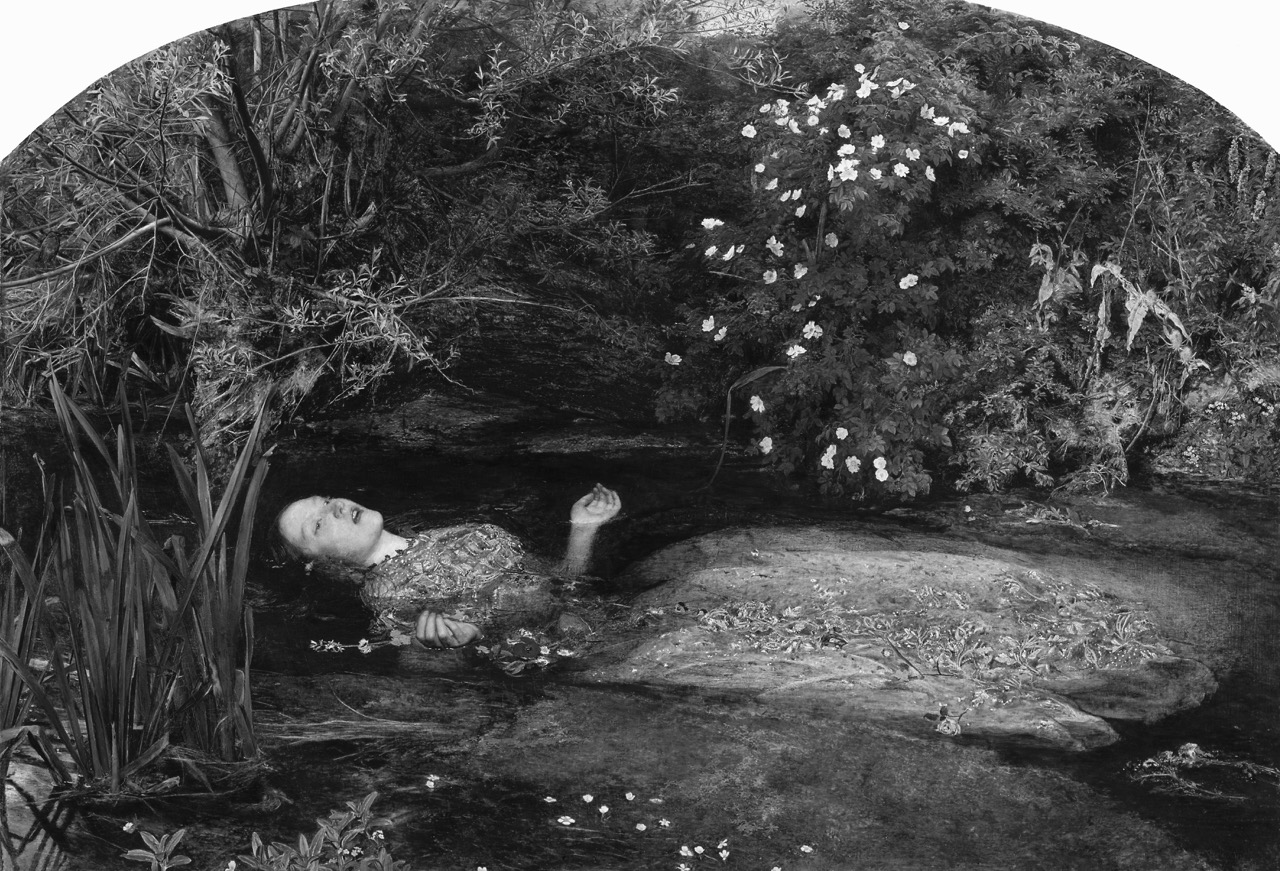
And there, in the vast great bathtub, in the deep warm water, floated an infant Millais’s Ophelia, hair spreading in the water, consciousness completely gone.

We had lost our home. Bink had lost her mind.

But my blood runs dry every time I picture what we could have lost that terrible Christmas.

Perhaps God still loved us a little after all. Rosie’s nose was above the water...

November 14, 2018 /Anne Atkins
Living with homelessness, Living with disability
2 Comments
park-1590553_1920 (1).jpg

On the move again

November 13, 2018 by Anne Atkins

December 2005

It would soon be the end of term and we still had nowhere to live.

My brother had friends returning from Malawi – doctor couple, Christians – who had just bought a house in Oxford for their young family and kindly agreed we could have it till they got back.

Then wrote to cancel, having realised it would be bare of furniture.

I didn’t know these people at all. Please, I said. A roof over our heads, being together for a few days is all. Floor, fine. Just, please.

Well of course they understood. They’d been ten years in Malawi.

In which case could we do them a favour, and direct the removal men where to put everything? At the last minute, another email. “Make sure they put the piano in the room near the front door!”

I can’t now remember what gave me insight into this surgeon I’d never met, who had founded several orthopaedic hospitals.

“Too late,” I replied. “They said it would look better on the third floor. I thought it best to be guided by the professionals. Don’t worry,” I added kindly. “it’s lovely for parties up there.”

He was thrown into enough panic to go in search of an e-café in the middle of the Malawian night... His wife was overjoyed. “For once,” she said, “the butt of a joke, not its instigator!”

They are good friends still, he one of the funniest people we know, and is interviewing Alex and me for the Oxford launch of my new novel.

A member of Shaun’s employing church, a musician, rang and asked me for help. I had no idea what we could find left in common, but I invited her for tea. (She had once given us dinner with the bishop...)

While the church had been providing accommodation for us at the beginning of the year, I had been asked to take over the music for the eleven o’clock service. Known as the “graveyard slot”: mostly grey-haired members of the flock; no children screaming through the aisles; no endlessly repeated choruses. Shaun told me I raised eyebrows by choosing this service to attend, when all the trendy people went to the early family or evening young people’s services.

But it proved handy when they wanted help with the music.

Within weeks we had a four-part choir and a chamber group. Bink had made a number of musical friends; she Alex contributed to both; while Rosie sat quietly listening, in a pretty frock and straw hat, charming the old ladies. Causing wonder by not screaming down the aisle herself, pushing a truck, never having had this example set her.

When our accommodation ran out, so did my help. I don’t know what happened after I left. But now we were back in Oxford, presumably I could help again.

To my shame, my memory is that, very rudely, I spent most of the time on the telephone: almost certainly, something to do with the increasingly pressing and many needs of my children. By now I had so many demands on me, so much more life-saving that this was going to be, I had little enough time for good manners.

It is no excuse for discourtesy but it happened that, a few months earlier, my visitor’s husband had acted extremely unprofessionally towards Bink, severely compromising one of her A levels. I was learning quickly that, when you are treated badly by one, it soon catches on for others.

Eventually I must have hung up and apologised.

Could we help with the various carol services, she asked?

“How?”

“By playing.” Obviously.

“What?”

“Your instruments!” What was the matter with me?

“What, specifically, did you have in mind?”

She was clearly stumped. “Well... harp, ’cello, violin...”

I stared at her. This woman was on the PCC. The body which had made us homeless.

I still, all these years later, have no words with which to answer her.

When we lived in our Vicarage in Parson’s Green, a man lived in a red car opposite. (Until he had to go into hospital, and some cruel and unfeeling authority towed his home away.) Chatting, Shaun discovered he had once been a concert pianist, and invited him to play the church piano any time. Which he did. Superbly.

In all the time he lived over the road from us – when we gave him mugs of tea, or hot filled baked potatoes, or just the time of day – it never once occurred to any of us to ask whether he had his concert piano about his person.

However mad Bink is, she is nowhere near as mad as many of the sane people out there.

November 13, 2018 /Anne Atkins
Living with OCD, Living with homelessness, Living with mental illness
Comment

Powered by Squarespace