Anne Atkins

  • Home
  • Bink Bonkers
  • Non-Fiction
  • Novels
  • Journalism
  • Speaking
  • Broadcasting
  • Biography
  • An Elegant Solution
  • Thoughts for the Day
  • Anthem for Mary and David Briggs
  • Love Strong as Death
  • Contact
cartoon-2029192_1280.jpg

Clean enough, sir?

October 26, 2018 by Anne Atkins

2004

Alexander has the kindest heart in the world.

Being Aspergic, he has coped with Bink’s illness very differently from the rest of us. I was about to say, “much better than”, and it certainly appears so. His objectivity is astonishing: if an emotion isn’t useful, he doesn’t use it. (The jury is still arguing ferociously as to whether his feelings consider this satisfactory; or whether they are merely biding their time, stacked up and waiting – somewhat pissed off – in the wings to be attended to when he has a moment.)

Thus he is able to analyse Bink’s behaviour, understand her fears and give her responses so appropriate and helpful that sometimes the rest of us can only gawp in admiration.

I have already alluded to his being the one member of the family who would never lie to her. The temptation can be considerable. In 2015 we lost Bink for months, just because Rose changed the cycle of her wash, when she was getting her uniform ready for the new Lent term, in order to be in time to catch her train. If Bink hadn’t known – if I had glossed over the exact details when she asked me – she would have been with us through Rosie’s precious last half year at choir school, and present for the celebratory and glorious week of her confirmation in Durham Cathedral that Easter.

But Alex would never do it. He explained to me why lies and Asperger’s syndrome don’t go together. Nothing moral about it: it’s just too confusing. He takes the long view, I suppose. Getting Bink to Rosie’s confirmation isn’t worth the price. ’Specially not the risk of losing her trust.

She’ll have to find a way around the truth herself.

Before her illness Bink was a sparkling musician. Her obsessiveness could have taken a very different turn. I’ve heard her practice triplets against quavers for hours on end. You can’t really become a professional musician – perhaps any creative genius – without a considerable level of obsession.

But since the Florence Nightingale Unit she hadn’t been able to touch musical instruments, along with much else besides. And she had no outlet for singing, so her music had fallen sadly silent.

One day Alex come into the Vicarage drawing room looking for all the world like Mrs Mopp. He didn’t quite have a headscarf tied in a knot on his forehead or flowery overalls on, but the resemblance was otherwise so striking that I picture him to this day as if he had. He was carrying a bucket of soapy water, bubbles frothing at its lip, and an old-fashioned mop, with its wild unbrushed hair on the end of a pole, head down in it.

We were so astonished that we merely watched, mesmerised, as he sloshed the sopping mop up and down the keyboard of the piano, refreshing it regularly from his bucket.

Eventually, someone must have had the sense to ask him what on earth he thought he was doing. I agree it was, if not quite a pointless question, certainly far too late a one. Still, I don’t think it warranted quite the tone of the blindingly obvious with which he explained, “Washing the piano. So Bink can play it.”

I don’t think Bink had actually asked him to do this. She’s not quite that bonkers.

On the other hand…

Alas, no one played that piano for quite a long time.

For some months, all the keys lay in the sun in our conservatory, individually extracted from the innards of the instrument, attempting to dry out. At first I put them in the garden for the duration of a sunny afternoon, but it was soon very clear that, spring though it was, it would be snowing before they had recovered.

We had to get a piano engineer friend in eventually. A high and little-used C# remained stuck for many years afterwards.

Perhaps it was Bink’s idea, now I think about it. I remember explaining that wet wipes would have been a little more appropriate. 

This was a mistake.

Wet wipes still have quite a lot of moisture in them, if you ring them out with enough determination over a wincing keyboard.

There came a time when the individual keys stretched out trying to dry in the conservatory were not those of our piano. But of my laptop. Without which I couldn’t work.

Which was not something Alex could ever have done. 

And that never did recover.
October 26, 2018 /Anne Atkins
OCD
Comment
hands-2319834_1920.jpg

Waste

October 25, 2018 by Anne Atkins

Present day

When we saw Bink on Sunday she gave me an article she had torn out and kept for me, from the previous week’s paper.

“I thought you might want this for your blog.”

It is worth reading in its entirety: the same bleat I have made a number of times. The appalling lack of any help whatsoever that passes for modern mental healthcare.

Bink had marked several passages for my attention. In particular she had circled a section in red, which ended:

It wasn’t enough. My referral was rejected on the basis that the teenager hadn’t yet tried to take her own life.

‘If she does make an attempt, then do call back,’ I was advised before the woman hung up.

(Precisely the reason Bink herself took an overdose at the age of 16.)

And underlined in black:

We know early intervention can reduce the impact mental illness has on people in years to come, so there is a good rationale for making sure everyone who really needs help gets it. 

How much pain does this represent in just one person’s life? How many wasted years? 

As it happens Bink also gave me back my novel, which she had kindly marked up with errors she had spotted in time for the final proof-read. The copy I’d given her had already been professionally, and very competently, proof-read.

Bink had spotted at least another hundred typos. And many more tiny quibbles of grammar and punctuation, about both of which I consider myself more than averagely fanatical. Several hundred corrections, to a novel ready for publication. I honestly don’t believe I have ever come across a mind so attuned to detail.

And still not worth the tax-payer’s while – apparently – to treat her any time over the last eighteen years.

“Bink,” I said, “you’ve got to become a barrister. You would be terrifying.”

“Hmm,” she said. “It would be against my conscience.”

One of the things to be said for life is that you can get wrong-footed by the most unlikely googlies. Who’d have thought Bink had one of those, eh?

“Though I wouldn’t mind taking on the large corporations.”

You read it here first. If you employ more than fifty thousand people, start ducking now.


Spring 2002.

Something in yesterday’s post jogged me. So many tucked away little voices of loss, you get used to the echoes and stop noticing.

Shaun’s brother was getting married in Pakistan. For us as guests, a one-off to last a life-time. Bill had been, for some years, working as a clergyman in Sharjah. The penny finally dropped with his Asian friends, and they faced the shocking fact that his own family back in the West was never going to arrange his marriage. And Bill himself couldn’t organise his socks into pairs. So his friends had referred him to a vicar in Lahore and asked him to find Bill a wife.

This was Billy’s arranged marriage. This white, Irish, Church of England clergyman’s wedding to a gorgeous Christian Pakistani vicar’s adopted daughter. They’d met once, I believe: to her bemusement, Bill insisted on her informed consent.

As so often before when the need arose, I went in search of an editor who would commission me to write about the trip, to pay for our flights. Once there, everything would be taken care of by our wonderfully hospitable new Pakistani in-laws.

A trip Thomas Cook could never pull off:

Taken for salwar-chemise fittings as soon as we touched down, in beautifully comfortable cotton, delivered the very next day; joining in searingly hot and delicious meals; washing up with the women under a cold tap; 16-year-old Alex being told at breakfast that – as the oldest unmarried male in the family – he was best man and he’d have to learn the rituals as he went along; following the crowds, none of whom seemed to have received a formal invitation, more and more joining in as we went along the streets; being unsure which day was the wedding itself, they were all so full of celebration; eating from vast vats of curry in an open courtyard; dancing under the stars.

Only one sad shadow casting its cold finger over the memories.

Serena, bless her generosity and big-heartedness, never once breathed a word of complaint, then or since. But she too had to miss out on so much, staying the other side of Lahore in an hotel, so Bink wouldn’t be completely alone. Neither of them sleeping with the rest of us, blanketed by the warm night, on the roof of our new family’s home. Bink must have asked, months beforehand, what she would use for a shower and loo.

No one in this culture, I thought, could afford to have OCD. You wouldn’t survive, would you? Presumably they would never have heard of such a thing…

But after we arrived the bride’s brother told me of a cousin with the same ailment. He couldn’t touch anything either. All cousins come together for such an event. We never heard any more about him.

Amidst all the proposals and offers we received for Serena’s hand, none was interested in Bink. No one took us aside on Bink’s account, and said, “I have a nephew studying to be a doctor. Please, let me show you his photograph…”

Could they not see how beautiful and clever Bink was too? They couldn’t even tell whether she was a girl or a boy – dressed as she was, as baggily as possible, with her hair all shorn off.

I like to hope there is an etiquette that you have to ask for the oldest first.

That’s one excuse the NHS couldn’t really use, isn’t it?

October 25, 2018 /Anne Atkins
Pakistani wedding, OCD
Comment
39156055872_939463b9b9_b.jpg

Party (II)

October 24, 2018 by Anne Atkins

September 2004 [cont.]

Serena rushed from the crowded room.

There was a long, shuffling pause as everyone tried to resume small talk. Eventually she returned with one guest who was visibly shaken. Nobody asked what was the matter. Most of our guests knew not to. As most, indeed, had known not to wander about the Vicarage.

Most. But unfortunately not quite all... 

We had learnt, with Bink, to expect anything. Many of our friends had, too

We ourselves weren’t at all surprised when Serena herded us into a room and told us not to move. We’d lived with this for some time now, and knew exactly what it meant.

It meant Bink needed the loo.

There was an upstairs loo, yes. It was a long time before I knew why Bink couldn’t use it. It was because she could touch the walls of any loo, so the room had to be a certain size. She fretted for weeks before a long haul flight to her uncle’s wedding in Pakistan: she couldn’t use any aeroplane loo. So because the upstairs loo was a normal size, she could only use the large ground floor loo in the Vicarage. It was a while, too, before I knew why we had to stay confined in a room.

Nevertheless we were well-used to the routine of not being allowed out for a while.

Indeed, sometimes Bink would send us all out of the way, use the loo, go back upstairs and then forget to tell us she’d finished... We could be stuck for quite a long time, believing we couldn’t answer the doorbell which some poor parishioner had been leaning on for several minutes; or attend to the telephone which was ringing its head off in the hall; or leave the room for a book we’d forgotten; or even use the loo ourselves.

We got used to calling out, if we’d been locked away for half an hour or more, to see whether she was still needing a clear run. Though we wouldn’t have done that at a party, obviously. On account of wanting to maintain some tiny shred of pretence at normality.

Serena is exceptionally competent. She would have no more difficulty taking charge of a milling chatter of humans than managing a flock of recalcitrant sheep or corralling naughty ponies. Thus, half the guests had been instructed to remain in the kitchen and dining room, at the back of the house. And the other half was in the drawing room, at the front. Serena posted Alex to guard one consignment, she herself oversaw the other, she made sure they all knew to stay where they were and then gave Bink the All Clear.

The only thing she hadn’t done was a head count.

The guests went on drinking, eating and enjoying one another’s company, and another challenge in Bink’s daily routine seemed successfully met...

Until the night was pierced, as if by a shriek owl at Hallowe’en whose toe has been trodden on by a warlock on a diet of doughnuts.

Moses (not his real name) was a quiet, conservative Christian from Nigeria. He had of come from a country where Christian behaviour differs far more radically from the cultural norm than perhaps it does in the UK. In many parts of – particularly AIDS-torn – Africa it was much more crucial to ensure that Christians lived differently. Western teenage Christians behave, in many ways, like their non-Christian friends. Young African Christians, far less so.

There were other adjustments he was coping with. He found himself in a house which was old, large, rambling and fascinating. He didn’t realise the rest of the guests had been shut away for a while. And he decided to take a little tour.

Jane Eyre got a shock when she discovered Mrs Rochester in the attic... though she eventually recovered. Moses, too, was traumatised when he wandered along the corridor of a Christian minister’s home, to encounter the minister’s eighteen year old blonde daughter, sporting – though we didn’t realise this, because she spent most of her teenage years in baggy men’s sweatshirts and oversized tracksuit trousers – an unfairly curvaceous body, with a tiny feminine waist whilst being extraordinarily buxom elsewhere.

The good news was that she was not completely naked. She had shoes and socks on. And one, just the one, very bright blue, top-of-the-range Marigold glove.

And she was screaming.

I suspect that was when I discovered why we were always shut in a room. None of Bink’s clothes could touch anything in a bathroom. So she always had to take them off before coming downstairs.

An unconventional thing to do, perhaps, in a Vicarage when all the congregation knew the front door was left unlocked and people were always letting themselves in and out.

But there we are.

Some time later I asked one of the guests whether he remembered the party. He not only remembered it, but gave me such a detailed description that I could see, and particularly hear, it all again as if it were five minutes ago. Moses was gently ushered back into the room by Serena, as pale as it was possible for him to be.

A long time later Bink also returned, hidden in a hoodie from which she didn’t emerge all evening.

And no one in that group of friends ever saw or heard from poor Moses again.

October 24, 2018 /Anne Atkins
OCD
Comment
eric-nopanen-624212-unsplash.jpg

Party (I)

October 23, 2018 by Anne Atkins

September 2004

“SereeeenaaaaaH!”

The scream must have been audible all the way around Parson’s Green. 

Serena was having a party.

She’s very good at parties, Serena. She collects people in the way she collects animals: a rabbit easily mistaken for a fluffy slipper; a Great Dane the size of a Friesian calf; a punk chicken. As a teenager, she would smuggle them all into her bedroom and somehow enable them to rub along. Except the terrier and the baby budgie, one of which ended up in the other.

It’s the same with friends. Serena has a way of throwing a party so all sorts of disparate people, from very different backgrounds, collide happily on a bouncy castle, laughing together. She was the one most often found at midnight, when we lived in Parson’s Green, operating the toasted sandwich machine for some tatty, extremely cold and usually not entirely sober visitor.

So there was often an eclectic mix of guests under our roof.

Nevertheless, despite Serena’s gregarious and hospitable nature and an ecclesiastical house and garden designed for nothing so much as peopling it, it was a while since we’d done anything so frivolous and important as entertaining. Barely since the Florence Nightingale Unit, and all it had done to Bink and us.

You can wear away a stone with dripping water.

This particular party was for a bunch of young people who had recently been on holiday together. I believe I have already mentioned the Christian holidays Shaun and I used to run, taking over a boarding school for ten days in August and organising thirty or forty older students and young professionals to provide activities, sport, entertainment and Christian teaching for a hundred or more teenagers. Ironically, by the time our own children were old enough we’d handed the baton on. They continued to attend without us though, having got a taste for the fun and games and lovely people when they tagged along as toddlers.

But of course, by her mid-to-late-teens it was extremely difficult for Bink to join in with anything, let alone something so purely enjoyable. The organisers – fortunately, close friends – had to find washing facilities for her sole use, so they allocated a 30-shower changing room in remote part of the school which no one else knew about. They would need to turn a blind eye when she was the only teenager breaking the rules, missing obligatory meals, the brief morning or evening meetings, or the bedtime Bible-study get-togethers with the other girls in her dormitory. I’m not sure she could even share a dormitory, which was how they all made friends. And she had to be welcomed several days late… by the time she’d bought all the wet wipes and loo paper she needed and was ready for me to drive her to Dorset.

I would have loved to have stayed and watched her enjoying herself: such a rare treat, to see her having some semblance of normal adolescence. But I was several years behind on my own work – and not needed for the next few days.

Here is the contradiction that was Bink. And still is. Friends on the team reported back to us the longed-for news which most parents of teenagers never need. How she and Alex got everyone vying to win their week-long competition to guess the number of dead wasps in a jar. How the two of them jumped up in the dining hall at breakfast and spontaneously sang, in harmony, in honour of someone’s birthday. How her high jinks were the highlight of the “Daily Dross”, the tabloid entertainment read out at the end of the day.

Despite her devastating illness, in a group of nearly two hundred people Bink still emerged as the star, her charisma catching the light.

Enabling me to imagine what her sparkling youth might have been like, without this cancer…

Serena’s party was a month later, in early autumn. She had been helping in the kitchen that summer, along with others too young to be leaders. So naturally, she organised a reunion. And because of the essence of the holiday, most of them were exceptionally well-behaved, courteous young Christians: the sort you’d be happy to have partying in your house any time.

Now, if you found yourself in a Vicarage full of young people who had just given up their scant time and money to help on a children’s summer holiday overseen by Scripture Union, your guard might be down. You might not be expecting – or not as much as at a usual teenager party – to find them smoking dope, throwing up or using the bedrooms illicitly. Possible, perhaps: but rather less likely.

Or indeed, wandering around with no clothes on.

Until the scream…

October 23, 2018 /Anne Atkins
OCD
Comment
crying-1293443_1280.png

Unkindness

October 22, 2018 by Anne Atkins

Summer holidays 2003-4

“But that’s mad,” my mother said.

That’s right, Mummy. She is.

We were in North Norfolk, on holiday at my parents’ seaside house, and Bink needed to go back to our Vicarage in Parson’s Green, in South West London.

To wash.

My parents’ holiday house hasn’t been updated since my grandparents bought it in 1948. They probably never updated anything from the house’s construction in the 1930s. 

We love it. Though I confess, our daughter Rose did ask this year whether it might be possible for the house to be cleaned before we go next summer, if she is to invite any of her 16-year-old friends to come too.

It helps to see it as a souped-up beach hut. With all of us running in straight out of the sea and off the beach, it’s bound to be full of sand and seaweed.

I deduce that for the year in question Bink needed a shower: that house has never heard of a shower... or microwave, wifi, or any other gizmo; it never even had a landline when we were young, though it does have a telly and a toaster... broken. Bink hasn’t been able to touch the original footed bath for many years and indeed can’t now enter the house. When we go these days, my very kind sister puts her up in her house, a couple of hundred yards away and complete with working hoover and duster... and shower.

I can’t remember what happened – I don’t believe she did go back to London in the end, though she was certainly very distressed – but I do have other memories.

My parents held open house, as my father still most generously does in my dearest mother’s memory. Siblings, cousins, aunts and uncles, friends and strangers, and sometimes a general factotum. In my grandparents’ day this was Sybil, and we still have Sybil’s Room (aka the Boiler Room, counter-intuitively the second best bedroom, overlooking the sea) though Sybil must have been dead many a long decade now.

Because there were so many extended Briggses (my maiden name) Sybil would refer to Mr and Mrs Briggs (my grandparents), Mr and Mrs David (my parents: my father is John Davidson, always known as David), Mr and Mrs Stephen (my uncle and aunt), Mr and Mrs Davidson (my cousins)... and so it went on.

It’s not a large house, no: one of a small terrace on the cliff. But you don’t need much room in the summer, and my mother would squeeze lots of children head to toe along the balcony.

So of course, the deal is that we all muck in together. My memory of seaside childhoods is mostly of washing up.

And you all have to rub along together, too.

My mother had a mischievous twinkle of humour in her eyes always, as well as the kindest heart in the world – and most stimulating mathematical mind – and she would sometimes refer, privately to me anyway, to Dodie Smith’s play, Dear Octopus, about the tensions and loyalties, and inescapable ties, of extended family.

By the time Bink was 17, though she still loved coming she couldn’t help at all. The rest of us understood and didn’t expect her to.

Not everyone did.

There were plenty of us to clear up after meals and no more people could fit in the kitchen anyway, but nevertheless someone saw Bink sitting idle and said, “I wish I had OCD.”

Imagine if one of the teenagers had been in a wheelchair.

“I wish I were quadriplegic.”

It got worse. 

An adult came into the sitting room and threw a teatowel at her. “Time you did some drying up.”

I don’t know how she got upstairs but that’s where I found her, howling – as quietly as she could – crouched in a corner of the balcony. If boiling water had been thrown over her she couldn’t have been in more pain. (The teatowel had already been used.)

My mother found both of us, sobbing together.

“I’ll have to go, Granny,” Bink explained. “I can’t stay here. Nobody will care, anyway.”

My mother sat down on the floor with us.

“I will,” she said.

children-1412016_1920.jpg

Present day.

At Rose’s insistence we took a picnic to share with Bink yesterday, and sat in the sun-soaked park next to the North London Priory, and lost a kitten up a tree. (Why did we have a kitten with us? It would take rather long to explain.)

She is off all drugs now except the Lorazepam, down to 2 mg a day. She hadn’t had any substances all day. She was sparky and full of smiles and hope, but by teatime jittery for her first pill. She took it, and blanked out behind the eyes.

By Christmas, by my reckoning, she will be clean. It will be very exciting to see the original Bink underneath.

She is in a good, safe place.

October 22, 2018 /Anne Atkins
OCD
Comment
Beatrice-much-ado-about-nothing-1099627_500_281.jpg

Hiding

October 20, 2018 by Anne Atkins

Summer 2003

I find I have skipped another episode.

People are asking me, “Just tell us what it’s like. We’ve all heard of OCD. But what does it mean?”

A few weeks after Rosie was born we went to Ireland. We all love the land of Shaun’s ancestry; and because I earn our family holidays – by writing travel articles about them – I get to decide what would make good copy. And I usually decide that what my readers would most enjoy reading about is my family and horses. Falling off them. Getting lost on them. Having to get up at dawn to tack them. Even, if necessary, getting saddle-sores on them or being chased by an elephant on them, driving a caravan into a ditch with them or having a complete stand-off with them as to which is the correct route to take. (On this occasion, aiming at the extremely small target of a polo ball from the back of them.)

I don’t mind much... as long as I get to ride them. 

Naturally, Ireland and horses go together like the proverbial cart and.

But Bink could no longer do horses. 

In her horror of hair and dirt and slobber and general animalness she seems to have forgotten this, but as a child she gave every appearance of liking dogs and cats... and, yes, horses. In a funny kind of way she still does. She is much more particular about eschewing meat that hasn’t been humanely reared even than Serena is. She is concerned about Horatio, our Great Dane, having a bed too small for him. She often demonstrates deep sympathy towards animals.

But because she can hardly bear to be in the same house as an animal that isn’t locked firmly behind glass – she doesn’t object to Ben’s snakes… not that it would make the slightest difference if she did: I’m sure I must have done – she has come to believe she doesn’t like them. (As I write this I find myself curious as to why the same thing hasn’t happened to her love of small children: their eating and evacuating habits are surely every bit as disgusting and unsympathetic towards OCD as animals’ are...)

That’s fine. Plenty of people in the modern world seem to function without much contact with animals. If not, perhaps, quite so many people in our household. Which, at the last count, had several dozen animals using our address as theirs when they need to claim anything from the DWP.

So Bink was not going to ride with us. Sad though this was, it was also quite fortunate as it meant there was someone to look after the six-week-old that was now Rosie.

As I was setting the holiday up it suddenly occurred to me that Serena’s Great Dane (Hamlet, predecessor to Horatio) was not the kind of dog you could snick into your designer handbag and hope no one notices your smuggling into your hotel room. We had the extreme good fortune to be booked into the smartest hotel in Ireland, so I rang Reception for advice.

“That’s grand,” I was told. “You can bring him wit’ ya.”

Obviously this was a mistake – you don’t need to see a Great Dane to realise he’s not welcome anywhere – so I waited a few weeks and rang again.

And, bizarrely, received the same answer. I thought about this for a while and then rang back for the manager. When even the owner of the hotel said we were welcome to have a Great Dane sleeping in our bedroom I decided to live dangerously.

Shaun has told me stories of tenements in Dublin inhabited by horses. Perhaps that’s why no one turned a hair at a dog the size of a pony being shown into our extremely luxurious 5* bedroom. Well, I say no one... the very English Colonel Blimp in the room next door kicked up a terrific fuss. And checked out next morning.

I asked whether there might be a few scraps left over in the kitchen suitable for a dog’s dinner. Five minutes later, a lassie in a neat black dress and white pinny knocked at our bedroom door. She was bearing the sort of vast shining platter and dome which shimmies into the frame in a Marx Bros movie before the waiter trips over the rug and hurls it across the room like an All Black attempting a try. (Is that how you attempt a try? And why isn’t that a tautology..?)

Beneath said dome was the biggest shin bone a cow ever sported, with enough meat left on it to feed the entire Atkins tribe. What we appreciated even more (though the dog barely seemed to notice) was the sprig of fresh green parsley decorating its noddle.

That’s the kind of hotel it was.

Attention to detail. Beds the size of croquet lawns. None of this kettle-in-the-room-and-capsules-of-longlife-milk nonsense in place of a service bell. This was the Downton Abbey of the hotel world.

You’d assume, then, that the bathrooms would be clean enough to serve ices on their tiles. And so they were.

But not clean enough for Bink.

My abiding memory of that holiday is of Bink darting among the bushes, like Beatrice in Much Ado running along the ground as a lapwing to overhear the gossip about Benedict. The main difference being that, in most productions I’ve seen, the director hasn’t considered it necessary for Beatrice to bare her bottom.

There were enough gardeners in that hotel’s gardens to comb every blade of grass, polish every leaf and buff every rosebud. And by the end of Bink’s ablutions, at least one gardener’s apprentice so traumatised by the sight of Bink’s white exterior flashing among the undergrowth that he reconsidered his calling and decided to take up brain surgery.

October 20, 2018 /Anne Atkins
OCD
Comment
youth-570881_1920.jpg

Freedom

October 19, 2018 by Anne Atkins

August 2004 

Every summer, my parents held open house for all their descendants at their home-from-home on the North Norfolk coast. Bink loved these holidays: sea; sand; stunning sunsets.

Most of all, cousins.

The summer of 2004, aged 18, she was looking forward to it as much as ever. As often before, Shaun and I were staying in London to work, and joining our offspring later.

I watched her, day after painful day, unable to pack or wash or even dress to go. I tried all I could think of: offering to launder her clothes; suggesting advice on what to take. Nothing could shift her out of the rut.

I knew how much she wanted to be there. It was pitiful. “What is stopping you?” I asked after a week or so.

“I can’t get anything ready.”

“Then take nothing,” I suggested.

“What... just go?”

“Why not?

“I can’t simply leave, like this!”

“I don’t see why not. Granny and Grandfather have most of what you need. It’s not an expensive town. A swimsuit only costs a few pounds; a toothbrush, less. And there’s a good library.”

“I’m not even dressed,” she objected. She was in the boxer shorts and tee shirt she had been wearing for many days. And nights.

“So?” I had a strong suspicion that if I suggested a pair of jogging trousers, it could take another week.

It was August.

“Here,” I said, and gave her enough money to cover her train fare. “Just go.”

Amazed, Bink took the cash and left: first the tube for Liverpool Street; then the train for Norwich; and finally the little pay-train to Sheringham. She was with my parents in a few hours, with nothing but the couple of garments she stood up in, and the socks and plimsolls she always wore.

She had a wonderful time. Of course she did.

And ever since, has taken wicked delight in telling people that her mother is so nuts, so unbelievably irresponsible, that she once made Bink leave the house and travel several hours by public transport, in nothing but her underwear.


Present day.

She rang late last night.

Very obviously, within seconds, more upbeat than I can remember. As last Sunday but more so. The word which comes to mind is engaged.

“So much to tell you,” she said, “for your blog. All the other patients...”

“Bink, I can’t write about other patients. Not without their permission.”

Which is a shame. The next twenty minutes, I told her, would make her fabulous first novel.

Eventually she reached an anecdote about a gruesome suicide attempt... and stopped just in time. All my family knows, unwelcome images can haunt me for years.

“Bink you sound so happy!”

“Well, I’ve been up since 11 am. Don’t laugh! I didn’t get to sleep till 4 and wouldn’t normally have got up at all, but my therapist got me out of bed.”

“Why couldn’t you sleep?”

“Erm... I had a couple of melt-downs the day before.”

“Yes, I was told you were found hiding, terrified, under the stairs and they hadn’t seen you like that before.”

“Yeah, well. I feel really bad, because there’s a patient trying to get her sleep sorted out and I was screaming so much she’s had to abandon her regime. But she was really sweet about it, and said it wasn’t my fault.”

From something she said to Shaun, we wonder if perhaps Bink measures high on the scale of ill, even in a hospital of ill people... 

“Anyway,” she continued in her babbling stream of enthusiasm, “I’ve been doing things all day. Like, useful things. For me. Except for an hour when I was listening to a really depressed patient.” I refrained from saying that a kindness to someone else can be very good for our own mental health. Bink has a track record of going into hospital and helping the others.

Another detail which has given me hope for the future.

“Just think,” I said, “how good you’ll feel when you’re well enough to work.

“You can be fulfilled and satisfied… every day!”

October 19, 2018 /Anne Atkins
OCD, Priory, Norfolk
Comment
IMG_2763.JPG

Indomitable Bink

October 07, 2018 by Anne Atkins

Sunday

We were in Professor Veale’s study a couple of evenings ago, Bink having invited me to attend her appointment.

“How much Lorazepam are you on now?”

“It’s supposed to be two and a half,” Bink told him. “It’s still hurrumhurrumhurrum...”

“Please can you speak up a little?”

“Hurrumhurrum...”

“Three milligrams a day?”

“Er… hurrum,” she conceded.

“Why is that then?”

“I was going to cut it down,” she assured him earnestly. “But I was too busy,” she gave me a sideways, Lady Diana look, “deciding whether or not to kill myself.”

Well, it’s a lot better than the dog ate my homework, isn’t it?

Professor Veale must think we’re all bonkers: I burst out laughing. Bink with me.

Quite rightly, he asked whether she is safe. (I don’t know whether he’d spotted the savage fresh cuts all over her right arm. The bandage was mostly hidden by her hoodie.)

“Yeah,” she said. “I’m safe.”

“So, why didn’t you kill yourself?”

“I’m afraid I couldn’t get it organised.”

As we walked to the car, she said, “It’s a bit pathetic, isn’t it? Being too incompetent to kill yourself.”

“On balance, Bink, I think it’s quite a good failure.”

Over supper I was laughing almost too much to convey the conversation to Shaun.

“But killing yourself is difficult,” Bink protested. “You do have to be organised.”

Ben came up into the kitchen from his den, one of his snakes wound round his neck. “I totally agree,” he said. “You’re right, Bink. It is difficult to kill yourself.”

He was on his way outside, no doubt to get a rat for his cuddly little pet’s supper. He puts these at the back of the range to thaw, particularly if I’m about to cook supper or we have paying guests. Occasionally he adds to the fun by forgetting them. Or blowing them up in the microwave.

“But the good news, Bink,” he didn’t halt his step as he comforted her in that patronising but soothing voice he has acquired since becoming a teacher to young girls, “is that I am here to help you...”

A reader has just kindly commented on an article in today’s telegraph:

I admire Bink hugely.

When she was, almost miraculously, offered private treatment earlier this year after so devastating and destructive half-a-lifetime’s wait for the NHS, I asked if I could blog about it in gratitude to the person who has made it possible. She said I can write anything I like as long as she doesn’t have to do anything. But then became drawn into reading it without really meaning to. It was clear that the history of her illness was distressing her, but she was adamant I should continue.

It was the same with the Telegraph article. There was no problem… until she had to give her permission.

“But I said I don’t want to be involved.”

Bink is very precise in everything she does.

“You don’t, Bink. You just have to say you’re happy for the article to go ahead.”

“I’m not happy.”

“Then I must cancel it!”

“Absolutely not. I don’t want to stop you writing.”

She and I eventually came up with wording acceptable to her: that she had given me permission. No more, no less.

My daughter, you will know by now, has an illness which has ruined her life.

And yet she retains her coruscating, self-deprecating humour. And the sharpest sense of other peoples’ autonomy. Not only do I admire that more than I can say.

Far more important, it gives me hope for her healing.

October 07, 2018 /Anne Atkins
Priory, Mental illness, OCD
2 Comments
fantasy-2530043_1920.jpg

Exposure

October 02, 2018 by Anne Atkins

2002

When Bink had been in the Florence Nightingale for a few days, in late October 2001, I had rapidly researched – as parents do – enough to know that a referral to the Maudsley Hospital in South London would have been far more appropriate, as the Maudsley specialises in OCD.

When I suggested this the next time we saw Dr Ratched later that week, she said (forgive my repeating this deliciously dreadful unintentional, quoted in a much earlier post) that we didn’t want “a sledgehammer to crack a nut.”

A few months later however, after we’d rescued Bink from the Florence Nightingale and indeed from Dr Ratched, she suggested it herself. (I struggle to understand anything that psychiatrist did in the wrecking of our daughter’s life. If I had to attempt any observation at all, I’d find it hard to avoid the appearance of control being far more important to her than either care or cure.)

But by then Bink was very much more ill, by a factor of many, many. And understandably determined never to let any psychiatrist near her again.

Nevertheless we somehow managed to get a referral to a child and adolescent psychiatrist in the Maudsley Hospital, and persuade Bink to give her a chance. 

One of the first things I told Dr Heyman, over the telephone before we even met, was that medication had done Bink a very great of damage. She was obviously not persuaded: if it was wrongly administered, she said with a slightly patronising laugh, it was hardly the fault of the drug!

Bink only met her twice. The first was in the hospital itself. For the second meeting, she very kindly came all the way to our Vicarage in Parson’s Green.

A classic way of treating OCD (as I mentioned a few days ago) is by “exposure.” The patient confronts her fears; is required deliberately to perform the action she is most frightened of; and thus it is demonstrated to her that the consequence is not, as she had feared, World War Three breaking out.

Nothing too awful happened when you trod in dog poo after all. Nobody died. Nobody even even came out in spots. Your fears are (in theory; eventually) overcome.

The difficulty is that Bink never thought WW3 would break out. Indeed, Dr Heyman said Bink was the only patient she had ever met with OCD (and she specialised in the disorder) who was rational about her condition.

Bink never feared her maternal grandmother would expire of some dreadful wasting disease if she didn’t walk around the house anti-clockwise seventy times seven. Nor that her brother’s face would be consumed by some pernicious parrot-green parasite if she didn’t comb every blade of grass on the lawn to face in a Northerly direction. Nor anything fanciful whatsoever, as a result of performing or not performing her rituals.

The consequence Bink fears, if she doesn’t perform certain tasks, is that she herself will suffer almost unendurable stress, pain and panic.

Unfortunately, Bink is right.

When Dr Heyman came to our house she made Bink go into our bathroom and touch the wall.

(She didn’t – as Bink’s therapist in the Bethlem did some years later – persuade Bink to the point of being motivated to do this herself. She was still only seventeen: it wasn’t difficult for a doctor to make her do something she didn’t want to do.)

The consequence? She refused ever to see Dr Heyman again.

There are some who interpret demon possession, as described in the New Testament, as a spiritual condition, quite different from mental illness. The cure for it presumably being exorcism, not clinical care. I am not theologically qualified to comment either way. This may well be correct for all I know. (Or care.)

What I am qualified to say, as a mother, is that I have seen Bink in the grip of something which, as a writer, I would describe as the very devil himself. Her reaction, after Dr Heyman’s visit, was that of a prisoner in thrall to some evil, powerful and seriously vindictive diabolical force.

She had transgressed its rules and she must suffer its dire penance.

I can’t even remember what she had to do, what actions she was made to perform, to expiate her sin. I just remember realising this dreadful agency in charge of her life was stronger than Bink herself; that it was deeply, deeply wicked; and that it was going to make her pay for what she’d just done, or face the most terrible torment.

It would have been well if the doctor had understood this too.

October 02, 2018 /Anne Atkins
Maudsley Hospital, OCD, Demon possession, Exposure therapy, Setraline
Comment

What's it like?

October 01, 2018 by Anne Atkins

Autumn 2002

Yesterday I was interviewed on our local radio station (www.bbc.co.uk/radio/play/p06kjsbj about ten minutes in) and the first thing the presenter asked me was, “What’s it like, living with OCD?”

I’ve been doing radio for quite a while now, and it’s not often I’m stumped. But it felt like being asked, “What’s it like, living in England?”

Where on earth do you start?

I said something rather unremarkable about the early days, when the rest of the family couldn’t use the bathroom for months on end when Bink was in “clean mode,” so around 10 o’clock every night I would walk to our neighbour’s in my dressing gown for the hot bath I relied on to get to sleep in our unheated Vicarage; though that was far better than “dirty mode,” when Bink herself couldn’t wash at all for months on end.

A bit like saying, Living in England means we’re on Greenwich Mean Time in the winter. 

When Bink had been out of the Florence Nightingale Unit for some months, without friends, without schooling, painfully slowly beginning to recover from what they had done to her in there but still incapable of doing virtually anything, I enrolled her at the tutorial college Mander, Portman & Woodward. (The High Mistress wouldn’t have her back at St Paul’s Girls’ School: not after being in a loony bin.)

She tells me now – I had forgotten this – that she applied for a scholarship at MPW and long before she’d completed all the papers, on the strength of just her first essay, the Principle offered her a free place. 

My heart was in my mouth, that first day of the autumn term. I had bought her a brand new black Pashley bicycle with the insurance money from all the bikes we’d had stolen in London over the years, and with her cropped hair and new books and file in her basket, she set off that first morning, sun glinting on her bike wheels as I watched her set off along Parson’s Green, disappear at the traffic lights and the reappear again in the New King’s Road before finally disappearing behind the row of shops heading East for Kensington.

Phew.

First day down. If we could only keep this going, we might get her back on track for her A levels. She had switched from the double maths and physics she’d been studying, with English, before, and had now taken up Latin again with single maths and English.

She enjoyed the first day. Soon she might start to make new friends.

The next day she set off again. The longer we could keep this going the more likely she would stay the course. 

One of the things you learn, if you live with OCD, is how to lie. We all did. All of us except Alexander.

The psychologist Prof Paul Salkovskis told me OCD is perhaps the most contagious of mental illnesses. Anyone in contact with it is likely to become obsessive, because of the fall-out if you don’t. You become extremely sensitised to the slightest contamination: it can ruin your own life if you miss it.

We had all learnt what could happen if we admitted to having touched such-and-such, or letting so-and-so brush against something else, particularly if it was to do with washing. It could incapacitate Bink for months. She had a thing about anything touching the rim of the washing machine, for instance. If she had a wash on, even if it was long-finished, we weren’t allowed to touch it. Ditto, anything of hers in the tumble dryer.

Serena had just finished A levels and while she prepared for her Cambridge vet exams, was doing her first paid job, in a lab, starting at 8 am and with a long journey first. She had to get up at 6 because she wasn’t allowed to use the shower, so she had to have a bath which took her much longer. Bink must have been in “clean mode” that term, so the rest of us couldn’t shower.

One morning Serena needed to put an item of clothing in the dryer for a few minutes to wear it for work. But Bink’s clothes were in there. We all knew by now that we could occasionally do relatively normal things as long as Bink didn’t know and therefore couldn’t get upset about it, so Serena carefully took Bink’s wash out, put her item in, dried it, and then put Bink’s wash back in again. All looking the same as before, long before Bink was up.

Only it didn’t. Because she had dropped one of Bink’s bras on the floor and in her hurry to get to work on time, didn’t notice.

By then Bink had been going to MPW for a week. It really looked as if she might attend every day, last the term, last the year, and only have missed a year of her schooling on account of the Florence Nightingale Unit. She wasn’t receiving any treatment for her OCD and was far more ill than before she went in, but if we could get her back into some kind of worthwhile routine at least she would be beginning to mend her life.

It was inevitable that she would look in the laundry eventually, and it just so happened she did so before she set off that day.

And saw her bra on the floor.

Complete and utter meltdown. Far worse than the contamination – presumably the bra could be washed again – was the realisation that we must all have been lying to her. If that was so, how could she ever know whether anything was “clean” or “contaminated”? 

Which, of course, was why Alex never did. All very well, but if we had pursued Alex’s policy she would never have enrolled at MPW in the first place. Our lying had kept her relatively calm. While it worked.

I knew I had to get her to college that that day or we could lose everything we’d gained. I calmed her as best I could, reassured her every way I could think of, and eventually, only two or three hours late, managed to persuade her to set off after all.

Thank goodness! I knew how absolutely vital it was to ensure her attendance every day.

Fifteen minutes later she was back. She was in too much panic to continue.

She didn’t return that day. Nor the next. Nor the one after that. 

That was it, then. She wouldn’t return that term. Possibly not the next. She had lost another academic year.

Over one bra.

We had not been obsessive enough. I should have noticed. I should have checked the laundry, seen the bra, put it back in the dryer. I would live with the guilt all year; perhaps longer.

Far worse, perhaps Serena would. Working so hard at her new job, her application to Cambridge, all the demands of her own eighteen-year-old life. Whilst having to keep her sister sane too.

Which is a tiny little bit of what it’s like to live with OCD.

October 01, 2018 /Anne Atkins
OCD, Mental illness
1 Comment
computer-guy.jpg

Bink has a date! (I)

September 27, 2018 by Anne Atkins

2002

Bink was almost a prisoner in her own room.

(Respect for her dignity constrains me from spelling out exactly what that means. Use your imagination. Peek, for instance, into your daughter’s bedroom for the first time in some weeks, and realise with sickening and horrified pity that she hasn’t been able to use the amenities. She often couldn’t wash or clean her teeth for months, either. Our brilliant Bink was almost a caged animal.)

There were long periods – months on end; perhaps years – when she had to wear rubber gloves, even to eat. She couldn’t touch books, musical instruments, a radio; certainly not food or glasses to drink out of. I bought her audio books, but she couldn’t touch a CD player. And couldn’t concentrate anyway.

We had a lumbering computer at the very top of the house, on a little landing lined with bookshelves which we called the Reading Corner. One afternoon when the children were small I had painted the walls (those not covered with books) with rainbows and birds and happy, smiling clouds. It was a comfortable place to be.

(After we left the Vicarage and before Shaun’s post was even advertised, the Diocese slapped magnolia over every surface – C of E clergy aren’t paid enough to justify colours on the walls – and chopped down the Cedar of Lebanon I’d put in the front garden and the luscious vine I’d tended in the conservatory we built. I learnt all this at a sad time, when I was desperately missing our dear home, and mourned the new Vicarage children not being allowed to choose whether to keep our hopping library birds and dripping indoor grapes. The Diocese also pulled down and skipped the large above-ground pool we had spent our first summer building and all subsequent summers swimming in and sharing, which we had specially left spotlessly clean – with a new motor and filter – for the new Vicarage family. Having no house of our own and never having been able to buy a car, it was the most expensive item we’d ever owned.)

Bink spent a lot of time at the top of the house that year, on that family computer. Presumably wearing her marigolds. I had no idea what she was doing, but at least she was out of bed.

Because her school High Mistress had ruled against telling any of her classmates where she was when she went into the Florence Nightingale Unit, she had lost them all. She was now too ill to leave the house, and had no way of meeting new people. She had no occupation, not even reading. A computer was it, really. And although I didn’t realise this then, the only way she could talk to anyone outside her family.

One day she came and found me, smiled sheepishly, and told me she had a boyfriend. 

“Wow, Bink.” I said. “That’s great news! Tell me all about him.”

He was around twice her age, and had recently been discharged from the army. He also had several children. From different women. He wasn’t allowed contact with any of them, though. Probably because he’d put a bloke in hospital with GBH. Presumably the boyfriend of one of his exes.

And he had invited Bink to his place (several hours away) for the weekend.

And. Yes. She had accepted.

Her eyes shone with excitement and pleasure. Poor Bink! She had little enough of either left in her sad life.

Multiple choice good-parent-questionnaire. At this point, do you:

  1. Scream, “You must be out of your tiny little mind! What are you thinking of? Have you never heard about meeting serial rapists / killers / psychopaths via the internet? Don’t you realise you are about to be serially raped / killed / psychopathed!”

  2. Lock her up.

  3. Ring the police. Then lock her up.

  4. Breathe slowly, think fast, and say very carefully and kindly and as enthusiastically as you possibly can, “Bink, that’s really kind of him. How lovely. Shall we have a think about the best way to do this?”

All my girlfriends gave variants on the first three, at various levels of decibel above 100.

Did none of them have any heart? My daughter’s prospects, health, happiness, education, everything, lay in ruins at her feet. She had no friends. She had nothing. She had managed, in this terrible and lonely solitary confinement which is the worst punishment custody inflicts, to make contact with a fellow human being, and he had issued her with the first invitation she had received since the Florence Nightingale Unit ruined her life.

My friends were not going to be any help whatsoever. So I rang my kind, imaginative, compassionate and utterly brilliant mother.

And she said exactly what I’d thought.

“Invite him for the weekend.”

“Thank you. That’s exactly what I thought.”

“Obviously. What else can you do?”

“That’s what I thought too.”

So we did.

(And I rang the police. Just... you know... in case.)

September 27, 2018 /Anne Atkins
Mental illness, Mental health., OCD, Priory
2 Comments
write-839225_1920.jpg

Dear Diary

September 26, 2018 by Anne Atkins

Spring 2002

It is eleven o’clock in the morning. I have not done any work yet today. I haven’t done any work for days, months… years if you count books, my only real work, the only work I value; what with Alex’s unhappinesses, and now this. Others find their work disrupted when babies first come along. But that was easy. Easy to find the discipline, even with three in terry nappies, one at nursery school, no car, no help, no money.

I remember when Shaun was on a conference and I wasn’t well, and I had to pile all three of them onto a tricycle to get Serena to nursery school, and then dash back to get them occupied long enough to meet a deadline: one of my first writing commissions, for a magazine. The day before I’d been issued with notice to quit the house by the end of the week. With Shaun away. His first post, as Assistant Curate in North London, was due to end and he was looking for another, and his boss, our vicar, thought it was “businesslike” to evict us.

It was possible to cope with all, then. It didn’t sap the spirit in the way that this does.

Upstairs there is a terrible, dark and brooding presence. It is like a thunderstorm waking to break.

I have been out to Starbucks to buy hot chocolate and an almond croissant. There was a time when I would have thought, I can’t afford Starbucks; but I have run out of other ideas. Besides, so much money has been poured down the drain, it now transpires, over the last year and more, that it seems futile to baulk over a few more pounds. All the savings Granny gave her in her post office account, hundreds of pounds being preserved for some special treat or project, all bled away. All Serena’s too, lent secretly to her sick sister, our Iphigenia, to appease this awful god that is poisoning all our lives.

I understand now, about the changelings left by the hidden people. She is gone. The ray of laughter and music we once knew is long gone. It went into hospital and what came back eventually, when they were done, the husk that was spat out, was this, this other, this possessed thing, this thing bewitched by the powerful doctors with their hidden arts and powers. We thought she was escaping from hospital, I thought I had outwitted the doctor by stealing her back again. What I now realise is that it was already too late.

They took her by various strategies. A friend, a close and dear friend, saying we must let her go, because she will do it again and one day she will do it for real. She wouldn’t, I knew that. But they frighten me and bully me, and I don’t stand up to them. Why, when my own child was at stake, why didn’t I? Because they came in the guise of friends. And because they threatened suicide. I know how suicide is, how much worse than accident or murder, because it nearly happened to Alex. But do you really think, I say angrily now, do you really think suicide would have been worse than this? Death would be sweet, compared with this. Death would be easy: no more awful hoping that she might come back.

A few days after she came home, after what I thought was she had come home, I went into the room, the guest room, not her room, where she was not exactly sleeping but brooding, and found a snow storm. Every page, every Indian-paper-thin page, individually torn out of her bible, the bible she was given as a baby at her baptism, and the room was white. The bible that had tormented and taunted her with her illness and God’s deafness and his unheeded promises.

She must get up, the doctor had said, the witch doctor who had to let her go. She must get up, and out, and do something, do a job or something. I was outraged, that she could contemplate labour for this child, such a bright child, who had been snatched out of her education so prematurely by these wicked doctors. I would not have it. I will not send her to work. She will finish her studies, she will. Make sure she gets up every day, the doctor said, to work or attend school or anything. I smiled, happy to agree to anything, so that she should be free.

But how? How do you get something, so solid and heavy, up and out of bed? How do you insist? Do you scream, do you steal the bedclothes, do you drive her to tear every page out of her bible?

You go to Starbucks and buy her favourite treat and pray, or leave your friends to pray for you because you have no emotional or spiritual resources any more, because all you have left is the tiniest trickle in the bottom of the vast wide empty riverbed, so dry it doesn’t even catch the sunlight any more. You hope that hot chocolate will do it, because you simply can’t think of anything any more. You plead. You go up every few minutes and plead. Your favourite treat, downstairs in the kitchen.

Two hours later, I wrap the almond croissant, her favourite, their most expensive, in a paper napkin for some use, sometime… something. I don’t know what, but something. It cost too much to waste. I pour the now cold chocolate down the sink.

I still have not done any work. Not for a long, long time, nor a long long time to come.

dont-give-up-3403779_1920.jpg
September 26, 2018 /Anne Atkins
Priory, Mental illness, OCD, BPD, Florence Nightingale Hospital
3 Comments

Snowstorm

September 25, 2018 by Anne Atkins

February 2002

Our children were brought up as Christians.

Before someone asks, “Isn’t it better to let them decide for themselves?” let’s knock that naïve two-dimensional pseudo-liberal notion on the head once and for all.

  1. Of course our children must decide for themselves. We all have to take responsibility for our choices eventually, whatever beliefs we were brought up with.

  2. There is no such thing as a philosophically “neutral” upbringing any more than there is English spoken with “no accent”. If you bring your children up to “decide for themselves,” you are teaching them the overriding supremacy of Western relativism as surely as the Amish are teaching their children... whatever it is the Amish pass on to their children.

  3. If we ourselves have concluded that Christianity is – probably, on balance – the most credible interpretation of the facts available, we have a duty to pass this conclusion on to our children; just as we have a duty to teach them that the earth is round, or climate-warming is – probably, on balance – really happening, or any other article of faith which (after doing our research as thoroughly and honestly as we can) we believe holds the balance of probability. That’s what parents are for.

So that’s how we brought them up. (Got an issue with that? Get over it.)

Bink loved our Parson’s Green church. All our children did. She played her fiddle every week in the chamber orchestra, which eventually she ran. She lent a hand with the children in Sunday School, or handed round refreshments, or helped host the Harvest Lunch, or welcomed people into the Vicarage garden for coffee after the service. She took as full a part in the church as the rest of us did.

She also loved coming on the teenagers’ Christian holidays which we led every summer, eventually going on such holidays herself.

After one such, she came home bubbling over with a deep and thrilling personal experience of God. She was all for being re-baptised, and celebrating with the church and all her friends. To my shame and lasting regret, I told her that you can’t really be “re-baptised” any more than you can be “re-married” to the same person… though we would certainly celebrate with her.

In the years to come I wondered how I could have put such doctrinal exactitude above exuberant enthusiasm. Well, there we are. (Now I think about it, I wonder why I didn’t suggest confirmation, as she was the only one of our offspring not yet – and still not now – confirmed. Perhaps I did.)

And as I explained in an earlier post, Bink packed two books to take into the Florence Nightingale Unit. One, naturally and wittily (Bink being Bink), was One Flew Over the Cuckoo’s Nest. 

The other was her Bible.

Bink had been home for a few weeks. For some reason she had moved into our guest room. Presumably because her own room had become “contaminated.” She has frequently, since, needed to discard clothes or a room or even a house for this same reason.

Dr Ratched had insisted we must get her up in the mornings. This was a bit like saying, learn to fly. Two-year-olds, easy. Sixteen-year-olds? Just try it some time. Not with a normal teenager, who simply needs the stick of being sacked from school or work, or carrot of not having the bedclothes yanked off and a bucket of water thrown over whatever remains, in order to jump joyously from bed.

But a sixteen-year-old who is absolutely, adamantly, completely, hell-bent-determined on not getting up. Or is simply too depressed and defeated to be capable. It may not be completely impossible but believe me, you can spend several hours of every day, for over a year, on the attempt. You can see my t-shirt if you like.

Still fairly early on in this dismal experience I went upstairs to embark on the daily, fatuous, enervating and prolonged exercise of trying to extract Bink from Bink’s bed so Bink could have a life.

I walked into a cloud. The room was white. I found myself in one of those children’s executive toys you turn upside-down to make Big Ben swirl with the kind of Victorian Christmas the Victorians probably never experienced.

Every single India-paper page of Bink’s Bible had been torn out. Every page ripped up into tiny little pieces. Every piece hurled into the room. Every scrap had snowed down and whitened her room with tears of scripture verses.

Year after year after year she had begged God to take away her pain. Year after year after year her prayers had fallen on what certainly seems to us mere mortals to be very deaf divine ears indeed.

I know how she feels.

And she was sweet sixteen.

Wouldn’t you weep the pages of your Bible, which had drifted down such lofty and pretty snowflake promises throughout your childhood merely for them to fall into the fire of your adolescence and melt into a wet and dripping howl of nothing?

winter-260817_1920.jpg
September 25, 2018 /Anne Atkins
Bible, OCD, Priory, Mental illness, Florence Nightingale Hospital
Comment
glass-984457_1920.jpg

Picking up the pieces

September 24, 2018 by Anne Atkins

February 2002

It’s impressive how much damage you can do to a sixteen year old in a bare three months. Enough to sabotage the next sixteen years, at least. The Florence Nightingale Unit had torpedoed Bink’s schooling, her relationships and worst of all by a very long way, her precious and so unusually sparkling mind.

We faced a daunting battle to get back to where she had been, without even considering treatment for the OCD which had landed her there in the first place. (And she would never be able to resume the same A-level course: some things were lost for ever.)

If I’d had any idea how many long and painful years it would take... well, thank the kind Lord He doesn’t show us the future.

The obvious place to start was with the beastly little pills. The sudden withdrawal of which had made her so distressingly and disastrously demented on Boxing Night.

She was taking one a day. I’ve no idea what that is in shrink-speak: Bink would probably remember the dosage. A pill was about half the size of your average-sized squashed pea or Ecstasy tablet. No, of courses I don’t! Excuse me: I’m a vicar’s wife. (Actually, I’m not a vicar’s wife any more, strictly speaking. Perhaps I should start to live a little... Afternoon tea dances and membership of nudist colony, maybe?)

Bink’s trust in me must have been sufficiently restored, now she was home again, to have given me charge of her medication. It was in one of those blister pack do-dahs. So I took this into the scullery (we lived in a Victorian Vicarage, with all the proper rooms a proper house should have) and climbed up a step ladder brandishing a nail file.

Curious; but I distinctly remember balancing precariously up there. I deduce it was so that if anyone came in unexpectedly, I could hide what I was doing without looking the slightest suspicious...

I then took pill Number One out of the blister thingy and filed the edges carefully, so it was very slightly smaller but still much the same shape. Then I returned it to the blister pack and smoothed the foil meticulously over it. Number Two pill I filed a bit more, and returned in the same way.

By the time I got to pill Number Ten, it was so tiny it was barely visible. She was bound to notice, but so what? By the time she asked how her pills had shrunk so mysteriously in the wash I’d be able to point out that she was nearly off them anyway.

Then I hid the pack on top of a very high cupboard, so no one could come across these Russian dolls of Sertraline lined up in their little blister beds, each one a bit more roomy than the one before, and wonder whether I should be committed to the nuthouse instead of Bink.

Extraordinarily, this Cunning Plan worked. In ten days she was off the stuff, and said yes of course she’d noticed but hadn’t wanted to be on them in the first place.

Except that, sadly, it didn’t really. It only achieved the immediate goal.

Before she was on medication, Bink’s mind had been sharp, witty, extremely incisive and with an absolutely infallible memory; capable of recalling conversations verbatim, even years later. After she’d been on Sertraline for a month or two she’d become irrational, confused and apparently capable of unrecognisable fantasies and imaginings. Her mind seemed to have deteriorated from the clearest focus to an incomprehensible fog. (We went to see A Beautiful Mind around this time, and all my fears were vindicated by the numbing and stupefying effect of medication on the brilliant John Nash.)

Though the real damage was far deeper even than this.

Sometime after I weaned her off Sertraline so her battered mind could recover, she went to see our GP about something else altogether.

I liked him very much, that GP. He was a proper, old-fashioned family doctor who used to come to barbecues in our garden with his glamorous French wife, and had a very un-NICE-recommended tummy, presumably due to her lovely French food and wine. I once happened to mention, in his surgery, that any booze – other than champagne, obviously – seemed to have a detrimental effect on my sleep. Could he advise?

“Stick to champagne,” he said.

But alas, despite this jolly attitude to the good things of life, he was pill-happy. A great many doctors are. He gave Shaun Prozac for his ME, and permanently undid all the good a whacky alternative diet had done him six months earlier. (And didn’t think to tell him, far less me – what does the wife matter? This is the data-protection-obsessed NHS – that Prozac can affect your libido. We’re back to common sense again: how can less sex possibly make you more happy? Given that he thought Shaun was depressed – he wasn’t: he had post viral fatigue, commonly known as ME – wouldn’t it make more sense to prescribe Viagra??)

And he handed Bink, when she visited him, a prescription for more SSRIs.

Before she went into the Unit she would have given him a firm, “No thanks.” But she had lost her drug-virginity... and her power to resist. Sixteen and a half years later, prescription medication is still her most obvious presenting problem.

And the first thing the Priory will tackle with her... at last.

glass-3099629_1920.jpg
September 24, 2018 /Anne Atkins
Priory, sertraline, prozac, OCD, ME, Mental illness
1 Comment

A better future

September 23, 2018 by Anne Atkins

Sunday

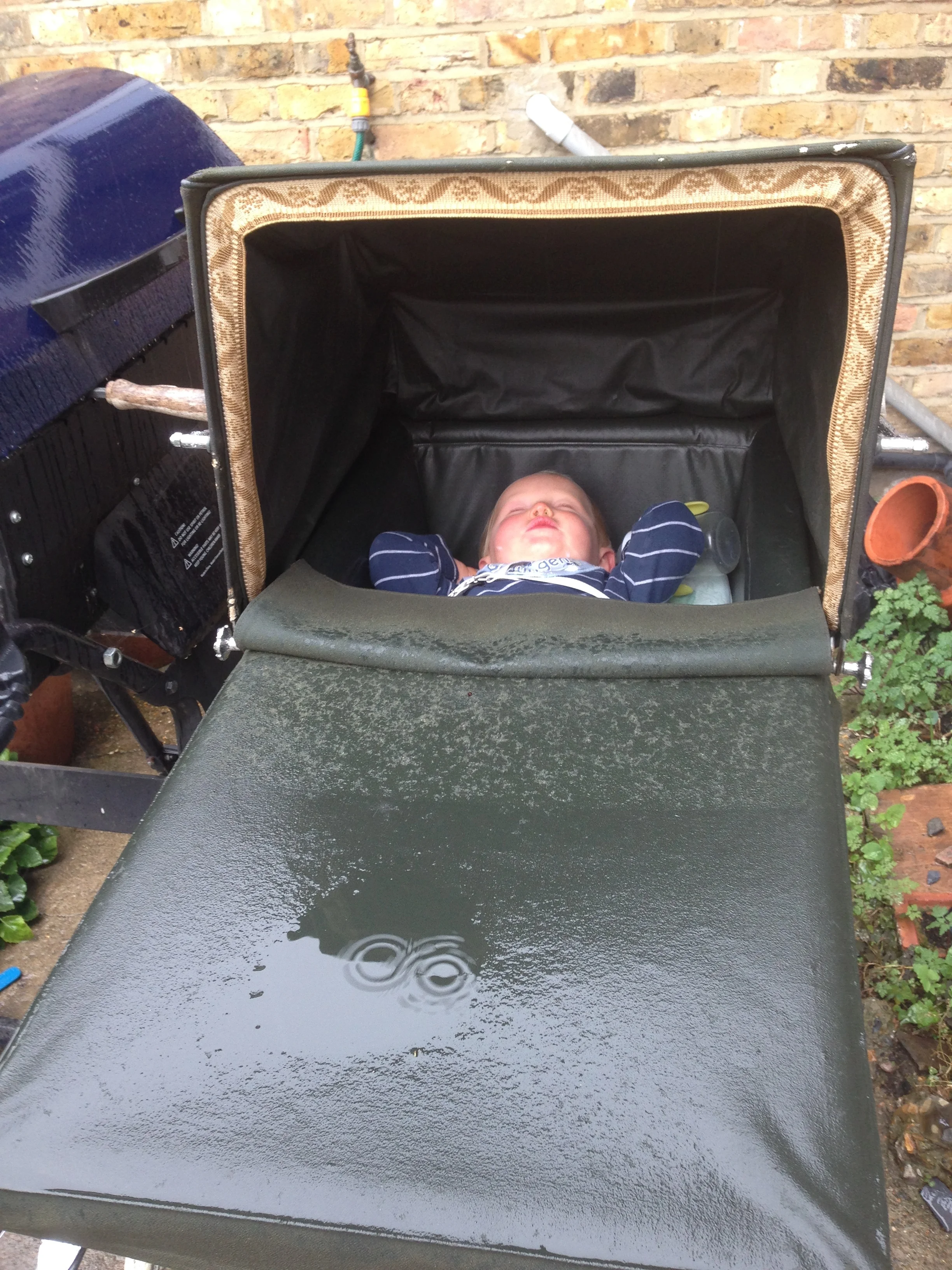
This is Bink’s nephew.

As you can see, being half-Norwegian he’s a tough little chap. Here he is having a spot of shut-eye in the English weather after rampaging and pillaging and conquering a few hundred Angles and Saxons yesterday morning. His favourite condition for a bit of time-out in his pram is under a lovely eight inches of snow, so he sometimes has to nip back over the sea for the more no-nonsense clime of his ancestors.

(He also has a robust Viking appetite. His preference is for 99%-beef-sausages, rare ribeye steak barely-cooked on the beach, haggis, black pudding, that sort of thing. We haven’t yet offered him raw reindeer bones to chew but no doubt he’ll soon catch his own.)

Shaun and I are in South London with Serena and her family, and Alex, for Shaun’s birthday weekend. Bink couldn’t come. She can’t cope with all the stress of moving, just for a couple of days. She can’t really cope with the loneliness of being left behind, either. When one of your children has an acute but brief illness, you can put everything on hold to attend to her needs.

If you continue this policy for twenty years you can destroy everyone in the family. And not help the patient anyway.

The Christmas before last, Bink’s sister gave her a very special present: a photograph of her own ultra-sound scan.

Children are the love of Bink’s life. When she came out of the Florence Nightingale Unit, she said her love of children was the only aspect of her personality still intact. All that was left, still truly herself and not destroyed by her illness.

Bink looked at her Christmas photograph from Serena for a few moments. Her younger sister had already assimilated the information and burst into tearful shrieks of joy. The reaction we all expected of Bink.

Instead there was silence: just, nothing. Then a deep reddening of the face. Then she too burst into tears. But very different from her younger sister’s tears of happiness. Bink’s tears were pitiful, pitiful, dreadful sobs of sorrow and grief and loss. 

The (unworthy, she knew) thought which flashed through her mind like a knife was, Oh, why couldn’t they have waited? Why couldn’t Serena have waited till I was well?

Her dream had always been of all of them having babies together. Of the cousins growing up best friends, as the siblings have been.

Yet another landmark which Bink’s terrible illness has stolen from her. From all of us.

And much as she adores her nephew and wants to spend time with him, she can’t manage a weekend away from home to see him.

But this is Sunday and Sunday is a day for good news and there is: very good news.

Bink has decided, now, a date for going into the Priory. She always wanted to come with us on our family holiday to Scotland for her younger sister’s half term at the end of October. After that she will start inpatient treatment, by 2nd of November.

When she was in the Bethlem Hospital, years ago, her therapist hit on a clever way of motivating her to overcome her OCD.

“What would you like to do more than anything else in the world?”

“Take my baby sister swimming,” Bink said.

Every new thing she managed to touch, every ritual she overcame, helped bring her nearer to that goal.

So it will be this time, in the Priory. Every new victory, every tiny battle won, will bring Bink closer, not just to her nephew, but perhaps even to giving him a cousin one day.

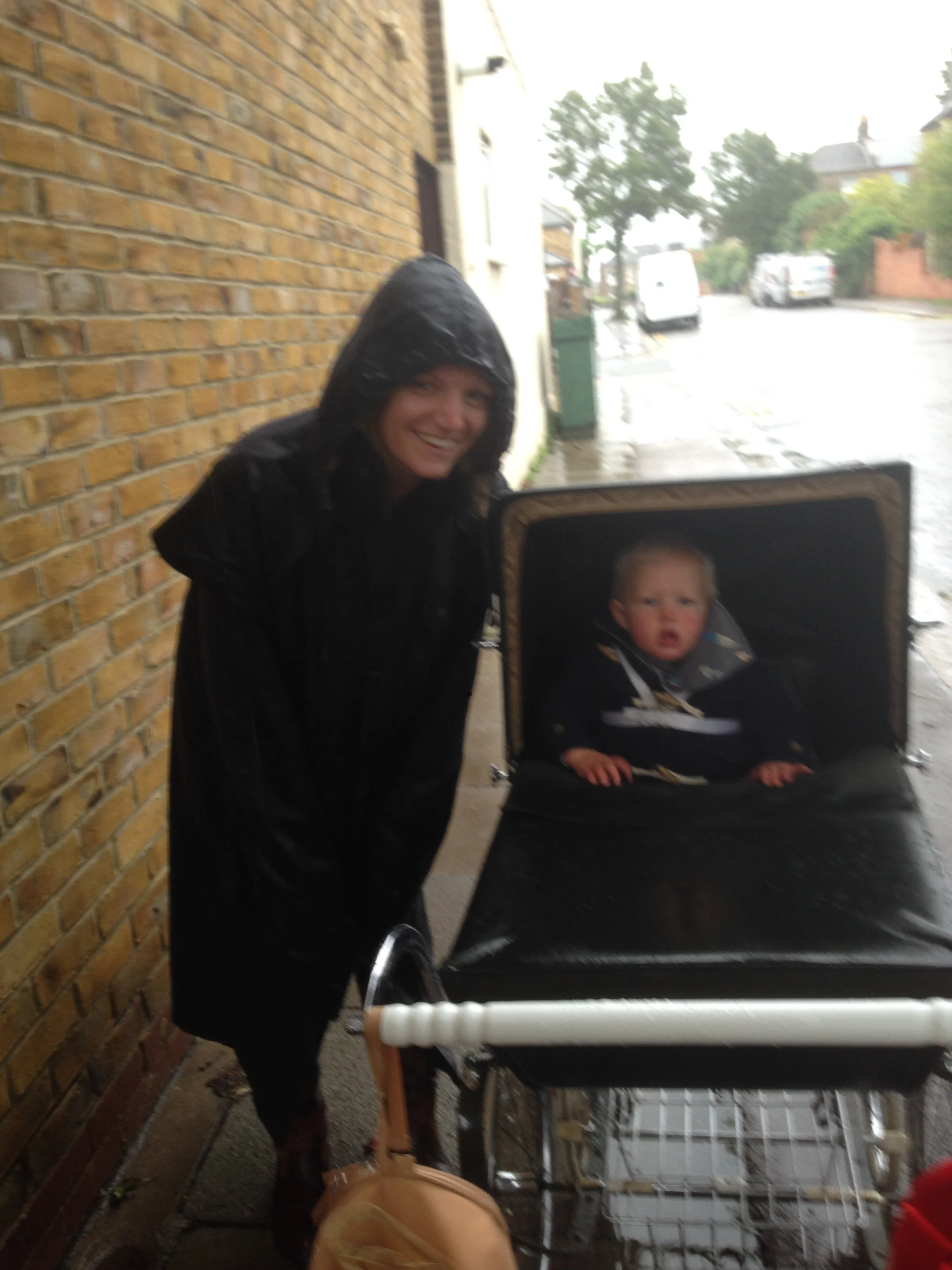
(PS And here he is this morning going to church. It is a twenty minute walk: we were half way there when a complete stranger stopped his car, opened his boot and gave us the biggest umbrella I’ve ever seen not on a stand. All the world loves a baby…)

IMG_2673.JPG
September 23, 2018 /Anne Atkins
Priory, hope, OCD
Comment

Anger

September 21, 2018 by Anne Atkins

Late January 2002

Bink was home again.

Except she wasn’t.

This wasn’t the Bink we knew. She went into the Florence Nightingale Unit with OCD. She came out unrecognisable. Feral. Insane.

For one thing, she was now on highly addictive medication. That this was doing her no good was evidenced by the fact that she was so very, very much more ill than she’d gone in. I’ve always estimated, by a factor of about ten.

For another, she was now understandably terrified of treatment. Even if we could find something appropriate for her condition, she didn’t want to have anything to do with hospitals or doctors ever again.

Thirdly she had now dropped – or rather been forceably yanked – out of school. She had no structure, nothing to do, and no reason to get out of bed any more.

“She must have an activity,” Dr Ratched had said. “A job in a shop, or something.” Three months earlier Bink had been half a term into A-level maths, further maths, physics and English at one of the most academically rigorous schools in the country. Was her education now over? Could she have no higher ambition than this?

It soon transpired that getting out of bed before noon was an ambition considerably higher than she could now achieve.

And her school didn’t want her back, after what the Unit had done to her.

More pressing than any of this, she was angry. Very angry indeed. Young as she was, she knew Robin had treated her appallingly. She wanted an explanation.

Robin operated from (and perhaps owned) a smart clinic in Sloane Square. 

Shaun had given Bink a hat of his, presumably for the winter. Bink has always been petite: five foot three, seven stone. Since the Unit, she wore large clothes. I see her still, diminutive figure, large man’s coat, jogging trousers, all topped with the black beanie she now wore all the time, setting off with Binkish determination from our Vicarage in Parson’s Green, headed for Sloane Square. We tried to stop her a number of times. But, unlike the Florence Nightingale, we didn’t lock her in.

The crunch came during a working breakfast for a preaching group of fellow clergy. Earnest muscular Christians, good friends, getting to grips with the Book of Romans or whatever, over bacon and eggs at our large Vicarage kitchen table.

I don’t know whether you’ve ever attended, or indeed run, a smart counselling-cum-therapy surgery in Sloane Square. Even if you haven’t, you can probably imagine that one of the items you might not put at the top of your wish-list-business-plan, as a ploy for enhancing custom, would be an obsessive fruitcake, dressed like a tramp, camping out on your smart Sloane Square steps, day in day out and all day long, frightening the horses. And all the other patients going in and out.

Whether or not it was topped by a black beanie hat. It probably wasn’t the deciding factor, to be honest, but I don’t think the beanie helped.

Now it was Robin on the line, interrupting the working breakfast. I usually answer the telephone in our house, but for some reason Shaun had taken the call.

After ten minutes, he gave me a summary.

Robin was advising sectioning.

Every so often, in telling this tale, I have to break off to deal with my own anger. I had thought it all long gone, swallowed up in sorrow. 

Sectioning is, obviously, an extremely grave infringement of anyone’s freedom: essentially, putting an innocent person behind bars, without trial, to prevent loss of life or serious harm. The one and only criterion, as I understand it, being threat to one’s own or someone else’s safety.

Never have I heard, read or seen anywhere discussed in the press the following additional criteria: that someone is threatening the reputation of your smart counselling business in Sloane Square; that you feel a bit freaked out; that you don’t like her sitting on your doorstep.

It also stands to reason sectioning is likely to have far-reaching implications: not just the immediate loss of freedom, but loss of possible future freedoms such as callings to the Church or the Armed Forces... not to mention working with children, the one consistent ambition Bink has had.

“Over. My. Dead. Body.”

I may have thought, but didn’t say, go to the frigging cops and get a harassment order, like a grown up.

“I’ll take that as a no, then, shall I?” Shaun asked tentatively.

The really frightening thing is how easy it could have been. If I hadn’t resisted, Robin could have picked up the telephone to Dr Ratched and Bink could have been banged up before anyone had even had time to think, “Human Rights.” Given the damage done to her by three months’ supposedly voluntary incarceration, I don’t even want to imagine what that might have done to the rest of her life.

Bink wasn’t then and never has been sectioned. Presumably eventually Robin had to man up.

Though Bink still believes, all these years later, that he should be prosecuted, sued or at the very least reported to the apppropriate regulatory body for what he did to her.

sebastian-pociecha-618090-unsplash.jpg

Perhaps now is the time to do it.

September 21, 2018 /Anne Atkins
Florence Nightingale Hospital, Sectioning, Sertraline, Priory, Mental illness, Stalking, Harassment, OCD
Comment
tennis-1644616_1920.jpg

Battling for Bink's soul

September 20, 2018 by Anne Atkins

Late January 2002, Thursday morning.

Everything we had been praying for, for three months, lost in one idiotic slip-up: letting Bink see Dr Ratched without us. We had no idea how she had persuaded her to go back into the Florence Nightingale Unit (then: we discovered later) but whatever it was, it was damned effective.

Bink looked utterly crushed.

“Your mother will go home and get your things,” Dr Ratched said sweetly, “while you go back to the ward. Now,” she added with an undertone of firmness.

“No,” I smiled helpfully. (But, I like to think, with just a soupçon of slightly impressive steel.) “I won’t know what she’ll need. You come back with us Bink, and we’ll pack together.”

I didn’t for a moment believe this oh-so-obvious tug-o’-war could work.

“Ok,” Bink said, and got up to leave with us.

Phew. Fifteen all.

A long match still ahead of us.

As soon as we got home Bink asked if she should pack.

“No hurry,” I said brightly. “Let’s have lunch first.”

I nipped upstairs to ring a few friends and ask them to pray.

And then a Neuro-Developmental Consultant, David Mulhall, who had treated Alexander. Alex‘s schooling was blighted by repeated and relentless requirements to perform tasks which, with his Asperger’s syndrome, he was completely incapable of. Particularly if they involved time, which Alex doesn’t really relate to. I’m still not sure what effect David’s numerous and tedious exercises had, morning and evening every day for three and a half years. Time seems to have remained a bit of a stranger, to be honest. But Alex credited David with enabling him to relate to neurotypicals, at least. (Being Alex, the exciting breakthrough came when he realised, face shining, that he could communicate with the horse he’d just been allocated for a week’s family trekking in Donegal. Perhaps it was an Aspergic horse and they were on the same wavelength. Which is kind of cool as well as significant, given that he now works in the Equities department of his firm.)

David’s treatment was costly (for a clergy family) and time-consuming. It might not help. But it was harmless. If he treated Bink, the worst he would do would be nothing.

Very much unlike the Florence Nightingale Unit, then.

He offered to see her that afternoon.

“Come on!” I said, with irritating cheeriness. “Let’s see if David can help.”

The thing about OCD is that if I’d asked Bink to go to an appointment tomorrow or next week, it could have taken her three months to get ready. If something is immediate, there’s no time for any of the rituals so you just shrug and do it. Sometimes.

He assessed her and said he might be able to help. In a flowering of kindest generosity, he offered to treat her for nothing. (And did, for the next two years.)

“Do I have to tell you how I feel?” she asked, obviously frightened.

“Absolutely not. You don’t need to tell me anything. I’ll just give you some exercises.”

“You don’t need to know stuff about my childhood? Or my emotions?”

“Not in the slightest. I wouldn’t want to.”

She could scarcely credit this. “Do I have to believe in the treatment?”

“Not at all. My exercises work whether you believe in them or not.”

Her relief was heartbreaking. What had they done to her in there? 

As soon as we got home, I suggested tea.

“Don’t I have to pack and go?”

By supreme good fortune, a friend – of whom Bink was extremely fond and with whom she had played chess every week after church, in happier times – had just rung to say he was nearby. I seized my chance.

“Nick’s coming for supper,” I said. “Roast chicken, your favourite. Why not leave it till tomorrow?”

Fifteen thirty.

I hardly dared breathe.

The next day the spell has loosened sufficiently for Bink to tell me how Dr Ratched had persuaded her.

“She’s promised I’ll see Robin.” My heart sank. We couldn’t compete with this.

In case you missed this, Robin was the therapist who had bombarded Bink with inappropriate verbal and physical affection until, understandably, he became the most important influence in her life. Both he and the Unit had promised he would continue to see her in there, but after the first visit the Unit told him it would be professionally unethical for him to continue treating her while she was their patient. Probably the only sensible thing they ever did.

How the sands of morality had shifted so it could now be either professional or ethical to promise he would see her, as bait to lure her back in, will forever remain more inscrutable than the Bermuda Triangle.

And what if Robin himself hadn’t wanted to play ball? Daft question. For one thing, he was too wet (and presumably too terrified of his previous misconduct) to object. For another, they would simply do what they did first time around. You don’t need to keep promises to loony people, silly. Any more than promises to... I don’t know... spiders or children. And, you know, staff.

Perhaps Bink bore this in mind when she made a decision I never would have thought possible.

“I’ve realised,” she said later that day. “I don’t really want to see Robin that much.”

Shaun has a superb tactic – perhaps many men have – of simply ignoring someone or something unworthy of his attention. I answer my telephone to every cold caller. I explain in meticulously courteous detail why I believe they might be mistaken in thinking I’ve had an accident which wasn’t my fault, or am owed a life-changing fortune in mis-sold PPI. At some stage during the conversation, usually when I’m mid-sentence, my cold caller hangs up without so much as a goodbye or thank you. I’ve decided to stop feeling personally hurt by this.

The trouble is, such appalling behaviour isn’t the fault of the next cold caller, is it?

For once in my life, just once, I managed to employ Shaun’s approach. (Unlike each new cold caller who is an individual in his or her own right, Dr Ratched had form.)

She had been expecting Bink back on the ward since Thursday lunchtime. Heroically, I resisted the impulse to pick up the telephone any number of times all Thursday afternoon, to give her an über-polite update. I even managed not to ring her the next day too.

Last thing on Friday, she rang us. When would Bink would be arriving? Best before the weekend; the nurses would have her room ready by now.

“She won’t,” I said. No explanation. No excuses. No chit-chat. Then I hung up.

(After saying goodbye, of course. And hope you have a nice weekend. And… um… life.)

Shaun should have been proud of me.

I’d like to say, game, set and match. We had won that tournament, at least. Bink never went back into the Florence Nightingale Unit, or saw Dr Ratched again.

But alas: seventeen and a half years on and we are still whacking vicious balls over the net from the effects of those dreadful three months.

Which is why it is now down to the Priory to help Bink win the Grand Slam.

September 20, 2018 /Anne Atkins
Florence Nightingale Hospital, Priory., OCD, Mental illness, David Mulhall, Neuro-developmental consultant
Comment
girl-3-1440414.jpg

Outwitted

September 19, 2018 by Anne Atkins

Late January 2002, Monday morning.

After three long months. Three months in which I had lain awake sick with worry every night, aching to bring her home. Three months of dreading, and fearing, and being impotent to prevent, the damage the hospital was doing to her. Three months of hopeless and helpless hell.

Bink on the telephone.

“This place is awful,” she said. “I can’t stand any more. Will you come and get me?”

I had to write my Thought for the Day script for the next morning – something I find almost impossibly difficult – before anything else or my day could slip out of control down the plughole and I’d still have nothing to say by midnight. My producer and I had agreed the topic. We had discussed the line I might take. Now to the writing, which can easily go skidding off in directions you really don’t want.

“Of course! Let me just draft this script. I should be able to set off in about an hour.”

“Ok,” she said, and hung up.

Eh? What did I just say?? Write a script! What was I thinking? I must be more mad than she was...

I rang my producer (and very dear friend) Christine.

“Go!” she said. “For goodness’ sake, go! Go and get your daughter!”

There’s a phrase I’ve heard Thought producers use occasionally, to instil a sense of proportion. You know: when your mother’s just been rushed into hospital with a massive stroke and you think it would be really irresponsible to ask if you might swop your slot; if you’re tempted to stay at your desk finishing your script when your house has caught fire. That sort of thing.

“It’s only radio!” Christine reminded me.

When I reached the Florence Nightingale there were very few people around. Bink was waiting for me, all ready: no packing needed. A concerned nurse fluttered, anxiously, saying we’d better wait for Dr Ratched. The psychiatrist would need to discharge her: she would be doing her rounds soon, she was sure.

I know what that means in hospital-speak: half a day at least. Nonetheless I wasn’t taking any chances. I couldn’t get Bink out of that building fast enough.

Dr Ratched wanted to see us. Could we attend, with Bink, on Thursday morning so she could discharge her properly? We’re conditioned, aren’t we? Less now than a couple of generations ago perhaps, but when someone with a hospital badge and letters after her name says jump! you find you’ve done it before you’ve had time to work out that you were on the edge of a cliff.

Thursday morning, and we arrived a bare five minutes before our 11 o’clock appointment.

“You go in,” Shaun said. “I’ll park.”

By the time he found me in the waiting room, Bink was gone.

“Dr Ratched wanted to talk to her on her own first,” I explained. “She was called up without me.”

“You should never have allowed that,” he said ominously.

“Excuse me,” I went straight to the reception desk. “All three of us were invited for this appointment. When will we join our daughter?”

“You’ll be called.”

Five minutes later, “I’m sorry to disturb you again, but we’re wondering when we’ll be shown upstairs.”

“She’ll call when she’s ready for you.”

Another ten minutes. “My husband has an appointment and we really can’t stay any longer,” I insisted with fierce energy. “We need to go up now.” No need to add that Shaun would cancel a dozen appointments for his daughter if he needed to.

When Bink had left the waiting room half an hour earlier, she walked upstairs with a spring in her step, her head held high and her cheeks rosy. By the time we were shown into Dr Ratched’s consulting room she was curled in an armchair, foetal, grey and mute. She looked dreadful.

The psychiatrist welcomed us with a beaming smile.

“Good news,” she said. “Bink has agreed to come back in.”

September 19, 2018 /Anne Atkins
Florence Nightingale Hospital, Priory, OCD
Comment
angel-1623316_1920.jpg

Gone again.

September 18, 2018 by Anne Atkins

End of 2001

We never discovered how Bink got the injury to her face. The charge against Shaun was quietly dropped.

I didn’t care. 

All I cared about was Bink’s state of mind, or lack of. What we had witnessed was terrifying, far beyond anything we could deal with. This was why we had taken her back to the Florence Nightingale, despite all the damage I knew they’d been doing to her. She had been nothing like that when we’d first taken her in, two months earlier. Yes, she’d had OCD: a very significant difficulty, making her desperately unhappy. But she hadn’t been, like, mad.

If she was that demented... I don’t think we could imagine a future at all.

The word Shaun and I asked of each other, not even knowing what it meant, was, “Schizophrenia?”

My brother is professor of nano-materials. He knew how to use the internet long before we did. A day or two after he and his family returned home to Oxford after Christmas, we received some pages of print-out.

Sertraline.

The drug Dr Ratched had put Bink on, very much against our wishes and hers. Which had “no negative side-effects” and which you could stop “at a moment’s notice, without any issues of withdrawal at all.”

And here were all the horrendous symptoms of coming off it suddenly, described on the internet, for anyone (who know how to use the internet) to read. And Dr Ratched had said there were none.

Was she ignorant or mendacious? Which would be worse?

Bink must have stopped taking her unwanted medication as soon as she got home, acting (sensibly) on the information she’d been given: that she mustn’t combine it with alcohol; and that she could stop it whenever she wanted.

She wasn‘t mad at all. She was simply exhibiting the known symptoms of sudden withdrawal. Palpitations, extreme terror, hallucinations. It was exactly as I had feared: the pills had made her very much worse.

Did no one in the Unit have any compassion at all? Could they not have thought to allay our wretchedness, as my brother so kindly had? We had been worried out of our own minds.

And of course, now we knew this, we realised with sinking dismay that we needn’t have taken her back into the Unit at all. Just stayed with her, and calmed her, and held her while the effects of the drug wore off, however many days or ghastly weeks that might have taken.

2002 began dull and leaden. Bink back in. Back on medication. Back incarcerated and beyond our reach.

We could do nothing. Except pray. Which we must have been doing almost incessantly, even though my confidence in prayer had been pretty effectively demolished when all our church prayed for Alexander a few years earlier. So it wasn’t because I had any faith in prayer left that I’d gone on praying.

Just, there was nothing else we could do.

Day after day, week after week, no change, no hope, no access. No communication at all.

Unless Bink herself specifically requested it. And she wasn’t talking to me.

It was a Monday morning in late January when I got the call.

I was writing a script for Thought for the Day, for Radio 4 the next morning. Racking my brains, as I always do, for something interesting, about an item in that day’s news, with a faith perspective, which hasn’t been said many times before. Bit of a bum brief, really.

Staring out of my attic study window at our neighbour’s roof in Parson’s Green. No inspiration there either.

When the telephone rings it breaks my attention, but it’s welcome because I’m stuck anyway.

“Hello,” said a familiar voice.

Wow. “Hello, Bink!”

September 18, 2018 /Anne Atkins
Florence Nightingale Hospital, Priory, OCD, Mental illness, Police, Sertraline
Comment
IMG_2629.JPG

Togetherness

September 16, 2018 by Anne Atkins

Sunday

I decided, when I started this blog, that out of courtesy to your being willing to walk with me, I would post every day so you’d know where we are.

And on Sundays we would have a break from the painful past, and dwell on some positive aspect of the present.

For today’s post, I was slightly stumped. 

Not because life isn’t good. It is. Thank you. Particularly this weekend because Alex is home, which always makes for a lot of laughs. Almost as many laughs as when Ben is home. Which is always. On account of, he lives at home. Which means we need all the laughs we can get.

Anyways.

Something I’ve learnt (pretty painfully) through the last twenty years and my mother seems to have known all her life, is that God can indeed bring good out of apparent (and indeed very real) bad. You just have to learn to recognise, and usually wait, for it.

Over the last couple of days, two of our three daughters have reacted, arguably negatively, to this blog. (Actually, three. Rose said, “I could walk to the station alone long before I was ten!” “I’ll change it then,” I promised immediately: that’s the thing about online publishing. “Naa,” Rose said. “Don’t bother.” As if my writing were the most unimportant thing in the world. Which, to my family, it is...)

I should perhaps explain a principle we drew up very early in this parenting business. I was brought up in a head master’s house, and once (and once only: most of the time I loved it) felt so resentful of our home’s being used for school business that I hid, under the sofa cushions, the coat of the piano teacher who had been giving a lesson in our drawing room. (And never confessed... until now. And overheard my parents saying the cleaner must have done it in a moment of incomprehensible absent-mindedness.) I determined that my children would never experience the same, so we established when we moved into a Vicarage that a veto of one, no matter how young that one was, would always be enough.

So if anyone in my family, at any time in the now or future, expresses this wish, my blog will cease immediately and disappear from view.

On Friday afternoon, I tried to show Bink a kind and very interesting comment from a reader... and it quickly transpired she was in a vile mood. (Bink. Not the reader. As far as I know.)

The reason followed soon after. My blog. All the things I’ve remembered differently.

“Bink, tell me!” I pleaded. “The last thing I want is inaccuracy. The truth is always more interesting.”

“How can you say that Daniel,” (in the Florence Nightingale Unit) “wasn’t abused? Her father made her watch porn when she was little.” (As a little boy, that is.) “And she was a girl long before she came in, too.”

“I’m sorry. I didn’t know. Please tell me and I’ll change anything you say.”

“It’s not your fault,” she said, after establishing this would take too long. “I said you could write it. But I also said I didn’t want to have anything to do with it, and this is why.” Maybe one day, she’s promised, she’ll read and correct everything.

Yesterday I spoke to Serena. “You sound low.”

“Perhaps I should stop reading your blog,” she admitted.

“Perhaps I should stop writing it?”

“No!” Serena was emphatic. “People need to know. There are far too many others suffering...”

“They don’t need to know at our expense,” I countered. “Our first duty – in this instance – is to ourselves.”

She was adamant, like Bink, that I shouldn’t stop the story on her account.

I have known others, as ill as Bink, who don’t acknowledge they are ill at all. How they will ever get well is a mystery... perhaps even to God Himself. Whereas Bink is extremely open. She has no truck with the taboo around being mental. None of us has.

This is a huge blessing, to her and all of us. As well as a great weapon in the armoury of health.

So yes, life – as Alex, Ben, Bink and I sat round the fire-pit till midnight last night, welcoming in the autumn – is very good indeed. Thank you.

September 16, 2018 /Anne Atkins
Mental illness, OCD, Priory, Family
Comment
  • Newer
  • Older

Powered by Squarespace