Anne Atkins

  • Home
  • Bink Bonkers
  • Non-Fiction
  • Novels
  • Journalism
  • Speaking
  • Broadcasting
  • Biography
  • An Elegant Solution
  • Thoughts for the Day
  • Anthem for Mary and David Briggs
  • Love Strong as Death
  • Contact

Next step...

October 28, 2018 by Anne Atkins

Sunday

“We had no idea,” a number of people reading this blog have told me.

“I’ve been such a rubbish friend,” said one, feelingly, a couple of days ago. (This is absolutely not true, by the way: she has been one of the kindest and most supportive people in our lives. But she obviously feels she didn’t know enough.) “Even though you told us from the start that Bink was ill...”

So should every family affected by madness be writing about it...?

Part of the trouble, of course, is that most mad people are not able to articulate their suffering themselves. They may be living on the streets, or in prison. Or simply in isolation in a bedroom: I know of at least one such.

When journalist Frank Gardner (shot six times in a war zone, and disabled) was left abandoned on a ’plane, he was able to tell the rest of us how wheelchair-users are treated.

Who does this on behalf of the loonies?

And does this go some way to explaining why mental health provision is so much worst than dire?

Serena has said to me a number of times, “You’ve barely begun to convey how awful it was. When Bink came out of the [Florence Nightingale] Unit, for instance. If readers don’t experience the depths, they won’t feel the elation now she is receiving treatment at last.”

Must try harder...

Be that as it may, today is a day for good news.

Bink rang yesterday. She is about to start on the Priory’s bootcamp Addiction Treatment Programme. 28 days, no contact at all with the outside world for the first week and not much after that. Full-on, 7.45 in the morning till 9.30 at night. Visitors only on Sunday afternoons, and none the first weekend. 

And Bink thinks she will be far too busy for visitors on Sundays anyway, catching up with her washing.

It is a while since she had much acquaintance with life before midday. Let alone experienced anything one could describe as busy. It could prove an interesting relationship.

“Are you excited?” I asked. Nobody is expecting an easy ride.

“I am, actually.”

This picture is of the bubbles Rose blew in the park, when we visited Bink last Sunday.

Is it too much to hope that one day, Bink might become the Frank Gardner of the world of madness?

* * * * *

PS Ha ha ha ha ha. This is the first time I’ve added to a post written earlier in the day, but I can’t resist. Bink has just rung again.

“Please can you do me a favour?”

“Of course, Bink.”

“What will you be doing at ten to nine tomorrow morning?”

“Probably writing this blog. I post every day by ten.”

“Could you get me up, please?” From Bedford. Fifty miles away. All I have in my armoury is Alexander Graham Bell’s invention. “By Thursday I have to be in breakfast by a quarter to eight, so I’m trying to get up half an hour earlier each day.”

“Ok…”

She is talking to me from a top-of-the-range, state-of-the-art psychiatric hospital.

“And nobody here can get me out of bed.”

October 28, 2018 /Anne Atkins
Addiction Treatment Programme, Priory, Mental health treatment
Comment
youth-570881_1920.jpg

Freedom

October 19, 2018 by Anne Atkins

August 2004 

Every summer, my parents held open house for all their descendants at their home-from-home on the North Norfolk coast. Bink loved these holidays: sea; sand; stunning sunsets.

Most of all, cousins.

The summer of 2004, aged 18, she was looking forward to it as much as ever. As often before, Shaun and I were staying in London to work, and joining our offspring later.

I watched her, day after painful day, unable to pack or wash or even dress to go. I tried all I could think of: offering to launder her clothes; suggesting advice on what to take. Nothing could shift her out of the rut.

I knew how much she wanted to be there. It was pitiful. “What is stopping you?” I asked after a week or so.

“I can’t get anything ready.”

“Then take nothing,” I suggested.

“What... just go?”

“Why not?

“I can’t simply leave, like this!”

“I don’t see why not. Granny and Grandfather have most of what you need. It’s not an expensive town. A swimsuit only costs a few pounds; a toothbrush, less. And there’s a good library.”

“I’m not even dressed,” she objected. She was in the boxer shorts and tee shirt she had been wearing for many days. And nights.

“So?” I had a strong suspicion that if I suggested a pair of jogging trousers, it could take another week.

It was August.

“Here,” I said, and gave her enough money to cover her train fare. “Just go.”

Amazed, Bink took the cash and left: first the tube for Liverpool Street; then the train for Norwich; and finally the little pay-train to Sheringham. She was with my parents in a few hours, with nothing but the couple of garments she stood up in, and the socks and plimsolls she always wore.

She had a wonderful time. Of course she did.

And ever since, has taken wicked delight in telling people that her mother is so nuts, so unbelievably irresponsible, that she once made Bink leave the house and travel several hours by public transport, in nothing but her underwear.


Present day.

She rang late last night.

Very obviously, within seconds, more upbeat than I can remember. As last Sunday but more so. The word which comes to mind is engaged.

“So much to tell you,” she said, “for your blog. All the other patients...”

“Bink, I can’t write about other patients. Not without their permission.”

Which is a shame. The next twenty minutes, I told her, would make her fabulous first novel.

Eventually she reached an anecdote about a gruesome suicide attempt... and stopped just in time. All my family knows, unwelcome images can haunt me for years.

“Bink you sound so happy!”

“Well, I’ve been up since 11 am. Don’t laugh! I didn’t get to sleep till 4 and wouldn’t normally have got up at all, but my therapist got me out of bed.”

“Why couldn’t you sleep?”

“Erm... I had a couple of melt-downs the day before.”

“Yes, I was told you were found hiding, terrified, under the stairs and they hadn’t seen you like that before.”

“Yeah, well. I feel really bad, because there’s a patient trying to get her sleep sorted out and I was screaming so much she’s had to abandon her regime. But she was really sweet about it, and said it wasn’t my fault.”

From something she said to Shaun, we wonder if perhaps Bink measures high on the scale of ill, even in a hospital of ill people... 

“Anyway,” she continued in her babbling stream of enthusiasm, “I’ve been doing things all day. Like, useful things. For me. Except for an hour when I was listening to a really depressed patient.” I refrained from saying that a kindness to someone else can be very good for our own mental health. Bink has a track record of going into hospital and helping the others.

Another detail which has given me hope for the future.

“Just think,” I said, “how good you’ll feel when you’re well enough to work.

“You can be fulfilled and satisfied… every day!”

October 19, 2018 /Anne Atkins
OCD, Priory, Norfolk
Comment
woman-1852907_1920.jpg

Contagion

October 16, 2018 by Anne Atkins

Contagion

2003: OCD

When Bink first started at Mander Portman Woodward tutorial college (after losing her place at St Paul’s Girls’ School because of going into the Florence Nightingale Unit) she struggled to study at all.

In some ways, being unable to touch is a far greater disability than being unable to use other senses: the deaf can read, or paint; the blind listen to audiobooks, perhaps play a musical instrument or read with their fingers. But if you can’t touch anything…?

One of Bink’s A level subjects was English. In a reasonably well-booked household, almost all the syllabus is going to be on the shelves. But Bink couldn’t touch any of the books we had already.

We lived round the corner from a lovely shop in the Fulham Road called Nomad Books. There was nothing for it but to buy new copies of the Dickens and Austen and Shakespeare she was supposed to be studying. These new paperbacks waited patiently, in the brown paper bags Nomad provided, for Bink to garner courage to take them out.

A week or two later she asked if I could please get her new ones, as the copies she had were now “dirty.”

Why?

Because they had been sitting in her room.

Right.

It went against the grain to buy one more copy of Oliver Twist (or whatever it was) when we already had several knocking around the house. But to buy a completely new replica of one I’d just bought a few days earlier...

“Excuse me. Um. Ok. There is absolutely nothing wrong with this book, which I bought from you the other day. It hasn’t even been out of its bag. But would you mind very much, please, taking it back and swapping it for another one exactly the same?”

“I’m sorry?”

“Can I exchange it, please?”

“What’s wrong with this one?”

“Nothing.”

“But you want another the same?”

“I know it sounds ridiculous...” What do I mean, sounds? “...but you see, my daughter has very severe OCD...”

Roll on another week.

“I’m so sorry. You very kindly changed this book for me last week. For another copy of the same. Could you kindly do it again?”

It is a small shop and they were getting to know me quite well.

“Er... this copy of Emma, which you’ve changed a couple of times already...”

“I’m really sorry, but we don’t have any more copies of Emma in stock. It’s on this year’s A level syllabus, and they’ve all gone.”

“Oh dear.” Stumped. “Ok. Tell you what. Here’s my receipt, for this copy. Could I return it, please, and you give me the money back?”

Business with till. “Here you are.”

“Thank you. Could you please now put it back on the shelf? That’s right: the book I’ve just returned. It was quite new. Still in its bag, as you saw.”

“You want me to put it back on the shelf? Like this?”

“Please. Great. Now... you don’t happen to have a copy of Emma you could sell me, do you please? Oh look, there’s one right there on the shelf behind you. How fortunate: it seems to be your last copy. Could I buy it, please?”

I can understand why psychologist Professor Paul Salkovskis calls OCD a contagious illness. We were all barking mad by this time, the staff in Nomad as well as me.

I asked Bink why on earth she thought a book on the shelf in Nomad was cleaner than one which had sat in a paper bag in her bedroom for a few days. “For all you know,” I said, “someone’s been in, thumbed through it, picked his nose, continued thumbing through, and put it back on the shelf.”

“Of course,” she said. “But I can only control what comes within my orbit. Even I am not going to attempt to keep the whole world clean.”

Well, there’s that to be grateful for, I suppose.

Present Day

Bink rang at lunchtime today in some distress.

Her therapist in the Priory thought she was ready to start on the Addiction Treatment Programme, and she was terrified.

Of what?

  • That she might be thrown out of the Priory if she couldn’t do what they wanted

  • That she wouldn’t have time to wash, and would become a lot more ill

“Bink, sweetheart, you need to talk to them.”

“I’m too frightened.”

It was quickly resolved, of course it was. If she wasn’t ready yet, that was fine. She rang back later, perfectly happy, having been reassured by her therapist. (And encouraged another time just to say so…)

What I find fascinating – and, yes, pitiful, given the history – is what she most fears: her treatment being withdrawn.

October 16, 2018 /Anne Atkins
Managing OCD, Priory, Living with OCD
Comment
trinity-college-1396215.jpg

Collateral

October 09, 2018 by Anne Atkins

The winter of 2002-3

By the end of 2002, Bink had been out of the Florence Nightingale Unit for nearly a year. She was far from recovered from what it did to her. Arguably, she is not yet. That will be down to the Priory.

She had been out of school for all that time and unable to resume. The Principal of MPW, where she had won a full-fees scholarship, had talked of having to withdraw it for non-attendance.

I pleaded with him to give her another chance in the New Year.

Nonetheless, Christmas 2002 was a considerable improvement on the previous. 

For the first time, we didn’t invite anyone to spend the day with us. Not nephews or nieces, cousins or siblings; not parishioners, friends or neighbours. Not even my adored parents. Afterwards Shaun realised that for the first time (presumably, since marriage) he had tasted hot turkey: usually, by the time he had carved and served two dozen plates of bird and stuffings, sausage and bacon, the first mouths had finished and were passing theirs up for more.

We treasured that Christmas for years. (So much that I’m not sure we have invited extended family since... You can get used to hot Christmas dinners.) Shaun poured the bubbly; we raised our glasses, just six of us round the table... and then he told the children our news. At the next Christmas – deo volente – there would be seven of us.

The next Atkins was due in midsummer.

Predictably, the excitement was explosive. And we didn’t have to share it with anyone.

A new sibling was our gift to the four we had, to lift us from the dragging desolation of Bink’s drear illness.

The day after our traditionally sociable and energetic Boxing Day, Serena received a letter from Trinity, Cambridge.

You can tell before you open it, can’t you? “Exceptionally strong field... very difficult decision... wishing you all the best,” only takes one sheet of paper and a slim envelope.

Accommodation, fees, details of the course, history of the college, all the bumf to prepare you for your three – or six, as a vet – years at Cambridge takes a thick A4 manilla.

I screamed and hugged and wept and wowed... and told Shaun that our eldest would never be out of work.

Then read the letter several times more, to be sure.

What a Christmas! 

January, Bink started attending MPW, sporadically.

And Serena and I accepted an invitation to stay with friends in Scotland.

I, to start my next novel after such an agonisingly long and enforced break. Serena, to pass her driving test and plan her glorious six months before Cambridge.

Every day we rode our friends’ horses through the forest with Serena’s Great Dane, Hamlet, at our heels. We learnt to drive – their horses; not just Serena behind the wheel. We built roaring fires with wood chopped from their land.

And I started my next novel... at last. It was set in Cambridge and opened with the Trinity College May Ball.

Days passed the wintery days.

After a week or so, I asked Serena how she was getting on applying for work in the Italian mountains. She seemed to have ploughed her way through a depressing pile of chic lits, lying in front of the fire.

A few days later I asked again.

“I can’t,” she confessed at last. “I just can’t. I can’t do anything.”

She had kept herself together so well, through the molten volcanic devastation that had become Bink’s hospitalisation and subsequent incapacity. She couldn’t let up while applying to read VetSci. She was still traumatised by the previous Boxing Day, 2001.

Perhaps still is.

She had had been driving on empty for so long. There was nothing left.

I pushed my novel aside and started researching chalet-hosting.

Oh well. Perhaps I would write the opening scene better once Serena was there.

The baby I was then carrying has just started GCSEs. Hamlet is buried under the dovecot and his replacement, Horatio, has just begun to slip on his back legs with age. Serena was married in Trinity five years ago and has her own little boy. Her graduation must be over ten.

My novel is only now coming out. Beginning of November. Two decades after my editor said I must produce a novel every year, to keep my career afloat.

My editor, long retired. My agent too.

trinity-college-1396215.jpg

It still opens with the Trinity College May Ball.

October 09, 2018 /Anne Atkins
Priory
Comment
IMG_2763.JPG

Indomitable Bink

October 07, 2018 by Anne Atkins

Sunday

We were in Professor Veale’s study a couple of evenings ago, Bink having invited me to attend her appointment.

“How much Lorazepam are you on now?”

“It’s supposed to be two and a half,” Bink told him. “It’s still hurrumhurrumhurrum...”

“Please can you speak up a little?”

“Hurrumhurrum...”

“Three milligrams a day?”

“Er… hurrum,” she conceded.

“Why is that then?”

“I was going to cut it down,” she assured him earnestly. “But I was too busy,” she gave me a sideways, Lady Diana look, “deciding whether or not to kill myself.”

Well, it’s a lot better than the dog ate my homework, isn’t it?

Professor Veale must think we’re all bonkers: I burst out laughing. Bink with me.

Quite rightly, he asked whether she is safe. (I don’t know whether he’d spotted the savage fresh cuts all over her right arm. The bandage was mostly hidden by her hoodie.)

“Yeah,” she said. “I’m safe.”

“So, why didn’t you kill yourself?”

“I’m afraid I couldn’t get it organised.”

As we walked to the car, she said, “It’s a bit pathetic, isn’t it? Being too incompetent to kill yourself.”

“On balance, Bink, I think it’s quite a good failure.”

Over supper I was laughing almost too much to convey the conversation to Shaun.

“But killing yourself is difficult,” Bink protested. “You do have to be organised.”

Ben came up into the kitchen from his den, one of his snakes wound round his neck. “I totally agree,” he said. “You’re right, Bink. It is difficult to kill yourself.”

He was on his way outside, no doubt to get a rat for his cuddly little pet’s supper. He puts these at the back of the range to thaw, particularly if I’m about to cook supper or we have paying guests. Occasionally he adds to the fun by forgetting them. Or blowing them up in the microwave.

“But the good news, Bink,” he didn’t halt his step as he comforted her in that patronising but soothing voice he has acquired since becoming a teacher to young girls, “is that I am here to help you...”

A reader has just kindly commented on an article in today’s telegraph:

I admire Bink hugely.

When she was, almost miraculously, offered private treatment earlier this year after so devastating and destructive half-a-lifetime’s wait for the NHS, I asked if I could blog about it in gratitude to the person who has made it possible. She said I can write anything I like as long as she doesn’t have to do anything. But then became drawn into reading it without really meaning to. It was clear that the history of her illness was distressing her, but she was adamant I should continue.

It was the same with the Telegraph article. There was no problem… until she had to give her permission.

“But I said I don’t want to be involved.”

Bink is very precise in everything she does.

“You don’t, Bink. You just have to say you’re happy for the article to go ahead.”

“I’m not happy.”

“Then I must cancel it!”

“Absolutely not. I don’t want to stop you writing.”

She and I eventually came up with wording acceptable to her: that she had given me permission. No more, no less.

My daughter, you will know by now, has an illness which has ruined her life.

And yet she retains her coruscating, self-deprecating humour. And the sharpest sense of other peoples’ autonomy. Not only do I admire that more than I can say.

Far more important, it gives me hope for her healing.

October 07, 2018 /Anne Atkins
Priory, Mental illness, OCD
2 Comments
punting-on-the-cam-1557278-1599x928.jpg

Samson, Rapunzel and Bink

September 30, 2018 by Anne Atkins

Sunday.

It is a discipline. Being cheerful. An act of the will, sometimes.

You know what it’s like when something has upset you long ago. An apparently innocent trigger can have a significance far beyond itself.

For a long time setting foot inside a church could produce in me the most absurd, disproportionate, debilitating weeping and panic attacks, sometimes lasting all day. Exposure – incidentally, the classic treatment for OCD – seems to have desensitised me enough that I was able to attend Serena’s baby’s baptism last spring without embarrassing anybody. And, far more important to Serena herself, enjoy it.

After Bink came out of the Florence Nightingale Unit, she shaved off all her hair. That is how I still see her: as a convict; as one who must do penance; as someone new-released from a concentration camp.

But it grew again, and when in 2012 Serena asked Bink to be her bridesmaid she also asked if she would mind, please, not cutting her hair. So that when she invited us to her degree ceremony the following summer, just before the wedding, I saw a stunning young women, all her life glittering before her and golden hair flowing down her back, step up to shake the Vice Chancellor by the hand... and with a shock of astonished joy realised it must be Bink.

In the dim and dismal dark autumn which followed, when we found her at dawn in a hospital in Staines after worrying for her life all the night long, her hair had been chopped off with kitchen scissors.

Eventually the years delivered her home again, battered and broken, and we began on the long process of trying to help her heal. Again. A couple of years ago I arranged a shampoo for her after she hadn’t be able to touch her hair for months, but she came home so humiliated by their kind and patient attempt to untangle it hour after hour that she used the kitchen scissors again.

And cut the heart out of me along with her lovely hair. For a while I believed I could not pray, or hope, or even care any more. But being a mother is not voluntary and nor is love.

A few nights ago she told me her mind was so broken, those years ago around the time of Serena’s wedding and her graduation, that she can’t see how even the Priory can mend it any more.

Then on Thursday evening I glanced through the kitchen window and saw her, her hair a quarter of an inch all over again. Just as when she was seventeen.

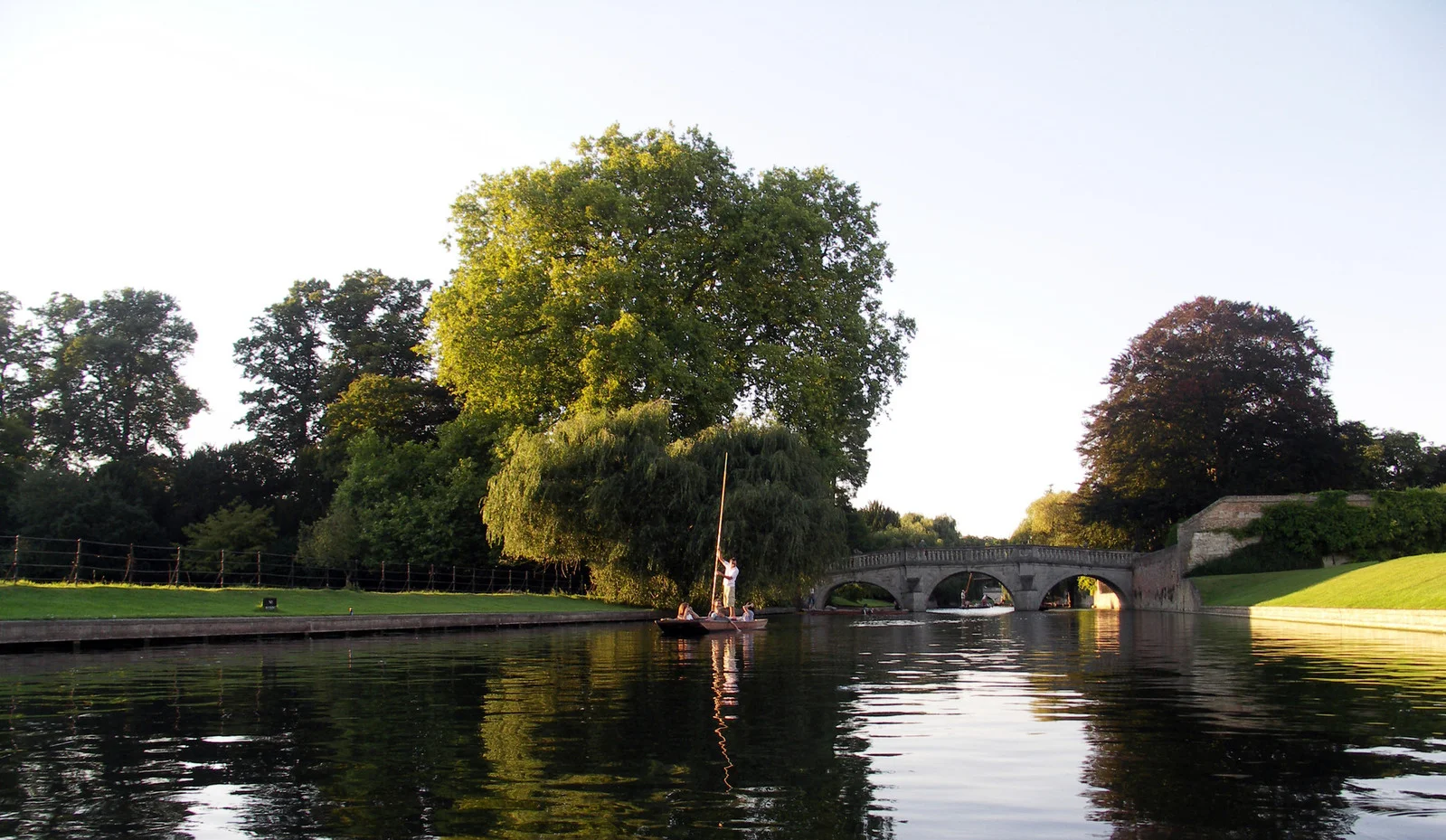
Yesterday we were in the city of my childhood, the city where Bink graduated and Serena married, and just as on the night before Serena’s wedding, the sun was slanting on the punt poles.

There are good memories as well as bad, and you can choose which to call on.

Hair grows. Minds mend. Bink has a lovely, pretty head and perhaps has shaved away some of her pain.

It is a discipline, being cheerful. And today is a fresh beginning. 

September 30, 2018 /Anne Atkins
Priory, Cambridge
Comment
computer-guy.jpg

Bink has a date! (I)

September 27, 2018 by Anne Atkins

2002

Bink was almost a prisoner in her own room.

(Respect for her dignity constrains me from spelling out exactly what that means. Use your imagination. Peek, for instance, into your daughter’s bedroom for the first time in some weeks, and realise with sickening and horrified pity that she hasn’t been able to use the amenities. She often couldn’t wash or clean her teeth for months, either. Our brilliant Bink was almost a caged animal.)

There were long periods – months on end; perhaps years – when she had to wear rubber gloves, even to eat. She couldn’t touch books, musical instruments, a radio; certainly not food or glasses to drink out of. I bought her audio books, but she couldn’t touch a CD player. And couldn’t concentrate anyway.

We had a lumbering computer at the very top of the house, on a little landing lined with bookshelves which we called the Reading Corner. One afternoon when the children were small I had painted the walls (those not covered with books) with rainbows and birds and happy, smiling clouds. It was a comfortable place to be.

(After we left the Vicarage and before Shaun’s post was even advertised, the Diocese slapped magnolia over every surface – C of E clergy aren’t paid enough to justify colours on the walls – and chopped down the Cedar of Lebanon I’d put in the front garden and the luscious vine I’d tended in the conservatory we built. I learnt all this at a sad time, when I was desperately missing our dear home, and mourned the new Vicarage children not being allowed to choose whether to keep our hopping library birds and dripping indoor grapes. The Diocese also pulled down and skipped the large above-ground pool we had spent our first summer building and all subsequent summers swimming in and sharing, which we had specially left spotlessly clean – with a new motor and filter – for the new Vicarage family. Having no house of our own and never having been able to buy a car, it was the most expensive item we’d ever owned.)

Bink spent a lot of time at the top of the house that year, on that family computer. Presumably wearing her marigolds. I had no idea what she was doing, but at least she was out of bed.

Because her school High Mistress had ruled against telling any of her classmates where she was when she went into the Florence Nightingale Unit, she had lost them all. She was now too ill to leave the house, and had no way of meeting new people. She had no occupation, not even reading. A computer was it, really. And although I didn’t realise this then, the only way she could talk to anyone outside her family.

One day she came and found me, smiled sheepishly, and told me she had a boyfriend. 

“Wow, Bink.” I said. “That’s great news! Tell me all about him.”

He was around twice her age, and had recently been discharged from the army. He also had several children. From different women. He wasn’t allowed contact with any of them, though. Probably because he’d put a bloke in hospital with GBH. Presumably the boyfriend of one of his exes.

And he had invited Bink to his place (several hours away) for the weekend.

And. Yes. She had accepted.

Her eyes shone with excitement and pleasure. Poor Bink! She had little enough of either left in her sad life.

Multiple choice good-parent-questionnaire. At this point, do you:

  1. Scream, “You must be out of your tiny little mind! What are you thinking of? Have you never heard about meeting serial rapists / killers / psychopaths via the internet? Don’t you realise you are about to be serially raped / killed / psychopathed!”

  2. Lock her up.

  3. Ring the police. Then lock her up.

  4. Breathe slowly, think fast, and say very carefully and kindly and as enthusiastically as you possibly can, “Bink, that’s really kind of him. How lovely. Shall we have a think about the best way to do this?”

All my girlfriends gave variants on the first three, at various levels of decibel above 100.

Did none of them have any heart? My daughter’s prospects, health, happiness, education, everything, lay in ruins at her feet. She had no friends. She had nothing. She had managed, in this terrible and lonely solitary confinement which is the worst punishment custody inflicts, to make contact with a fellow human being, and he had issued her with the first invitation she had received since the Florence Nightingale Unit ruined her life.

My friends were not going to be any help whatsoever. So I rang my kind, imaginative, compassionate and utterly brilliant mother.

And she said exactly what I’d thought.

“Invite him for the weekend.”

“Thank you. That’s exactly what I thought.”

“Obviously. What else can you do?”

“That’s what I thought too.”

So we did.

(And I rang the police. Just... you know... in case.)

September 27, 2018 /Anne Atkins
Mental illness, Mental health., OCD, Priory
2 Comments
write-839225_1920.jpg

Dear Diary

September 26, 2018 by Anne Atkins

Spring 2002

It is eleven o’clock in the morning. I have not done any work yet today. I haven’t done any work for days, months… years if you count books, my only real work, the only work I value; what with Alex’s unhappinesses, and now this. Others find their work disrupted when babies first come along. But that was easy. Easy to find the discipline, even with three in terry nappies, one at nursery school, no car, no help, no money.

I remember when Shaun was on a conference and I wasn’t well, and I had to pile all three of them onto a tricycle to get Serena to nursery school, and then dash back to get them occupied long enough to meet a deadline: one of my first writing commissions, for a magazine. The day before I’d been issued with notice to quit the house by the end of the week. With Shaun away. His first post, as Assistant Curate in North London, was due to end and he was looking for another, and his boss, our vicar, thought it was “businesslike” to evict us.

It was possible to cope with all, then. It didn’t sap the spirit in the way that this does.

Upstairs there is a terrible, dark and brooding presence. It is like a thunderstorm waking to break.

I have been out to Starbucks to buy hot chocolate and an almond croissant. There was a time when I would have thought, I can’t afford Starbucks; but I have run out of other ideas. Besides, so much money has been poured down the drain, it now transpires, over the last year and more, that it seems futile to baulk over a few more pounds. All the savings Granny gave her in her post office account, hundreds of pounds being preserved for some special treat or project, all bled away. All Serena’s too, lent secretly to her sick sister, our Iphigenia, to appease this awful god that is poisoning all our lives.

I understand now, about the changelings left by the hidden people. She is gone. The ray of laughter and music we once knew is long gone. It went into hospital and what came back eventually, when they were done, the husk that was spat out, was this, this other, this possessed thing, this thing bewitched by the powerful doctors with their hidden arts and powers. We thought she was escaping from hospital, I thought I had outwitted the doctor by stealing her back again. What I now realise is that it was already too late.

They took her by various strategies. A friend, a close and dear friend, saying we must let her go, because she will do it again and one day she will do it for real. She wouldn’t, I knew that. But they frighten me and bully me, and I don’t stand up to them. Why, when my own child was at stake, why didn’t I? Because they came in the guise of friends. And because they threatened suicide. I know how suicide is, how much worse than accident or murder, because it nearly happened to Alex. But do you really think, I say angrily now, do you really think suicide would have been worse than this? Death would be sweet, compared with this. Death would be easy: no more awful hoping that she might come back.

A few days after she came home, after what I thought was she had come home, I went into the room, the guest room, not her room, where she was not exactly sleeping but brooding, and found a snow storm. Every page, every Indian-paper-thin page, individually torn out of her bible, the bible she was given as a baby at her baptism, and the room was white. The bible that had tormented and taunted her with her illness and God’s deafness and his unheeded promises.

She must get up, the doctor had said, the witch doctor who had to let her go. She must get up, and out, and do something, do a job or something. I was outraged, that she could contemplate labour for this child, such a bright child, who had been snatched out of her education so prematurely by these wicked doctors. I would not have it. I will not send her to work. She will finish her studies, she will. Make sure she gets up every day, the doctor said, to work or attend school or anything. I smiled, happy to agree to anything, so that she should be free.

But how? How do you get something, so solid and heavy, up and out of bed? How do you insist? Do you scream, do you steal the bedclothes, do you drive her to tear every page out of her bible?

You go to Starbucks and buy her favourite treat and pray, or leave your friends to pray for you because you have no emotional or spiritual resources any more, because all you have left is the tiniest trickle in the bottom of the vast wide empty riverbed, so dry it doesn’t even catch the sunlight any more. You hope that hot chocolate will do it, because you simply can’t think of anything any more. You plead. You go up every few minutes and plead. Your favourite treat, downstairs in the kitchen.

Two hours later, I wrap the almond croissant, her favourite, their most expensive, in a paper napkin for some use, sometime… something. I don’t know what, but something. It cost too much to waste. I pour the now cold chocolate down the sink.

I still have not done any work. Not for a long, long time, nor a long long time to come.

dont-give-up-3403779_1920.jpg
September 26, 2018 /Anne Atkins
Priory, Mental illness, OCD, BPD, Florence Nightingale Hospital
3 Comments

Snowstorm

September 25, 2018 by Anne Atkins

February 2002

Our children were brought up as Christians.

Before someone asks, “Isn’t it better to let them decide for themselves?” let’s knock that naïve two-dimensional pseudo-liberal notion on the head once and for all.

  1. Of course our children must decide for themselves. We all have to take responsibility for our choices eventually, whatever beliefs we were brought up with.

  2. There is no such thing as a philosophically “neutral” upbringing any more than there is English spoken with “no accent”. If you bring your children up to “decide for themselves,” you are teaching them the overriding supremacy of Western relativism as surely as the Amish are teaching their children... whatever it is the Amish pass on to their children.

  3. If we ourselves have concluded that Christianity is – probably, on balance – the most credible interpretation of the facts available, we have a duty to pass this conclusion on to our children; just as we have a duty to teach them that the earth is round, or climate-warming is – probably, on balance – really happening, or any other article of faith which (after doing our research as thoroughly and honestly as we can) we believe holds the balance of probability. That’s what parents are for.

So that’s how we brought them up. (Got an issue with that? Get over it.)

Bink loved our Parson’s Green church. All our children did. She played her fiddle every week in the chamber orchestra, which eventually she ran. She lent a hand with the children in Sunday School, or handed round refreshments, or helped host the Harvest Lunch, or welcomed people into the Vicarage garden for coffee after the service. She took as full a part in the church as the rest of us did.

She also loved coming on the teenagers’ Christian holidays which we led every summer, eventually going on such holidays herself.

After one such, she came home bubbling over with a deep and thrilling personal experience of God. She was all for being re-baptised, and celebrating with the church and all her friends. To my shame and lasting regret, I told her that you can’t really be “re-baptised” any more than you can be “re-married” to the same person… though we would certainly celebrate with her.

In the years to come I wondered how I could have put such doctrinal exactitude above exuberant enthusiasm. Well, there we are. (Now I think about it, I wonder why I didn’t suggest confirmation, as she was the only one of our offspring not yet – and still not now – confirmed. Perhaps I did.)

And as I explained in an earlier post, Bink packed two books to take into the Florence Nightingale Unit. One, naturally and wittily (Bink being Bink), was One Flew Over the Cuckoo’s Nest. 

The other was her Bible.

Bink had been home for a few weeks. For some reason she had moved into our guest room. Presumably because her own room had become “contaminated.” She has frequently, since, needed to discard clothes or a room or even a house for this same reason.

Dr Ratched had insisted we must get her up in the mornings. This was a bit like saying, learn to fly. Two-year-olds, easy. Sixteen-year-olds? Just try it some time. Not with a normal teenager, who simply needs the stick of being sacked from school or work, or carrot of not having the bedclothes yanked off and a bucket of water thrown over whatever remains, in order to jump joyously from bed.

But a sixteen-year-old who is absolutely, adamantly, completely, hell-bent-determined on not getting up. Or is simply too depressed and defeated to be capable. It may not be completely impossible but believe me, you can spend several hours of every day, for over a year, on the attempt. You can see my t-shirt if you like.

Still fairly early on in this dismal experience I went upstairs to embark on the daily, fatuous, enervating and prolonged exercise of trying to extract Bink from Bink’s bed so Bink could have a life.

I walked into a cloud. The room was white. I found myself in one of those children’s executive toys you turn upside-down to make Big Ben swirl with the kind of Victorian Christmas the Victorians probably never experienced.

Every single India-paper page of Bink’s Bible had been torn out. Every page ripped up into tiny little pieces. Every piece hurled into the room. Every scrap had snowed down and whitened her room with tears of scripture verses.

Year after year after year she had begged God to take away her pain. Year after year after year her prayers had fallen on what certainly seems to us mere mortals to be very deaf divine ears indeed.

I know how she feels.

And she was sweet sixteen.

Wouldn’t you weep the pages of your Bible, which had drifted down such lofty and pretty snowflake promises throughout your childhood merely for them to fall into the fire of your adolescence and melt into a wet and dripping howl of nothing?

winter-260817_1920.jpg
September 25, 2018 /Anne Atkins
Bible, OCD, Priory, Mental illness, Florence Nightingale Hospital
Comment
glass-984457_1920.jpg

Picking up the pieces

September 24, 2018 by Anne Atkins

February 2002

It’s impressive how much damage you can do to a sixteen year old in a bare three months. Enough to sabotage the next sixteen years, at least. The Florence Nightingale Unit had torpedoed Bink’s schooling, her relationships and worst of all by a very long way, her precious and so unusually sparkling mind.

We faced a daunting battle to get back to where she had been, without even considering treatment for the OCD which had landed her there in the first place. (And she would never be able to resume the same A-level course: some things were lost for ever.)

If I’d had any idea how many long and painful years it would take... well, thank the kind Lord He doesn’t show us the future.

The obvious place to start was with the beastly little pills. The sudden withdrawal of which had made her so distressingly and disastrously demented on Boxing Night.

She was taking one a day. I’ve no idea what that is in shrink-speak: Bink would probably remember the dosage. A pill was about half the size of your average-sized squashed pea or Ecstasy tablet. No, of courses I don’t! Excuse me: I’m a vicar’s wife. (Actually, I’m not a vicar’s wife any more, strictly speaking. Perhaps I should start to live a little... Afternoon tea dances and membership of nudist colony, maybe?)

Bink’s trust in me must have been sufficiently restored, now she was home again, to have given me charge of her medication. It was in one of those blister pack do-dahs. So I took this into the scullery (we lived in a Victorian Vicarage, with all the proper rooms a proper house should have) and climbed up a step ladder brandishing a nail file.

Curious; but I distinctly remember balancing precariously up there. I deduce it was so that if anyone came in unexpectedly, I could hide what I was doing without looking the slightest suspicious...

I then took pill Number One out of the blister thingy and filed the edges carefully, so it was very slightly smaller but still much the same shape. Then I returned it to the blister pack and smoothed the foil meticulously over it. Number Two pill I filed a bit more, and returned in the same way.

By the time I got to pill Number Ten, it was so tiny it was barely visible. She was bound to notice, but so what? By the time she asked how her pills had shrunk so mysteriously in the wash I’d be able to point out that she was nearly off them anyway.

Then I hid the pack on top of a very high cupboard, so no one could come across these Russian dolls of Sertraline lined up in their little blister beds, each one a bit more roomy than the one before, and wonder whether I should be committed to the nuthouse instead of Bink.

Extraordinarily, this Cunning Plan worked. In ten days she was off the stuff, and said yes of course she’d noticed but hadn’t wanted to be on them in the first place.

Except that, sadly, it didn’t really. It only achieved the immediate goal.

Before she was on medication, Bink’s mind had been sharp, witty, extremely incisive and with an absolutely infallible memory; capable of recalling conversations verbatim, even years later. After she’d been on Sertraline for a month or two she’d become irrational, confused and apparently capable of unrecognisable fantasies and imaginings. Her mind seemed to have deteriorated from the clearest focus to an incomprehensible fog. (We went to see A Beautiful Mind around this time, and all my fears were vindicated by the numbing and stupefying effect of medication on the brilliant John Nash.)

Though the real damage was far deeper even than this.

Sometime after I weaned her off Sertraline so her battered mind could recover, she went to see our GP about something else altogether.

I liked him very much, that GP. He was a proper, old-fashioned family doctor who used to come to barbecues in our garden with his glamorous French wife, and had a very un-NICE-recommended tummy, presumably due to her lovely French food and wine. I once happened to mention, in his surgery, that any booze – other than champagne, obviously – seemed to have a detrimental effect on my sleep. Could he advise?

“Stick to champagne,” he said.

But alas, despite this jolly attitude to the good things of life, he was pill-happy. A great many doctors are. He gave Shaun Prozac for his ME, and permanently undid all the good a whacky alternative diet had done him six months earlier. (And didn’t think to tell him, far less me – what does the wife matter? This is the data-protection-obsessed NHS – that Prozac can affect your libido. We’re back to common sense again: how can less sex possibly make you more happy? Given that he thought Shaun was depressed – he wasn’t: he had post viral fatigue, commonly known as ME – wouldn’t it make more sense to prescribe Viagra??)

And he handed Bink, when she visited him, a prescription for more SSRIs.

Before she went into the Unit she would have given him a firm, “No thanks.” But she had lost her drug-virginity... and her power to resist. Sixteen and a half years later, prescription medication is still her most obvious presenting problem.

And the first thing the Priory will tackle with her... at last.

glass-3099629_1920.jpg
September 24, 2018 /Anne Atkins
Priory, sertraline, prozac, OCD, ME, Mental illness
1 Comment

A better future

September 23, 2018 by Anne Atkins

Sunday

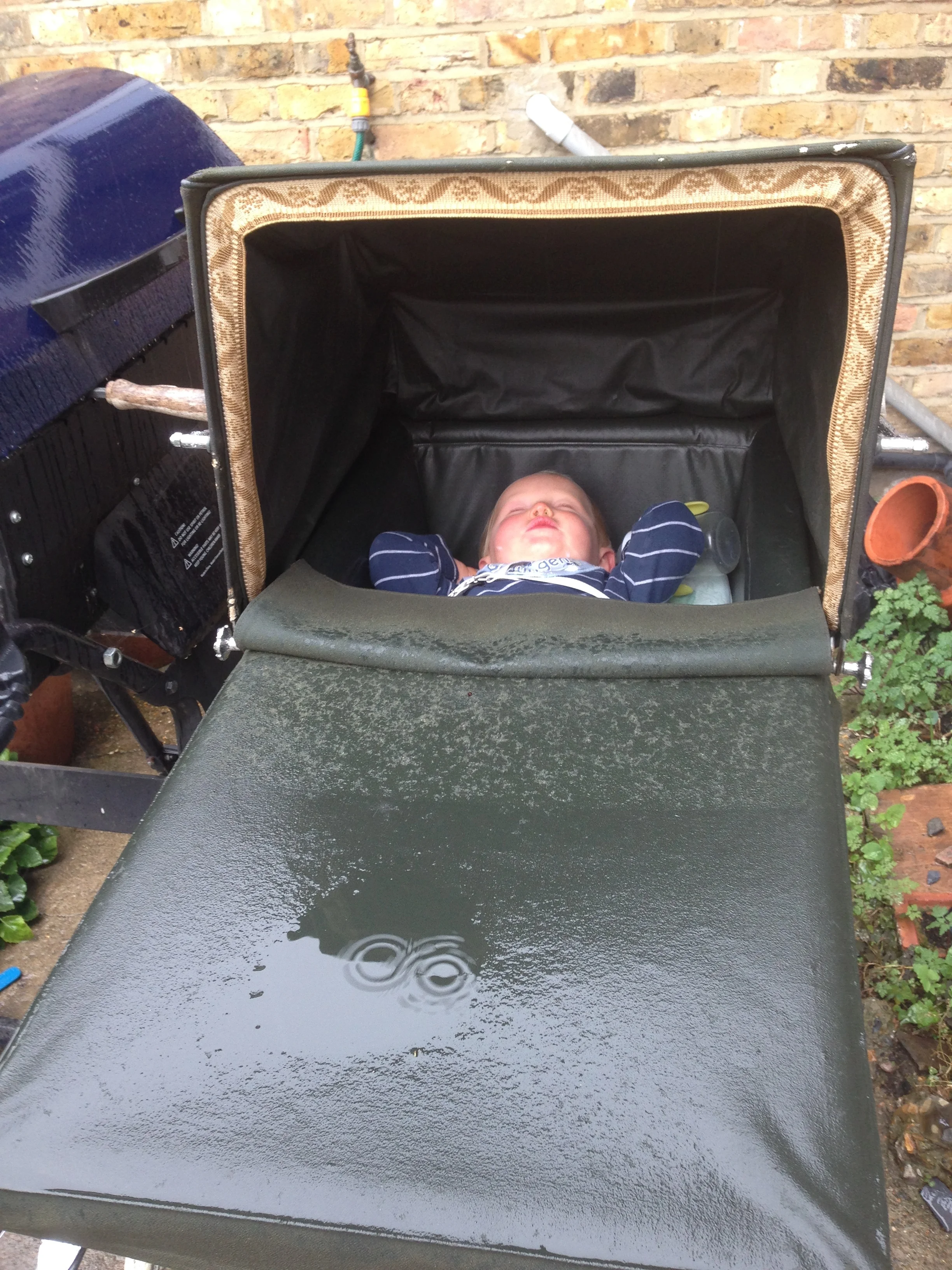
This is Bink’s nephew.

As you can see, being half-Norwegian he’s a tough little chap. Here he is having a spot of shut-eye in the English weather after rampaging and pillaging and conquering a few hundred Angles and Saxons yesterday morning. His favourite condition for a bit of time-out in his pram is under a lovely eight inches of snow, so he sometimes has to nip back over the sea for the more no-nonsense clime of his ancestors.

(He also has a robust Viking appetite. His preference is for 99%-beef-sausages, rare ribeye steak barely-cooked on the beach, haggis, black pudding, that sort of thing. We haven’t yet offered him raw reindeer bones to chew but no doubt he’ll soon catch his own.)

Shaun and I are in South London with Serena and her family, and Alex, for Shaun’s birthday weekend. Bink couldn’t come. She can’t cope with all the stress of moving, just for a couple of days. She can’t really cope with the loneliness of being left behind, either. When one of your children has an acute but brief illness, you can put everything on hold to attend to her needs.

If you continue this policy for twenty years you can destroy everyone in the family. And not help the patient anyway.

The Christmas before last, Bink’s sister gave her a very special present: a photograph of her own ultra-sound scan.

Children are the love of Bink’s life. When she came out of the Florence Nightingale Unit, she said her love of children was the only aspect of her personality still intact. All that was left, still truly herself and not destroyed by her illness.

Bink looked at her Christmas photograph from Serena for a few moments. Her younger sister had already assimilated the information and burst into tearful shrieks of joy. The reaction we all expected of Bink.

Instead there was silence: just, nothing. Then a deep reddening of the face. Then she too burst into tears. But very different from her younger sister’s tears of happiness. Bink’s tears were pitiful, pitiful, dreadful sobs of sorrow and grief and loss. 

The (unworthy, she knew) thought which flashed through her mind like a knife was, Oh, why couldn’t they have waited? Why couldn’t Serena have waited till I was well?

Her dream had always been of all of them having babies together. Of the cousins growing up best friends, as the siblings have been.

Yet another landmark which Bink’s terrible illness has stolen from her. From all of us.

And much as she adores her nephew and wants to spend time with him, she can’t manage a weekend away from home to see him.

But this is Sunday and Sunday is a day for good news and there is: very good news.

Bink has decided, now, a date for going into the Priory. She always wanted to come with us on our family holiday to Scotland for her younger sister’s half term at the end of October. After that she will start inpatient treatment, by 2nd of November.

When she was in the Bethlem Hospital, years ago, her therapist hit on a clever way of motivating her to overcome her OCD.

“What would you like to do more than anything else in the world?”

“Take my baby sister swimming,” Bink said.

Every new thing she managed to touch, every ritual she overcame, helped bring her nearer to that goal.

So it will be this time, in the Priory. Every new victory, every tiny battle won, will bring Bink closer, not just to her nephew, but perhaps even to giving him a cousin one day.

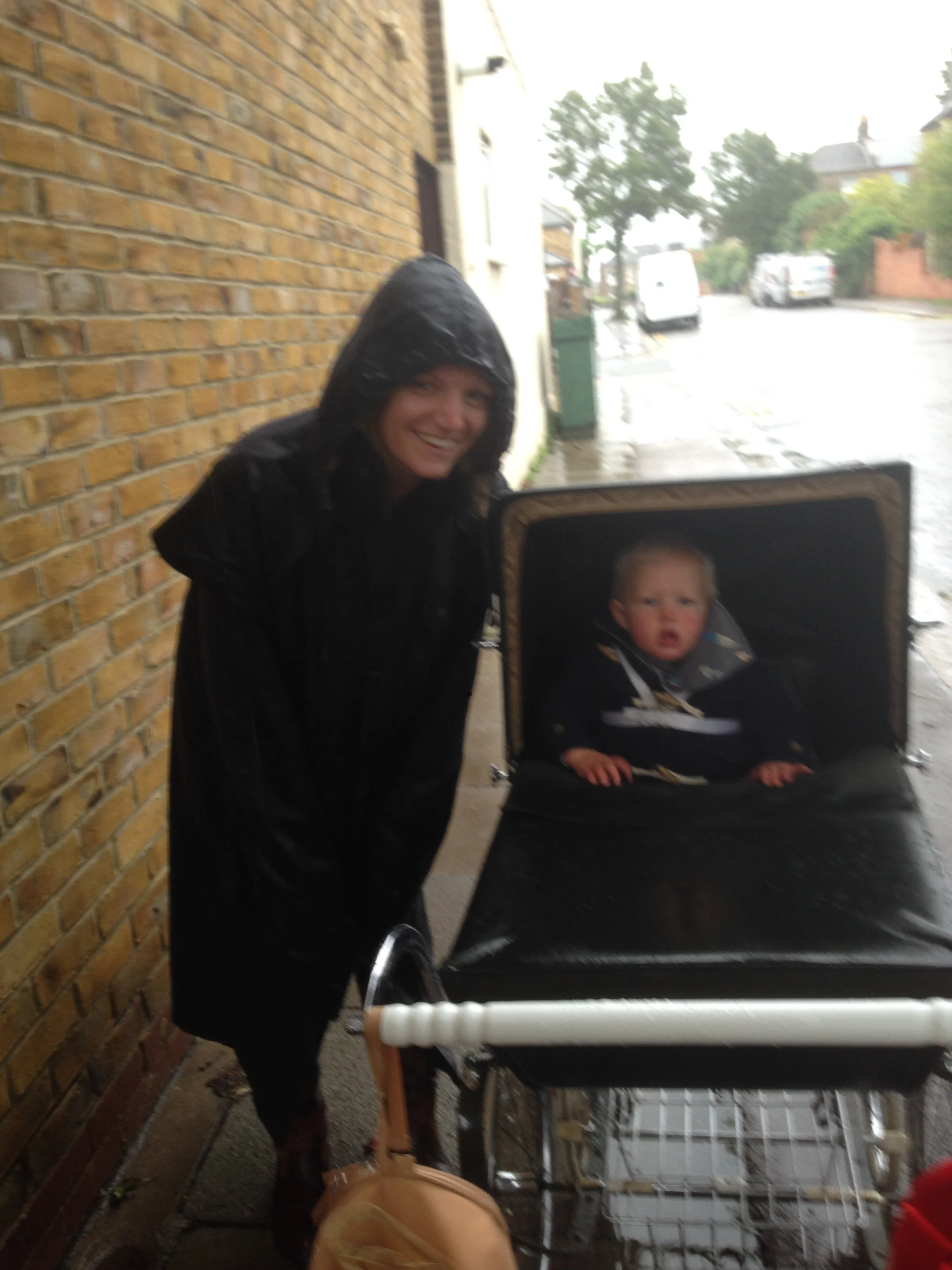
(PS And here he is this morning going to church. It is a twenty minute walk: we were half way there when a complete stranger stopped his car, opened his boot and gave us the biggest umbrella I’ve ever seen not on a stand. All the world loves a baby…)

IMG_2673.JPG
September 23, 2018 /Anne Atkins
Priory, hope, OCD
Comment

Anger

September 21, 2018 by Anne Atkins

Late January 2002

Bink was home again.

Except she wasn’t.

This wasn’t the Bink we knew. She went into the Florence Nightingale Unit with OCD. She came out unrecognisable. Feral. Insane.

For one thing, she was now on highly addictive medication. That this was doing her no good was evidenced by the fact that she was so very, very much more ill than she’d gone in. I’ve always estimated, by a factor of about ten.

For another, she was now understandably terrified of treatment. Even if we could find something appropriate for her condition, she didn’t want to have anything to do with hospitals or doctors ever again.

Thirdly she had now dropped – or rather been forceably yanked – out of school. She had no structure, nothing to do, and no reason to get out of bed any more.

“She must have an activity,” Dr Ratched had said. “A job in a shop, or something.” Three months earlier Bink had been half a term into A-level maths, further maths, physics and English at one of the most academically rigorous schools in the country. Was her education now over? Could she have no higher ambition than this?

It soon transpired that getting out of bed before noon was an ambition considerably higher than she could now achieve.

And her school didn’t want her back, after what the Unit had done to her.

More pressing than any of this, she was angry. Very angry indeed. Young as she was, she knew Robin had treated her appallingly. She wanted an explanation.

Robin operated from (and perhaps owned) a smart clinic in Sloane Square. 

Shaun had given Bink a hat of his, presumably for the winter. Bink has always been petite: five foot three, seven stone. Since the Unit, she wore large clothes. I see her still, diminutive figure, large man’s coat, jogging trousers, all topped with the black beanie she now wore all the time, setting off with Binkish determination from our Vicarage in Parson’s Green, headed for Sloane Square. We tried to stop her a number of times. But, unlike the Florence Nightingale, we didn’t lock her in.

The crunch came during a working breakfast for a preaching group of fellow clergy. Earnest muscular Christians, good friends, getting to grips with the Book of Romans or whatever, over bacon and eggs at our large Vicarage kitchen table.

I don’t know whether you’ve ever attended, or indeed run, a smart counselling-cum-therapy surgery in Sloane Square. Even if you haven’t, you can probably imagine that one of the items you might not put at the top of your wish-list-business-plan, as a ploy for enhancing custom, would be an obsessive fruitcake, dressed like a tramp, camping out on your smart Sloane Square steps, day in day out and all day long, frightening the horses. And all the other patients going in and out.

Whether or not it was topped by a black beanie hat. It probably wasn’t the deciding factor, to be honest, but I don’t think the beanie helped.

Now it was Robin on the line, interrupting the working breakfast. I usually answer the telephone in our house, but for some reason Shaun had taken the call.

After ten minutes, he gave me a summary.

Robin was advising sectioning.

Every so often, in telling this tale, I have to break off to deal with my own anger. I had thought it all long gone, swallowed up in sorrow. 

Sectioning is, obviously, an extremely grave infringement of anyone’s freedom: essentially, putting an innocent person behind bars, without trial, to prevent loss of life or serious harm. The one and only criterion, as I understand it, being threat to one’s own or someone else’s safety.

Never have I heard, read or seen anywhere discussed in the press the following additional criteria: that someone is threatening the reputation of your smart counselling business in Sloane Square; that you feel a bit freaked out; that you don’t like her sitting on your doorstep.

It also stands to reason sectioning is likely to have far-reaching implications: not just the immediate loss of freedom, but loss of possible future freedoms such as callings to the Church or the Armed Forces... not to mention working with children, the one consistent ambition Bink has had.

“Over. My. Dead. Body.”

I may have thought, but didn’t say, go to the frigging cops and get a harassment order, like a grown up.

“I’ll take that as a no, then, shall I?” Shaun asked tentatively.

The really frightening thing is how easy it could have been. If I hadn’t resisted, Robin could have picked up the telephone to Dr Ratched and Bink could have been banged up before anyone had even had time to think, “Human Rights.” Given the damage done to her by three months’ supposedly voluntary incarceration, I don’t even want to imagine what that might have done to the rest of her life.

Bink wasn’t then and never has been sectioned. Presumably eventually Robin had to man up.

Though Bink still believes, all these years later, that he should be prosecuted, sued or at the very least reported to the apppropriate regulatory body for what he did to her.

sebastian-pociecha-618090-unsplash.jpg

Perhaps now is the time to do it.

September 21, 2018 /Anne Atkins
Florence Nightingale Hospital, Sectioning, Sertraline, Priory, Mental illness, Stalking, Harassment, OCD
Comment
girl-3-1440414.jpg

Outwitted

September 19, 2018 by Anne Atkins

Late January 2002, Monday morning.

After three long months. Three months in which I had lain awake sick with worry every night, aching to bring her home. Three months of dreading, and fearing, and being impotent to prevent, the damage the hospital was doing to her. Three months of hopeless and helpless hell.

Bink on the telephone.

“This place is awful,” she said. “I can’t stand any more. Will you come and get me?”

I had to write my Thought for the Day script for the next morning – something I find almost impossibly difficult – before anything else or my day could slip out of control down the plughole and I’d still have nothing to say by midnight. My producer and I had agreed the topic. We had discussed the line I might take. Now to the writing, which can easily go skidding off in directions you really don’t want.

“Of course! Let me just draft this script. I should be able to set off in about an hour.”

“Ok,” she said, and hung up.

Eh? What did I just say?? Write a script! What was I thinking? I must be more mad than she was...

I rang my producer (and very dear friend) Christine.

“Go!” she said. “For goodness’ sake, go! Go and get your daughter!”

There’s a phrase I’ve heard Thought producers use occasionally, to instil a sense of proportion. You know: when your mother’s just been rushed into hospital with a massive stroke and you think it would be really irresponsible to ask if you might swop your slot; if you’re tempted to stay at your desk finishing your script when your house has caught fire. That sort of thing.

“It’s only radio!” Christine reminded me.

When I reached the Florence Nightingale there were very few people around. Bink was waiting for me, all ready: no packing needed. A concerned nurse fluttered, anxiously, saying we’d better wait for Dr Ratched. The psychiatrist would need to discharge her: she would be doing her rounds soon, she was sure.

I know what that means in hospital-speak: half a day at least. Nonetheless I wasn’t taking any chances. I couldn’t get Bink out of that building fast enough.

Dr Ratched wanted to see us. Could we attend, with Bink, on Thursday morning so she could discharge her properly? We’re conditioned, aren’t we? Less now than a couple of generations ago perhaps, but when someone with a hospital badge and letters after her name says jump! you find you’ve done it before you’ve had time to work out that you were on the edge of a cliff.

Thursday morning, and we arrived a bare five minutes before our 11 o’clock appointment.

“You go in,” Shaun said. “I’ll park.”

By the time he found me in the waiting room, Bink was gone.

“Dr Ratched wanted to talk to her on her own first,” I explained. “She was called up without me.”

“You should never have allowed that,” he said ominously.

“Excuse me,” I went straight to the reception desk. “All three of us were invited for this appointment. When will we join our daughter?”

“You’ll be called.”

Five minutes later, “I’m sorry to disturb you again, but we’re wondering when we’ll be shown upstairs.”

“She’ll call when she’s ready for you.”

Another ten minutes. “My husband has an appointment and we really can’t stay any longer,” I insisted with fierce energy. “We need to go up now.” No need to add that Shaun would cancel a dozen appointments for his daughter if he needed to.

When Bink had left the waiting room half an hour earlier, she walked upstairs with a spring in her step, her head held high and her cheeks rosy. By the time we were shown into Dr Ratched’s consulting room she was curled in an armchair, foetal, grey and mute. She looked dreadful.

The psychiatrist welcomed us with a beaming smile.

“Good news,” she said. “Bink has agreed to come back in.”

September 19, 2018 /Anne Atkins
Florence Nightingale Hospital, Priory, OCD
Comment
angel-1623316_1920.jpg

Gone again.

September 18, 2018 by Anne Atkins

End of 2001

We never discovered how Bink got the injury to her face. The charge against Shaun was quietly dropped.

I didn’t care. 

All I cared about was Bink’s state of mind, or lack of. What we had witnessed was terrifying, far beyond anything we could deal with. This was why we had taken her back to the Florence Nightingale, despite all the damage I knew they’d been doing to her. She had been nothing like that when we’d first taken her in, two months earlier. Yes, she’d had OCD: a very significant difficulty, making her desperately unhappy. But she hadn’t been, like, mad.

If she was that demented... I don’t think we could imagine a future at all.

The word Shaun and I asked of each other, not even knowing what it meant, was, “Schizophrenia?”

My brother is professor of nano-materials. He knew how to use the internet long before we did. A day or two after he and his family returned home to Oxford after Christmas, we received some pages of print-out.

Sertraline.

The drug Dr Ratched had put Bink on, very much against our wishes and hers. Which had “no negative side-effects” and which you could stop “at a moment’s notice, without any issues of withdrawal at all.”

And here were all the horrendous symptoms of coming off it suddenly, described on the internet, for anyone (who know how to use the internet) to read. And Dr Ratched had said there were none.

Was she ignorant or mendacious? Which would be worse?

Bink must have stopped taking her unwanted medication as soon as she got home, acting (sensibly) on the information she’d been given: that she mustn’t combine it with alcohol; and that she could stop it whenever she wanted.

She wasn‘t mad at all. She was simply exhibiting the known symptoms of sudden withdrawal. Palpitations, extreme terror, hallucinations. It was exactly as I had feared: the pills had made her very much worse.

Did no one in the Unit have any compassion at all? Could they not have thought to allay our wretchedness, as my brother so kindly had? We had been worried out of our own minds.

And of course, now we knew this, we realised with sinking dismay that we needn’t have taken her back into the Unit at all. Just stayed with her, and calmed her, and held her while the effects of the drug wore off, however many days or ghastly weeks that might have taken.

2002 began dull and leaden. Bink back in. Back on medication. Back incarcerated and beyond our reach.

We could do nothing. Except pray. Which we must have been doing almost incessantly, even though my confidence in prayer had been pretty effectively demolished when all our church prayed for Alexander a few years earlier. So it wasn’t because I had any faith in prayer left that I’d gone on praying.

Just, there was nothing else we could do.

Day after day, week after week, no change, no hope, no access. No communication at all.

Unless Bink herself specifically requested it. And she wasn’t talking to me.

It was a Monday morning in late January when I got the call.

I was writing a script for Thought for the Day, for Radio 4 the next morning. Racking my brains, as I always do, for something interesting, about an item in that day’s news, with a faith perspective, which hasn’t been said many times before. Bit of a bum brief, really.

Staring out of my attic study window at our neighbour’s roof in Parson’s Green. No inspiration there either.

When the telephone rings it breaks my attention, but it’s welcome because I’m stuck anyway.

“Hello,” said a familiar voice.

Wow. “Hello, Bink!”

September 18, 2018 /Anne Atkins
Florence Nightingale Hospital, Priory, OCD, Mental illness, Police, Sertraline
Comment
IMG_2629.JPG

Togetherness

September 16, 2018 by Anne Atkins

Sunday

I decided, when I started this blog, that out of courtesy to your being willing to walk with me, I would post every day so you’d know where we are.

And on Sundays we would have a break from the painful past, and dwell on some positive aspect of the present.

For today’s post, I was slightly stumped. 

Not because life isn’t good. It is. Thank you. Particularly this weekend because Alex is home, which always makes for a lot of laughs. Almost as many laughs as when Ben is home. Which is always. On account of, he lives at home. Which means we need all the laughs we can get.

Anyways.

Something I’ve learnt (pretty painfully) through the last twenty years and my mother seems to have known all her life, is that God can indeed bring good out of apparent (and indeed very real) bad. You just have to learn to recognise, and usually wait, for it.

Over the last couple of days, two of our three daughters have reacted, arguably negatively, to this blog. (Actually, three. Rose said, “I could walk to the station alone long before I was ten!” “I’ll change it then,” I promised immediately: that’s the thing about online publishing. “Naa,” Rose said. “Don’t bother.” As if my writing were the most unimportant thing in the world. Which, to my family, it is...)

I should perhaps explain a principle we drew up very early in this parenting business. I was brought up in a head master’s house, and once (and once only: most of the time I loved it) felt so resentful of our home’s being used for school business that I hid, under the sofa cushions, the coat of the piano teacher who had been giving a lesson in our drawing room. (And never confessed... until now. And overheard my parents saying the cleaner must have done it in a moment of incomprehensible absent-mindedness.) I determined that my children would never experience the same, so we established when we moved into a Vicarage that a veto of one, no matter how young that one was, would always be enough.

So if anyone in my family, at any time in the now or future, expresses this wish, my blog will cease immediately and disappear from view.

On Friday afternoon, I tried to show Bink a kind and very interesting comment from a reader... and it quickly transpired she was in a vile mood. (Bink. Not the reader. As far as I know.)

The reason followed soon after. My blog. All the things I’ve remembered differently.

“Bink, tell me!” I pleaded. “The last thing I want is inaccuracy. The truth is always more interesting.”

“How can you say that Daniel,” (in the Florence Nightingale Unit) “wasn’t abused? Her father made her watch porn when she was little.” (As a little boy, that is.) “And she was a girl long before she came in, too.”

“I’m sorry. I didn’t know. Please tell me and I’ll change anything you say.”

“It’s not your fault,” she said, after establishing this would take too long. “I said you could write it. But I also said I didn’t want to have anything to do with it, and this is why.” Maybe one day, she’s promised, she’ll read and correct everything.

Yesterday I spoke to Serena. “You sound low.”

“Perhaps I should stop reading your blog,” she admitted.

“Perhaps I should stop writing it?”

“No!” Serena was emphatic. “People need to know. There are far too many others suffering...”

“They don’t need to know at our expense,” I countered. “Our first duty – in this instance – is to ourselves.”

She was adamant, like Bink, that I shouldn’t stop the story on her account.

I have known others, as ill as Bink, who don’t acknowledge they are ill at all. How they will ever get well is a mystery... perhaps even to God Himself. Whereas Bink is extremely open. She has no truck with the taboo around being mental. None of us has.

This is a huge blessing, to her and all of us. As well as a great weapon in the armoury of health.

So yes, life – as Alex, Ben, Bink and I sat round the fire-pit till midnight last night, welcoming in the autumn – is very good indeed. Thank you.

September 16, 2018 /Anne Atkins
Mental illness, OCD, Priory, Family
Comment
bat-995210_1920.jpg

Bat shit crazy

September 15, 2018 by Anne Atkins

27th December 2001

It was the darkest hour of the not-morning when the telephone rang.

It would have been a pretty confusing call even if we hadn’t been groggy with sleep. Someone at the Florence Nightingale Unit, half an hour away in North London, was ringing us in Parson’s Green, garbling something about Bink who was supposed to be with Serena in the flat next door. 

We lurched into some clothes.

If that flat had been the city of Jericho it would have been rubble by the time we arrived. Bink was screaming the walls down. Bansheeing off them. If you’ve ever trapped a terrified wild animal in your bare hands you’ll know: I picked up a young field mouse as a small child and it bit me to the bone.

What assaulted us at the front door was a vortex of screeching fireworks. We went up the stairs into a caterwauling Charybdis. Trying to catch and calm whatever had taken hold of Bink was to embrace a water-jet.

And Serena had been coping with this alone.

It is years ago now and she has neutralised what memories she can, but still retains a few vivid details: her own terror; her realisation that this is what demon possession is; and the “men with knives coming through the window to get me.” Bink has always claimed she made them up, but I could see them in her eyes when we arrived. Serena too.

It transpired that, after we’d gone to bed around midnight, Bink had gone outside and started yelling her pain into the Parson’s Green night. Serena managed to get her into the flat but containment merely concentrated her incoherence.

The only thing which she communicated clearly was that Serena was not, under any circumstances, to call us. Serena must not ring home. She mustn’t tell Shaun or me anything. She was not to fetch us. She mustn’t she mustn’t she mustn’t.

Under no circumstances whatsoever at all at all did Bink want to see me.

jack-o-lanterns-1326113-1598x1062 (1).jpg

So after two hours of this frenzied nightmare Serena rang the hospital.

This may sound strange to anyone under thirty, but when when we were children there was an idea – long left over from Victorians and smelling salts, for all I know – that the appropriate thing to administer when someone is suffering from hysteria is a slap. Like you say boo! to cure hiccoughs. No, that’s never worked for me, either. Perhaps sudden shock can tranquillise, or at least stop one in one’s tracks: I don’t know. Now that I’ve heard Professor Veale’s explanation about the calming effect of sudden cold (and read more about it myself) I presume a bowl of iced water thrown over the head could do the trick. Be that as it may, a slap in response to hysterics was a deeply ingrained idea, heard at our mothers’ knees.

What could we do with this shrieking maelstrom whirling round the plughole of Maggie’s flat? Nothing could contain her. In his panic and fear, Shaun slapped her.

No change. Even that couldn’t check the raging tumult that Bink had become.

We had no idea what to do. The hospital had rung us. They seemed to know what was going on. Goodness only knows why given the history, but all we could think of in that confused frightening whirlwind of howling in the most hidden part of the night was to take her back there.

We managed to steer her outside but my brother’s car was blocking ours in our Vicarage drive. He came downstairs, in his thin cotton summer pyjamas, and offered to drive us there.

The Vicarage in Parson’s Green is fairly public, even in the small hours in the deserted Christmas hols. Imagine you witnessed a slim, five foot three girl screaming in wild distress while two men bundled her into a car...

You might, sensibly, be too frightened to ask what was going on. So you might go home and do it from there.

I said that Shaun’s slap “did nothing.”

That wasn’t entirely true.

September 15, 2018 /Anne Atkins
Florence Nightingale Hospital, Sertraline, Mental illness, Priory
Comment
washing-machine-2668472_1920.jpg

Instead of work

September 13, 2018 by Anne Atkins

Present day.

You must be wondering what day-to-day life with a loony is like. How can it be so time-consuming, when all she does is lie in bed all day?

I realise such a rapid change of direction doesn’t fool you for a mo. Yesterday we were in the Florence Nightingale Unit and late 2001. What happened to that nail-biting, white-knuckle-ride, cliff--slide-on-our-bottoms-down-to-the-beach I left you with, eh?

Yes, well. I’ll come back to it tomorrow. Having lived through several of Shaun’s breakdowns, I’ve become much more attuned to, and respectful of, my own feeble squawks of emotional protest. I’ve learnt to be kind to myself. I need a break from being cross today.

Given that you’re all gluttons for punishment and longing to go back in there, we’ll return to the Flo Nightingale tomorrow.


So, back to living with someone who’s round the bend and why it’s hard to do anything much else at the same time.

Obviously, you have to feed her occasionally. And she can’t do anything to help with that process.

No, really, she can’t. The last time but three that Shaun and I accompanied Bink to her umpteenth tribunal to fight for her disability benefits yet again, the panel of judges asked us to comment on her assertion that she wasn’t “safe in a kitchen.” The look of instant stricken terror on our faces and the way we glanced nervously around, like Pavlov’s dogs, for the nearest fire extinguisher was enough to obviate the need for words.

Bink once managed to stop herself taking a searing baking tray out of the oven, in the marigolds she wore continuously from the age of 17 till she went into the Bethlem Hospital aged 21, with the timely thought, “Hang on. Hot dish. Need to pick up with something protective.”

So she grabbed a plastic bag. And, yes, used it.

When she was in the Bethlem Hospital, they told her that cooking was an essential aspect of every patient’s OT.

“I’m not sure you want me in your kitchen,” she warned them.

“Of course we do!” They said reassuringly. “Everyone does a bit of cooking: no exceptions. Don’t be nervous: we’ve had patients far more ill than you, who couldn’t cook at all.”

After one session – one session – Bink was excused cooking. For all time.

They put her on house demolition instead.

Anyway, you’re partially right. A lot of the time, now I’ve given up on believing I can ever help her get well myself, I leave Bink alone under the covers upstairs. It’s pretty depressing, knowing there’s a Mrs Rochester in the attic, but you get used to it. Like you get used to hitting your head repeatedly with a claw hammer.

Much of the time, though, she needs something.

The other day she was up earlier than usual. About 4pm. Looking drawn and distressed.

“Please will you help me?”

“Of course, Bink, if I can. What with?”

“The dryers.”

Dryers? Bink hasn’t been able to use our laundry for two and a half years, when she disappeared for three months after thirteen-year-old Rose changed the programme on her wash, mid-cycle, to a shorter one so her uniform would be ready for the start of term that day. Bink went into melt-down about her beloved baby sister spending all term contaminated by soap residue. My fault, somehow. Most things are. That was at the New Year.

Bink was still living elsewhere and unable to join us for the joyous week-long celebration of Rose’s confirmation, at Easter. Yet again, family incomplete.

Anyway, I deliberately have a dryer in the laundry which barely works, so everyone is forced to use sun and air.

“Next door. You know.”

Ah. The dryers.

We live next door to a care home for the acutely disabled. We hear the occasional bloodcurdling screech in the night, but we don’t mind that: we are grateful to them for doing such loving work on behalf of society. What Bink and I mind are the sound of the dryers going night and day. To be fair, most of the time no one else can hear them (except, intriguingly, my 100-year-old father) and the owners of the home are trying everything they can to muffle them.

But I have an utter loathing of mechanical noise, however almost-imperceptible, and wouldn’t have chosen our house if the dryers had already been in place. I couldn’t live (voluntarily) within several miles of a distant motorway. I won’t say, it drives me nuts. I just hate it.

It drives Bink nuts.

Yes, I know she’s nuts already. But it drives her really nuts. Scaling the drainpipes at 3am begging staff to turn them off, nuts. (I can’t think why she scaled the drainpipes instead of ringing the doorbell, but I distinctly remember this happening a few years ago.)

She can’t sleep. She can’t get out of bed. She can’t start a shower. That kind of nuts. Sometimes she can cope with it for a few weeks, if the wind is blowing the right direction. Sometimes she can’t.

This was one of those. She couldn’t stand one more minute of it. I could tell, by the ghostly pallor on her face and the shaking limbs.

Trouble is, when you’ve been trying to solve a problem for several years, there’s a limit to how much you can do in an afternoon.

Still, she begged me to go round there, though the owner is seldom available. She came with me, in her huge men’s boxers, baggy teeshirt and nothing else. And we spent the next couple of hours, with the kind and solicitous proprietor, turning the machines on and off; going up to Bink’s room and coming back again; eventually with my lugging the heavy old wooden ping-pong table we use to serve dinner to paying guests in the garden, and laying it over the exit pipes of the dryers, probably in contravention of every fire reg you’ve ever imagined; going back up to her room; finding it didn’t make the slightest difference; finally my agreeing to source an acoustics expert and the proprietor agreeing (yet again) to source quieter industrial drying machines, if they exist, next time they upgrade. 

No difference in the sound whatsoever. But a difference in Bink.

“Thank you,” she said. “It does make it less stressful, actually. Knowing you’ve tried everything, and you aren’t just doing it to drive me mad.”

This is why my novel coming out next month is my first for nearly twenty years. That is what I've spent my days doing for all that time.

While most people are being productive at work.

September 13, 2018 /Anne Atkins
OCD, Mental health, Priory, Noise intolerance
2 Comments
honey-1006972_1920.jpg

Miracle medicine

September 11, 2018 by Anne Atkins

November 2001.

We were not allowed to veto Bink's medication. But since we were invited into the psychiatrist’s consulting room on a regular basis, it seemed sensible to find out more.

Sertraline was the first (of many) she was put on. It was the elixir of life, that drug. Lily the Pink’s Medicinal Compound. The first genuine miracle invented by the human race.

1. It had no side effects. That’s right. Absolutely none whatsoever. At all at all at all.

2. It was also astonishingly easy to come off. The moment you wanted to. Though you wouldn’t ever want to, because it solves world poverty. But if you did. You could stop just like that. No negative repercussions or withdrawal symptoms. At all at all at all.

3. If you don’t trust us we can’t work with you.

Hello? Where did that come from? Have no parents ever asked any questions before?

Well no, I don't suppose they would. All the other adolescents in that ward came from families who wouldn't know how, even if they had the energy left over from surviving their own lives.


I happened to mention all this in passing, a couple of months ago, to a reputable psychiatrist – still mystified as to why anyone would lie so blatantly to a patient and her family – and she very kindly took the time to reply: “Ah, there is a good explanation. In the early years of SSRIs, we really thought they had no ‘discontinuation’ symptoms and were very safe to start and stop. It was only much later that they were discovered, so the doctor probably really was not trying to deceive but we would all have been unaware.”

It was good to get this explanation at last. Genuinely.

However... um... forgive my being awkward, but it still leaves two very obvious questions unanswered.

First, if the drug was so new and unknown that the body of medical knowledge didn’t yet include such basic stuff as the way it completely screws your head when you come off it, and that you can find yourself addicted to it for years and years and years, why experiment on our daughter? Have we learnt nothing from thalidomide?

And secondly, how then was it possible for my brother (well-educated but nonetheless a layman) to allay our terror a few months later – when we thought Bink must be schizophrenic, so dire were the effects – simply by looking up this drug and what it could do, on something we'd barely heard of called the 'internet'?

Be that as it may, what the psychiatrist didn’t bother to mention, to us and even more crucially to Bink herself, was that you weren’t supposed to imbibe alcohol while on it.

A couple from our church, with the hospital’s permission of course, took Bink out to Pizza Express. When they delivered her back, they were asked what she’d consumed.

A pizza. A salad. A glass of red wine.

Shit. Fan. Convergence of.


I must still have considerable residual anger over Bink’s time in the Unit: just thinking about the way our kind friends were treated roils my guts.

How about giving them information before they took her out, rather than demanding it of them when they brought her back? How about an apology for not advising them properly? How about the hospital's taking responsibility for the omission, rather than rebuking those solicitous enough to give her a generous treat, as if they were recalcitrant schoolchildren smoking behind the bike sheds?

And of course the reprimand dished out to the adults was nothing to the scolding given to Bink herself.

It’s exhausting: remembering. Anger is.


Let’s end on a positive note. A reader has just asked whether Bink get to her therapy session last Thursday?

Yes, kind friends, she did. “She’ll never make it,” Shaun had said with his customary encouraging Eeyore jollity.

But I knew she would, somehow.

As I wrote yesterday, mothers can be annoying like that. Knowing stuff without knowing how.

So give me grace to be right on this one too: that the Priory offers Bink the turning point we've all been praying for – for so many, many long years – to a glorious future of freedom. 

September 11, 2018 /Anne Atkins
sertraline, Priory, Florence Nightingale Hospital, mental illness
Comment
human-3586707_1920.jpg

Lunacy

August 27, 2018 by Anne Atkins

October 2001. 

I can no longer call the date ‘Half Term’ because half-terms were over for Bink, long before half-term itself was. That night we took her to the Florence Nightingale and were told we couldn’t take her home again, school became history. 

That night, the Police were called to the Unit, a common occurrence: a member of staff had assaulted a patient. (By way of poetic symmetry, the day she finally left they were there as well: one patient had attempted to rape another, and almost succeeded.)

That night too, we were informed that the nurses sat with the patients for every meal. We could rest assured she would be well looked after, and certainly fed. Presumably a necessary precaution, since they must sometimes have had anorexic patients.

The next time we saw her, a week later, I was stopped in my tracks. I could have sworn she’d lost half a stone. Always slight, Bink now seemed breakably thin. Having been told, so specifically, that every meal was monitored, I must be imagining it.

It was months before she told me that for the first ten days, apart from water she consumed one cup of tea and a biscuit. Nothing else. At all. For a week and a half.

A pointless protest, since not a single member of the staff noticed. Presumably, if she had indeed been anorexic she could have died before they did.


Her room was neat and clean but stifling. No windows were allowed to be opened. Anywhere in the building. Suicide risk.

It didn’t take Bink long to learn the only way to be allowed fresh air. Smokers were released into the street for ten minutes in every hour. An addiction Bink still has – and hates – to this day. One of the first things she asked the Priory is to help her quit nicotine, as well as all the other mind-altering substances she acquired in there. It has jeopardised her sleeping ever since.

Our children were brought up in your archetypal draughty Victorian vicarage: lots of cracks and crannies, no heating upstairs and the windows wide to the stars every night. Naturally she couldn’t sleep, in her overheated airless room.

I turned to Yellow Pages and spent a morning searching for a gym. After many fruitless calls I rang the Florence Nightingale reception.

“You’ll know the answer to this,” I said. “I’m looking for the nearest gym to the hospital, so Bink can get some exercise.”

“There’s a gym right here inside the hospital.”

“Oh. Brilliant! Thank you. How does she use it, please?”

“She can’t.”

“I’m sorry?” This seemed incomprehensible. “Why is that?”

“She’d need supervision.”

I was momentarily speechless. “She’s very keen. Isn’t there anyone who could be with her? I could come over myself every afternoon.”

“Wouldn’t make any difference. The gym shuts at four.”

“Well, why doesn't she use it before four, then?”

“She has therapy till half past three. She wouldn’t get there in time.”

Defeated as I was, I tried one more time.

“Is there anything you can suggest, please? She’s not able to sleep at night.”

“That’s her own fault. She’s won’t take the medication.”

Despite all my despair at that dreadful place over the next weeks and months, I have always believed in trying to understand something I don't agree with.

“Please, explain it to me,” I begged a friend whose husband worked in mental healthcare. “There must be some logic to it: I can’t for the life of me see what. They have thirteen teenagers cooped up in that Unit. All mentally ill. All physically fit. Why don’t they take them to the park every afternoon for a couple of hours of football? Or for a walk? Or cross-country running? Or anything. Surely that would be more beneficial than therapy. And then drugging them all to make them sleep. What’s the reasoning behind it? It seems completely insane to me.”

“It’s cheaper,” she said simply.

August 27, 2018 /Anne Atkins
Florence Nightingale Hospital, OCD, Priory
Comment
death-164761_1280.jpg

Nicotine and narcotics

August 21, 2018 by Anne Atkins

Present Day.

When I went upstairs to wake Bink, as arranged, at one o’clock for lunch on Sunday, she peered out from under the pillowcase still tied around her head, and grumbled that she was much too tired. Trying to get Bink out of bed is a deeply dispiriting process, seldom – though occasionally – profitable; which seldom – even more occasionally – rewards the intrepid bed-dragger-from.

Always and invariably me.

I reminded her that we’d arranged the date around her: in a few weeks’ time she’ll be in the Priory. She grumbled some more.

Since Shaun resigned his job I’ve become creative about sources of income. On Sunday I’d let out our garden for a corporate event for 60 – and promised them lunch – as we were going to be out ourselves. (This does sort of make sense. We got the lunch ready, more or less; handed over to our amazing cleaner Gerda; and scarpered.)

Before we left, the organiser came and found me.

“I’m sorry to bother you, but there’s someone in your garden.” She was clearly alarmed.

“Probably our son Ben. Six foot, blond...”

“Noo... I think he might have wondered in off the street.”

Sure enough, on a bench at the bottom of the garden was a diminutive tramp-like figure, rolling a fag, in turned-up men’s pyjamas and a hoodie, with a pillowcase round its head.

We teased her all the way to lunch.

“But Shaun says aristocrats dress really scruffily, because they have nothing to prove.”

I thought of Kate and Meghan, archetypal aristocrats of Bink’s generation.

“Surely I look like an aristocrat?”


Late Summer 2001

Since 1996 I’d had a column in the Daily Telegraph, and an income to speak of for the first time since my gap year. I now had a weekly telly slot. For a few brief years – till Bink shuntered out of hospital and I lost it all – I was earning more than Shaun. (Which, ok, given that he is a CofE clergyman, is not setting the bar very high...)

With such resounding zilch and nada forthcoming from the NHS, I decided we could pay for therapy.

Robin was dapper, in his thirties with a smart clinic in Sloane Square. £40 an hour.

After Bink’s second session, she started blaming me. I’d done such-and-such when she was six: the root of her problems. I didn’t believe this for a moment but it was a small price, if it helped.

Serena, aged 18, went to collect her after about her fourth session. She was taken aback. Not just by the protestations of affection from therapist to client, but by the hug Robin gave Bink when she left.

Bink had never really told anyone about her unhappinesses. Now she was opening her soul for the first time, to a good-looking bloke who told her he was extremely fond of her, and gave her cuddles.

No surprise that she was getting worse.

After ten sessions – I know, because for years afterwards she begged me not just to report Robin, but to sue him for the £400 (as if I had world enough and time!) – she was desperate. For proper treatment.

In our medicine cabinet were the pills our family doctor had given me when I was doing A-levels, suggesting one a night for a week to break my insomnia. Serena is extremely sensible: I had told her they were there if she needed them, for hers.

Bink rang Robin to tell him she’d taken them all.

As if a bomb had gone off in Pall Mall. Suddenly, everyone cared. Clearly, Bink’s strategy worked.

Serena and I sat with her in the ambulance, screaming and swerving its way round traffic on the way to the Chelsea & Westminster, and I thought, This is bonkers: we’d be quicker on our bicycles.

That was when I made my worst ever mistake in bringing up our five children. One with dreadful, dire ramifications still haunting and dogging us today. One which prompted the subtitle to my subsequent book, Childrearing for Fun: trust your instincts and enjoy your children.

Instead of listening to my own common sense, I obeyed the professionals.


Sunday 19th August 2018

As we walked back from our long, lazy, leisurely lunch with our kind neighbours in the slanting late 6 o’clock sun on Sunday, Bink said, “I enjoyed that so much. I’m really glad I came.”

(Anything about thanking me for dragging her out of bed? What was I saying just now about nada and zilch...)

August 21, 2018 /Anne Atkins
NHS, Mental illness, Priory
Comment
  • Newer
  • Older

Powered by Squarespace