Anne Atkins

  • Home
  • Bink Bonkers
  • Non-Fiction
  • Novels
  • Journalism
  • Speaking
  • Broadcasting
  • Biography
  • An Elegant Solution
  • Thoughts for the Day
  • Anthem for Mary and David Briggs
  • Love Strong as Death
  • Contact

The days are surely coming, says the Lord

December 02, 2018 by Anne Atkins

First Sunday in Advent.

I realise, of course I do, that Advent is about something far bigger than my little concerns. 

None the less one of the things I love about the God I do love – as I understand it, anyway: given His attitude to little children, for instance – is that He cares about little things, just a bit, too.

(True, He often doesn’t seem to answer my little prayers. Correction: He almost never seems to. In any meaningful timeframe. To me. I expect I’ll understand this one day. When The Days are finally Come.)

Anyway, Advent is about waiting. And hoping. And being without Someone for a while.

A few Sundays back, I mentioned how good it can be not to hear news of a loved one.

Today I am reminded how good it is to be without someone, too.

(Here’s a guilty secret. We’re supposed to pray for the Lord to return quickly, right? I’m afraid I don’t. I hope He’ll take a really, really long time about it. For all that it’s a Vale of Tears down here, I’m very fond of this old world, and I’ll be extremely sad to see it go. 

When I was little, my mother tidied up my toy-cupboard, and threw away my awful bashed up dog-eared old Wobbly Man that had seen so many better days. I’m guessing it must been made of seriously heavy-duty papier-mâché, because it had that frayed, exhausted look only bio-degradable substances can do.

When I turned my cupboard inside-out looking for it and asked her where it had gone, she realised her mistake, apologised and bought me a brand new one. In shiny bright plastic.

I appreciated her love and kindness a lot more than that horrid new Wobbly Man.

I do know the New Heaven and New Earth isn’t going to be made of shiny new plastic. And I do know it will be better than this earth, really. Theoretically. I’m just not good at adjustment and moving on when I love something already... Apart from anything else, there’s going to be no marriage in the New Creation. How can that be any fun, eh?

I can’t help wondering whether He’s really thought this through...)

Anyway, Bink’s therapist rang a few days ago. I hadn’t spoken to Bink in ten days, the longest since she’d gone into the Priory.

Today, we are giving my father a small lunch party to celebrate his 101st birthday. Bink is invited, of course, and has now finished the bootcamp programme so technically could come home. But had already told me she didn’t think it would be wise.

Her therapist said, moreover, that it might be better if Bink didn’t come home for Christmas, either. That Bink herself had said so. And how impressed she was – they all are – that Bink is so committed to the programme, and how she has thrown herself into it with such complete dedication.

Which they have told us a number of times already.

(And which I could have told them she would, if anyone had offered her any treatment any time this last twenty years.)

“A lot of our patients,” the therapist continued, “know they’ve put their families through so much already, they decide they owe it to them to go home for Christmas. And it’s too soon and they fall off the wagon and lose it all...”

“Listen,” I said. “We’ve been without Bink for nearly two decades. Don’t you think we’d rather have another Christmas without her, to see the real Bink back?”
IMG_2897.JPG

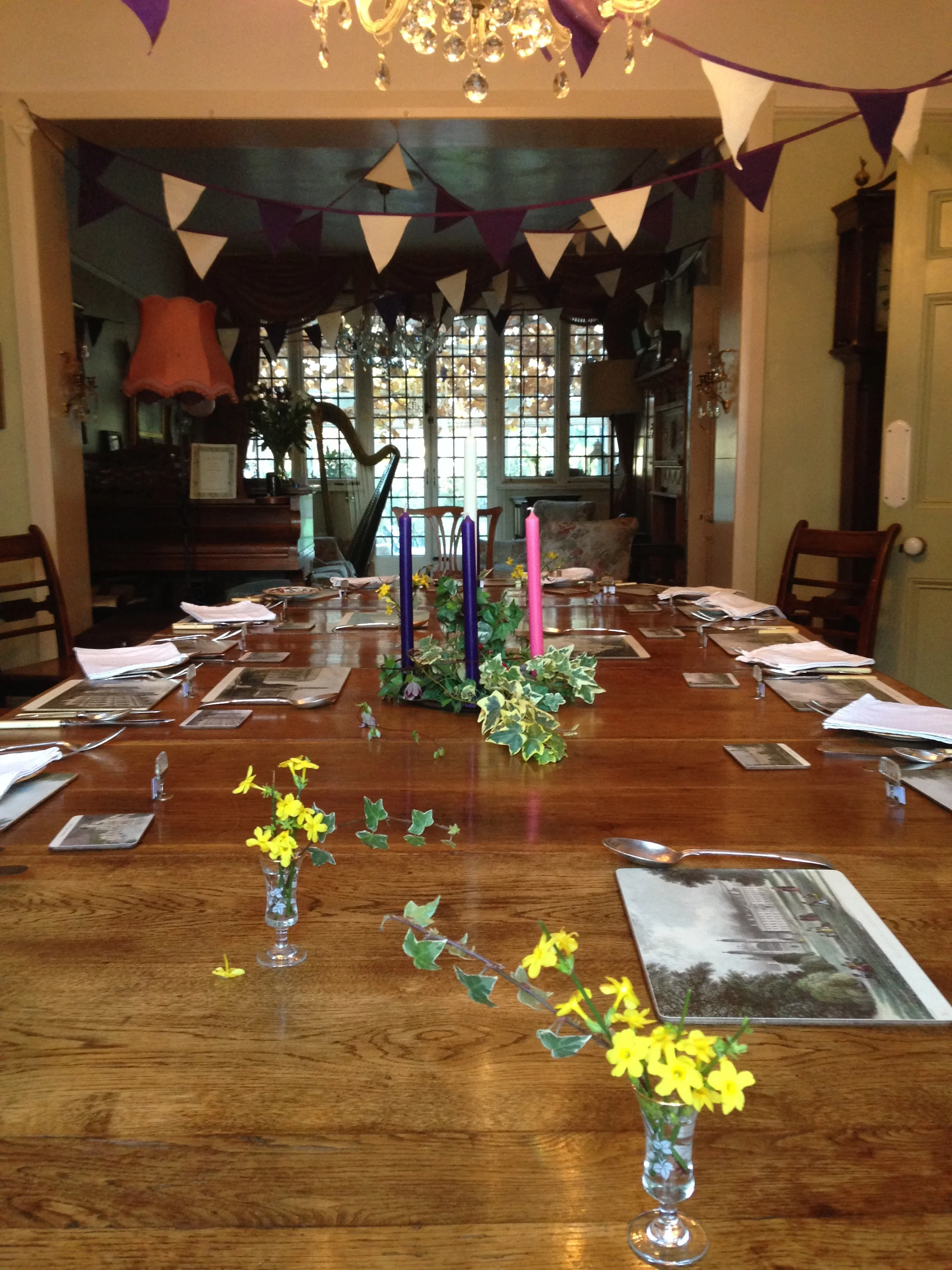
Last week, if you remember, I was looking forward to raising a glass of champagne with our wonderful, generous, exuberant friend Joanna who insisted on throwing a party to celebrate my new novel.

Now here’s a funny thing. Joanna gave the most wonderful party for me. She invited her friends and ours. She filled her fabulous Manor House with lovely people, just to raise a toast to my finally putting pen to paper again.

I went into the kitchen at the start of the evening, was offered a drink, and realised I was very slightly disappointed. There were no bubbles in the glass. I shrugged it off, deliriously happy as I was to be there anyway.

At the end of the evening when all the guests had gone and we sat relaxing in our pyjamas, I felt the same tiny little pang. I couldn’t suggest we open the bottle we’d brought Joanna as a present: that would be really rude. Then her husband came in with the whisky and we enjoyed that instead.

The next morning we drank gallons of tea, and every time I opened any of Joanna’s three fridges, row upon row upon row of foil-wrapped corks winked at me, and I sort of vaguely clocked that Joanna is still Joanna, and all her fridges are full of champagne so the sun has his hat on and all’s right with the world.

The really funny thing is that Serena went through all these thought processes, exactly the same as I did: very slight disappointment at no bubbles; deep shame at being so spoilt that she even had the thought; reassurance at noticing that Joanna’s fridge has all the right bottles in it anyway.

That evening, after we’d all got home, Joanna rang, hooting with self-deprecating laughter, having forgotten all the bottles of bubbly which she’d specially emptied all her fridges for three days earlier and lugged up from the cellar so they were lovely and properly chilled.

“Ah. We assumed that was your normal stock,” I explained.

“What?!” she said. “Don’t you think we eat anything?”

“Not really, no.” On her own frequent admission, Joanna is a lousy cook. “Why would you need food, if your fridge is full of champagne?”

There is a theological point to all this...

Advent is all about looking forward. See?

Not only have we now had five days’ laughter instead of champagne.

We also have a perfect excuse to go back and see Joanna again (perhaps even with Bink, one day soon?) and put all her stock to rights.


December 02, 2018 /Anne Atkins
Treatment for OCD, Addiction Treatment Programme
Comment
Fireworks

Bedford pre-Christmas fireworks, November 2018

Celebrations

November 25, 2018 by Anne Atkins

Sunday

Despite our time – in that pretty cottage, in that pretty village, opposite that pretty church – being very challenging all the time we lived there, we have lots of lovely memories.

Our neighbours were the best in the world.

2nd April, 2006

On that very first Sunday, the day after Bink’s 21st birthday, I tipped everyone out of bed and said from now on we’d be supporting our new tiny village church, barely a hundred yards from our door.

The one with the glorious bells.

There were a few grumbles and some extra snores. But we all made it.

Apart from Shaun, of course, who was employed to be at a different church altogether. (A church which, incidentally, still expected us to be attending it. I had told the vicar before we even left London that if we were housed outside Oxford I would attend our parish church, wherever that might be. And the children would probably follow me. He hadn’t believed me, perhaps because it didn’t occur to him that some people do what they say they will. Far less important was that we only had one car, that church was seven miles away and Shaun would need to be there an hour or two earlier than anyone else.)

The Atkins family soon swelled the electoral roll of the village church by nearly 50%. Within eighteen months Radio 4’s Sunday Worship programme was broadcast from it.

That very first morning we were warmly befriended by Muriel and Bob, retired farmers, who invited Rosie to play at their house any time she liked. They were only a couple of minutes away, and she quickly learnt the lane to their cottage.

9th April 2006.

Soon, too, we were invited to the Manor House: ours was the humble Manor Cottage, in the once Manor grounds. Would we like coffee on Sunday morning? I said we’d be at church – a very slight, “oh!” – but we’d love to call in afterwards.

The lady of the Manor would obviously be gracious and elderly, with grey hair and perhaps a bun. A sort of friendly Miss Haversham.

I dressed carefully.

And, wow! Met one of my now bestest friends. Blonde and gorgeous and vivacious and full to the brim and overflowing with love. That very first morning together we started organising a joint fête, to span our two gardens and raise money for the struggling church. Soon, there was a hole in the wall between our tiny patch and their spacious grounds, making the gardens one.

Rose told me last night that she went through it, as we often did, tripped down the stone steps to their barbecue and had an egg on her forehead for Easter.

Joanna and her adorable (slightly quieter, more academic) husband filled our spirits all the time we lived there. With spirits, mostly.

Gin when the going was bad. Champagne when it was good.

We got through a lot of gin.

But actually, a fair bit of champagne, too. Joanna can turn anything to celebration.

And tomorrow, they are hosting a party at their Manor House to launch my new novel, not even (quite) out yet – though beginning to garner some interest.

I am expecting a lot of bubbly...

Bink will not be at the party. She is still on the Priory’s bootcamp, and not allowed out.

Am I sad? Yes and no.

Mostly no.

Of course I’m sad that she won’t be popping the corks with us. Of course I’m sad because she herself is sad to be missing two of our dearest friends and their very dear home, which meant so much to us and kept us cheerful for so long.

But am I sad she is getting treatment? Am I sad she is on a strict programme to enable her to overcome her OCD?

Was I sad to hear these words: “Oh well. I probably shouldn’t be partying for a while yet anyway.”

Is the Chief Rabbi circumcised?

jonathan-daniels-385121-unsplash.jpg

(To be honest, I’ve never asked him.)

November 25, 2018 /Anne Atkins
Living with OCD, Addiction Treatment Programme, Priory Hospital
1 Comment
Apple

Owning up

November 18, 2018 by Anne Atkins

Sunday

On Friday, reader Helen asked a pertinent question on Guilt. How can Christians demand forgiveness of a wrong that is still ongoing? (Apologies: this has turned into enough for two posts. I should have started yesterday. Sunday is always good news, and today’s news.)

I gave much thought to forgiveness over those years – what it involves; how it feels; whether it wipes everything out – and we may return to it.

But Helen’s question is particularly timely this week.

In principle, we can be called to unconditional forgiveness. African slaves on American cotton plantations had little enough alternative, and no hope of redress… in this life.

Our Lord forgave on the cross… an ill that was very much ongoing.

But Helen asked how we could be required to forgive by those allowing the wrong to continue? It would stick in the gullet, wouldn’t it, if the slave-owners or executioners themselves preached the need for forgiveness?

(I’ve asked myself a related question in the writing of fiction. And am speaking on this in Cambridge on the evening of 5th December. How to portray evil? Do we create the cunning Iago, with no redeeming features at all? Or the far more murderous Othello and Shylock, whom we sympathise with much more?)

The fundamental challenge, as I see it, is this:

When I do wrong, I still have to live with myself. If I can’t, the game is over. And the longer, deeper and more devastating the wrong I have done, the harder this is to do.

1. The easiest way is to argue the evil away. How did the Nazis do what they did? By telling themselves Jews are not really human, so it wasn’t wrong. The same with Negro slaves. Or the disabled or homeless or mentally ill, or any abused group. (Some might even say, unborn children.)

We are on the same spectrum when we argue anything from our own point of view. Last time you had an quarrel, did it go:

“I was really unkind to you last night.”

“Well actually it was my fault, for being rude.”

“Yes but that’s because I belittled your mother first”?

Much more likely the other way around.

So bear in mind, regarding our homelessness, I am giving my side of the story. To many in the church, I don’t suppose there was a wrong at all.

a) The vast majority probably didn’t know. I’ve said before that in a church of many hundred you become a customer, to be served; not a family member, to own.

Shaun was allocated half a vestry as his study. After August 2005 this also had to house the clothes, books and musical instruments we’d brought from London for our few months in rented accommodation... before that ran out. A member of the church called to see him, and found him eventually, at his hidden-away desk, through a narrow path between cardboard boxes piled seven foot high and far more deep.

“Gosh,” his visitor said, astonished. “This is real, isn’t it?” 

b) The minority with responsibility on the (far-too-big) PCC presumably thought someone else was solving it. They must be. They couldn’t just have voted for us to be actually homeless, could they? One went home to her husband – a truly kind couple, who helped us hugely later – who asked her, “But where are the Atkinses going to live?”

“I don’t know,” she said. “I wondered that...”

c) And the tiny few who knew exactly what they were doing? They told themselves it wasn’t wrong. We were to blame.

If you remember, we were persuaded – our hearts in our mouths – to tell the PCC, if they bought the house I knew I couldn’t cope with (so much so, that all I could think of was to leave my family and go home to my parents’), that Shaun would look for other work. Anything less was irresponsible. So the purchase was aborted.

Which was interpreted as our refusing accommodation, and choosing to be homeless.

And that’s how it was (eventually) told to the many.

So from one point of view, there was no wrong ongoing. It was my fault for being difficult. I reaped my deserts.

(Jumping ahead a bit, my response – avoiding the vicar, the church, even the city I once loved as much as my home town of Cambridge, where Shaun and I met and fell in love; which I even now stay away from as much as I can – must have seemed the result of resentment or anger: the remedy, forgiveness. It wasn’t at all: it was the result of trauma; the only way I knew to keep going.)

I never quite worked out how my children deserved it too.

But this I did know. The vicar was a sportsman. He liked to win. I wasn’t doing as I was told. I could see as well as the next man that by far the most effective way to beat me was through my children.

2. There is another way, however, to live with the wrongs we have done. Much tougher, more painful and daunting.

Bink is currently on the Priory’s Addiction Treatment Programme. 

Last Wednesday she was allowed two guests for the Families’ Day, and invited Shaun and me.

I can’t tell you about the sessions, because they were confidential. I can tell you the procedure, because we were told this in advance. We were each required to write our own “Consequences Letter” telling our loved one what effect her addiction has had on us.

We were to pull no punches and spare no feelings.

This would be read out to the addressee, face to face, in a circle of others.

We were allowed one page, and twenty minutes to write. I described Bink’s addiction to destructive thinking, mostly around washing, and what it has done to us. I pulled no punches.

I can also tell you Bink’s reaction, because she has given me permission to write anything about her treatment.

She was devastated. Distraught. So much that I cry now, thinking of her, broken and wretched at what she has done. Or her illness has done through her.

The addict is allowed to respond. She couldn’t. For minutes she had no words, she was sobbing so, until coaxed by the therapist.

It hurt to have hurt her so much, and I feared she’d wish she hadn’t invited us. At tea afterwards I asked if the session had been helpful.

“Oh yes,” she said. “Very.”

That is courage. That is facing up to wrongs done. That is the honest way to live with our true selves.

To say: “I’ve done it. I own it.” And eventually, “I repent of it.”

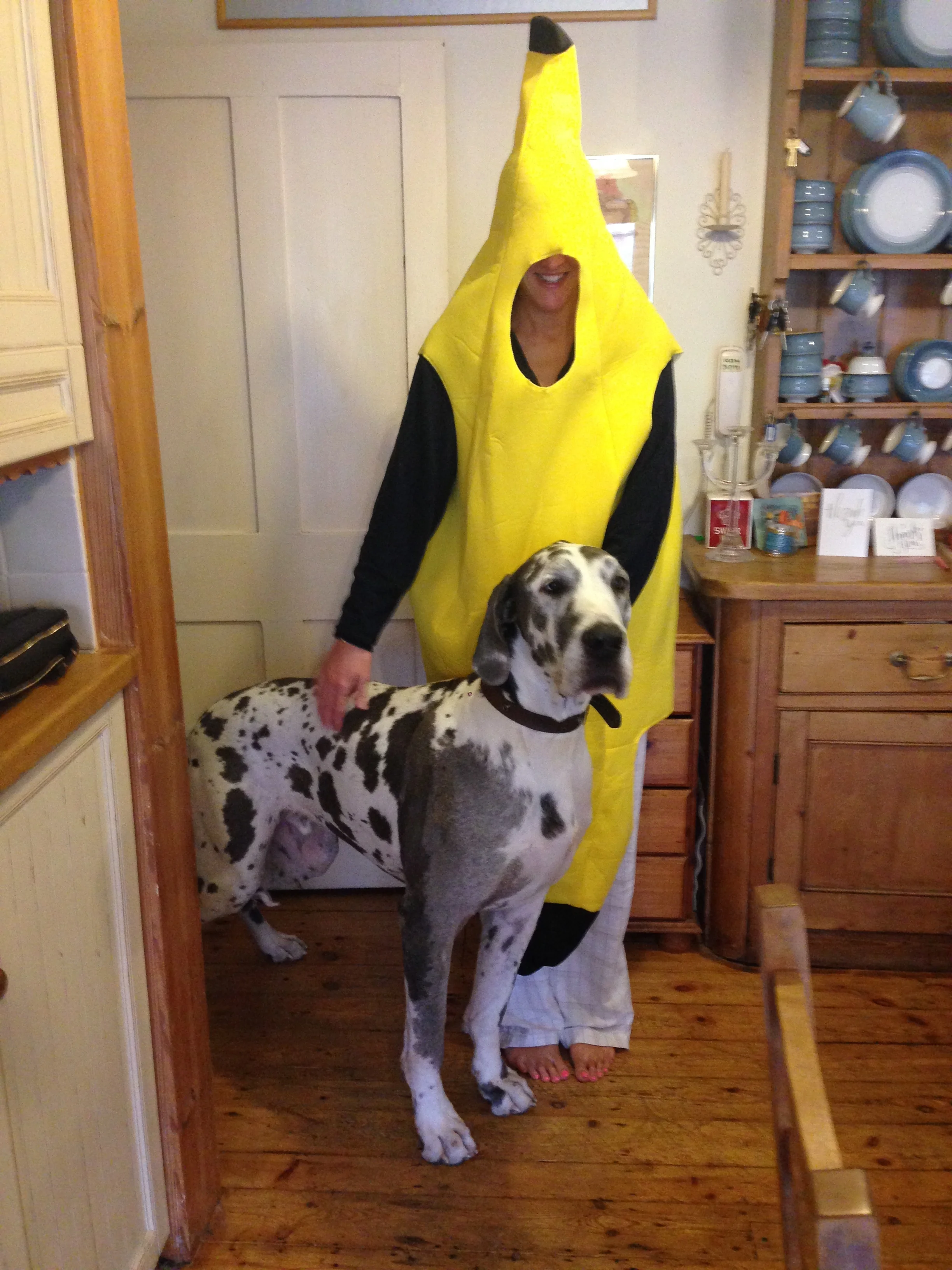
Now, its being Sunday, here is Horatio with a banana.

IMG_2857.JPG

Every Sunday I give you colour photographs I’ve taken myself. There had to come a time when the link would be tenuous...

Now that Shaun has left his job and until he has another, our only income is letting out our home. We are very popular with hen parties. Horatio loves them, and flirts with all the girls.

One bride (a six foot doctor) was a yellow duck all weekend. This morning, Shaun came back from his shower having just bumped into a banana.

Facing her dæmons as she is, why shouldn’t Bink be well? Once well, why shouldn’t she fall in love? In love, why shouldn’t she have a hen party all of her own?

And dress as a banana…

November 18, 2018 /Anne Atkins
Christian forgiveness, Living with mental illness, Priory Hospital, Addiction Treatment Programme
5 Comments

Next step...

October 28, 2018 by Anne Atkins

Sunday

“We had no idea,” a number of people reading this blog have told me.

“I’ve been such a rubbish friend,” said one, feelingly, a couple of days ago. (This is absolutely not true, by the way: she has been one of the kindest and most supportive people in our lives. But she obviously feels she didn’t know enough.) “Even though you told us from the start that Bink was ill...”

So should every family affected by madness be writing about it...?

Part of the trouble, of course, is that most mad people are not able to articulate their suffering themselves. They may be living on the streets, or in prison. Or simply in isolation in a bedroom: I know of at least one such.

When journalist Frank Gardner (shot six times in a war zone, and disabled) was left abandoned on a ’plane, he was able to tell the rest of us how wheelchair-users are treated.

Who does this on behalf of the loonies?

And does this go some way to explaining why mental health provision is so much worst than dire?

Serena has said to me a number of times, “You’ve barely begun to convey how awful it was. When Bink came out of the [Florence Nightingale] Unit, for instance. If readers don’t experience the depths, they won’t feel the elation now she is receiving treatment at last.”

Must try harder...

Be that as it may, today is a day for good news.

Bink rang yesterday. She is about to start on the Priory’s bootcamp Addiction Treatment Programme. 28 days, no contact at all with the outside world for the first week and not much after that. Full-on, 7.45 in the morning till 9.30 at night. Visitors only on Sunday afternoons, and none the first weekend. 

And Bink thinks she will be far too busy for visitors on Sundays anyway, catching up with her washing.

It is a while since she had much acquaintance with life before midday. Let alone experienced anything one could describe as busy. It could prove an interesting relationship.

“Are you excited?” I asked. Nobody is expecting an easy ride.

“I am, actually.”

This picture is of the bubbles Rose blew in the park, when we visited Bink last Sunday.

Is it too much to hope that one day, Bink might become the Frank Gardner of the world of madness?

* * * * *

PS Ha ha ha ha ha. This is the first time I’ve added to a post written earlier in the day, but I can’t resist. Bink has just rung again.

“Please can you do me a favour?”

“Of course, Bink.”

“What will you be doing at ten to nine tomorrow morning?”

“Probably writing this blog. I post every day by ten.”

“Could you get me up, please?” From Bedford. Fifty miles away. All I have in my armoury is Alexander Graham Bell’s invention. “By Thursday I have to be in breakfast by a quarter to eight, so I’m trying to get up half an hour earlier each day.”

“Ok…”

She is talking to me from a top-of-the-range, state-of-the-art psychiatric hospital.

“And nobody here can get me out of bed.”

October 28, 2018 /Anne Atkins
Addiction Treatment Programme, Priory, Mental health treatment
Comment

Powered by Squarespace