Anne Atkins

  • Home
  • Bink Bonkers
  • Non-Fiction
  • Novels
  • Journalism
  • Speaking
  • Broadcasting
  • Biography
  • An Elegant Solution
  • Thoughts for the Day
  • Anthem for Mary and David Briggs
  • Love Strong as Death
  • Contact
panic-1393619_1920 (1).jpg

Well enough

October 18, 2018 by Anne Atkins

Present day.

This isn’t proving quite as plain sailing as I’d assumed.

Well, of course not. I am, by nature, insanely optimistic. If I weren’t, I would have topped myself by now.

Bink rang home again, again terrified of being expelled from the Priory. She wanted me to get her an assurance, in writing, that she wouldn’t be thrown out with nowhere else to go.

“Why, Bink? I don’t think it’s going to happen.”

“So I can stop worrying and get on with things.”

Yes, I could see that. Bink can get herself into a complete state about something so unlikely the rest of us would just get on with things anyway. Still, I couldn’t promise her it was impossible.

“Why are you so frightened? Has anyone said anything?”

“Yes.”

Unpicking this unlikely statement, it seemed that she had pushed and pushed and pushed – she does this: it’s partly why she would make a terrifying barrister – until the person she was pushing said, well, I suppose, if you absolutely couldn’t engage with the programme, it is conceivable… Obviously, no one can promise her she could never be asked to leave.

I am reminded of extremely abused and damaged children, pushing foster parents to extremes to see what it would take to lose them.

After about twenty minutes, going round and round in ever more frustrating circles, I suggested the first thing she should do was find out when her next therapy session is.

“I can’t do that first. I’m twenty minutes late for a cooking session.”

“Bink, hang up and go to your cooking session!”

“But we need to finish this conversation.”

“Bink, please!”

“I can’t while we’re discussing this.”

“I think we finished ages ago.”

“Then why did you go on talking to me?”

“Because I didn’t know you had a cookery session! Bink, I can’t help you if you don’t go to your sessions.”

“I can’t do that till we’ve finished this.”

“I can’t help you with this unless you do that. You rang me up for advice. My advice is, go to your cookery session!”

At some stage over the next five minutes she told me to stop panicking about her cookery session.

Bink has a point. In a very mild way compared with Bink herself, I was indeed panicking. I wasn’t screaming so loudly I could be heard down the street, or setting fire to the kitchen because I couldn’t work out how to call for help from someone in the next room. But I was focusing so hard on one thing that I couldn’t think about anything else.

Bink is my daughter. Her madness hasn’t come out of nothing.

Over the last decade and a half I have experienced panic attacks. In situations that most people would consider reasonably panic-making: losing our home; my husband’s breakdown; his having to give up work and the attendant prospect of our losing another, even more precious, home.

They have been few in number, they haven’t lasted long, and they haven’t really incapacitated me. I’ve never even felt I couldn’t control them if I wanted to. But they were enough for me to imagine, if I multiply them by a factor of several hundred, a little of what it must feel like to be Bink… all day and every day. No wonder she has accepted chemical coshes, just to keep breathing.

Bink has often asked what I mean by “well”. I fall back on what I assume most people would mean: well enough to function. But she doesn’t like my using the word and in a sense, she is right. Bink will never be “well.” Not if well means never being overwhelmed by emotions; never having intrusive thoughts; never panicking in untoward circumstances.

None of us is well, if this is what well is.

One of my most successful, intelligent and admired friends – honoured by the Queen – recently told me of unwelcome thoughts, dominated by worry. Just as Bink’s are.

Bink doesn’t have to be completely “well”.

Just well enough to function.

I think of the joys in my own life. Well enough to work. Well enough to fall in love. Well enough to feel the sunshine on her face.

Well enough to have children of her own… and break her heart over them.

Bink loves the flowers, card and chocolates I arranged to be delivered to her room. She says, laughing, that other patients are threatening to ring their mothers and demand their own.

What she doesn’t know – and I believe she isn’t reading my blog at the moment, so it is safe to share with you – what she doesn’t know is that tomorrow she will have more. I have an arrangement with the florist, and with Bink’s prayer group. We are taking it in turns.

She will have flowers every week. While I am alive – and she is in hospital – she will.

And a letter from my nearly-101-year-old father every day. While he is.
October 18, 2018 /Anne Atkins
1 Comment
teen mental illness.jpg

Chaos come again

October 17, 2018 by Anne Atkins

Chaos Come Again

2003-4

You don’t expect mothers to turn up in their Yves St Laurent and dive headfirst into your wheelie bins

Before Bink went into the Florence Nightingale Unit at the age of 16 she used to complete her academic work with no apparent effort whatsoever.

We know now that her life was far from perfect – she had been in acute and increasing mental anguish for some years – but one challenge she didn’t have was academic achievement. Assignments were always on time; exams sailed through; near-top marks in all subjects for her a matter of ease.

After the Unit, everything became an almost unbearable struggle.

If you are a teacher, you may put some of this down to the A level course being more demanding than GCSE. A much more visible difficulty was a new curse of perfectionism. Bink had always set herself extremely high standards. But whereas previously these had spurred her on to sparkle, now they seemed to cripple her into incapacity.

She had coursework to write on Othello. For weeks, her labour had been agony.

On the last possible day she took her finished work into MPW to hand in. The relevant tutor had gone home, so she put it on his desk for the morning. She had met the deadline.

First I knew about it, her several-thousand-word essay had gone missing. It was handwritten: she had no copy.

“I can’t do it again,” she said despondently. “I just can’t. I’ll have to fail.”

My brother lost his PhD thesis the day he finished it. After searching for half a week, he simply sat down and rewrote it. Most of us have done something similar, and ended up with a more honed piece of work.

Bink couldn’t.

I had witnessed the sweat and tears. She really couldn’t.

Rapid research revealed that a member of the nighttime cleaning staff at MPW had so shaky a grasp of the English language that all the Principal’s attempts to sack her had so far fallen on deaf ears. Every time he dismissed her from her post, she smiled, thanked him, and turned up again the next day.

Characteristic of her eccentricity was that she had decided Bink’s essay on the tutor’s desk was rubbish which needed disposing of. Pointless to ask why. If she had a reason, she wasn’t revealing it: not in English.

She had put it in the wastepaper basket. Which, along with all the bins, was emptied each night into a large wheelie bin. Which in its turn was standing to attention as one of a row on parade outside on the pavement, waiting to be emptied by Kensington and Chelsea Borough Council.

“Stop them!” I shouted to the Principal. “Please, go out and pull them all back in again!”

What this might do to the entire college’s rubbish collection for the next week, I didn’t have time to care.

By extreme good fortune, the refuse representatives of the good burghers of the ancient Borough of Kensington and Chelsea had that morning had a lie-in.

“I can be there by bike in under ten minutes.”

Thing is, by the time you find yourself Principal of a posh tutorial college in one of the poshest boroughs of London, you get used to all sorts of self-sacrifices. And you don’t expect mothers to turn up in their Yves St Laurent and dive headfirst into your wheelie bins. (Not even your scholarship-mothers, in their writers’ mufti of jeans they’ve been wearing for a fortnight.)

He obviously thought it beneath me.

As Principal, though, you also tend to turn up for work looking fairly smart yourself.

I was pretty sure it was beneath him.

Bink thought it beneath either of us. “I can’t touch it if it’s been in the bin,” she wailed repeatedly.

“Let’s just find it, shall we Bink? You don’t mind photocopied contamination, surely? And your tutor doesn’t have OCD: he can mark it in marigolds if necessary.”

All credit to that Principal and his hapless, roped-in Vice Principal. I dread to think what it did to their Gieves & Hawkes, spending the morning going through the contents of several wheelie bins… before one of them emerged like a jack-in-the-box, triumphantly waving several pages in Bink’s neat handwriting on the theme of jealousy in Othello.

It was darned good, too. I’ve come across similar arguments since among serious literary critics, but I don’t believe anyone suggested it to Bink. Her thesis was that the green-eyed monster, the thwarted love in the play is all Iago’s; the climax, from memory, being the quasi-marriage vows the two men make on their knees at the pivotal centre of the play. It gave me fresh insight into a story I know well.

Worth spending half a day head down in a Council wheelie bin, up to your gold cuff-links wading through discarded Prêt à Mangers, your beautifully tailored trousers and handmade leather Oxfords waving in the air.

October 17, 2018 /Anne Atkins
parenting a teenager with mental illness, Education
Comment
woman-1852907_1920.jpg

Contagion

October 16, 2018 by Anne Atkins

Contagion

2003: OCD

When Bink first started at Mander Portman Woodward tutorial college (after losing her place at St Paul’s Girls’ School because of going into the Florence Nightingale Unit) she struggled to study at all.

In some ways, being unable to touch is a far greater disability than being unable to use other senses: the deaf can read, or paint; the blind listen to audiobooks, perhaps play a musical instrument or read with their fingers. But if you can’t touch anything…?

One of Bink’s A level subjects was English. In a reasonably well-booked household, almost all the syllabus is going to be on the shelves. But Bink couldn’t touch any of the books we had already.

We lived round the corner from a lovely shop in the Fulham Road called Nomad Books. There was nothing for it but to buy new copies of the Dickens and Austen and Shakespeare she was supposed to be studying. These new paperbacks waited patiently, in the brown paper bags Nomad provided, for Bink to garner courage to take them out.

A week or two later she asked if I could please get her new ones, as the copies she had were now “dirty.”

Why?

Because they had been sitting in her room.

Right.

It went against the grain to buy one more copy of Oliver Twist (or whatever it was) when we already had several knocking around the house. But to buy a completely new replica of one I’d just bought a few days earlier...

“Excuse me. Um. Ok. There is absolutely nothing wrong with this book, which I bought from you the other day. It hasn’t even been out of its bag. But would you mind very much, please, taking it back and swapping it for another one exactly the same?”

“I’m sorry?”

“Can I exchange it, please?”

“What’s wrong with this one?”

“Nothing.”

“But you want another the same?”

“I know it sounds ridiculous...” What do I mean, sounds? “...but you see, my daughter has very severe OCD...”

Roll on another week.

“I’m so sorry. You very kindly changed this book for me last week. For another copy of the same. Could you kindly do it again?”

It is a small shop and they were getting to know me quite well.

“Er... this copy of Emma, which you’ve changed a couple of times already...”

“I’m really sorry, but we don’t have any more copies of Emma in stock. It’s on this year’s A level syllabus, and they’ve all gone.”

“Oh dear.” Stumped. “Ok. Tell you what. Here’s my receipt, for this copy. Could I return it, please, and you give me the money back?”

Business with till. “Here you are.”

“Thank you. Could you please now put it back on the shelf? That’s right: the book I’ve just returned. It was quite new. Still in its bag, as you saw.”

“You want me to put it back on the shelf? Like this?”

“Please. Great. Now... you don’t happen to have a copy of Emma you could sell me, do you please? Oh look, there’s one right there on the shelf behind you. How fortunate: it seems to be your last copy. Could I buy it, please?”

I can understand why psychologist Professor Paul Salkovskis calls OCD a contagious illness. We were all barking mad by this time, the staff in Nomad as well as me.

I asked Bink why on earth she thought a book on the shelf in Nomad was cleaner than one which had sat in a paper bag in her bedroom for a few days. “For all you know,” I said, “someone’s been in, thumbed through it, picked his nose, continued thumbing through, and put it back on the shelf.”

“Of course,” she said. “But I can only control what comes within my orbit. Even I am not going to attempt to keep the whole world clean.”

Well, there’s that to be grateful for, I suppose.

Present Day

Bink rang at lunchtime today in some distress.

Her therapist in the Priory thought she was ready to start on the Addiction Treatment Programme, and she was terrified.

Of what?

  • That she might be thrown out of the Priory if she couldn’t do what they wanted

  • That she wouldn’t have time to wash, and would become a lot more ill

“Bink, sweetheart, you need to talk to them.”

“I’m too frightened.”

It was quickly resolved, of course it was. If she wasn’t ready yet, that was fine. She rang back later, perfectly happy, having been reassured by her therapist. (And encouraged another time just to say so…)

What I find fascinating – and, yes, pitiful, given the history – is what she most fears: her treatment being withdrawn.

October 16, 2018 /Anne Atkins
Managing OCD, Priory, Living with OCD
Comment

Corner?

October 15, 2018 by Anne Atkins

Present day

I can’t remember when I last felt so happy about Bink.

Her graduation, five and a half years ago, was a pretty stunning day, Bink looking fab, golden hair flowing over her shoulders, stepping forward with grace and confidence... and we, with no idea how ill she was underneath. 

When she came home from the Bethlem Hospital a dozen years ago, the first weekend she was allowed, having changed beyond recognition in just ten days, was a good time too... though we didn’t realise she would be discharged far too soon with nothing in place to survive.

That’s about it, I suppose. A couple of occasions, since she first went into the Florence Nightingale Unit aged sixteen, in 2001.

And now this, today.

Wow.

No illusions about how ill she is. No fear that the Priory will kick her out prematurely, without any support to help her.

Just about the best news since Bink was twelve years old.

(Ah, add one more good time. That evening when the police – with Serena, and Shaun’s two sisters – came home with her at last, after she had disappeared for two days, early December 1997. The first intimation of her illness, had we but known how to read it. But she was alive. Blessedly, wonderfully, still warm and breathing and alive! That was a pretty good day, too. Eventually.)

Yesterday she rang and we spoke for over half an hour. Shaun and I walking though the gangling Scots pines of the Highlands, springy moss underfoot, lurid toadstools glistening in their startling frocks, sun slanting through the branches and seals bobbing in the estuary. I, hoping for a repeat of the red squirrels Shaun saw scampering in their lanky skywards playground a day or two ago.

While Bink chatted and chatted. Upbeat. Cheerful. And thoroughly engaged with it all.

She told me of the first addiction meeting she’d been to, an evening or two ago. 

“They asked who’d been clean for a year. Then six months.

“Then,” she said, “they asked if it was anyone’s first meeting. So I went forward for my badge. And everyone clapped and congratulated me and cheered me on...” She described her medal to me in detail. The only word I remember from it is Hope. Will you understand, if I tell you she sounded like a six-year-old excited by her sticker from the dentist’s, that I am not being in the slightest patronising?

I am, in truth, moved to tears by her innocent and so-trusting… well… hope.

Tears of joy. And anger.

My daughter has been ill for over two thirds of her life. Longing for treatment for nearly two decades, since she was diagnosed aged 15. We live in – and fund – a Welfare State. We share in a world-class NHS. That Welfare State and that NHS claim to treat us when we are ill.

Instead, the system has been content to pay for her to stay ill. For disability benefits, and crisis teams, and psychiatric wards where the emphasis seems entirely on containment and damage-limitation and not at all on cure. On so-called “supported accommodation,” more abusive than prison.

And in all that time it couldn’t spend a fraction of that amount giving her treatment enough to heal.

Bink has now, at last, got extremely fortunate. Someone extremely generous has agreed to pay for private treatment. Only because Bink’s mother had the extreme cheek to ask, because she is extremely tenacious and bolshy… and extremely heartbroken. So heartbroken that she would have done anything, almost.

Rant over. I am content.

Good news is that, when she has to give up her books to embark on the much stricter programme, she will be allowed to keep her Bible.

And the icing on the cake, that she is reading a pre-publication copy of my next novel. And said it is my best yet.

October 15, 2018 /Anne Atkins
2 Comments

The journey of a thousand miles...

October 14, 2018 by Anne Atkins

Sunday

If you remember the remarkable film Kes, you may recall the intense and prolonged patience needed to win the trust of a wild animal. You have to respect the animal’s fear. It is a costly and very drawn-out process, extremely uncertain of success.

By Sunday evening Bink was calmer, small thanks to me. By Monday morning she had a shopping list: a new large suitcase, an even larger plastic storage box and many, many boxes of wet-wipes, more than one shop could provide. By Monday evening she had gathered together what she would need for the foreseeable future.

On Tuesday she started filling the box and suitcase.

“Could I,” she asked, “open the presents you gave me, so I can pack them?”

One had been waiting outside her room, in brown paper backed-with-gold and a gold-and-white cotton ribbon, for so long that someone else had to open it: the paper was now deemed “dirty.” Others only recently wrapped: books signed by writers at a bookfest I’d been speaking at the week before; a new Manga Bible inscribed by the illustrator Siku, who had spent much time thinking what to write to her; an annotated journal and a new, clean pen.

That afternoon she asked if my promise – not to let anyone into her room before November – would still hold if she went in on Wednesday, not Tuesday. She wanted to shower and brush her teeth, a day’s work.


Wednesday, 10th October. World Mental Health Day.

I find I am still shaking as I write this: on World Mental Health Day Bink was ready to go into the Priory. 

She was frightened of saying goodbye to my father. She didn’t want anyone to touch her: would Grandfather understand? Would he? He has wept and prayed over Bink since she first went missing over twenty years ago.

He will be 101 in less than a month. He may never see Bink again.

Not on these shores, anyway.

Teatime. She was ready to go.

Hair shorn to within half an inch of her scalp. Very obviously-new loose cotton pyjama trousers, and a loose cotton top. Open sandals.

Bink looking as vulnerable and gamine as she ever has.

Shaun cancelled a long-standing appointment. I went to get in the car too. I hadn’t realised there wouldn’t be room for me: Bink didn’t consider the newly-shampooed boot clean enough (the dog has been in it once, though everything was covered with a sheet) so her luggage was on the back seat.

Just as well. We were leaving the house at 6 the next morning for a flight to Scotland, the holiday Bink postponed her admittance for; I had to return the final proofs of my novel before we left; I had a short article for the Daily Mail to write by morning; and the next day’s blog. And I hadn’t begun packing. Bink isn’t the only one who finds it difficult: I normally need a week. I would be up half the night as it was.

I waved goodbye – no hugs or kisses allowed – and watched the car pull into the street.

I have no idea when Bink will ever be back, nor how changed she might be.

I went inside to ring the florist I already had an arrangement with, to make sure flowers and chocolates were in her room before she got there.

Then I sat down at the kitchen table, shaking as I was, and cried.

For the briefest of moments only. I have twenty years to cry about. But I also had a novel to proof-read and return.

October 14, 2018 /Anne Atkins
2 Comments
devil-33927_1280.png

Deflection

October 13, 2018 by Anne Atkins

5th October

We were at a bit of an impasse.

Bink said she needed everyone to stop putting pressure on her to go into the Priory by any particular date. Only then would she feel relaxed enough to go in at all.

It appeared that she couldn’t see what the therapist and I had a clear view of: just out of her line of vision, over her shoulder, Screwtape, laughing his head off...

Mental healing, far more even than physical, needs the patient to sign up to it. How many light bulbs would it take to change a psychotherapist, if the psychotherapist didn’t really want to change? Even had it ever been appropriate (it hasn’t, thank goodness) I can’t see how sectioning could ever have helped her. 

If Bink doesn’t want this enough to do it, all bets are off. For ever, probably. We’ve all been seeing this life-changing opportunity at the Priory as a bit of a Last Chance Saloon.

I wouldn’t say this of many therapists (obviously, tautologically) but Bink’s therapist at the Priory does seem pretty exceptional. Both in skill and kindness. Gently, softly, she suggested Bink might want to relax about her room’s OCD, just putting it through its rituals on days when it felt like it, and come into the Priory in a month anyway.

“That,” Bink said, “is more pressure than coming in tomorrow.”

“In which case,” I suggested predictably, “come in tomorrow. Or stay now and I’ll go home without you.” She had no toothbrush, or spare clothes. “Southgate must have shops with toothbrushes and clothes.”

We’ve done this before when Bink’s got stuck. It can be easier to jump straight in, than think about how freezing the water’s going to be.

“Or Monday,” the therapist suggested sensibly. “Pack a few things over the weekend.”

“I’m not promising anything...” I said very carefully (since Shaun left his job a month ago, our house is the only member of the family earning… apart from Ben, whose snakes have some very expensive habits to maintain) “but just suppose we could undertake not to touch your room before November: would that help?”

A wave of relief washed visibly over her.

As we drove away Bink processed this. “My life is such a mess anyway,” she conceded, “I suppose abandoning my room can’t make it much worse.”

We formalised the deal: if she came back as inpatient to the Priory in time for her therapy appointment on Tuesday, I would promise not to let anyone touch her room before 2nd November: the most recent deadline she had given herself… before saying she needed to postpone that, too.

(I didn’t tell her what I had told myself – and no one else – a few days earlier. If she wasn’t in the Priory by 2nd November, she would be sleeping on the streets. Again. After she ran out resources to pay £70 a night for an hotel, which she’s done before too. I have read, and heard, from numerous sources, that sometimes you have to let your children hit rock bottom before they will swim up to the light. Love can be brutal. More, it can be utterly desperate.

To be honest, I don’t know that I could do it. But Bink wasn’t the only one who had set herself a very painful and difficult deadline.)

She would need help with her packing though.

She barely emerged all Saturday. On Sunday the diary had been cleared for her.

“What on earth for?” she demanded.

“You said you wanted help with your packing.”

“I didn’t say anything of the sort. Why are you putting pressure on me again?”

Heart-sink.


June 2003

When Rosie (as she then was) was a week old, Bink took her to Wimbledon in a baby-sling. A week is the smallest a human being ever is, outside the womb: you lose weight in the first few days.

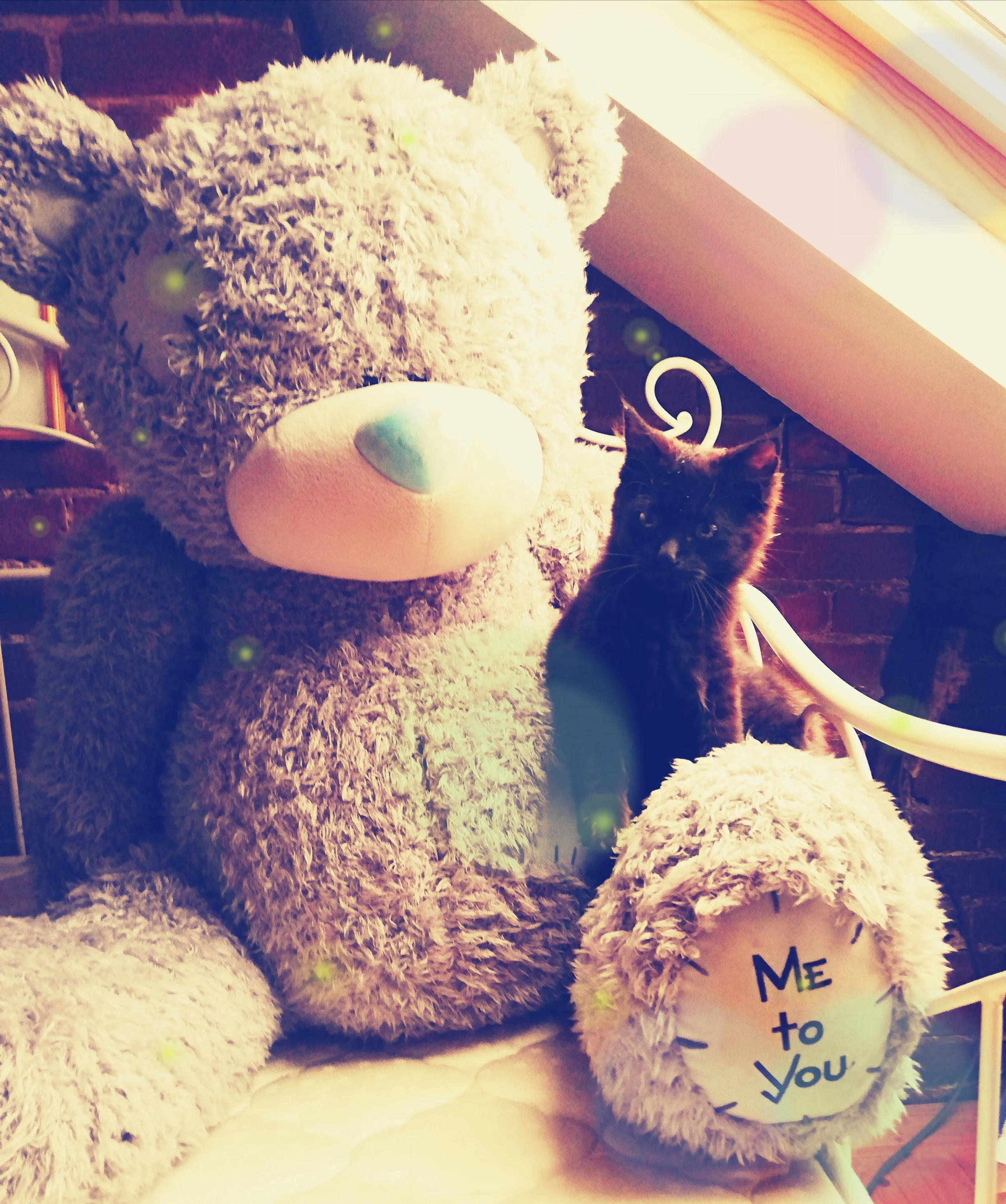
They came back, the two of them, with the biggest teddy bear in the world. Bink, the cat with the cream: everyone had admired her tiny accessory.

Somewhat remarkably given where we’ve been since, we have her still.

(The teddy I mean. And the sweet-grown Rose, actually.)

October 13, 2018 /Anne Atkins
Comment

Fear

October 12, 2018 by Anne Atkins

30th May 2003

I went into labour around three on a Friday morning. (Sadly, a couple of days after Benjamin went back to school: I have regretted ever since his missing our family celebrations.)

By the time you’ve done the gig a few times you have some idea how it goes, so I didn’t call the midwife until 4.30. By which time the baby had a view that it was about time to be born.

I had no idea how much had changed since Ben’s birth. The criminally insane midwife I spoke to said she was too busy delivering other people’s babies and wouldn’t come out just because a mother of four fancied having a fifth. The contractions, she said, had to last a minimum number of minutes, with a maximum number of minutes in between. She suggested I timed them and rang back when I qualified.

In a way it’s lucky she wasn’t in the house. Because I would have killed her.

Try it sometime. Get a friend with a large saw to cut off one of your legs, time how long it takes him, then how long it is before he’s finished his Kit-Kat break and cuts off the other one. Then call the doctor. 

By the time my screams could be heard all the way down our street and up the next and round all the houses and had reached the windows of the labour ward in the Chelsea & Westminster Hospital a couple of miles away where the midwife was far too busy delivering other people’s babies – by the time even Shaun was awake – she said oh all right then since you keep going on about it. She didn’t exactly hurry. It took her forty five minutes, at five in the morning. By car.

The relevance to our story being that all Alexander’s life, both before and after this, I have resolutely maintained and still do that his Asperger’s syndrome is a privilege. It is not a disability. (I only concede to the label to procure his rights.) Alex is simply on another planet, just as good as this one. (Though I agree, it is a little more… sideways on.)

Alex’s birth, however, was different from the others’. The midwife told me to push too soon. When she realised her mistake, she halted proceedings and we went back to the beginning, with the result that Alex emerged a bit on the late side, by a couple of hours or so. A trend he has stuck to consistently since.

I had often wondered whether this was connected to his AS. (That genius of autism, Prof Simon Baron-Cohen, has since suggested that it may not have been the delay which caused Alex, so much as Alex causing the delay, which is far more amusing and likely. She was a very experienced and excellent midwife.)

If I’d really believed, as I’ve always claimed, that Aspergic is just as valid as neurotypical, I wouldn’t mind having another Aspergic child, would I?

I obviously did mind, because I absolutely refused to have that baby without the midwife there to tell me when to push.

With the result that the moment she and her back-up walked through the door and gave me permission, that baby was out faster than I could say, “Give me the effing gas-and-air you effing stupid cow now-now-now-NOW what is the matter with you?!”

My terror of disability being also evidenced by my immediate, obsessive and repetitive, “Has it got Down’s syndrome?” every second and a half as the midwives attempted to deliver the after-birth.

“What do you mean?” one of them eventually managed to get a word in edgeways.

“HAS IT GOT DOWN’S SYNDROME?” I shouted to these utter imbeciles.

“You have a beautiful baby girl,” they assured me. “And no, not as far as we can see.”

I sank back on the bed in overwhelming relief. “Just the club foot, then?” This was the one thing we knew for sure.

“What club foot?”

They were seriously challenged, those two. Two scans had showed definite club foot.

“We see no club foot.”

(Just a salutary little reminder here. Babies can be aborted, up to term, for club foot in the UK. I don’t suppose you’re told afterwards, are you, if the diagnosis turns out to have been a little over-pessimistic? They’re hardly going to put the baby back after they’ve had a proper look.)

“Tea,” our son-from-another-planet announced.

Only then I could I tell everybody what I had known for several minutes, the moment I saw her rosebud mouth: the new member of our family was called Rosie.

It was just as well I didn’t have the emotional hurdle of disability to contend with. After the best tea I’ve ever drunk from Alex, and the best pecan-and-maple pastry from Serena, I had to spend the next few hours washing all the sheets Rosie and I had rendered laundry-worthy between us, before the risk of Bink showing up from hunkering-out at our next-door neighbour’s and realising that birth is not always a very OCD-respectful event.


5th October.

My hunch proved correct.

At Bink’s therapy session at the Priory last Friday, she said she needed us all to stop putting pressure on her to go into hospital. She’d had a very gruelling time recently and needed a break, to do nothing for a while.

(It is a bit of mystery to Shaun and me how anyone can need quite so many breaks from doing absolutely FA, but perhaps we’re not very imaginative.)

“What are you feeling?” the therapist asked me.

“I want to ask Bink,” I said, “if she remembers another time when she said exactly that.”

After a few wrong guesses, she cited after-graduation: while all her contemporaries were starting glittering new jobs, she decided to take a holiday… which has so far lasted five and a half years. Asking whether that decision had gone well would have been like asking a suicide bomber whether his vest exploding had been a good idea.

“If I were Bink’s Screwtape,” I explained to the therapist, “wanting to wreck her chances of getting well, I’d persuade her it was in her interests to keep postponing.”

“I asked how you feel,” she reminded me.

“I feel,” I said, “protective of Bink.”

She nodded.

“And very angry with Screwtape.”

October 12, 2018 /Anne Atkins
Comment
grizzly-443197_1920.jpg

Motivation

October 11, 2018 by Anne Atkins

Summer 2003

Our baby was giving Bink new hope before it was even born. 

When she came out of the Florence Nightingale Unit, she said the only aspect of her personality not destroyed by her illness was her abiding love of children. (There came a time when the vindictive daemon had a devastating crack at that too, but that was many long and hard winters ahead of us.)

She looked to the birth of her new sibling as to a world newborn.

She had seen, in a shop in Wimbledon, a bear bigger then the turkey Scrooge bought the Cratchits. It was a staggering £130. Show me a newborn who appreciates a teddy thrice the size of Tiny Tim, and I’ll give it back to King Kong before he misses his little treasure.

But Bink had set her heart on it.

For some reason now long forgotten, Bink was no longer studying further maths and physics as two of her four A level subjects as she had been Before the Unit, but had substituted Latin and Greek along with her English and single maths.

And B the U nobody ever had to motivate Bink to do anything: she was as driven as the snow in Narnia. If you wanted to introduce Mohammed to the mountain, there was no need to kick the holy prophet out of bed. Just put Bink behind the mountain.

All that fierce resolution had evaporated along with her health and happiness. I found myself urging her all the time. I can’t believe she’d lost the will: it was as integral to her essential Binkness as her whacky humour and incisive logic.

But powerful-enough chemicals can dissolve almost anything, including a person.

I did her a deal. Obviously £130 on a teddy bear is just plain loopy. But £30 an hour on a Greek tutor, if you could afford it, was pretty good value even in 2003. If said Greek geezer got you through a chapter of your text book in that hour he was probably cheap at the price. I can’t remember how many exercises there were to a chapter (half a dozen, perhaps?) but to my mind, £1 for the completion of a Greek exercise was pretty good value. To hers, £1 for an evening’s work that she had to do anyway was an absolute bargain.

She nearly did it, too. By the time I went into labour she was only about half a dozen exercises short.

I let her off the rest.

I was a bit too occupied to insist.

5th October.

In the present day, matters have been coming to a head in the Atkins ménage.

Last week, Bink asked if I would be willing to attend her therapy session in the Priory. Pleased though I was to be invited, I had a pretty ugly hunch what this intimated.

She was beginning to drag her feet. More accurately, to panic.

She couldn’t go into the Priory without performing numerous whacky rituals on her room, otherwise she’d never be able to return to it.

And she couldn’t perform the rituals because she wasn’t well enough.

She was as trapped as the sinner who can’t be saved until he isn’t sinning any more and doesn’t need to be.

I shoved my anger in a bottom drawer, smiled beatifically (for someone hiding a seethe of anger in a bottom drawer) and said, of course I would.

October 11, 2018 /Anne Atkins
1 Comment
pregnant-422982_1920.jpg

Disability

October 10, 2018 by Anne Atkins

Today is world mental health day. More children than ever are showing symptoms of mental illness. Some are having to wait up to thirteen years for treatment. This morning’s Today Programme (an hour and nine minutes in) interviewed a young man who deteriorated considerably after having to wait just a fortnight.

What can I say? How long has Bink waited now? She was first diagnosed in the millennium year. The only thing which can be said for which is that the arithmetic isn’t difficult…

Spring 2003

Back home again I went for a routine scan, a few weeks late because of having been in Scotland.

It seemed to take for ever. Someone more senior was called. He spent ages too. Lots of quiet voices and conferring.

Could I come back next week? Was there someone who could accompany me?

Well, of course. And yes, if necessary. Why?

“We believe your baby may have club foot.” They showed me the foot, bent round and squashed right up against the camera.

I returned the following week. I didn’t consider it a good use of Shaun’s time for him to have to come too.

I was reminded of the horse who went into the pub. Why the long face? said the barman.

“We’re very sorry, Mrs Atkins, but your baby definitely has club foot. We suspected it last week. We wanted to be sure before alarming you.”

“But surely,” I said, confused, “that’s really easy to correct, in the West?”

“Well, yes, it is.”

“So what’s the problem?”

More exchanged looks.

“Club foot is often caused by chromosomal abnormality. It’s highly likely your baby has Down’s syndrome.”

I bicycled home, the soft spring sunshine bathing my face. I couldn’t do this. I hadn’t the resources. First Alexander’s Asperger syndrome. Then Bink’s OCD. Or rather, still Bink’s OCD.

Now this.

I couldn’t.

And I had to.

“What is Down’s syndrome?” Alex asked. It was one of those sunny spring afternoons with the winter chill still on it. He and I were drinking tea companionably in the conservatory.

“You remember, in your class at Finton House...” The happiest years of Alex’s childhood were spent in the school with the Special Needs integration policy. Both before and after we realised he was one of the Special Needs pupils. Which we didn’t until four terms in, when we were invited to a party for Special Needs parents. And thought the school secretary must have invited us by mistake.

I named his childhood friend. “She had Down’s syndrome.”

“But she was wonderful!” Alex exclaimed. “Is that all?”

I will remember for ever how Alex made me feel that afternoon.

“What are the odds on the baby having Down’s syndrome?” he continued.

“They now say one in seven.”

“Well, that’s not very likely at all,” he pointed out. “I shouldn’t waste time worrying about it.”

What a wonderfully refreshing attitude my mathematician son had to statistics.

“And what is the risk to the baby, if you have an amniocentesis test?”

“Between one in a hundred and one in two hundred, depending on the hospital.”

“That,” he said emphatically, “is obviously a completely unacceptable risk. Of course you can’t.”

Down’s people are great. The chance was slim. And the test is insanely dangerous.

Alex had summed it up.

Even if it hadn’t carried a risk, an amniocentesis test would have been worse than pointless. Knowing would merely compound the issue.

I am not one of those mothers who bonds before birth: I never felt anything for any of my children during pregnancy. Nor am I a natural with disability, unlike my sister who loves caring for people. Already two of our children were diagnosed disabled.

I was now terrified of a third. Frightened of my own baby. Awful to relate, I lay in the bath regarding my swelling belly, feeling as if an alien had taken over my body.

Changing a likelihood into a certainty would render the last two months of pregnancy many times harder.

Whereas the moment our child was born, I would be flooded with unavoidable and involuntary love. It had happened every time. And love would enable me.

The irony was that amniocentesis, so late in pregnancy, could cause premature birth. With its attendant further risk of disability. My very dread, had I heeded it, could have delivered what I most feared.

At a routine check-up, a midwife happened to ask when I’d had my amniocentesis test.

“I haven’t.”

There was a horrified intake of breath.

“Oh my goodness,” she said. “That’s terrible.”

Well, thanks. That just made me feel a whole lot better...

October 10, 2018 /Anne Atkins
Amniocentesis
Comment
trinity-college-1396215.jpg

Collateral

October 09, 2018 by Anne Atkins

The winter of 2002-3

By the end of 2002, Bink had been out of the Florence Nightingale Unit for nearly a year. She was far from recovered from what it did to her. Arguably, she is not yet. That will be down to the Priory.

She had been out of school for all that time and unable to resume. The Principal of MPW, where she had won a full-fees scholarship, had talked of having to withdraw it for non-attendance.

I pleaded with him to give her another chance in the New Year.

Nonetheless, Christmas 2002 was a considerable improvement on the previous. 

For the first time, we didn’t invite anyone to spend the day with us. Not nephews or nieces, cousins or siblings; not parishioners, friends or neighbours. Not even my adored parents. Afterwards Shaun realised that for the first time (presumably, since marriage) he had tasted hot turkey: usually, by the time he had carved and served two dozen plates of bird and stuffings, sausage and bacon, the first mouths had finished and were passing theirs up for more.

We treasured that Christmas for years. (So much that I’m not sure we have invited extended family since... You can get used to hot Christmas dinners.) Shaun poured the bubbly; we raised our glasses, just six of us round the table... and then he told the children our news. At the next Christmas – deo volente – there would be seven of us.

The next Atkins was due in midsummer.

Predictably, the excitement was explosive. And we didn’t have to share it with anyone.

A new sibling was our gift to the four we had, to lift us from the dragging desolation of Bink’s drear illness.

The day after our traditionally sociable and energetic Boxing Day, Serena received a letter from Trinity, Cambridge.

You can tell before you open it, can’t you? “Exceptionally strong field... very difficult decision... wishing you all the best,” only takes one sheet of paper and a slim envelope.

Accommodation, fees, details of the course, history of the college, all the bumf to prepare you for your three – or six, as a vet – years at Cambridge takes a thick A4 manilla.

I screamed and hugged and wept and wowed... and told Shaun that our eldest would never be out of work.

Then read the letter several times more, to be sure.

What a Christmas! 

January, Bink started attending MPW, sporadically.

And Serena and I accepted an invitation to stay with friends in Scotland.

I, to start my next novel after such an agonisingly long and enforced break. Serena, to pass her driving test and plan her glorious six months before Cambridge.

Every day we rode our friends’ horses through the forest with Serena’s Great Dane, Hamlet, at our heels. We learnt to drive – their horses; not just Serena behind the wheel. We built roaring fires with wood chopped from their land.

And I started my next novel... at last. It was set in Cambridge and opened with the Trinity College May Ball.

Days passed the wintery days.

After a week or so, I asked Serena how she was getting on applying for work in the Italian mountains. She seemed to have ploughed her way through a depressing pile of chic lits, lying in front of the fire.

A few days later I asked again.

“I can’t,” she confessed at last. “I just can’t. I can’t do anything.”

She had kept herself together so well, through the molten volcanic devastation that had become Bink’s hospitalisation and subsequent incapacity. She couldn’t let up while applying to read VetSci. She was still traumatised by the previous Boxing Day, 2001.

Perhaps still is.

She had had been driving on empty for so long. There was nothing left.

I pushed my novel aside and started researching chalet-hosting.

Oh well. Perhaps I would write the opening scene better once Serena was there.

The baby I was then carrying has just started GCSEs. Hamlet is buried under the dovecot and his replacement, Horatio, has just begun to slip on his back legs with age. Serena was married in Trinity five years ago and has her own little boy. Her graduation must be over ten.

My novel is only now coming out. Beginning of November. Two decades after my editor said I must produce a novel every year, to keep my career afloat.

My editor, long retired. My agent too.

trinity-college-1396215.jpg

It still opens with the Trinity College May Ball.

October 09, 2018 /Anne Atkins
Priory
Comment
allan-ramsay-92247_1920.jpg

The torment of treatment

October 08, 2018 by Anne Atkins

I am very humbled by all the kind messages of support and helpful suggestions, since my article about Bink appeared in yesterday’s Telegraph. Thank you all. I have decided to postpone our next episode till tomorrow, in order to direct you today, to the heartrending response to yesterday’s. Please scroll to the bottom and read in its entirety Marilyn Sands’ piteous and poignant account.

I wish I could say Mrs Sands’ experience is unusual. Another mother I have never met but who is now a dear friend through our correspondence, has been among the faithful few praying for Bink for several years. She always responds to my prayer updates... usually with, “how often I have been there before,” at the latest heartless deficiency, or far worse, of what so hideously passes for modern mental healthcare. (When I have her permission – and we are all feeling strong – perhaps I will tell her tragic story.)

You are busy people and I don’t wish to detract from Mrs Sands’ comment, so I will restrict myself to one observation:

In school history, my schoolmates and I would gasp in patronising incredulity at the idiocies of previous generations. The leeching and blood-letting; the insanitary conditions found by Florence Nightingale; the infested breeding grounds for germs which passed for hospitals. How could we have been so utterly imbecilic? Isn’t it blindingly obvious that places of healing need to be clean and cutting patients will make them worse?

I have often wondered what future history classes will make of us…

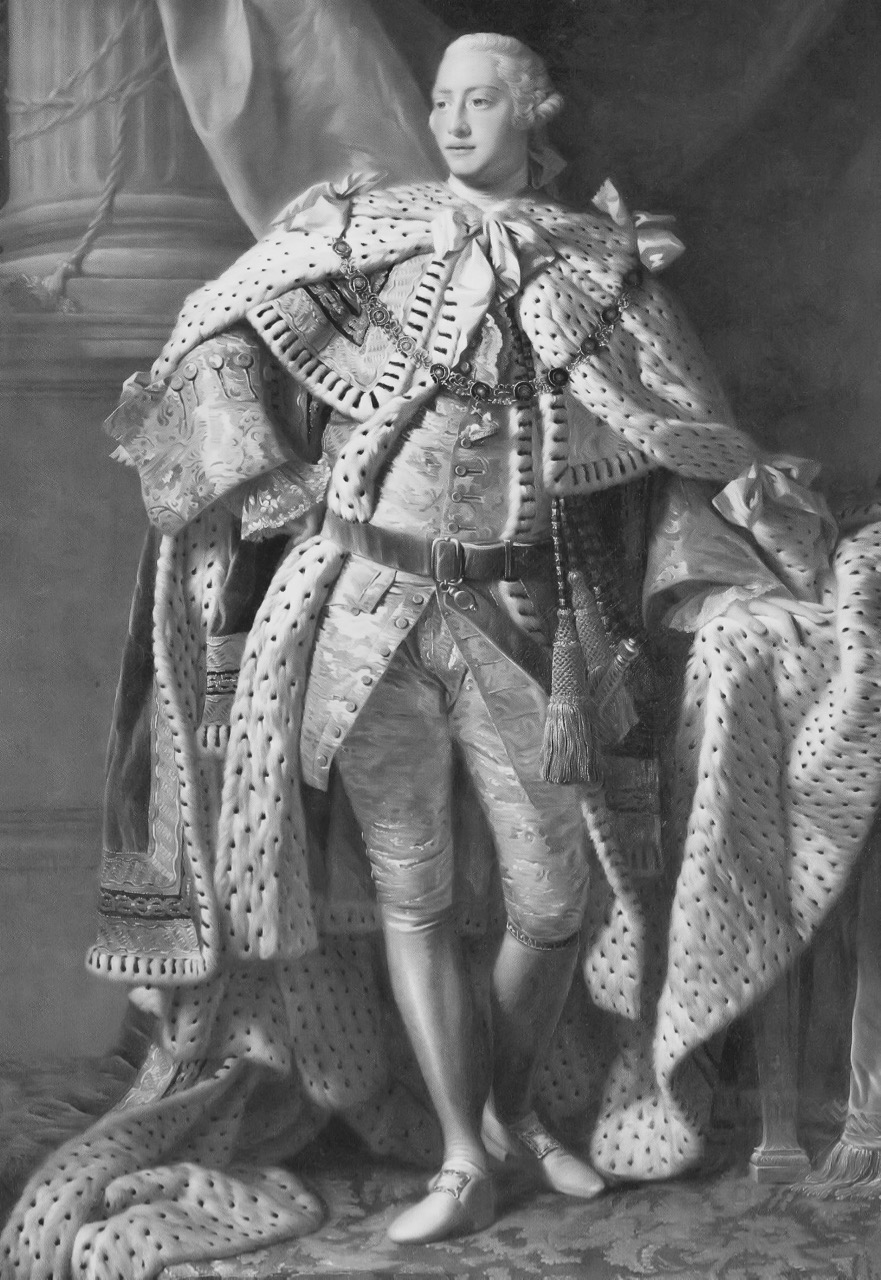
In his sad and salutary article on The Poisoning of George III, surely one of our loveliest monarchs, Ed Crews details the “eighteenth-century treatments, which were cruel and useless” and that the king was “made worse by his medicines”. In 2005, an article in The Lancet found that, “The medicine he was given for his illness made [his] condition much worse. As the researchers reported in The Lancet, the original physicians’ notes ‘make for disturbing reading,’ especially when one reads of the amount and frequency of the emetic tartar doses, the king’s violent reactions, and the deception or force often used to make him take the mixture.”

Mrs Sands, I wish you well for your so-precious and wonderful son. You tell us private counselling is forthcoming, and wonder on the effect this could have. Given my previous paragraph, your concern is common sense.

The outpatient care the North London Priory is giving Bink is superb. Perhaps your son could be treated there?

October 08, 2018 /Anne Atkins
The Poisoning of George III, North London Priory
Comment
IMG_2763.JPG

Indomitable Bink

October 07, 2018 by Anne Atkins

Sunday

We were in Professor Veale’s study a couple of evenings ago, Bink having invited me to attend her appointment.

“How much Lorazepam are you on now?”

“It’s supposed to be two and a half,” Bink told him. “It’s still hurrumhurrumhurrum...”

“Please can you speak up a little?”

“Hurrumhurrum...”

“Three milligrams a day?”

“Er… hurrum,” she conceded.

“Why is that then?”

“I was going to cut it down,” she assured him earnestly. “But I was too busy,” she gave me a sideways, Lady Diana look, “deciding whether or not to kill myself.”

Well, it’s a lot better than the dog ate my homework, isn’t it?

Professor Veale must think we’re all bonkers: I burst out laughing. Bink with me.

Quite rightly, he asked whether she is safe. (I don’t know whether he’d spotted the savage fresh cuts all over her right arm. The bandage was mostly hidden by her hoodie.)

“Yeah,” she said. “I’m safe.”

“So, why didn’t you kill yourself?”

“I’m afraid I couldn’t get it organised.”

As we walked to the car, she said, “It’s a bit pathetic, isn’t it? Being too incompetent to kill yourself.”

“On balance, Bink, I think it’s quite a good failure.”

Over supper I was laughing almost too much to convey the conversation to Shaun.

“But killing yourself is difficult,” Bink protested. “You do have to be organised.”

Ben came up into the kitchen from his den, one of his snakes wound round his neck. “I totally agree,” he said. “You’re right, Bink. It is difficult to kill yourself.”

He was on his way outside, no doubt to get a rat for his cuddly little pet’s supper. He puts these at the back of the range to thaw, particularly if I’m about to cook supper or we have paying guests. Occasionally he adds to the fun by forgetting them. Or blowing them up in the microwave.

“But the good news, Bink,” he didn’t halt his step as he comforted her in that patronising but soothing voice he has acquired since becoming a teacher to young girls, “is that I am here to help you...”

A reader has just kindly commented on an article in today’s telegraph:

I admire Bink hugely.

When she was, almost miraculously, offered private treatment earlier this year after so devastating and destructive half-a-lifetime’s wait for the NHS, I asked if I could blog about it in gratitude to the person who has made it possible. She said I can write anything I like as long as she doesn’t have to do anything. But then became drawn into reading it without really meaning to. It was clear that the history of her illness was distressing her, but she was adamant I should continue.

It was the same with the Telegraph article. There was no problem… until she had to give her permission.

“But I said I don’t want to be involved.”

Bink is very precise in everything she does.

“You don’t, Bink. You just have to say you’re happy for the article to go ahead.”

“I’m not happy.”

“Then I must cancel it!”

“Absolutely not. I don’t want to stop you writing.”

She and I eventually came up with wording acceptable to her: that she had given me permission. No more, no less.

My daughter, you will know by now, has an illness which has ruined her life.

And yet she retains her coruscating, self-deprecating humour. And the sharpest sense of other peoples’ autonomy. Not only do I admire that more than I can say.

Far more important, it gives me hope for her healing.

October 07, 2018 /Anne Atkins
Priory, Mental illness, OCD
2 Comments
sunset-3645343_1920.jpg

Psychotherapy

October 06, 2018 by Anne Atkins

Summer 2002

A reader has asked a very pertinent q. What is the matter with the two of you, that you went on seeing such eejit counsellors?

Absolutely fair enough. And particularly pertinent in this story about Bink.

Middle of the Atlantic. Titanic glugging down. Icebergs all around. Lifeboats disappearing out of the film set without you.

Man-eating shark comes along and offers you his fin to hang on to...

Isn’t that how Bink ended up in the Florence Nightingale Unit?

Take another analogy. You have cancer. Chemo hurts. In some ways it hurts your body for real, and your hair starts to fall out. Do you quit?

I am doing all this analysis many years later. I surmise.

We could have done with some help and support. This was the help and support on offer. The fact that your doctor doesn’t seem particularly kind and sympathetic doesn’t necessarily mean he doesn’t have the qualifications to diagnose and treat you.

By the summer I was dreading Wednesday afternoons like the thumbscrews. But I was fixated on them too. They’ve done things with rats: getting them addicted to poisoned sugar. The rats know the sugar is killing them, but they can’t stop themselves.

I may have just made that up. You get the gist.

Every midweek, we would come home and I’d be plunged into despair. By the weekend I was just starting to breathe again. Monday, I would be feeling ok. Tuesday, fine. Then, wham! It was Wednesday again and we’d be waterboarded once more.

Till there came a point, one 3 am, Shaun away, when I went into the bathroom and tried out one of his razors along my wrist for size.

The humiliating thing is that by the time you’ve deconstructed a plastic disposable safety razor, you end up with something which wouldn’t cut a piece of paper.

I didn’t really mean it, anyway. I meant the misery: not the suicide. Nevertheless if I’d ever felt tempted to adultery – I haven’t – I’d tell a friend, just to be sure I didn’t do it. So the next morning I told a friend.

He thanked me for not ringing him at 3 am.

There were three sessions that summer which were enjoyable. The male counsellor was away, so instead of the schlepp across London by tube to the hospital, we were invited to the female counsellor’s house a short bike ride away in South London.

It was full of violins and books, tatty and homely just like our Vicarage. And it was a completely different experience. She was never unkind to us...

At our next regular appointment, we asked if we could go to her house in future. He said they only worked together; and if the sessions weren’t in the hospital, we’d have to pay for them.

By the time we broke for the summer, every diary entry was peppered with our counselling. I was tormented. And already dreading our return in September.

I rang a GP friend to ask whether this stuff really worked. “I think,” she said kindly, “if it doesn’t feel helpful you don’t need to continue.”

I took, as reading matter on holiday, a book analysing the effects of psychotherapy. For a while I could cite chunks of it, but I can’t now trace the name or author. Perhaps it will come back to me. I quoted passages to Shaun as we drove through Ireland.

His thesis was as follows. After trauma, most of us recover (to some extent). Those who are in psychotherapy put this recovery down to their treatment. Research shows, however, that those who don’t go through psychotherapy recover faster and better.

The day we were due to resume drew near. I had been asking Shaun for weeks what we were going to do. He told me not to worry: he would deal with it.

“Don’t we have to tell them? Anything at all?”

“No.”

Predictably, I was the one to answer the telephone when the counsellor rang, on the day, to find out what we were doing. I still didn’t know, so I handed the telephone to Shaun.

“Are you coming for your session this afternoon?” he asked.

“No.” Shaun said. And hung up.

My anger, as I think back to that year, is not of the hurling china at the wall and screaming type. It is slow-burn and sad.

There was enough to read the runes. My brave, wonderful and brilliant Shaun went through considerable trauma as a child and young man. This isn’t to do with Bink’s illness, which was always in her genes.

He has carried the grit in his soul, as he does everything, superbly… and mostly silently. But two kind, qualified people, with a year’s weekly sessions at their disposal, could have helped him and us in that process of turning his pain into pearls.

October 06, 2018 /Anne Atkins
2 Comments
vintage-1318361_1920.jpg

How much longer?

October 05, 2018 by Anne Atkins

Summer 2002

When we started counselling, we weren’t given any instructions or introduction. No explanation as to the theory behind the practice. Not even what the practice was. Nothing about what to expect, or what was expected of us. No steer whatever. Straight in.

Never having done this before, I assumed it would be like learning anything.

You turn up for your first piano lesson, your teacher asks what you’ve learnt already, poo-poohs every other teacher you’ve ever had, tells you what you’re doing wrong, and you’re away. You play a scale, she raps you over the knuckles, shows you how to do it properly.

Skiing, the same. You need to lean down the mountain, not up it. But Gaspard – or Pierre, or Günther – that’s completely counter-intuitive! That’s why you have a ski instructor. Dummkopf.

Naturally, I thought counselling would run along similar lines. These geezers must know something we don’t, otherwise we’d be the counsellors and they’d be the ones being humiliated. Sooner or later, presumably, they will impart some of their wisdom.

For the first few weeks, it was understandable that we’d be filling them in. How we met. What our families were like. Things we liked – or didn’t – about each other. But there’s only so much, right? After a while, you’d think they must have enough background.

I kept waiting for the real thing to start. Week after week... after eventual month. I mean, when are they going to tell us how to do things better? We began this malarky in September, it’s nearly Christmas, we still seem to be doing all the talking.

I put it to the test. There is a member of my family, I said, I have a real difficulty buying a present for. Because of a bad experience in the past. But I love this family member and want to choose something, and Christmas is nearly upon us.

Uh-huh. They nodded and listened.

So... ok... I find this difficult, right? I want to buy a present for this person I love.

Yes, we’ve got that.

And?

We understand.

You understand? That’s it? You’re not going to tell me how to solve it? No ideas whatsoever?

Apparently not.

Well that was a bit of a waste of time, then, telling you that, wasn’t it?

If your piano teacher behaved like that, simply listening, week after week, while you kept playing the pieces all wrong and with the same mistakes, never telling you how to iron them out... eventually, if you had any sense, you’d stop going to the ruddy piano teacher and just play them wrong to yourself at home.

It was beginning to driving me nuts.

I felt we’d been sitting in the concert hall, listening to the cacophonous tuning-up, waiting for the music to start, for about three hours... and sooner or later someone was at risk of saying, That’s it, time to go home, it was a Philip Glass piece, ha ha.

Another thing I found really difficult: we’d never been told why or that it must be so, but we’d noticed they never started the sessions. We had to kick off every time.

I think I may have mentioned already that Shaun, generous to a fault with all the money he doesn’t have, does tend slightly towards the parsimonious when it comes to spending words. He doesn’t. Not without weighing each one very carefully, turning it this way and that, making absolutely sure he is willing to part with it... and then possibly thinking better of it and hanging on to it anyway.

Which does mean his sermons are stonkingly lean, packing the punch of a verbal body-builder. No one preaches a better, anywhere.

While his breakfast conversation is a little... shall we say... sparse.

So every week, I was the one left to open the batting.

I don’t know whether you’ve ever tried being a mother, but if you have you will know the one luxury you are seldom afforded is the opportunity to focus. Not so much a one-woman-band as the whole orchestra, conductor, audience, ice-cream sellers, stewardesses, loo attendants, programme-hander-outers, and all the people who didn’t bother to turn up but stayed at home watching the telly.

If you are given one more responsibility you will shoot yourself.

The one thing I needed like the proverbial crater in the topknot was having to work out, week by week, how to start yet another counselling session. 

After six months of this I said so. I felt, I told them, burdened by having the sole duty of every single bully-off, all on my own. I had enough responsibilities at home.

The woman counsellor – who, I’ve said before, was very kind – asked me how many of us were in the room? Even I can count to four. So why, she asked, did I assume it must always be down to me? Why take on this extra responsibility?

Oh. Ah. Ok. Wow.

So... I’ve started every session, now, for the last six months. Pretty basic arithmetic suggests it’s not my turn for the next eighteen.

Phew. I needn’t open the innings for at least the next year and a half.

Next week, guess what. I kid you not. All four of us sat in silence. Because I didn’t start, nobody did. And I wasn’t jolly well going to, having been given permission to not.

Tick, tick, tick. How long could this go on?

I’ll end your suspense. Twenty. Agonising. Minutes.

Until the male counsellor exploded with rage and asked why we wasted his time...

anger-18615_1920.jpg

(But at least I got him to start…)

October 05, 2018 /Anne Atkins
Psychotherapy
2 Comments
rosehips-3123253_1920.jpg

Rosehips and carousels

October 04, 2018 by Anne Atkins

Summer 2002

The other loose end left over from that year was the free clergy-couples-counselling Shaun and I had embarked on the previous September, just before Bink went into the Florence Nightingale Unit.

What had started as a highly enjoyable experience had become more and more distressing as the months went by, particularly for me. I suspect the bullying began as soon as they realised they had heard of me, but because it started so subtly it took a while for us to realise.

A few weeks in, I found myself in trouble because they’d read something I’d written. “Does Sex Get Better with Age?” was one of those harmless Daily Mail constructs designed to be taken about as seriously as one of our son Ben’s oh-so-hilarious jokes: half a dozen freelancers who happen to have twenty minutes spare before sharpening the next pencil are invited to contribute a couple of hundred words on the topic under debate. From memory, my ground-breaking and authoritative assessment was that what you may lose in quantity you can easily make up for in quality. (Give me a break: it was 200 words, ok? This paragraph is nearly long enough. I wasn’t being asked for an academically-researched bio-psychical-medical thesis on the sex-life of the geriatric homo sapiens on which to hang my doctorate.)

Our counsellors were very much not-happy. They didn’t quite say, “how on earth would you know?” but it was clear they thought sex should be so distant a memory that I could have no possible take on it.

Their verdict? I must refrain from writing while we were attending sessions.

I was aghast. For one thing we couldn’t afford for me to turn down commissions from the Mail. This may come as a shock to you, dear reader, but there is no justice in this world and you don’t earn a fortune writing a couple of uninformed paragraphs about middle-aged sex for Femail. Nevertheless if I wasn’t allowed to work for the duration of our course our counselling certainly wasn’t free.

Far more shockingly, I knew with utter certainty that they would never have dreamt of telling Shaun to refrain from preaching, Sunday by Sunday. Far less from earning a living.

I happened to say I was very much hoping for another child.

This was something I had been mulling since a miscarriage a year or two earlier, when everyone in the family was so disappointed it was a no-brainer that our loss must be telling us something. Bink’s illness clinched it for me. Such drear misery was now so draining the heart of our family, I could think of nothing radical enough to exchange our sorrow for joy short of the arrival of a new human being.

Our counsellors wheel-clamped this idea with an instant, no-compromise veto. Such a notion was out of the question. We were to “sort out” our relationship first. Since we had absolutely no idea what was supposed to be wrong with it, this could take a very long time indeed.

In effect, they were imposing an eternal embargo on us ever having another child. (Given that they believed we slept at opposite ends of the house, I’m surprised they felt the need.)

Occasionally they would give us homework. I relished this. My love for Shaun is the overriding affair of my life: what could be more satisfying than doing something to enhance it?

We were to make a picture of our relationship. There were only two rules:

  1. It must be colour not black-and-white.

  2. It must be large enough for all four of us to see.

I went home, launched into it immediately and spent several hours that first evening on my project. I had so much to say that when I finished one side of the paper I turned it over and covered the other, even attaching rosehips (there being no fresh roses available) from around the Vicarage door.

Shaun did absolutely nothing. All week. With immense restraint I didn’t say, “Have you remembered...?” Or “Don’t forget...”

Five minutes before we were due to leave for the next session, he grabbed a sheet of paper and pencil and draw a vibrant sketch of a carousel. It was dynamic and evocative: of movement and laughter and childhood. I loved it.

But not even the most dedicated and expensive member of the Bar for the defence could have argued that it was in colour. Oh well: not my problem.

We arrived and spread our dreams out under their feet.

The male counsellor looked at Shaun’s pencil sketch, nodded approvingly, agreed that he must always feel rushed off his feet and exhausted, and looked accusingly at me.

And what of mine, which had taken so many precious hours? No comment at all. Nothing. 

Week after week, I waited for some appraisal. Deeply disappointed, a month or two later – probably in mid-debate about our relationship being such a failure – I asked what we had learnt from our pictures.

“Your pictures?”

“The pictures of our relationship, that you gave us for homework.”

“What we learnt,” he said, very much meaning me not Shaun, “is that you can never do as you’re told.”

I was right back at school. Half my teenage years, publicly humiliated, sitting outside the head mistress’s office: the worst punishment my school knew. Then, as now, often having no idea how I’d transgressed.

I’m sorry?

“You were never given permission to use both sides of the paper.”

pink-rose-on-empty-swing-3656894_1920.jpg
October 04, 2018 /Anne Atkins
Couples counselling
Comment
eyes-1566993-1600x1200.jpg

Insight

October 03, 2018 by Anne Atkins

I’m sorry: I realise I’ve missed one or two loose ends.

This is like when Lionel Blue dropped his second page during one of his Thoughts for the Day on the Today Programme on Radio 4 and simply stopped mid-script, and everyone wrote to the Beeb afterwards saying, “We had no idea Thought for the Day was live.”

(Even though the speaker is announced every single morning as being there in the studio. You’d be amazed the number of people who ask me if it’s recorded weeks in advance, though the brief specifies that we comment on a current item in the news.)

Anyway, at least now you know I write this blog each day. It’s not a book I scribbled down in its entirety fifteen years ago, shoved under the bed, found again earlier this year and tore up into bite-sized pieces which I then pre-scheduled into daily posts before emigrating to Australia.

And given that I’m writing it every day, my memory sometimes wakes me in the night and fills me in on gaps we’ve already skipped over.

Earlier in 2002

Such as the debrief, after we rescued Bink from the Florence Nightingale Unit in late January 2002.

We were sitting in the Chelsea & Westminster Hospital two or three months later, Bink’s life a bloody and devastating car crash as a result of that referral to the Florence Nightingale, and the consultant who shoved her in there crossed one expensively trousered knee over the other and opined for an hour about... oh, something or other. Bink. Treatment. Not.

To be honest I’ve no idea. Nothing useful whatsoever. This was that same six-figure-salary consultant who did absolutely FA for a year after Bink was diagnosed, leading her to take a token overdose in a desperate bid for treatment, which was what landed her in the Unit. I’ve often wondered what he did do, to justify living so comfortably off our taxes: he can’t have had many patients more worthy of treatment than Bink, and he didn’t lift a finger to help her.

Be that as it may, I sat there politely all that time – we both did – listening courteously, no doubt occasionally nodding or chipping in, and when he’d finally run out of steam and said all the important things he wanted to say, I ventured to enquire, excessively deferentially, just in case there might be some explanation which might help me sleep at night:

“May I ask you a couple of questions, please?”

He inclined his head.

“Why did you refer Bink to the Florence Nightingale Unit? And did it achieve what you wanted?”

“Not really,” he admitted casually, brushing a mote of fluff from one of his neatly pressed cuffs. “We believe that sometimes, the problem is the family.” He smiled in explanation. “In your case, it obviously wasn’t.”

That was it. His entire reason for ruining our daughter’s life. And her siblings’. And ours.

A random experiment.

Just in case.

Based on that pernicious pseudo-philosophy and catch-all-diagnosis I’ve come across time and time again in mental health clinicians and para-clinicians: The Parents Must Be To Blame.

I wonder how he’d have felt if I’d picked up his Parker pen from off his desk, skewered his eyes out with it, plopped them in the basin, gazed thoughtfully at his craters and said, “Mmm. Oh well. Sometimes it makes me feel a bit better if I Gloucester-out the eyes of someone who’s just blown up my life. This time is obviously hasn’t.”

October 03, 2018 /Anne Atkins
Chelsea and Westminster Hospital, Psychiatrist, Blame the family, Florence Nightingale Hospital
Comment
fantasy-2530043_1920.jpg

Exposure

October 02, 2018 by Anne Atkins

2002

When Bink had been in the Florence Nightingale for a few days, in late October 2001, I had rapidly researched – as parents do – enough to know that a referral to the Maudsley Hospital in South London would have been far more appropriate, as the Maudsley specialises in OCD.

When I suggested this the next time we saw Dr Ratched later that week, she said (forgive my repeating this deliciously dreadful unintentional, quoted in a much earlier post) that we didn’t want “a sledgehammer to crack a nut.”

A few months later however, after we’d rescued Bink from the Florence Nightingale and indeed from Dr Ratched, she suggested it herself. (I struggle to understand anything that psychiatrist did in the wrecking of our daughter’s life. If I had to attempt any observation at all, I’d find it hard to avoid the appearance of control being far more important to her than either care or cure.)

But by then Bink was very much more ill, by a factor of many, many. And understandably determined never to let any psychiatrist near her again.

Nevertheless we somehow managed to get a referral to a child and adolescent psychiatrist in the Maudsley Hospital, and persuade Bink to give her a chance. 

One of the first things I told Dr Heyman, over the telephone before we even met, was that medication had done Bink a very great of damage. She was obviously not persuaded: if it was wrongly administered, she said with a slightly patronising laugh, it was hardly the fault of the drug!

Bink only met her twice. The first was in the hospital itself. For the second meeting, she very kindly came all the way to our Vicarage in Parson’s Green.

A classic way of treating OCD (as I mentioned a few days ago) is by “exposure.” The patient confronts her fears; is required deliberately to perform the action she is most frightened of; and thus it is demonstrated to her that the consequence is not, as she had feared, World War Three breaking out.

Nothing too awful happened when you trod in dog poo after all. Nobody died. Nobody even even came out in spots. Your fears are (in theory; eventually) overcome.

The difficulty is that Bink never thought WW3 would break out. Indeed, Dr Heyman said Bink was the only patient she had ever met with OCD (and she specialised in the disorder) who was rational about her condition.

Bink never feared her maternal grandmother would expire of some dreadful wasting disease if she didn’t walk around the house anti-clockwise seventy times seven. Nor that her brother’s face would be consumed by some pernicious parrot-green parasite if she didn’t comb every blade of grass on the lawn to face in a Northerly direction. Nor anything fanciful whatsoever, as a result of performing or not performing her rituals.

The consequence Bink fears, if she doesn’t perform certain tasks, is that she herself will suffer almost unendurable stress, pain and panic.

Unfortunately, Bink is right.

When Dr Heyman came to our house she made Bink go into our bathroom and touch the wall.

(She didn’t – as Bink’s therapist in the Bethlem did some years later – persuade Bink to the point of being motivated to do this herself. She was still only seventeen: it wasn’t difficult for a doctor to make her do something she didn’t want to do.)

The consequence? She refused ever to see Dr Heyman again.

There are some who interpret demon possession, as described in the New Testament, as a spiritual condition, quite different from mental illness. The cure for it presumably being exorcism, not clinical care. I am not theologically qualified to comment either way. This may well be correct for all I know. (Or care.)

What I am qualified to say, as a mother, is that I have seen Bink in the grip of something which, as a writer, I would describe as the very devil himself. Her reaction, after Dr Heyman’s visit, was that of a prisoner in thrall to some evil, powerful and seriously vindictive diabolical force.

She had transgressed its rules and she must suffer its dire penance.

I can’t even remember what she had to do, what actions she was made to perform, to expiate her sin. I just remember realising this dreadful agency in charge of her life was stronger than Bink herself; that it was deeply, deeply wicked; and that it was going to make her pay for what she’d just done, or face the most terrible torment.

It would have been well if the doctor had understood this too.

October 02, 2018 /Anne Atkins
Maudsley Hospital, OCD, Demon possession, Exposure therapy, Setraline
Comment

What's it like?

October 01, 2018 by Anne Atkins

Autumn 2002

Yesterday I was interviewed on our local radio station (www.bbc.co.uk/radio/play/p06kjsbj about ten minutes in) and the first thing the presenter asked me was, “What’s it like, living with OCD?”

I’ve been doing radio for quite a while now, and it’s not often I’m stumped. But it felt like being asked, “What’s it like, living in England?”

Where on earth do you start?

I said something rather unremarkable about the early days, when the rest of the family couldn’t use the bathroom for months on end when Bink was in “clean mode,” so around 10 o’clock every night I would walk to our neighbour’s in my dressing gown for the hot bath I relied on to get to sleep in our unheated Vicarage; though that was far better than “dirty mode,” when Bink herself couldn’t wash at all for months on end.

A bit like saying, Living in England means we’re on Greenwich Mean Time in the winter. 

When Bink had been out of the Florence Nightingale Unit for some months, without friends, without schooling, painfully slowly beginning to recover from what they had done to her in there but still incapable of doing virtually anything, I enrolled her at the tutorial college Mander, Portman & Woodward. (The High Mistress wouldn’t have her back at St Paul’s Girls’ School: not after being in a loony bin.)

She tells me now – I had forgotten this – that she applied for a scholarship at MPW and long before she’d completed all the papers, on the strength of just her first essay, the Principle offered her a free place. 

My heart was in my mouth, that first day of the autumn term. I had bought her a brand new black Pashley bicycle with the insurance money from all the bikes we’d had stolen in London over the years, and with her cropped hair and new books and file in her basket, she set off that first morning, sun glinting on her bike wheels as I watched her set off along Parson’s Green, disappear at the traffic lights and the reappear again in the New King’s Road before finally disappearing behind the row of shops heading East for Kensington.

Phew.

First day down. If we could only keep this going, we might get her back on track for her A levels. She had switched from the double maths and physics she’d been studying, with English, before, and had now taken up Latin again with single maths and English.

She enjoyed the first day. Soon she might start to make new friends.

The next day she set off again. The longer we could keep this going the more likely she would stay the course. 

One of the things you learn, if you live with OCD, is how to lie. We all did. All of us except Alexander.

The psychologist Prof Paul Salkovskis told me OCD is perhaps the most contagious of mental illnesses. Anyone in contact with it is likely to become obsessive, because of the fall-out if you don’t. You become extremely sensitised to the slightest contamination: it can ruin your own life if you miss it.

We had all learnt what could happen if we admitted to having touched such-and-such, or letting so-and-so brush against something else, particularly if it was to do with washing. It could incapacitate Bink for months. She had a thing about anything touching the rim of the washing machine, for instance. If she had a wash on, even if it was long-finished, we weren’t allowed to touch it. Ditto, anything of hers in the tumble dryer.

Serena had just finished A levels and while she prepared for her Cambridge vet exams, was doing her first paid job, in a lab, starting at 8 am and with a long journey first. She had to get up at 6 because she wasn’t allowed to use the shower, so she had to have a bath which took her much longer. Bink must have been in “clean mode” that term, so the rest of us couldn’t shower.

One morning Serena needed to put an item of clothing in the dryer for a few minutes to wear it for work. But Bink’s clothes were in there. We all knew by now that we could occasionally do relatively normal things as long as Bink didn’t know and therefore couldn’t get upset about it, so Serena carefully took Bink’s wash out, put her item in, dried it, and then put Bink’s wash back in again. All looking the same as before, long before Bink was up.

Only it didn’t. Because she had dropped one of Bink’s bras on the floor and in her hurry to get to work on time, didn’t notice.

By then Bink had been going to MPW for a week. It really looked as if she might attend every day, last the term, last the year, and only have missed a year of her schooling on account of the Florence Nightingale Unit. She wasn’t receiving any treatment for her OCD and was far more ill than before she went in, but if we could get her back into some kind of worthwhile routine at least she would be beginning to mend her life.

It was inevitable that she would look in the laundry eventually, and it just so happened she did so before she set off that day.

And saw her bra on the floor.

Complete and utter meltdown. Far worse than the contamination – presumably the bra could be washed again – was the realisation that we must all have been lying to her. If that was so, how could she ever know whether anything was “clean” or “contaminated”? 

Which, of course, was why Alex never did. All very well, but if we had pursued Alex’s policy she would never have enrolled at MPW in the first place. Our lying had kept her relatively calm. While it worked.

I knew I had to get her to college that that day or we could lose everything we’d gained. I calmed her as best I could, reassured her every way I could think of, and eventually, only two or three hours late, managed to persuade her to set off after all.

Thank goodness! I knew how absolutely vital it was to ensure her attendance every day.

Fifteen minutes later she was back. She was in too much panic to continue.

She didn’t return that day. Nor the next. Nor the one after that. 

That was it, then. She wouldn’t return that term. Possibly not the next. She had lost another academic year.

Over one bra.

We had not been obsessive enough. I should have noticed. I should have checked the laundry, seen the bra, put it back in the dryer. I would live with the guilt all year; perhaps longer.

Far worse, perhaps Serena would. Working so hard at her new job, her application to Cambridge, all the demands of her own eighteen-year-old life. Whilst having to keep her sister sane too.

Which is a tiny little bit of what it’s like to live with OCD.

October 01, 2018 /Anne Atkins
OCD, Mental illness
1 Comment
punting-on-the-cam-1557278-1599x928.jpg

Samson, Rapunzel and Bink

September 30, 2018 by Anne Atkins

Sunday.

It is a discipline. Being cheerful. An act of the will, sometimes.

You know what it’s like when something has upset you long ago. An apparently innocent trigger can have a significance far beyond itself.

For a long time setting foot inside a church could produce in me the most absurd, disproportionate, debilitating weeping and panic attacks, sometimes lasting all day. Exposure – incidentally, the classic treatment for OCD – seems to have desensitised me enough that I was able to attend Serena’s baby’s baptism last spring without embarrassing anybody. And, far more important to Serena herself, enjoy it.

After Bink came out of the Florence Nightingale Unit, she shaved off all her hair. That is how I still see her: as a convict; as one who must do penance; as someone new-released from a concentration camp.

But it grew again, and when in 2012 Serena asked Bink to be her bridesmaid she also asked if she would mind, please, not cutting her hair. So that when she invited us to her degree ceremony the following summer, just before the wedding, I saw a stunning young women, all her life glittering before her and golden hair flowing down her back, step up to shake the Vice Chancellor by the hand... and with a shock of astonished joy realised it must be Bink.

In the dim and dismal dark autumn which followed, when we found her at dawn in a hospital in Staines after worrying for her life all the night long, her hair had been chopped off with kitchen scissors.

Eventually the years delivered her home again, battered and broken, and we began on the long process of trying to help her heal. Again. A couple of years ago I arranged a shampoo for her after she hadn’t be able to touch her hair for months, but she came home so humiliated by their kind and patient attempt to untangle it hour after hour that she used the kitchen scissors again.

And cut the heart out of me along with her lovely hair. For a while I believed I could not pray, or hope, or even care any more. But being a mother is not voluntary and nor is love.

A few nights ago she told me her mind was so broken, those years ago around the time of Serena’s wedding and her graduation, that she can’t see how even the Priory can mend it any more.

Then on Thursday evening I glanced through the kitchen window and saw her, her hair a quarter of an inch all over again. Just as when she was seventeen.

Yesterday we were in the city of my childhood, the city where Bink graduated and Serena married, and just as on the night before Serena’s wedding, the sun was slanting on the punt poles.

There are good memories as well as bad, and you can choose which to call on.

Hair grows. Minds mend. Bink has a lovely, pretty head and perhaps has shaved away some of her pain.

It is a discipline, being cheerful. And today is a fresh beginning. 

September 30, 2018 /Anne Atkins
Priory, Cambridge
Comment

Bink has a date! (III)

September 29, 2018 by Anne Atkins

2002

Bink & her “date” returned from the V&A in good time for him to make supper.

There then followed a very great deal of to-ing and fro-ing of paraphernalia from his car. A packet of Basics mince. Ditto tin of tomatoes. An onion. Packet Basics white spaghetti. Half a clove (getting adventurous!) of dryish-looking garlic. A saucepan for the spaghetti. Colander for same. Another saucepan for the sauce. Even a wooden spoon. And tin opener.

He didn’t bring matches and a Primus stove, so he must have assumed we had a few items of abstruse specialist kitchen equipment ourselves. 

I’m sympathetic here. Like you, I’ve opened the Delia, seen, “Preparation: 10 mins,” and written off the next hour and a half. We all know Delia is lying. And has been practising for decades, boiling an egg in 15 secs and defying physics. 

Nevertheless, I’ve never known anyone take so long over simple spag bog as Bink’s date did that evening. But then, I’ve never known anyone boil the spag for a couple of hours with a view to bottling it for glue. 

Still, all credit to him for living dangerously and having a go at something he’d never done before.

It just so happened that there was a programme on the telly I very much wanted to watch that evening. Doesn’t happen to me often, but there was a documentary on the life of Jane Austen which I’d been looking forward to for a while. So I lugged our black-and-white portable (the only tv we had) into the Vicarage kitchen so we could have a nail-biting white-knuckle evening on the edge of our seats together.

Let me give you a tip. Bloke in his thirties, tattooed from head to toe, voice like Beowulf's dragon on account of he’s recently been in a fight involving throat grabbing, drives several hours to meet your seventeen-year-old daughter... well, don’t be fooled by his claim to have spent the day ogling Queen Victoria’s children’s dollshouses. He’s probably now exhausted his appetite for culture for the next decade, and will want to get down to business.

After about five minutes of sprigged frocks, lisping English Literature professors from obscure universities, views of the Royal Mile and absolutely no sex whatsoever, the two of them excused themselves and withdrew to the withdrawing room.

Hoist by my own empire-line. I could hardly get the rest of the family to follow them, exclaim what a shame the programme was now over and ask if they’d like to play Snap!

So I made a pot of tea and laid a tray. As I manoeuvred the tray with one hand and doorknob with the other there was quite a lot of bustling and rustling, and by the time I’d got the door open they were on opposite sides of the room.

Frank Churchill and Jane Fairfax couldn’t have looked more shifty. 

“Tea!” I bellowed brightly.

There is a limit to how long you can hover convincingly saying, “Are you quite sure you don’t take sugar?” so eventually I had to exit again.

Leaving the door wide open. For a good five seconds.

The best I could come up with as a fresh strategy in the stress of the moment was the offer of a second round of tea. Not very original, perhaps, but Shaun (rather unfairly) studied the history of warfare before marriage, and often tells me that in the heat of battle the important thing is to do something.

This time, I didn’t have the handicap of being slowed down by the tea-tray.

I’ve never seen anyone propel himself horizontally from a sofa with quite such alacrity. He didn’t even stop when he hit the other wall but headed, red-faced, straight for the Vicarage front door.

It would have been quite an impressive exit. If he hadn’t had to come back, more a deep vermillion now, for the two saucepans. Then again for the colander.

Finally and one last time, for the tin opener and wooden spoon.

We laughed a lot over that evening... but it is not entirely funny.

Whatever it may feel like to the other half of the human race, women remain far more vulnerable in the mating game. And the mentally ill are among the most vulnerable in society.

When Bink was about fourteen she came home terrified. Most puzzling was her fear that Shaun would be angry. After much painful stammering she confessed to Serena and me that a stranger had given her his number on the tube. Though she had told him nothing, she was panic-stricken that he might somehow track her down.

All young women have to learn, from earliest double figures until well into adulthood, how to protect ourselves from sexual exploitation whilst still presenting that charm and deference towards the opposite sex which has been our meal ticket for millennia: such conditioning long outlives its usefulness.

Bink started to become ill at the age of eleven. She seemed simply to miss out on that critical sexual survival skill.

She was sexually assaulted as an adult in hospital. Also at university, the court case contributing to her breakdown and abandonment of her studies. After university she was exploited for years by a “friend” who wanted to marry her and wouldn’t take no for an answer.

If MeToo and Harvey Weinstein have taught us anything, it is surely that having to exchange sexual favours for anything other than sexual pleasure is not an acceptable bargain. Not for career, nor for companionship, nor (as in the last case) for a carer.

Alas, nothing in law regarding “vulnerable adults” enabled us to protect Bink from a predatory male any more than a predatory psychiatrist.

On that occasion in 2002, thank goodness, she was still young enough for us to have influence. 

Her date had no reason to know I had rung the police on his account. But he had every reason to know that what he was doing was deeply wrong.

September 29, 2018 /Anne Atkins
Comment
  • Newer
  • Older

Powered by Squarespace