Anne Atkins

  • Home
  • Bink Bonkers
  • Non-Fiction
  • Novels
  • Journalism
  • Speaking
  • Broadcasting
  • Biography
  • An Elegant Solution
  • Thoughts for the Day
  • Anthem for Mary and David Briggs
  • Love Strong as Death
  • Contact
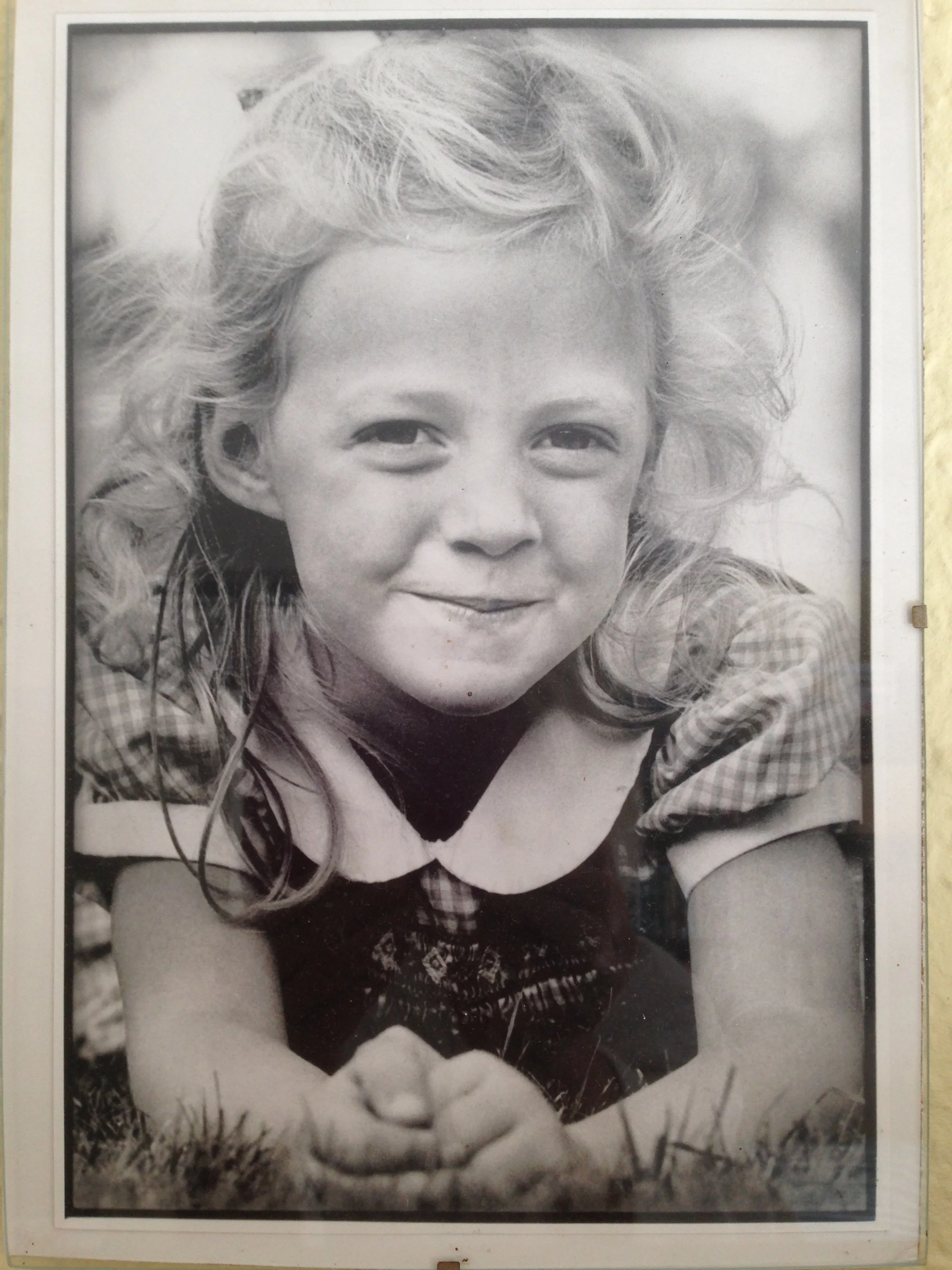
vintage-1721941_1920 (1).jpg

Transformation

September 08, 2018 by Anne Atkins

November 2001

It was agonising, knowing school was starting again after half term and Bink wasn’t allowed to attend.

She urgently needed proper help. If the appropriate treatment for OCD had been made available – say, as an outpatient at the Maudsley Hospital – it might have saved her decades of future agony and disablement. (And eventually the taxpayer, megalithic expense.) Indeed, if it had been provided when she was first diagnosed a year earlier, she need never have been admitted to hospital.

But how could it address her illness to make her drop out of school, lose touch with all her friends, abandon her A levels, be deprived of contact with her home and forget all structure and intellectual challenge? Simply to be locked out of the way? In an extremely toxic and dangerous environment...

I knew it was wrong and damaging. And yet we’d been stripped of our right to rescue her.

This alone was bad enough. Of course there would be worse to come.


The previous Christmas, when Bink was fifteen, she had chosen the most beautiful, apt and costly presents for each one of us. She says now that her display of generosity was down to nothing more than having access to her Post Office savings for the first time. (My kind mother had given each of them a nest egg of £200 when they were children.)

It was far more.

Most of the presents were ordered from Past Times. For my mother, a beautiful, opal-coloured, glazed butterfly broach, which she loved and wore continuously... until dementia stripped her of it and lost it for her, near the end. For my father, a chunky half pint glass tankard, with the King’s Shilling in the base.

Serena’s, Shaun’s and my presents have slipped away from memory over the years, but for Alexander and Benjamin she had reserved the most expensive of all: solid gold cufflinks engraved with their initials. They were exquisite. We couldn’t find their little boxes on Boxing Day, and on 27th December, just to be sure, I went through every scrap of wrapping paper in two wheelie bins before collection, only to find them safely put away.

We later had so many disruptive moves that, despite months of searching, I couldn’t find them for Serena’s wedding in 2013. It was with a whoop of joy and delighted call to Alex at work, last year, that I unearthed them (along with Shaun’s love letters to me from university) when clearing out the summerhouse.

Bink had taken endless trouble for each of us, as well as all her savings. I’m not sure when it was that I realised this was her goodbye, to everyone precious to her. She knew her daemons were coming for her, and before the next Christmas too...

She wanted us to know that she loved us, before she was taken away.


And boys: did they come!

Within a fortnight of entering the Unit, she was unrecognisable. From our ill and troubled but kind and considerate, dearest Bink, she became... well, horrible. Cruel; spiteful; cunning. I can say this without any disloyalty to the Bink I adore. She was no longer herself. And it was no more her fault than if she’d been suffering from shell shock in 1916. She was painfully ill; far younger than her years; isolated from any kind influence; and bombarded.

I have witnessed many times a type of therapy which turns patients against their loved ones. I’ve even experienced its attempt myself more than once. (Our couples-counsellors, for instance, suggesting how difficult my parents made my life, by being “perfect”. It only needs the subtlest of pointers, to make us feel angrily entitled; specially when we are already low.)

Bink’s family might be denied access to her, and soon we were. But our influence would still be protecting her. If those “treating” her wanted unfettered access to her mind, they had to break down all loyalty. And love.

With the accuracy of an Exocet, she soon homed in on what would hurt each of us most. 

Shaun, she attacked with vicious vitriol. He came home from the Unit blistering with smarting fury. I could have coped with overt nastiness: he was pained to the core.

Me, she completely blanked out. She wouldn’t even see me. Again, this would have been water off Shaun’s back: I was desperate with grief.

She learnt overnight how to divide us, too. She gave Shaun secrets he was not to pass on. Had she offered me confidences I would have said, straight up, tell me nothing I can’t tell your father. Our togetherness, I knew, was more important to Bink herself than anything she wanted to share.

But enjoining the priest in the family to keep her confessional silent hit its mark. Shaun was caught. And I, more hurt.

They were destroying Bink from the inside out. Every week would do her more damage. And drive her illness deeper under the skin.


The next was the worst blow of all.
September 08, 2018 /Anne Atkins
1 Comment
fork-554064_1920.jpg

Like a fork

September 07, 2018 by Anne Atkins

Serena (our eldest) tells me I must stick to the narrative of Bink at the age of 16, and the oh-so-inappropriately-named Florence Nightingale Unit she found herself incarcerated in with no exit route.

Otherwise, she says that you (kind reader) can’t possibly appreciate the momentous surge of hope we experience now as we contemplate still waters shimmering on the horizon, if you haven’t been through the valley of the shadow of death through which we have come. Why would you be excited about proper, good treatment at last, giving real hope of the best life can be for Bink, if you haven’t seen how bad the abusive treatment could get, destroying all life had on offer for her at the time?

Easy for Serena to say! If I hate revisiting that time myself, I argue, why will any reader want to come with me?

Just do it, she says. People need to know.


Autumn 2001

To recap: we had been duped – it was indeed so – into allowing Bink to go into hospital “for a night or two.” Only to discover on arrival that we could never take her home again. Legally (we were told – mendaciously we discovered many years later) that she was “adult,” at 16 years. Which meant that we, her parents, had no rights at all. You might think, then, that these rights had been transferred to Bink herself. You would be wrong.

For one thing, 16 isn’t adult anyway: we all know that. Shaun's father joined the tank regiment at 16 and was never the same again. For another, because of her illness Bink was as vulnerable as a 12- or 13-year-old.

For a third, they treated her as if she were about 6.

She had not been sectioned. Nevertheless she was never allowed out (unless she was smoking, for 10 minutes in every hour). She wasn’t consulted over her treatment. She certainly wasn't respected when it came to her wishes. Bink wasn’t given any choices in the matter either.

But even when we've been lost in the darkest of clouds we've always tried to find the amusing lining, so let me start with a light-hearted memory or two...

Every so often, the psychiatrist summoned us for meetings. She must have asked for the whole family, because I remember all six of us sitting in her consulting room together. 

One of the power games which mind-quacks (shrinks, therapists, counsellors &c.) sometimes like to play concerns the furniture in the room. They prefer to dominate proceedings. (Nothing disconcerts a family therapist more than musical chairs. Try it sometime...) On at least one occasion however, Bink managed to get the better of the room dynamic and seat herself so she could make faces at us behind the shrink's back. With her eyes crossed and her tongue up her nose – and the psychiatrist wondering whether we were all verging on the loony given the ripples of inexplicable suppressed spluttering – it was hard to believe Bink could be completely beaten by the system. Yet.

At another session, the shrink asked if we had any shrink-info on our other children. As it happened I could comply with this. Clergy children can find themselves an anomaly: at a working-class school they stand out as posh; at a middle-class one, as poor. One solution is to find private schools willing to give clergy scholarships or bursaries. Essential arsenal in my armoury was that an old friend of my parents, an ex-pupil’s mother, was a psychologist, and had kindly given, free, each of our children a pukkah WISC test, with IQ scores... for what IQ scores are worth. (Which turned out to be quite a lot, translated into school fees, when I touted them around prep school proprietors.)

I had these reports anyway, so why not? I faxed them over.

“My goodness,” she said, next time we went in. “You have quite a bright family, haven’t you?” I got the distinct impression she was not particularly pleased with this intelligence.

What did she think? A qualified psychiatrist, and she assumed anyone with a mental illness must be intellectually sub-normal? Surely basic shrink-training should include the knowledge that mental illness, like cancer, can strike anyone? It doesn't necessarily mean you haven't been eating your greens.

My favourite memory is when Alexander turned to her and said, all solemn and matter-of-fact like: “I think like a fork.”

Now, any sensible person confronted with one of Alex’s incomprehensible comments, says, “Eh? What??” And possibly, “That's nothing: I think like a set of six egg spoons crossed with a multiway Swiss penknife... You freak, Alex.”

This shrink, without batting the proverbial, nodded sagely and said, “I know exactly what you mean.”

That was the moment at which I should have known everything she would ever say would be coming out of the other end.

(As it happens, if you're interested, he didn't mean like in a cutlery drawer as the rest of us assumed. He meant like a split in a block chain of crypto-currency. That sort of fork. Obvious. If you're Aspergic. I mean, come on: how could anyone think like a fork-fork?

Here is a picture I took earlier of Alex having a thought. And yes, it is as scary as it looks.)

lightening-1185742_1920.jpg

And yet, when the shrink told us the worst lie of all, I still wanted to believe her.

Not that we could have done anything about it, if we didn't...

September 07, 2018 /Anne Atkins
Comment
daniele-levis-pelusi-591637-unsplash (1).jpg

Faith

September 06, 2018 by Anne Atkins

Present day.

I am impressed. Really.

Shaun and I are in the South of France, on our first holiday abroad for so long that I honestly don’t know how long it is. (At least ten years, I know that.) The kind friends who invited us keep saying we need a break and a rest, and very graciously put my splitting headache on the first night down, not to an excess of sun and wine (it was, actually) but to years of worry about Bink.

There was all the usual to organise before going away: cats to be fed; dog to be kept company with; hens locked away. Bink was as helpful as she could be: she can’t go anywhere near animals (though she is solicitous for their welfare) but she promised to ensure my father’s stream of overnight carers foxed the fox by shutting the hen door, somehow.

Where I failed was finding anyone to take Bink to her therapy session in North London on any of Tuesday, Wednesday or today. Every idea, every friend or neighbour, came to nothing. In the end, she told me not to worry about it: she would organise it herself.

Bink is in her early thirties... and about as independent as your average, what, five-year-old? Not only can she not cook or wash up or do her own laundry (or let anyone else do it: she has to buy new clothes from Primark and put last week’s clothes in the bin) but she can’t touch things, get out of bed most days or clean her teeth sometimes for months on end. Showering is a major challenge which often defeats her. Brushing her hair can be next to impossible.

She is a very, very great deal better than she was three or four years ago – when sometimes she couldn’t speak – but she is still completely incapable of independent living.

Which means she needs a lot of help with making telephone calls, arranging appointments, and most certainly getting to them.

The likelihood that she could even choose and confirm a time with her therapist without help seemed slim: she can’t touch telephones and hasn’t used email for years. Getting to Southgate from Bedford without a chauffeur was probably as likely as reaching the moon.

But she had told me not to worry about it, and I don’t often get an offer like that.

Before our aeroplane took off on Monday morning she rang me to ask if anyone could help her get to Bedford Railway Station. A ten minute walk from our house. Her younger sister Rose has been able to do it unaccompanied since she was ten or so.

If I take time to think myself into Bink's shoes, I can understand this. Committed though I am to saving the planet, if a telly programme offers to send a car for me rather than paying my rail fare, I have to confess I find it easier. A driver will be silently waiting when I need to leave. No onus on me whatsoever. If I multiply my stress at taking responsibility for my own journey by a factor of several hundred...

So I assured her I was sure our cleaner would be happy to walk her to the station on time.

Just after we touched down, another call: could Shaun’s sister meet her at Southgate Underground and get her to the Priory... about a quarter of a mile, if that. Sister turns out to be in Majorca. Tell Bink, she said, there are taxis right outside the tube station.

“Do you want me to confirm your appointment...?” I started to ask.

“No, no, no.” She was most emphatic. Clearly, I was not to worry about this. Any more than I was already.

Friends have expressed scepticism that Bink will enter the Priory when the time comes. Or last the course. Or that she really wants to be well. Enough to make it over the long haul, anyway.

I know how hard it will be for her to get to the Priory. I am posting this before I know any more than I have told you. I don’t suppose anyone else who knows Bink would put sixpence on her getting there.

But I will put more than money: I will put my own credibility on her meeting her therapist by the end of today.

Ultimately, it's not down to a balance of probabilities. Belief is a choice you make in life.

I have the same, almost-insanely-optimistic-in-the-face-of-experience, absolute, utter, unshakable faith that (now she has the opportunity of proper treatment, at last) she will one day be... she hates my using the word, ‘well’... 

As well as the rest of us? Happy and fulfilled?

The person God made her to be.

September 06, 2018 /Anne Atkins
Comment
_E1G9430 (1).jpg

What a difference!

September 05, 2018 by Anne Atkins

I’m longing to tell you how it came about that Bink is being treated in the Priory.

But we can’t enjoy all our miracles at once.

After all, we’ve had to spin them out pretty sparsely ourselves, sometimes, over the last eighteen years or so: if you are travelling with me (for which, much thanks gentle reader) you may need to wait too, from time to time.

So allow me to stall a little longer, by giving you a taste of what this miracle – for it is one – of her Priory treatment will mean.


May 2018

It stands to reason that the difference between private healthcare and NHS will be infinitely more significant for mental illnesses than physical.

Not even taking into account that there has been no mental health treatment forthcoming for Bink from the NHS for agonising years and years. Not from the GP. Nor the local psychological services. Nor specialist hospitals we have appealed to. She might as well rot in a ditch. And Bink has family – and an MP – behind her, fighting her corner. Foxes have holes and birds of the air nests, but many suffering from mental illness don’t even have a bed to lie in. They are rotting in ditches, and on cold pavements, many of them.

Notwithstanding this – even if she were getting what she is entitled to – there would still be a huge distinction.

I have very little experience of private medicine. Last December, however, I was extremely fortunate in having my eyes operated on privately, thanks to the kindness of St Luke’s Healthcare for the Clergy and a dedicated and very generous surgeon.

And it was... well... wow.

From a medical point of view, being honest, it probably wasn’t very different. True, I didn’t have to wait till I was feeding Whiskers to the kitchen cushions and cooking string bolognese. I could have both my eyes done in the same fortnight, as soon as I wanted; throw away my contact lenses and reading specs; and end the humiliation of asking a random stranger in Sainsbury’s what are the ingredients in this tin, please... and finding I’d picked up a pencil case in WHSmiths. And was asking the display column.

But if I hadn’t been so blessed in jumping the NHS queue I could have gone to Specsavers, couldn’t I? For a year or two, until I had biked into enough lampposts to earn my place. Five years on, the results would have been much the same. All the surgeons I’ve ever met who do private work also put in their stint for the NHS for the other half of the week. You get the same – superb – quality of treatment at both.

From the psychological point of view, though, the experience couldn’t have been more alien... from any healthcare I’ve ever experienced. After my eye op, I made myself have a completely unnecessary five-minute bath to justify my private en suite. Our son Alexander, who came to meet and escort me out, didn’t need supper for a week after hoovering up all the beef-and-horseradish, egg-and-cress complimentary granary sandwiches I’d ordered for my recovery tea.

Haven’t felt so pampered in years. Still, I don’t suppose it will make much difference to my eyesight in the long term.

But if my mind were sick, how relevant those delicious sandwiches and that fresh pot of tea, the private bathroom and the beautiful grounds, the elegant building and the courteous and deferential nurses suddenly become!

(And yet the mentally ill are treated far, far worse than the physically ill. By a very long way.)


The first time we took Bink to the North London Priory was for her initial assessment in May this year. Gobsmacked is a very silly word. But even the daftest words need to get out occasionally.

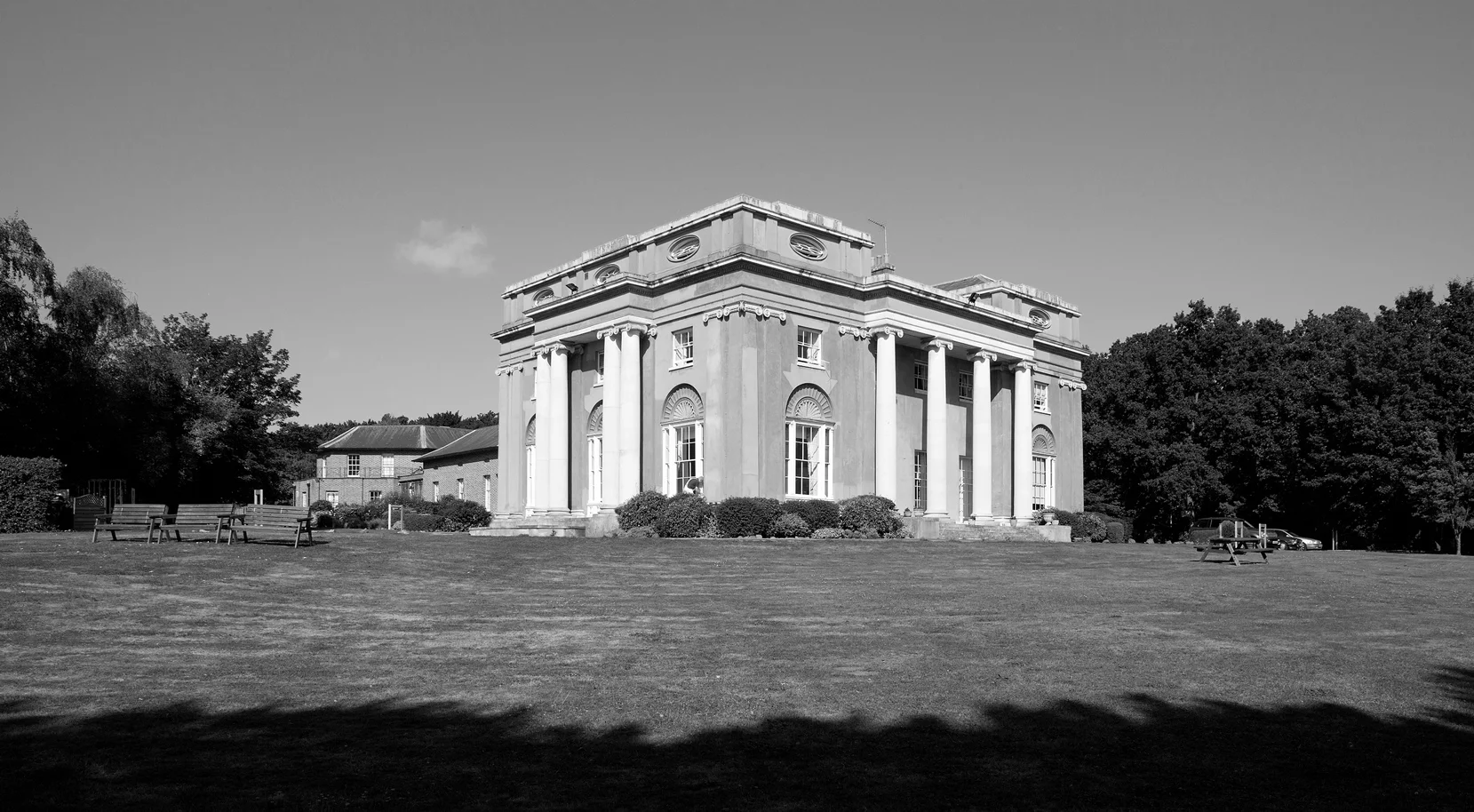
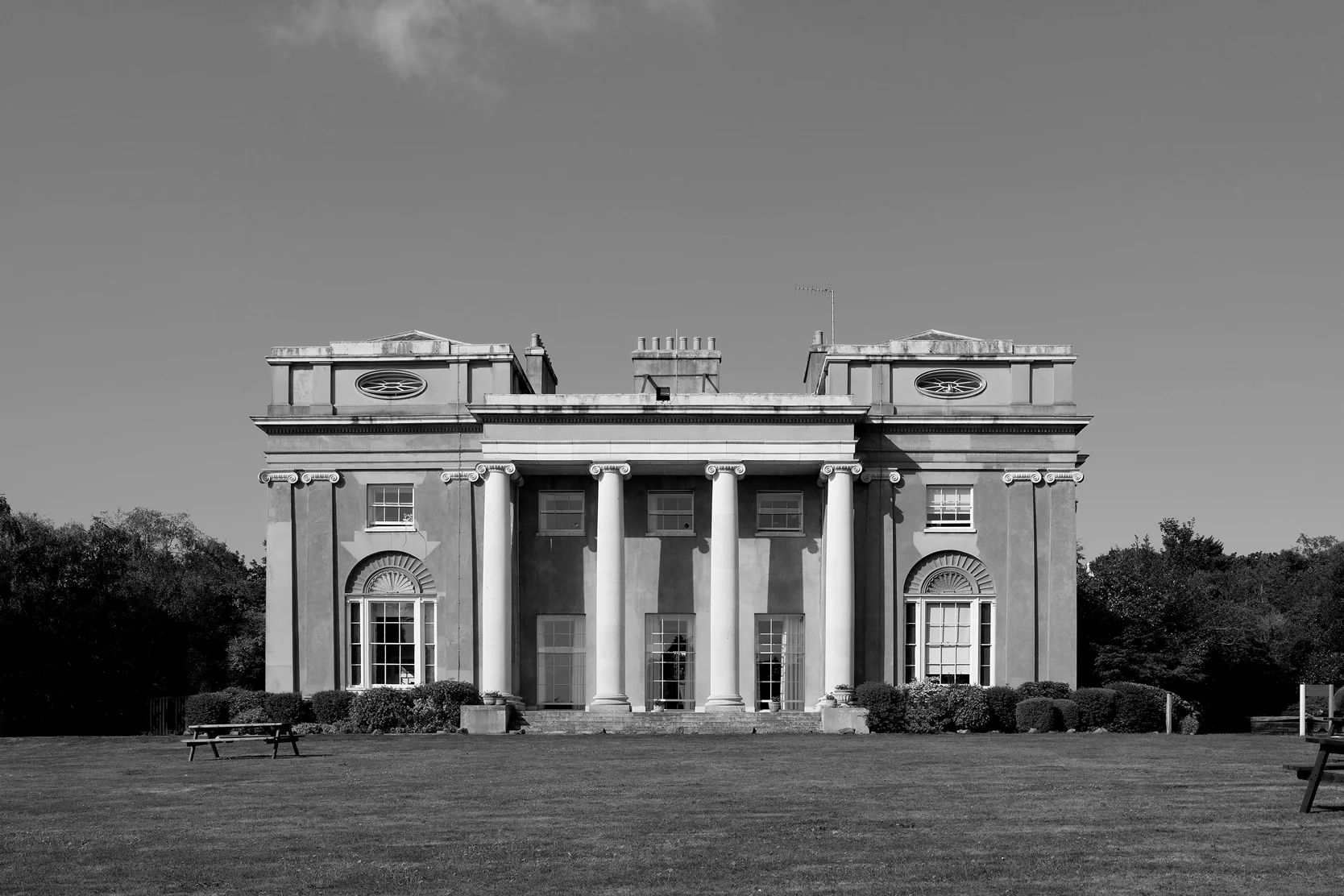
The gates of the Priory stood open to a lane through soaring and drifting woods. The gravel drive led us through this silvan wilderness, to eventual startlingly hot pink rhododendrons rounding on a sweeping lawn. And there she stood, gracing the grounds, the neo-Paladian, four columned, John Nash stately mansion.

Coo.

Even more coo was the coffee machine. Which worked. Sort of. If you could find someone with a degree in all the buttons. Ok, Bink doesn’t imbibe caffeine but that’s not the point. It was still jolly exciting to play with. Until she jammed it.

But there was another difference far more important than all this.

When we sat down in the dining room overlooking this gracious garth – with our free tea – to wait for her appointment, there were half a dozen people at the next table. Presumably a patient’s family. They weren’t in uniform, so they couldn’t be staff. They weren’t looking slightly harassed and running late, in white coats, so they weren’t shrinks. And they weren’t the dumb, shuffling, blank-behind-the-eyes vegetables we’d seen in the last NHS psychiatric hospital we took Bink to look round: I felt deep sympathy for those patients, but even I couldn’t argue when Bink said it wouldn’t help her to go there. (That was before the hospital refused to treat her anyway, because she was on Lorazepam.)

These people were talking, even laughing together. They were, like, normal: you know. Not "normal" as in boring and incomprehensible, an insult which Alexander (who is proudly Aspergic) reserves for neurotypicals. Normal as in, something in life to live for.

“Excuse me,” Bink said after a few minutes. I’ve often discerned that she has more discernment than I. “Are you patients here?”

They smiled and welcomed her, soon to be one of them.

_E1G9421.jpg

More hope every step of the way...

September 05, 2018 /Anne Atkins
2 Comments
balloons.jpg

Couple Counselling (II)

September 04, 2018 by Anne Atkins

Autumn 2001

There came a time when I dreaded those weekly counselling sessions as you would old-fashioned dental extractions without the laughing gas, but that was many months down the line. Throughout that autumn I anticipated them with the bounce of a child going to a birthday party. Even though already – ever since our counsellors had recognised my voice from the radio or my face from my byline mugshot – my bright balloons were being savagely and systematically deflated.

I was not brought up to be particularly intimate with my siblings. I love them, of course: almost certainly appreciate them more than I did as a child. But as an adolescent, for instance, I never whispered secrets to my sister about boys I fancied. Confidences were for friends.

Even before Serena was born, I calculated that our children’s relationships with one another would almost certainly last longer, so their sibling friendship was arguably even more important, than the more intense love they might receive from us.

So this was how we brought them up. Others – nannies, more often than parents, in Fulham – invited Serena or Bink to play-dates because their charges couldn’t possibly enjoy an afternoon with their own sisters.

But ours were Team Atkins, the four of them barefoot together, tearing through the Vicarage or ragging in our generous Church of England London garden. (Shaun’s secretary called them the Free-Range Children.)

I was proud that they had continued this carefully-fostered closeness as they entered adolescence.

“Our children are best friends,” we offered our counsellors this precious boast with quiet delight. We might be going through a tough time, but there was still much to be grateful for.

They processed this as they processed everything (we were soon to learn). Negatively.

“That’s because,” was their analysis, “they are so worried about what’s going on in the family that they don’t dare step outside it.”

Bang. Another balloon.


“Tell us about your parents,” was an early question.

Shaun complied perfectly, as he did fairly consistently in those sessions. His parents were exactly what the counsellor ordered: his father having stepped out of every Irish novel you’ve ever read. Absent, alcoholic, boozily affectionate and utterly unreliable. Shaun’s stoic and dependable mother left him when he hit her once too often.

Tick.

My turn.

“I couldn’t really fault my parents,” I said. “They’re wonderful.”

Did this stump them? Not a bit. He (it was mainly he, my adversary) didn’t miss a beat. “I’d like to hear what Shaun has to say about that.”

Nine times out of ten this ploy would work: if you want to drive a wedge between daughter and parents, wheel on son-in-law. As a bonus, you knock an extra wedge between husband and wife.

“I agree, actually,” Shaun said. “Anne’s parents are pretty amazing.”

Correct me if I’m wrong, but I think if I were asked to help a couple whose lives were beginning to look challenging because their daughter was desperately ill, and I was presented with something so uncomplicatedly positive, I might be tempted to say, “Wow. That’s a great gift life has given you, there. Let’s see how we can build on such privilege and support.”

Was our doughty counsellor daunted? He was not. “Has it ever occurred to you,” he turned to me, “how difficult it is to go through life with perfect parents?”

Bang.

We relayed this comment, still marvelling, in the kitchen when we got home.

“Not nearly as difficult,” Bink quipped, sparklingly spirited, “as having crap parents, is it?”

Well, she would know.


It was during those early weeks that our counsellors told us Bink's troubles were because of us. All we needed was to sort out our own problems. I am reminded of the belief, a couple of generations ago, that a man's homosexuality was his mothers' 'fault.'

We were not sure what these 'problems' were supposed to be – I don't think we ever discovered; though they were so serious that when I said I hoped for another child, we were told, unequivocally, that such an idea was out of the question – but when we'd solved whatever it was between us, they assured us, Bink would be well.

Presumably this was supposed to be encouraging.

We repeated this comment, too, when we got home. I was taken aback by the vehemence of Bink's response.

"Is that all they believe it is? Some issue between my parents?"

She was incensed.

"Everything I'm going through? And they think it's nothing but a parental tiff!"

September 04, 2018 /Anne Atkins
Comment
counselling-3630323_1280.png

Couple Counselling (I)

September 03, 2018 by Anne Atkins

In the year of Bink’s sixteenth birthday, the friend whose husband first diagnosed her told me of a charity which offered free counselling for clergy couples.

I forgot all about it, to be honest, until she mentioned it again some months later.

“Apparently it’s very good.”

I’d always been vaguely interested in counselling, in the way that I’m interested in regular dental check-ups: just to be sure life and relationships are as good as they can be.

It was free. And it came recommended.

We started shortly before Bink went into hospital, arriving in Fitzrovia on the best kind of blustery, sunny but wet autumn day; I tossing off as we entered the Akubra hat I’d sported at university.

I loved it.

What could be more congenial than being given permission to talk, for as long as you like, about how and why you fell in love?

They – a man-and-woman team; the man an ordained Anglican clergyman as well as qualified counsellor – asked us why we had married each other. Spontaneously, unanimously and without so much as a breath between us, we both said, “Sex!” and burst out laughing. (In case you have never heard of such a thing: being Christians, we had not lived together before our wedding night.)

There was a bit of a stunned silence.

“Nobody’s ever said that before.”

We were intrigued. “What reasons do other people give?”

“Most clergy say, for instance, they thought they would help each other with their ministries.”

Our turn for the stunned s.

“If a man asked me to marry him because he thought I’d help him with his ministry,” I said with feeling, “I’d punch his lights out.” As it happens, the one thing Shaun thought I’d do to his ministry was hamper it. A compliment I have happily complied with ever since.

It was during that session or the next that they realised they’d heard of me. Or he did: she never seemed quite so put out by this.

Now, the one thing that counsellors or therapists (many of them, anyway: like many teachers) consider an absolutely fundamental working necessity, is having the upper hand. So if the counsellor feels that the client (even if she herself doesn’t subscribe to this feeling at all) somehow has more kudos than he has, it can wreak havoc with said counsellor’s own sense of self-worth.

At least, that was the conclusion we eventually came to... a long time later. It was only this which made sense of the way that from then on – very subtly at first; eventually, pretty blatantly – our sessions became exercises in putting that right. In giving the counselling-couple the upper hand over the client-couple. Which necessitated taking me, in particular, a notch or several down. Sometimes pretty breathtakingly.

Which in turn wreaks havoc with the client’s sense of self-worth. Which is not, presumably, what the primary point of therapy – or counselling, or whatever – is supposed to be.

It did, however, enable me to understand how Bink had become and still was in thrall to her own abusive therapist, Robin.

I imagine, indeed I very sincerely hope, one of the first things you learn at counselling-college is the utterly disproportionate significance you are awarded in your client’s life. 

The whole counselling construct is an instant, intense and artificial act of emotional love-making. It is the Pretty Woman of the soul. You strip down naked, so to speak – often in your very first session – and share with the other person (or in this case, couple) stuff so intimate that in any other circumstances it would only ever be part of the erotic process.

In all its fullness. That business of opening yourself up, and trusting, and giving of yourself, and holding absolutely nothing back, and reserving no secrets whatsoever, which usually belongs in the context of doing exactly the same thing with your bodies. For the rest of your lives, ideally.

Your rather baffled emotions follow this as best they can... and eventually think, Oh, right, I see. This is another person (or in our case, couple) to fall in love with. I’ve done this. I know where we are. This too is now someone (or some couple) more important to my well-being than anyone else in the world.

Only of course, unlike with any other friendship or love affair or sharing kind of relationship, this traffic is entirely one way. Your counsellor shares absolutely nothing whatsoever with you.

This man or woman (or couple) soon knows your most private dreams and fears. Whether you’ve had an affair; whether you wish your wife were more like your mother; whether you are into sadomasochism or were abused by your uncle aged three or even just that you are completely terrified of the bath taps.

Whereas you don’t even know which tube he takes to get home. Let alone whether he is married, gay, a father, a fanatical philatelist or loves nothing so much pottering alone on his allotment.

Which makes for an extreme imbalance in the power structure. If you are vile to your counsellor (if, indeed, you dare: I never did) he probably forgets about you before he walks out of the room. Quite right too.

If your counsellor is vile to you, he could make you suicidal.

September 03, 2018 /Anne Atkins
Comment
IMG_2536.JPG

Love

September 02, 2018 by Anne Atkins

(Rose: "Ruby Wedding.")


Sunday.

Turns out it wasn’t. The right thing.

From a simplistic point of view, that is.

Bink did gain from the therapy session, yes. But not as much as the stress and exhaustion of going to it set her back.

She only went to please me. And – Shaun told me afterwards – sobbed all the way. Because she feels so utterly useless. Because she can’t even wash.

“Why do you keep saying sorry?” she asked me the next morning.

“For making you go.”

“You didn’t. It was my decision. It’s not your fault. I realised it mattered a lot more to you than it did to me.”

And we now understand one another better, anyway. Which is a lot of what living with someone is about.

I understand why she might not go into the Priory as early as 10th September, when she could: because she wants to get her washing more under control; and her Lorazepam intake; and hopes she may gain even more from the treatment if she’s not quite so ill when she starts.

And she understands why I was so upset that she cancelled her therapy: because I thought it was my fault; because I hadn’t reassured her that I’d washed my hands with soap; so because I was trying to undo the damage I’d done.

Obviously, love is not enough. Bink has had all the love of God and man for all her life, and she is still more ill than it is possible to believe.

But it’s not a bad start, is it?

Bink was able to put my needs above her own. And that is the first and most fundamental kick in the teeth to the devil rubbing his evil little hands at the heart of her diabolical illness. Insanity's primary hostage is unselfishness: love, the most powerful antidote to lunacy.

If she can do that... if she can step outside herself, if she can care about someone else more than she fears her own terrors... she can be well.

IMG_2537.JPG

I love you, Bink.

September 02, 2018 /Anne Atkins
Comment
maze-2264_640.jpg

Never any answers

September 01, 2018 by Anne Atkins

Present Day.

I’ve said before that one of the hardest things about living with mental illness is not having any answers. Not knowing. How to help the person you love. Having no one to ask. Because (unlike with many physical illnesses) no one else knows either.

And sometimes, believing that the most loving behaviour could be what feels most horrible.

Bink cancelled her therapy session. (Her thoroughly suitable, tailor-made, appropriate to her condition, one-to-one, state of the art therapy at the Priory earlier this week. Not the NHS let's-lock-all-the-loonies-up-together-to-get-them-out-of-the-way so-called 'therapy' of seventeen years ago.)

I was sad but not surprised.

The night before, I’d unwittingly touched her bag and failed to reassure her that my hands had been soaped since I last went to the loo. And I hadn’t yet told her that Shaun had borrowed a cleaner car and would be able to take her himself.

Why hadn’t I? Didn’t I know this already? Was it really because – knowing how busy he was before his imminent trip abroad – I didn’t want to commit Shaun if Bink might allow me to take her in our tatty old car?

Or (being brutally honest) was I just pissed off? Yet again, all these ridiculous hoops we have to jump through for Bink’s destructive and loopy requirements.

I don’t honestly know. Probably a bit of both. Does it matter?

The next morning I told her – truthfully – that I’d observed myself in the bathroom and yes, I do soap my hands. I don’t know whether I usually do, I said; but I did this morning, which suggests so.

And I told her she could go in a clean car.

Too late, she said. It’s cancelled.

It’s not too late, I said. The therapist is keeping the slot for you.

I’m not well enough, she said.

What sort of not well enough?

I’m not well enough to say.

This argument continued, on and off, all day. Each feeling manipulated by the other.

I, because next time I’ll just bloody lie and tell you I’ve soaped my hands won’t I? She, because I told her I’m not turning down a lucrative house-letting, requiring your bedroom, now we have no other source of income, just because you haven’t gone into hospital when you could have done because you can’t be bothered to show up for your therapy.

Why don’t you even bother to understand what it feels like to be me?

Why don’t you even bother to explain what it feels like to be you?

(Did didn't did didn't.)

And maybe I do understand, Bink. Maybe the rest of us, who get off our backsides and go into work when we don’t feel well enough, understand only too well what it feels like not to feel well enough, and just ignore the feeling and get on with it until we do feel well enough. And maybe the fact that you don’t is a lot of the problem.

You have this ridiculous idea that one day I'll just miraculously be 'well'. And being 'well' means being perfect. And then I won't have any issues any more.

(Da-di-da.)

This is supposed to be about me.

Primarily about you, yes. But it's also about all the rest of us. Have you any idea the effect your illness has...

(On and on.)

A book group in Cambridge, I said, thought they had booked me to speak about my novel next week, when Shaun and I have accepted an invitation to the South of France, for which we've bought flights. And I was all set to cancel my trip... because just three readers turning out in the cold matter more than our first holiday abroad in more than ten years. 

Is it really that important to you? she asked after an hour and a half of this. One therapy session?

Yes, I said. It really is. Because it’s a statement of priority.

All right. In that case. I’ll go.

And then she began to weep piteously, and tell me how desperate and helpless she is because she simply can’t wash, and how if she can’t fix that she’ll be a lot worse off than just not going to a therapy session, and how she won’t be able to wash for several more days if she puts her energy into going, and she will spiral completely out of control...

Bink, I said gently. Do you not think that’s what the therapist is for?

And then I felt overwhelmed with guilt.

What a horrible, bullying, cruel person I must be.


So she and Shaun set off, an hour and seventeen minutes later than originally planned, to reach the North London Priory in all the end-of-the-day traffic.

And the wonderful therapist said that was great and of course she’ll hang on for her last session of the day, and presumably in turn make herself horrendously late home.

Was it the right thing to do? To persuade her? To put pressure on her like that?

Who knows.

That’s the trouble, isn’t it?


September 01, 2018 /Anne Atkins
1 Comment

Therapy

August 31, 2018 by Anne Atkins

Autumn and winter 2001

Troubled though Bink already was, broken and splintered and fragmented though she was soon to become in the Florence Nightingale Unit all those years ago, she never lost her spirit.

She never has.

(It strikes me suddenly what a momentous thing I have just written. I savour it for a moment. Bink is still Bink. She always will be. Incomparably – and still, somehow, despite everything indomitably – herself. And that strengthens my faith that the true, restored, glorious and well Bink will one day re-emerge, shaking out her wings to dry in the warm springtime.)

In a later, and happier, hospital than the Florence Nightingale, the therapist wrote the word ‘Procrastination,’ on the board, told the patients to discuss this with relation to OCD, and left the room. There was a dazed group stare. Eventually Bink pitched in, broke the word down into its component parts and explained how it was approximately Latin for ‘mañana’. The group stare was now substantially more dazed.

“You’re a complete freak,” one of them said.


She was, yes, considerably crippled by what they did to her in the Florence Nightingale. But never completely crushed. One mealtime, a member of staff, in an act of completely unprovoked verbal antagonism, exclaimed, “I hate all Christians.”

“That is as irrational and prejudiced,” Bink responded calmly, “as if I were to say, ‘I hate all homosexuals.’”

Note that, unlike him, she did not say that she did. She was using it as an example of the inappropriateness of such bigotry.

Note too, that Bink had no idea – an omission very quickly and no doubt aggressively corrected by the authorities – of the sexual orientation of the member of staff in question. He, however, knew very well her faith orientation, and it was in direct response to this intelligence that he had made his remark.

And note, finally, who was the adult in the equation, with the duty of care and presumably therefore respect towards the other: and who the patient, the adolescent, the one who was supposedly there because she was ill and in need of help, who had no such obligation to those supposed to be caring for her.

Which of the two do you suppose was disciplined for misdemeanour? I’ll give you a clue: it wasn’t the staff member.

She was even more indignant at the inability to engage in intelligent debate, than at the injustice.


In one of the endless and fatuous therapy sessions Bink now attended instead of education, patients were asked to draw a desert island. Bink, whose skull was presumably bored inside out by now, drew on her beach a pig’s head on a stick.

“They probably haven’t read Lord of the Flies,” Serena explained, as Bink marvelled at the lack of response this provoked.

“Even if you don’t get the reference,” she replied, with some justification, “it’s pretty bizarre not to comment on it. At all.” All they said, Bink relayed to us in the sort of mumsie voice you would use for the dangerously demented, was, “You don’t seem to have put any food on your island.” (Dear.) “Do you think it might be helpful to share with the group why that might be?”


Sadly, the therapy was not all harmless.

Bink – who was, don't forget, very vulnerable herself – was locked up with some seriously damaged adolescents. One had been attacked by his own father, with knives, before he was twelve, and was lucky to have survived. Another had been stolen as a toddler from her tribe in Africa, sold into slavery and had lost touch with all her birth family. (Or so she believed, anyway.) One of the less abused had come in as heterosexual Daniel and discovered herself to be homosexual Sue.

(None of these conditions, you have no doubt already observed, remotely relevant to what Bink herself was suffering from. Would you subject a stroke patient to chemotherapy? It would be about as appropriate.)

Each discussed his or her abuse in their therapy sessions. Bink’s difficulties had originated with peer pressure. What could she say? “I was teased at school”?

It sounds a bit lame, doesn’t it?

Soon, she too was sharing her trauma of abuse. We weren't supposed to know this. Nor that she had confessed to being the abuser herself. Of little children. The fact that we didn't believe it for a moment didn't make it any the less sickening: however ill she had been was before she went in, she had never been delusional.

(And of course, because this information was a breach of confidence, we couldn't ask her about it. Nor therefore find out, for quite some time, that she never believed it either.)

August 31, 2018 /Anne Atkins
Comment

Yuk (II)

August 30, 2018 by Anne Atkins

Present day [continued].

There was a soft tap on our bedroom door. Bink is back to the pillowcase on the head, though at least this time it was red so it looked more a gypsy bandana and less like a bandage from The Beano. She had emerged some time after supper (I’d been up to her room several times, but she didn’t seem interested in food or company) and asked me about my bath, so I hoped that meant she might brave a shower.

We had already had a tussle about her second therapy session in the Priory in the afternoon. I’ve told her I’ll accompany her, till she’s used to the journey, by train and bus, but public transport has become ‘too stressful.’ Now, our car is ‘too dirty.’

Shaun has had to borrow one.

“Come in, Bink,” I sighed.

“When did you last wash your hands?”

“Um... in my bath just now I suppose.”

“Before then?”

“I’ve no idea. Last night’s bath? I don’t know. Why?”

“You brushed past my bag. Do you wash your hands when you go to the loo?”

“Bink...”

“But do you?”

“Yes, I wash my hands when I go to the loo." Usually. If I’m not in a hurry. Bink has no idea – many people have no idea – that being a mother often means you don’t have time to go to the loo at all. For days on end.

“With soap?”

“I never use soap, you know that. I don’t wash at all in the summer, Bink: you know that too. I swim. In the sea, and the pool. All summer long. And that keeps me clean.” We’ve had these conversations before. Bink can’t understand why I don’t smell. Shaun tells her I’m just a mystery: I don’t even sweat on my bike.

“Not even when you do a poo?”

“Possibly when I do a poo. I don’t know.” That's the point, isn't? The reason I'm able to lead a more-or-less normal life is because I don't care enough to know. And the reason I don't want to talk about it now is because I don't ever want to. I've seen what happens when you do. “I’m not in the habit of getting poo on my hands. Ok...” I try to be more helpful. “When I clean up after the kitten, or the dog, I use loo paper, or a bag, and don’t touch the poo. And actually, yes, use soap afterwards anyway just in case.” (Now that’s irrational, isn’t it? If I didn’t touch it?) “Unless I used rubber gloves. And no,” I pre-empt her next question, “I don’t know when I last did a poo. What difference does it make? You’re going to wash your bag anyway, now.”

“It will affect how I do it. That would really gross most people out. That you don’t use soap when you've done a poo.”

“How would you know?” Shaun looks briefly over his book. “What other people feel?”

“I have conversations with people. And that would gross most people out.”

After she leaves, deeply and obviously unhappy, I feel an absolute shit.

So to speak.

And Shaun is cross: “Bink, the expert on what people feel about washing their hands after a poo.” (But this is relevant too. Bink’s OCD started when she was bullied at school, so what other people think is vital.)

Why didn’t I just tell her what she wanted to hear? Why not simply keep her happy, and calm, until she’s in the Priory and we can hand over to the experts? After all, if she’s as distressed as I now fear she is, she might not get to the Priory at all.

Because it would be a lie.

Because we’ve been there, lying to Bink year after year – no, of course no one touched your wash; no, of course the dog didn’t sneeze on the floor – and it doesn’t work. It perpetuates everything. And one day you get found out and she can’t even trust you, and that’s far worse.

And because, being ruthless with myself, I resent it. The intrusiveness. The humiliation. 

Last time Bink came to live at home I was put through an hour’s interrogation about the washing of my underwear and even the nature of my own bodily fluids. And, not to put to fine a point on it, my relationship with Shaun. And as well as committing myself to retraining the dog – an extremely amenable Great Dane who doesn't even touch food that isn't in his own bowl, and whose only rebellion this is – not to poo in the wrong areas of the garden, I also had to promise to carry personal items of my wash straight from our bedroom to the laundry outside, and never put them down on the way. To do something else, as mothers do too.

Sometime later I tried to explain to her how that had made me feel.

(Invaded. Exposed. Demeaned. Why should I have to discuss what comes out of my body with my daughter? With anyone?)

And that is irrational too, isn’t it? (Intrusive, unwelcome thoughts I can't get rid of... just like Bink's.)

It’s all irrational.

It’s just a matter of finding a level of irrational where you can survive.

August 30, 2018 /Anne Atkins
Comment
3919530474_3db3e20a4f_b (1).jpg

Yuk (I)

August 29, 2018 by Anne Atkins

Present day (and past).

You may not want to read this post. Even more, tomorrow’s.

I didn’t want to write them. But I am committed to telling the truth about Bink’s illness; about myself; about all of us. Aversion, distaste, yuckiness is what OCD is all about.

A friend whom I’ve barely seen since university contacted me from abroad, having just found this blog. Amidst expressions of support and sympathy he told me of a quip the previous evening about his ‘OCD’: he was neat and tidy when we were at Oxford.

“Doesn’t seem so funny this morning.”

Last night our paying guests commented about being ‘OCD,’ in locking themselves out of our house. Such comments used to sadden me but now they are water off the old db. As I replied to my friend, it’s no worse than joking about someone being nuts or bonkers, is it?

Obviously there must be some evolutionary point to it: screaming in horror at your toddler eating dog poo might put it off next time and stop it going blind, presumably. OCD is no more than this universal – and, let’s face it, irrational – disgust gone haywire.

I tried to explain it to my father when Bink was first ill. “You have illogical reactions,” I said. “You don’t like the dog licking plates clean.”

“That’s because it’s disgusting,” he argued, showing himself less self-aware than Bink.

No, it isn’t. Dogs’ mouths have far fewer germs than humans’ so the dog is presumably making the plate cleaner. And any remaining bogeys are about to be boiled to death in the dishwasher: you could sluice the plates off in a sewer first and it wouldn’t be unhygienic.

When the children were small my parents gave them a Bug File: interesting information about creepy crawlies in the garden, with little bug boxes to catch and observe them. The school had a project on, so they were taking some in with them.

“Mummy, it’s escaping!” came the panic from the back of the car.

“Don’t be silly. It can’t possibly. And if it did, it wouldn’t hurt you would it?” I oozed calm and reassurance.

The squeals continued, and eventually someone handed me the bug box. “There’s absolutely nothing...” I said, taking it confidently and turning at the traffic lights, “to worry...”

And then I saw the horrid, vile little centipede, four fifths escaped from the tiny air-hole, waving its disgusting, revolting, hideous hundred little icky legs at me and about to land on my lap, and threw it out of the window, shrieking.

In the early days, I tried to help Bink in that annoying way people have when they’ve thought far less about a problem than you have and think they’ve come up with a solution.

“I’ve been reading,” I said naïvely, “and apparently you can cure yourself of OCD by just getting in the bath anyway, and not worrying about how you feel. Eventually the feelings get fed up and go away. Just thought I’d mention it,” I went on digging. “Because obviously it’s awful being ill, and it seems to me it’s worth doing something difficult if it will get you well...” I petered out.

“If you were ill,” she challenged, “would you do anything – anything at all – to get yourself better?”

“I hope so. If I were suffering as much as you.”

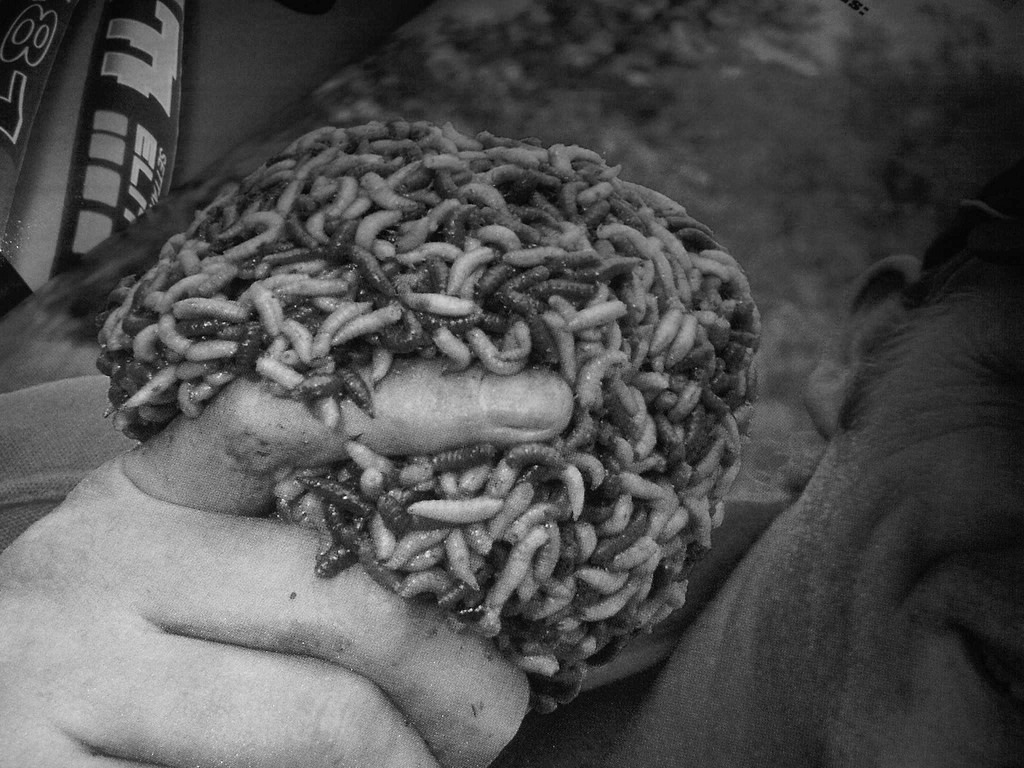
“Suppose you were told to sit in a bath full of live, wriggling maggots for several hours? Would you do that?”

Gosh. 

“They don’t bite, or sting, or do you any harm. They can’t hurt you, can they?”

Well, would I?

August 29, 2018 /Anne Atkins
Comment
letters-1390463_1920 (1).jpg

Isolation

August 28, 2018 by Anne Atkins

October and November, 2001

The first Sunday Bink was in the Unit, we told our church.

Of course we did.

Shaun had never accepted the adage he was taught at theological college and in his first curacy: ‘Never make friends within the parish.’ His congregation was our family, our friends. We shared everything. Our home, our life, and that included our sorrows.

(True, there came a time, as perhaps there comes a time for everything, when the vulnerability and openness we’d shown the church we loved so much ended up hurting us very deeply... but that is another story, for another time, and not really to do with Bink’s illness. And it doesn’t make it inappropriate, anyway.)

It would have been inconceivable for us not to have told everyone: the church was Bink's family too.

She was instantly inundated. Soon she had more cards than she could fit on her notice board or arrange on her desk: more flowers than in a star’s dressing-room.

How different from school.

Bink, like Serena, was on a full Government Assisted Place at St Paul’s Girls’ School. SPGS is sometimes in the press accused of putting its pupils under undue pressure, perhaps unhelpful to their mental health. Serena loved it there, made lifelong friendships, was inspired to achieve her potential in a way she found deeply satisfying. (Bink perhaps had a less congenial cohort. Which, like everything, helped shape her illness.)

The Monday morning she was due back, I rang the High Mistress.

“My advice,” she said, “is that we don’t announce where she is.”

“Oh?” I was taken aback. “I’m afraid we’ve already told our church.”

“That’s your business,” she went on. “But in my experience it’s not helpful. When she returns she will want to be in control of the information.”

When she returns! When Bink eventually crawled, crippled, from that place the High Mistress gave us very short shrift indeed.

She is long gone herself and we will never know how much her advice was genuinely charitable, but from Bink’s point of view it was disastrous. The school chaplain kindly visited her a few times, but she never heard anything from any of her schoolmates. 

A very long time later, one of them explained. “Bink simply disappeared. We had no idea where she was. No one told us anything and we got the impression we weren’t to ask. How could we send her our well-wishes?”

Serena’s school friends danced at her wedding and now compare baby notes. Bink never saw hers again.


Be that as it may, she continued to be bombarded with love.

My faithful, wonderful father – bless him – wrote to her every single day, until the day she came out. He never missed a single post. My parents sent her flowers, a pot plant via Interflora: the suffocating heat of her unbearably stuffy room all but killing it off in days.

Serena brought her a little clematis in a pot. The present surprises me now (a few months ago someone tried to throw it out, and I rescued it): Serena, like me, abhors anything artificial. But it was deceptive, the buds looking very real and the pot looking like plastic. We joked that we’d succeeded in smuggling it in: ceramic, like the knives she also easily hid into her room, was forbidden.

And members of our dear, loving church kept up a constant stream of support. The payphone rang many times a day for Bink: other stranded, abandoned patients were fortunate if their defeated and disoriented families contacted them once a week.

Parson’s Green is half an hour from the Florence Nightingale Unit, and Bink was often visited and taken out for supper.

For several weeks.

Until the psychiatrist put her foot down. It would be interesting to do a comparative study between the techniques of that Unit and those of a cult. Brainwashing, I’ve been told, includes isolation as well as sleep deprivation.

All this attention was ‘distracting from therapy.’ Bink was to have no more visits. No more contact.

Even we, her parents – and siblings – were not to communicate with her any more.

(And if your thesis is that, 'The parents are usually the problem,' as I have variously heard from therapists, counsellors and psychiatrists, this makes a sick kind of sense.)

Not unless she specifically requested us were we ever allowed to see her.

August 28, 2018 /Anne Atkins
1 Comment
human-3586707_1920.jpg

Lunacy

August 27, 2018 by Anne Atkins

October 2001. 

I can no longer call the date ‘Half Term’ because half-terms were over for Bink, long before half-term itself was. That night we took her to the Florence Nightingale and were told we couldn’t take her home again, school became history. 

That night, the Police were called to the Unit, a common occurrence: a member of staff had assaulted a patient. (By way of poetic symmetry, the day she finally left they were there as well: one patient had attempted to rape another, and almost succeeded.)

That night too, we were informed that the nurses sat with the patients for every meal. We could rest assured she would be well looked after, and certainly fed. Presumably a necessary precaution, since they must sometimes have had anorexic patients.

The next time we saw her, a week later, I was stopped in my tracks. I could have sworn she’d lost half a stone. Always slight, Bink now seemed breakably thin. Having been told, so specifically, that every meal was monitored, I must be imagining it.

It was months before she told me that for the first ten days, apart from water she consumed one cup of tea and a biscuit. Nothing else. At all. For a week and a half.

A pointless protest, since not a single member of the staff noticed. Presumably, if she had indeed been anorexic she could have died before they did.


Her room was neat and clean but stifling. No windows were allowed to be opened. Anywhere in the building. Suicide risk.

It didn’t take Bink long to learn the only way to be allowed fresh air. Smokers were released into the street for ten minutes in every hour. An addiction Bink still has – and hates – to this day. One of the first things she asked the Priory is to help her quit nicotine, as well as all the other mind-altering substances she acquired in there. It has jeopardised her sleeping ever since.

Our children were brought up in your archetypal draughty Victorian vicarage: lots of cracks and crannies, no heating upstairs and the windows wide to the stars every night. Naturally she couldn’t sleep, in her overheated airless room.

I turned to Yellow Pages and spent a morning searching for a gym. After many fruitless calls I rang the Florence Nightingale reception.

“You’ll know the answer to this,” I said. “I’m looking for the nearest gym to the hospital, so Bink can get some exercise.”

“There’s a gym right here inside the hospital.”

“Oh. Brilliant! Thank you. How does she use it, please?”

“She can’t.”

“I’m sorry?” This seemed incomprehensible. “Why is that?”

“She’d need supervision.”

I was momentarily speechless. “She’s very keen. Isn’t there anyone who could be with her? I could come over myself every afternoon.”

“Wouldn’t make any difference. The gym shuts at four.”

“Well, why doesn't she use it before four, then?”

“She has therapy till half past three. She wouldn’t get there in time.”

Defeated as I was, I tried one more time.

“Is there anything you can suggest, please? She’s not able to sleep at night.”

“That’s her own fault. She’s won’t take the medication.”

Despite all my despair at that dreadful place over the next weeks and months, I have always believed in trying to understand something I don't agree with.

“Please, explain it to me,” I begged a friend whose husband worked in mental healthcare. “There must be some logic to it: I can’t for the life of me see what. They have thirteen teenagers cooped up in that Unit. All mentally ill. All physically fit. Why don’t they take them to the park every afternoon for a couple of hours of football? Or for a walk? Or cross-country running? Or anything. Surely that would be more beneficial than therapy. And then drugging them all to make them sleep. What’s the reasoning behind it? It seems completely insane to me.”

“It’s cheaper,” she said simply.

August 27, 2018 /Anne Atkins
Florence Nightingale Hospital, OCD, Priory
Comment
IMG_1045.jpg

Hope

August 26, 2018 by Anne Atkins

Sunday.

Surprisingly, despite all the horror inflicted on her, Bink has – twice – experienced effective hospital treatment; had no follow-up; lost all the gain.

Not this time.

Some months ago, Professor Veale put forward his three point plan:

  1. Treatment (in the Priory).
  2. Life in a therapeutic community (possibly faith-based).
  3. Career in a structured environment (perhaps boarding school).

For the first time, a thought-through vision rather than footling and fruitless firefighting.

Bink has been ill for two-thirds of her life. Cripplingly so for about half. A direction unlikely to be reversed in a few weeks – even months – in hospital.

Professor Veale's job is part one.

Mine, part two. I lost count of the loopy, whacky communes I rang, over many weeks. Rehabs for junkies. Employment-skill-schemes costing tens of thousands. A Christian retreat, single-sex, location unspecified, no exeats or visits for the first year. (Much as we laughed at the thought of Bink as nun, she might as well go to a house of correction as a cult or a convent.)

Eventually I found somewhere hopeful... and Bink was turned down. She would have been devastatingly discouraged, but that the same day Shaun found the perfect paradise.

She thought about it for a long time. A few days ago she rang and spoke to someone. (Or rather – Bink can't touch telephones – I rang and she used speakerphone.)

It would be premature to say more: there will be a long and careful application process. But the thought of Bink surviving in a self-sufficient community, of kind, Christian people; growing their own vegetables and rearing their own meat; in a peaceful rural environment, with a nearby river for her to swim in; its own little railway station within walking distance (and perhaps a small friendly café in the village high street, with chairs and a table and cheerful gingham cloth in the sun); and Bink herself eventually turning the earth and feeding hens... it is a very joyful one.

IMG_2514.JPG

She might even pack her fiddle, and bring them songs and dances.

Perhaps... maybe... in a year or two, she may be able to brave the bottom of our garden without terror.

IMG_2522.JPG.jpeg

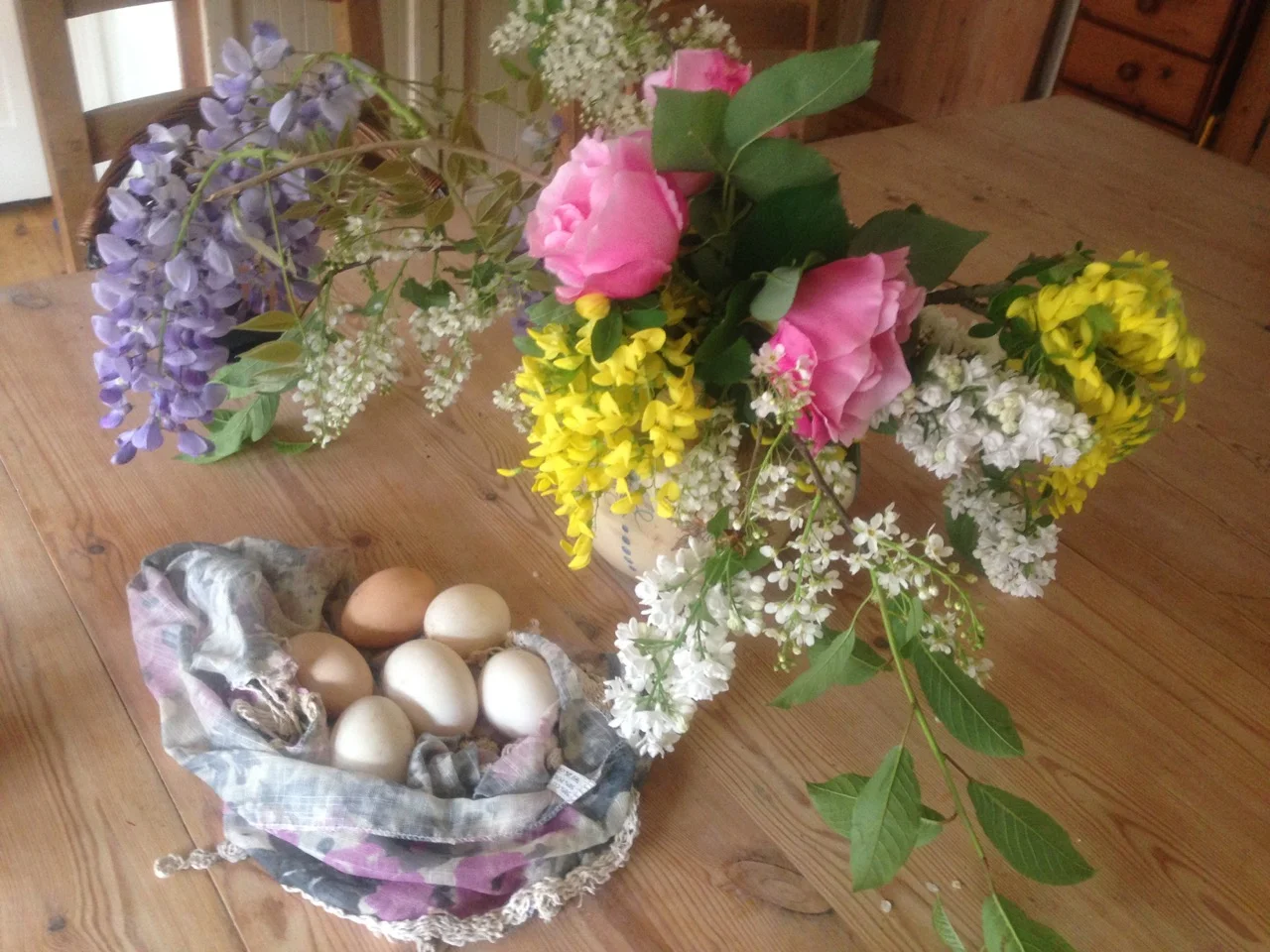
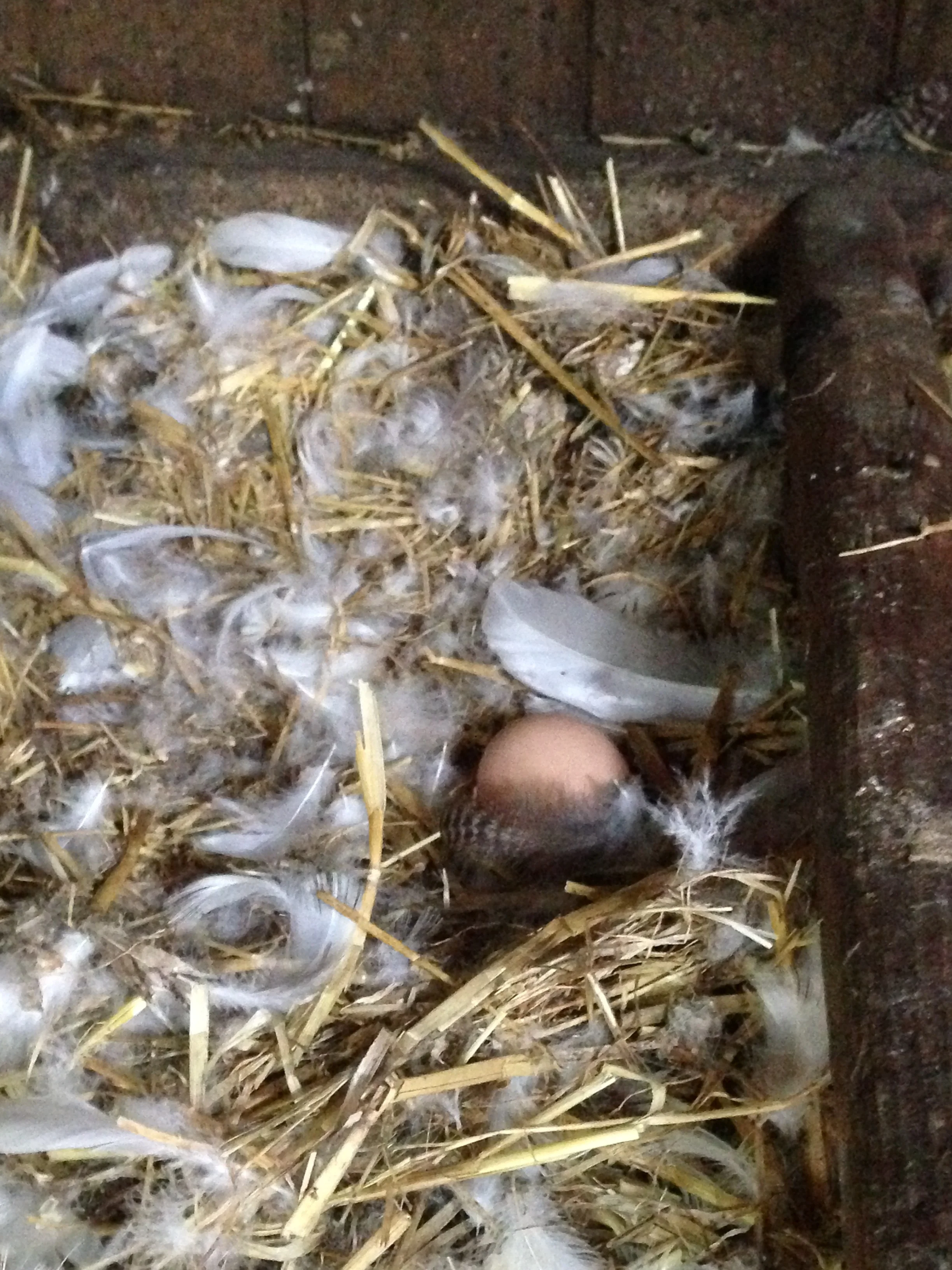
Just possibly, instead of setting fire to the kitchen in panic at the thought of animal poo, she might even be able to collect an egg.

IMG_2518.JPG

Perhaps even eat it...?

August 26, 2018 /Anne Atkins
Comment
chess-2018670_1920.jpg

Check!

August 25, 2018 by Anne Atkins

Present Day.

Ha ha ha.

Bink has met her match: a smart shrink. Not just clever, canny and capable... but caring and conscientious too.

You know what it’s like with bright children: their education is always dogged by the sparsity of teachers quite as quick-witted as they are. Great pedagogues, like my mother, recognise there are always going to be some in the class who will one day prove better mathematicians – if they aren’t already – and challenge and respect their charges accordingly. (But then she taught, inter alia, Andrew Wiles, several Keyneses and a Perutz: Cambridge for you.) Sadly, such humility is rare.

The same goes for mental health treatment: nothing hobbles therapy quite like being able to run rings around your therapist.

As previously mentioned, Bink is addicted to the pernicious prescription poison, Lorazepam. Her problem has long been confounded by the difficulty of supply: as hard for a beggar presented with the occasional banquet to refrain from gorging, as for Bink to cut down on something she has to fight so hard to obtain. The lurching anxiety from one unobtainable prescription to the next is so intense, it becomes a significant contributor to the strain which keeps her taking it.

When Professor Veale agreed to prescribe it until she becomes his inpatient in the Priory (and under managed withdrawal) a burden fell off her like Pilgrim’s sin falling from his shoulders.

“Never again,” she said to us after her last appointment, “never again in my life will I have to worry where my next prescription is coming from.”

There were stipulations along with the script. Bink has been trying to quit this stuff for at least a year and a half, and sometimes manages to reduce her intake considerably. Which means she can stash a few spare pills away to stave off the gnawing stress about the next supply. 

Fine. Up to a point, Lord C: until life turns ugly and she resorts to this cache to survive. Meaning her intake teeters and totters.

Professor Veale was having none of this. She had to tell him what dosage she was on, and then take it whether or not she felt like it. 

Shaun justified this afterwards – proving, if needed, how useful it can be to have parents on board.

“Surely I should cut down if I can?” she argued.

“No,” Shaun said. “Professor Veale was very clear about that. You are not to decide your dosage depending on how you feel. You must take the amount you have agreed. No more, no less.”

Well, I suspect she probably intended to...

But after her double appointment, with Professor Veale and then her therapist, she slept for about three days. Quite sensibly (to my mind) she didn’t set an alarm for her appointment with yet another evil little pill.

Once or twice since, she has observed, “I really don’t need as much Lorazepam as this. Do you honestly think I should take it if I don’t want it?”

I kept schtum. If this is cunning reverse – or even aversion – therapy, I’m not interfering.

Last night she went to collect her next fortnight’s dosage... and came home empty-handed, the pharmacist having rejected the unfamiliar private prescription.

“Why do you leave it right up to the wire?” I sighed, as Shaun agreed to drive her round Bedfordshire trying to find a late-night chemist.

“Because I find the whole process so stressful.”

Sometime before midnight Tesco’s agreed to ring Professor Veale’s secretary in the morning to check the prescription was bona fide.

The next day Bink came home bursting with wry indignation.

“He is far too attentive and observant,” she complained with a reluctant smile. “Why did I have to end up with a conscientious psychiatrist?” (Surely like asking, Why was my pen in the last place I looked?)

“He’s noticed. That I was late presenting the prescription. So he’s worked out I hadn’t run out yet. So he knows I’ve reduced my dose.”

Ah-hah! Clever Prof V...

“It’s not funny! He’s going to have such a go at me.”

“I doubt it, Bink.”

“And now he’s told the pharmacist he’ll have to work out the new lower dosage. I bet he left the hospital stamp off on purpose. So they had to ring him.”

Ha ha ha ha ha.

“And he’s supposed to be on holiday...” She wailed.

August 25, 2018 /Anne Atkins
Comment
IMG_2458 (1).JPG

Bink the child

August 24, 2018 by Anne Atkins

Forgive a brief change in direction. I can only revisit memories of that black hole, which so suddenly gaped beneath us, for so long without respite. It takes energy to fight off the destructive, dragging, dogging guilt.

Why blame myself? Why do I say, I made this decision or that, when God gave Bink two parents? That’s the point, isn’t it: two different parents.

Shaun is the sea on which the rest of us sail. He is there. He is calm... or occasionally not. He thinks slowly, deeply and very well. I react nimbly and confidently and not always correctly. I am the skipper in the little boat, making day-to-day decisions which determine our immediate direction. If I had said, “We take her home again, right now,” he never would have gainsaid me.

And that evening, I didn’t think quite quickly enough...

My mother taught me, repeatedly, never to regret. Never to say, If only. Never to lose the future to a helpless mourning of the past.

We have a hopeful future for Bink for the first time in many years.


Summer 1994

So allow me, today, to go slightly further back to a happier history, and introduce you to Bink the little girl. Not to sadden us with What Might Have Been, but gladden us with What Will Still Be. She is still there, that wild child who brought us all such delight. True, her joyous soul is currently trapped inside a mad mind: the jealous faeries stole our beautiful Bink and left a crippled changeling in her place. But she is not gone: not at all. The real dinkum Bink is just biding her time, waiting to be released again like a bird into the sunshine.

Before that evil genetic mental infection, which we now know runs so devastatingly through the veins of my birth family, began eating Bink from the inside out – and certainly before the canker was visible – I can barely remember her without her impish grin. She was always plotting mischief.

You don’t want a three volume biography so I will restrict myself, by way of example, to one holiday in Ireland.

Bink was 9. Serena, Alexander and Benjamin were 11, 8 and 6.

It was raining and the children cooped up indoors, so I put a jar of flowers on the kitchen table, gave them each a sheet of paper and pencil and some paints, and announced a competition.

The others started drawing, meticulously and painstakingly.

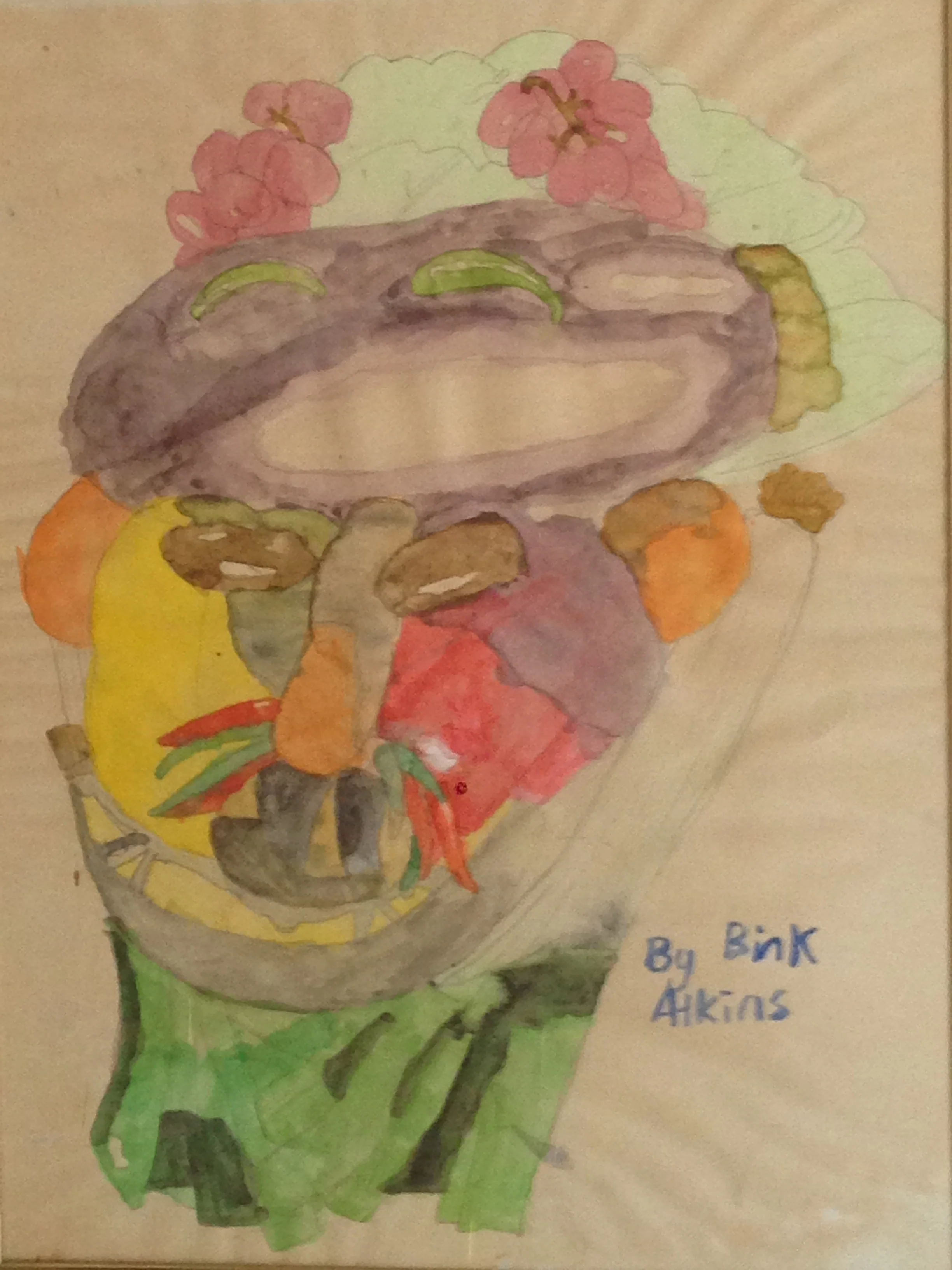
Had Bink already started falling out of love with her pencils and brushes? Time had been, when she was six or seven, that she would arrange a still life – fruit in the shape of a face, say – and execute it with the passionate commitment she gave to everything.

IMG_2508.JPG

An artist told us that a perfectionist child can eventually find the discrepancy between what she sees and what she can execute so frustrating it can lead to renunciation: a phase which successful artists work through.

“I’m not doing this rubbish,” she said dismissively that day, scribbling for a few scant seconds before getting down. 

It was a valid entry, so it was presented along with the others to the unknowing judge.

Poor Serena, with her careful, conscientious petals and stamens, accurately and competently represented! Poor Alex and Ben, with their childish bright colours and hopeful splashes!

It hardly took Shaun longer to decide than it had taken Bink to draw. Her few slapdash lines had conjured up the glass bottle; the shape and movement of the sweet wild blossom; even the romantic atmosphere of the surroundings...

That was the holiday when we came home from the pub and told the children we wished we had taken them to hear the live guitarist and singer.

The next day, as we were walking through the village, Bink briefly disappeared. She was nine years old, I tell you.

We turned about, wondering where she’d gone, and saw her emerge from the pub.

“We’re performing tomorrow night,” she told her siblings.

What astonishes me (other than that I’d happened to strap their fiddles, ’cello and harp to the roof of the car) is how she marshalled them. There was no let up under Bink’s rule, practising all that day and the next. Shaun and I left them to it and went for a walk. On our return we could hear harmony and discord alike resounding through the valley, emanating from that little cottage like the argumentative spells flying through the windows in Disney’s Sleeping Beauty.

That night Shaun and I sat at the other end of the bar, pretending to know nothing while they played jigs and reels and folk tunes for hour after lively hour, paid in lemonade and chocolate bars.

An English couple sat down near us and we learnt they lived barely a mile away from us in Kensington.

“We weren’t planning on coming in,” they confessed, “but we heard these authentic Irish children, from the street, and couldn’t stay away.”

Sometime in the night Bink asked the landlord how long he wanted them to play.

“Ah my dear,” he replied, with his canny Irish charm, “I could listen to ye till marnin’.”

August 24, 2018 /Anne Atkins
Comment

Trapped

August 23, 2018 by Anne Atkins

October 2001, Half Term.

Bink packed surprisingly quickly.

I say, ‘surprising,’ but it wasn’t really: she had always been efficient. Only surprising because (the intrusive advice continued) this is supposedly unusual for someone with OCD. So we ought to bundle her into hospital while we had the opportunity.

Bink: oh, Bink! Even at that apocalyptic time: whacky, hilarious Bink. She packed two books for her desert island. Her Bible... and One Flew Over the Cuckoo’s Nest.

We all went with her. Shaun and I, Serena and the boys. It was the Florence Nightingale Unit off the Edgware Road, half an hour away.

Miss Nightingale must be screaming in her grave.

We arrived in the early evening and took her to her room. She was under the auspices of the NHS, but it was a private ward and she had her own en suite bathroom. 

A long time later she said it was the only helpful thing about the place: she was able to wash. Just think: if someone, anyone, had told us we could apply for a Disability Grant, she could have had her own bathroom at home. At a fraction of the cost (and no damage to her).

But then, a lot of things could have been done at a fraction of the cost.

While Bink unpacked we went down for mugs of friendly tea with the buxom Australian nurse. It must have been about ten o’clock when she dropped the bombshell. Perhaps I’d commented that I only expected Bink to stay a night or two.

“Oh, you can’t take her out again.”

I’m sorry?

“She’s an adult.”

She’s sixteen...

“That’s adult, to the NHS.”

To this day, I cannot fathom – let alone forgive – my stunned inaction. Why didn’t we go straight back upstairs and tell her to pack everything smartly back in that suitcase again? True, it would have been traumatic and upsetting. She might not have coped well with the sudden switchback. We might have had a rocky day or two.

But a few tears and sleepless nights wouldn’t register on the scale of what that place did to her. To all of us.

Was it really already too late?

We had no rights at all. Not to visit, nor see her notes. Not veto the treatment, nor have any say in it. Certainly not to take her home. Ever.

“I’m not saying it’s right, mind you,” the motherly Antipodean continued. “I don’t agree with it myself.”

During the nightmare which ensued, why did we never ask a lawyer friend to get this assertion checked out? Because it simply never occurred to us that it might be a lie. Because we were already sandbagged and reeling. Because you start out in life trusting, don’t you? You have to learn to fight to the teeth.

It was fifteen years before I found out. A few years ago, after we moved to Bedford, I resigned myself to counselling offered by our GP. Was that when Bink had disappeared completely and I was tearing myself into scattered shreds and shards of misery? I can't even remember. Every week for a year, with not much to show for it except this chilling correction to what we had so gullibly accepted all that long time ago.

Which devastated all our lives, and far more to the point set Bink on the path to hell.

Sixteen is only ‘adult’ if you have left full-time education. (Which, to be fair, every other adolescent in that unit probably had at around the age of ten.) I don’t suppose the nurse was deliberately deceiving us. It was no more than she had been told.

But the psychiatrist – who kept Bink in there, and from us, against what were so obviously our wishes and in the face of our so heartbroken and desperate concern – must have known. She certainly should have done. She was surely exploiting our trust on purpose. She presumably knew exactly what she was playing at.

She wanted control of our daughter. Of her precious and very vulnerable mind.

(Indeed of her body and her soul. In order to conduct – I realise how insanely paranoid this sounds, but it was no less than we eventually heard explained and justified by the psychiatrist who referred her – a dangerous and extremely destructive experiment... Just to see what might happen.)

We were to see evidence of this many times, over the next few months.

The last thing that psychiatrist wanted was protective parents, getting in the way.

teddy-2711675_1920.jpg
August 23, 2018 /Anne Atkins
Comment
hospital-921034_1920.jpg

Worst mistake ever

August 22, 2018 by Anne Atkins

October 2001

Since the awful, terrible decision we made that week – listening to professionals when I should have listened to myself – I have often trumpeted the wisdom of maternal instinct.

It’s not really instinct, though, is it? It’s just blindingly obvious. Someone takes a couple of dozen quarter-century-old extremely mild-in-the-first-place sleeping pills and immediately rings her therapist. She’s not trying to kill herself, is she?

Sure, she wants something. But it ain’t death.

We sat in the dismal A&E of the Chelsea & Westminster for hour after dreary and pointless hour. It was Robin who had called the ambulance and up he popped, debonair jack-in-the-box, sporting a Starbucks for himself and one for Bink. (He could have been useful and brought G&Ts. And a few decent books.)

He didn’t stay long.

After midnight, Bink still incarcerated alone with shrinks behind curtains on metal poles, I thought, “They must have pumped her stomach by now. Surely it would be more helpful to send her home to bed?”

I even considered barging in, ringing the bell for Time and saying, Come on children: that’s enough now.

I’d do it now, no question. Correction: these days, I’d send the ambulance away in the first place, make a pot of tea and ask Bink what she really needed.

They never pumped out her stomach at all. There was nothing in those pills. She didn’t even feel drowsy. Except, presumably, whatever is appropriate at the 3am it was before we got her away.

What I feel most regretful about is poor Ben. He was just thirteen. He’d started boarding school, on a clergy bursary, a few weeks earlier. Just home for Half Term, his sister takes an overdose and he is abandoned with our kind neighbour – and virtually no explanation – till the small hours. I’d always thought bumptious Ben the most robust of us all. But nobody is indestructible.

And what on earth did they think they were doing, keeping her up all night instead of making a sensible appointment to talk to her the next day? Aren’t adults supposed to set an example? Do 95% of shrinks have no nous at all?

The following morning, we were rung up and offered a place for her in hospital. The last thing she needed. I knew that.

She needed something, though.

The advice hounded us all day. A bed won’t always be available. Take it while you’ve got the chance. Most chillingly, our ex-psychiatrist friend: “Anyone who has attempted suicide will again.”

I knew this wasn’t true. Alex had nearly killed himself, aged ten, after his head teacher failed to tell anyone in the staff room that he had Special Needs. Debriefing him, I had explained that suicide is wrong, and saw the cogs in his brain tick round as he ruled that solution out of his calculations for ever.

Besides, Bink hadn’t attempted it. Not even slightly. When Bink wanted to do something, she did it.

“You’ll never forgive yourself.” Hard words for a mother to resist. From an old friend.

And of course, Robin wanted her hospitalised so desperately I could smell his fear down the telephone.

It was the beginning of Half Term. She had a fortnight off school anyway. She could spare a bit of it, I reasoned.

Two or three days. What harm could it do?

August 22, 2018 /Anne Atkins
1 Comment
death-164761_1280.jpg

Nicotine and narcotics

August 21, 2018 by Anne Atkins

Present Day.

When I went upstairs to wake Bink, as arranged, at one o’clock for lunch on Sunday, she peered out from under the pillowcase still tied around her head, and grumbled that she was much too tired. Trying to get Bink out of bed is a deeply dispiriting process, seldom – though occasionally – profitable; which seldom – even more occasionally – rewards the intrepid bed-dragger-from.

Always and invariably me.

I reminded her that we’d arranged the date around her: in a few weeks’ time she’ll be in the Priory. She grumbled some more.

Since Shaun resigned his job I’ve become creative about sources of income. On Sunday I’d let out our garden for a corporate event for 60 – and promised them lunch – as we were going to be out ourselves. (This does sort of make sense. We got the lunch ready, more or less; handed over to our amazing cleaner Gerda; and scarpered.)

Before we left, the organiser came and found me.

“I’m sorry to bother you, but there’s someone in your garden.” She was clearly alarmed.

“Probably our son Ben. Six foot, blond...”

“Noo... I think he might have wondered in off the street.”

Sure enough, on a bench at the bottom of the garden was a diminutive tramp-like figure, rolling a fag, in turned-up men’s pyjamas and a hoodie, with a pillowcase round its head.

We teased her all the way to lunch.

“But Shaun says aristocrats dress really scruffily, because they have nothing to prove.”

I thought of Kate and Meghan, archetypal aristocrats of Bink’s generation.

“Surely I look like an aristocrat?”


Late Summer 2001

Since 1996 I’d had a column in the Daily Telegraph, and an income to speak of for the first time since my gap year. I now had a weekly telly slot. For a few brief years – till Bink shuntered out of hospital and I lost it all – I was earning more than Shaun. (Which, ok, given that he is a CofE clergyman, is not setting the bar very high...)

With such resounding zilch and nada forthcoming from the NHS, I decided we could pay for therapy.

Robin was dapper, in his thirties with a smart clinic in Sloane Square. £40 an hour.

After Bink’s second session, she started blaming me. I’d done such-and-such when she was six: the root of her problems. I didn’t believe this for a moment but it was a small price, if it helped.

Serena, aged 18, went to collect her after about her fourth session. She was taken aback. Not just by the protestations of affection from therapist to client, but by the hug Robin gave Bink when she left.

Bink had never really told anyone about her unhappinesses. Now she was opening her soul for the first time, to a good-looking bloke who told her he was extremely fond of her, and gave her cuddles.

No surprise that she was getting worse.

After ten sessions – I know, because for years afterwards she begged me not just to report Robin, but to sue him for the £400 (as if I had world enough and time!) – she was desperate. For proper treatment.

In our medicine cabinet were the pills our family doctor had given me when I was doing A-levels, suggesting one a night for a week to break my insomnia. Serena is extremely sensible: I had told her they were there if she needed them, for hers.

Bink rang Robin to tell him she’d taken them all.

As if a bomb had gone off in Pall Mall. Suddenly, everyone cared. Clearly, Bink’s strategy worked.

Serena and I sat with her in the ambulance, screaming and swerving its way round traffic on the way to the Chelsea & Westminster, and I thought, This is bonkers: we’d be quicker on our bicycles.

That was when I made my worst ever mistake in bringing up our five children. One with dreadful, dire ramifications still haunting and dogging us today. One which prompted the subtitle to my subsequent book, Childrearing for Fun: trust your instincts and enjoy your children.

Instead of listening to my own common sense, I obeyed the professionals.


Sunday 19th August 2018

As we walked back from our long, lazy, leisurely lunch with our kind neighbours in the slanting late 6 o’clock sun on Sunday, Bink said, “I enjoyed that so much. I’m really glad I came.”

(Anything about thanking me for dragging her out of bed? What was I saying just now about nada and zilch...)

August 21, 2018 /Anne Atkins
NHS, Mental illness, Priory
Comment
lion-2870735_1920.jpg

The last memory

August 20, 2018 by Anne Atkins

Summer 2001.

For a long time after Bink was referred (‘correctly’ this time) there was a very great deal of nothing.

No treatment, no help, no advice. A deafening silence.


That summer, 2001, we were to have the holiday of a lifetime.

To my deep and lasting sorrow, two years earlier we’d had to scratch the trip I had been planning since the children were tiny, for Shaun’s sabbatical. Alex had been turned down by half a dozen senior schools. No one had heard of Asperger's syndrome. What do you do with a child with an IQ of 140 who can’t turn up for lunch? (No matter, incidentally, how frequently and severely he is punished – and he was.) No one knew and fewer wanted to care. So we had lost for ever that window when we could have taken the children out of school for half a year to go round the world.

A travel article for the Mail on Sunday was best the substitute I could offer: a horseback safari for all six of us, in the Okavango Delta.

Bink didn’t want to come. Friends advised, “She’s sixteen: leave her behind.” Thank goodness I ignored them.

As we were packing Bink asked whether there would be a bath at our first stop in South Africa. Otherwise, she would have one at home. I can’t be the only parent to jitter at the thought of getting four teenagers to Heathrow on time. Nor indeed to lump all her children together in one blurred, corporate impression of tardiness. I didn’t stop to think how efficient, organised and – in those days – prompt Bink was. She could have had a bath and still been ready before anyone else.

“I’ve never been to an hotel without a bathroom,” I assured her. (Forgetting I had almost never stayed in an hotel of any kind.) “I should wait till you get there.”

We arrived in our idyllic one-night-stop safari lodge. We had half an hour to get ready for our game drive before dinner. Bink opted to stay behind. So we five chattered excitedly off in the four-by-four to enjoy the wildebeest and springbuck and first of the life-changing African sunsets... while Bink spent hours soaping herself in a freezing river, emerging red and shaking with the cold.

There were no baths.

The next day I looked at my handsome blonde family, in the open-top amphibian jeep, wind in their hair on our way to the Okavango, all in the ‘bush colours’ we’d been advised to wear (Alex had nearly been arrested at the border, wearing his school CCF camouflage combats) and marvelled that I had pulled it off.

Bink said she didn’t want to ride. I was disappointed – that was the point of the trip – but after a couple of hours in the saddle on the first evening our incomparable host, PJ, told me gently that it wouldn’t work. We all had to be able to ‘gallop out of trouble’: Bink had ridden as much as the rest of us but she was no longer comfortable on a sweaty horse. 

She would stay behind as we all set out before dawn each morning, and travel by jeep.

We still talk of it, tell jokes forged by the fires over the open-air candlelit dinners, share the precious memories which Rose (not yet born) grew up missing out on.

Bink emerged from her moonlit shower – the poor staff having to cart all her water, heated on the camp fire, to fill the bucket above her head, over and over, hour after hour – to remonstrate with her brothers.

“You’re so mean, you two.” Alex and Ben looked at each other, all innocence. “Mocking me in my shower. Pelting me with nuts. It’s not funny,” she complained, as PJ roared with laughter.

“That wasn’t your brothers. That was the baboons in the trees laughing at you.”

wood-2881087_1920.jpg

There was a night when Alex ran out of the tent he shared with Ben, upset at something he’d said, into the dark against all the careful safety rules and straight into a hippo infested river. Even today Bink reminds us that she was the only person, in all the shouting and panic, who did as she’d been told and stayed put. I was still, in those days, more worried about Alex than Bink... As Ben has often said since, if I had any energy and time left over to give any of my resources to the rest of my children, I still might be.

We cantered for half an hour beside a herd of giraffe. Came suddenly across an elephant in musth and backed our horses briskly away again.

Rode out in the five o’clock morning before the heat of the sun. We smarted that Bink saw her family of big cats, from the jeep, while we longed for the sight day after day. And then on our last morning we heard the distant thrilling roar, and crept out of the camp behind PJ, on foot along a river, and caught the magic sight.

It was indeed the holiday of a lifetime. And, I suppose, the last time we ever truly enjoyed ourselves as a family, free of care...

August 20, 2018 /Anne Atkins
Okavango Horse Safaris
Comment
  • Newer
  • Older

Powered by Squarespace