Anne Atkins

  • Home
  • Bink Bonkers
  • Non-Fiction
  • Novels
  • Journalism
  • Speaking
  • Broadcasting
  • Biography
  • An Elegant Solution
  • Thoughts for the Day
  • Anthem for Mary and David Briggs
  • Love Strong as Death
  • Contact
sholto-ramsay-73277-unsplash.jpg

Still waiting

December 17, 2018 by Anne Atkins

Monday 8th December 1997, afternoon.

By the afternoon I was too tired to think.

The Telegraph journalist – was it Judith Woods? Jan Muir? Whoever it was, she was tactfully trying to keep out of the way whilst also doing her job – was the last one left in the house. Someone had sent all the others away (though they didn’t seem to have got much further than our front garden). A neighbour, a member of our church, was telling even her to go. I felt guilty: surely I had to be loyal to my own paper?

The same friend told me, firmly and kindly, to go upstairs and lie down.

I suspect she then sent the Telegraph journalist away.

All the while my father, fifty miles away in Cambridge, was sitting in his vicar’s study.

I didn’t appreciate my parents’ vicar much. He once preached a sermon which had upset me so much (he referred to “keeping the rumour of God alive”, as if our Heavenly Father were no more than a conspiracy of idle gossip) that straight after the service, without waiting for tea or coffee, I went for a vigorous walk before going back to my parents’ house. I’m not sure I ever attended a service in their church again: I certainly didn’t want to.

After that incident my father had told me the vicar was quite open about having lost his own faith. He stayed on in his post “to give the unbelievers in the parish a voice”. Which seemed to me suspiciously like taking money from the Meat Association to propagate one’s own veganism.

Nevertheless he was there for my father when he needed him. He offered him a haven in his storm.

A safe study to weep in; a sympathetic shoulder to cry on; somewhere to mourn his lost granddaughter.


Some time in the late afternoon, Gordon called Shaun and me aside again.

“There is nothing definite,” he warned us, “and you mustn’t say anything to anybody. Not a word, not even to your other children.

“We are tentatively hopeful. We think there may have been a sighting. It has not been confirmed yet and it could be a case of mistaken identity, so please don’t pin any hopes on it.” 

How could we not? How could any parent go from such dark despair of death to even the most tentative glimmerings of life, and not be overwhelmed with joy?

We did as we were told. We didn’t breathe a word. Not even to my poor father, sobbing (unknown to us) in his unbelieving vicar’s study.

We simply waited...

As we wait now, twenty one years later, still hoping for good news.

By early evening, Shaun’s sisters had arrived.

Gordon said he couldn’t involve Shaun and me. If the sighting was indeed Bink, seeing us might frighten her away.

They could take Shaun’s two sisters and Serena with them.

While we continued to wait.

December 17, 2018 /Anne Atkins
Missing persons, Living with mental illness
Comment

Ready... to return

December 16, 2018 by Anne Atkins

Third Sunday in Advent.

Dring Dring.

Me: Hello?

Really courteous and polite person other end: Hello. I’m from a company called Ready for Retirement. I wondered...

Me: No.

Really nice person: I’m sorry?

Me: Absolutely not. The answer is no.

Nice person: I just want to ask...

Me: I’m sorry, but I don’t care what you want to ask. The name of your company is enough.

Nice person: Please don’t take any notice of the name. We’re an investment company, and over twenty years...

Me: Too late. Even if you’re offering to make me a hundred million quid. I’m not interested in retirement, never have been and probably never will be. I don’t even understand what retirement is for. My parents never retired and I don’t see why I should either. So I’m going to hang up now. I’m sorry. Good bye.

Just think. Mr Nice Person may have had lovely financial package all lined up for me in Christmas wrapping paper.

A nest egg by any other name surely smells just as sweet?

Nope.

I confess, I have been a bit stuck for my post this morning. 

Ever since I started blogging a few months ago, my parameters for Sundays have been as follows:

  1. News which is happening now, not from our past.

  2. About Bink, since that’s what the blog is about.

  3. And cheerful.

(And – not that this matters – with a photograph I’ve taken myself, in colour.)

It’s obvious that sooner I later I might come a cropper, setting myself these boundaries. What happens when there’s no news? Or it isn’t cheerful?

Bink entered the Priory in mid-October, about eight weeks ago. While she was on the bootcamp programme, she was embracing the challenge and getting on really well.

Since then I’ve heard almost nothing from her (always, in the past, a very bad sign) except that she couldn’t cope with transition to the new centre, felt suicidal and has been moved back to the acute ward. Where, we’ve been told, she can’t stay.

Thus, our story happens to have reached three points in the telling:

Early December 1997, when Bink was twelve and we had to assume she might be dead.

Midsummer 2006, just after the Trinity May Ball, when something happened we knew nothing about... until months later when we were picking up the pieces.

Now. When all our hopes for Bink’s future are pinned on the Priory and we don’t yet know what is unravelling or why.

Into this mix, some poor git whose computer tells him I might respond well to being asked if I want to put my feet up, rings and asks if I’m ready to give up?

Go boil your head, matey.

I realise the name of your company isn’t your fault.

But in the summer of 2008 Bink and I went on a Neuro-Lingistic Programming week together. Since when I’ve become a lot fussier about the message-in-the-motto. No way am I going to let anyone Negatively-Linguistically Programme me with any hint of a suggestion that the game is over.

Now or ever.

I’ve lost count of the number of times I’ve heard Bink may not get better.

I find it interesting that in the midst of that very first crisis when she was twelve, Shaun and I faced the worst far quicker than most parents you read about in the news. Whose children go missing... whose mothers insist they know their child is alive... who go on knowing it for weeks... until a shallow grave is found and the child was dead all along.

We did none of that. Perhaps because it was so early in the story; but I suspect because, at that point, the end was out of our hands. We could do nothing. (Well, other than fill our house and garden with the national press tripping over each other...)

It was all down to the Met.

(And also perhaps, to be honest, a tiny bit because I’m a slightly contrary so-and-so and don’t like doing what’s expected of me)

So we faced the worst. We accepted it. If there was no hope, we would entrust our dearest Bink to the hands of God, and weep.

But now there is hope, and there has been ever since. And while there is – any hope at all – I will believe, and believe, and believe until there is no breath left in my body.

Advent is about waiting. Waiting may not be easy: but at least you know what to do. You hope. You go on hoping. And you never, ever, ever give up.

“Ready for retirement?”

Never, never, never, never, never.

December 16, 2018 /Anne Atkins
Ready for Retirement
1 Comment
press-2333329_1920.jpg

Press

December 15, 2018 by Anne Atkins

8th December 2007

By mid-morning, so many Fleet Street snappies and scribblers had crowded into our (large Victorian) Parson’s Green Vicarage that they couldn’t fit in and were beginning to fill our front garden.

How did we feel? When did she disappear? Would I comment for the lunchtime news?

Shaun’s secretary was in our kitchen. I went in, shut the door and howled onto her shoulder for several minutes.

Then pulled myself together.

“They will not see my like this,” I said, drying my face brutally. I loathe the voyeuristic fashion of filming sobbing parents over pitiful diminutive bloody stretchers in a war-torn zone.

I went upstairs to put fresh makeup on.

Not before Shaun had noticed the – burly, large, as aforementioned – member of the Met. Still standing guard in the same place, in the window, where he had stood all night.

Tears streaming down his face, like a small child’s.

Shaun’s secretary asked me what she could do to help.

Pick Alex and Ben up, please. They were at boarding school twenty miles away. If Bink was gone for ever, we would all face it together.

Someone was fighting his way through the milling crowds, into our hall, flashing ID.

Gordon. We knew him slightly. He had helped on teenagers’ Christian camps with Shaun’s previous boss, the vicar in the next parish, a close and dear friend. Since then, they had all played football together.

He beckoned us into Shaun’s study.

“I’m your liaison officer,” he explained. “What on earth’s going on?”

“The person I spoke to at the station said publicity might help,” I explained.

If he didn’t quite sink his face into his hands, it was certainly that kind of gesture.

“He meant,” he said slowly, “if we haven’t found her by about Thursday,” (this was Monday) “we might contact the local rag.”

All three of us stared at each other.

“Not all the national press by mid-morning!”

Oh well.

There are some genies you can’t put back in the bottle.

Our neighbours, over the wall at the bottom of our garden, were good friends. When we first moved in I had glanced into their fascinating garden, thinking their home charmed and magical. How wonderful to play there...

I didn’t know until much later that they thought the same of us.

By then their son was swimming, with our children, in our above ground pool every summer’s evening while we shared a drink with his father, watching them.

That day they called round, having passed the fashionable Fulham delicatessen between our two houses and brought two of their lovely quiches for our lunch. I had often looked through the window and longed to taste them: they were too expensive for us.

One was stilton and spinach. The other, walnut and something.

I noticed them with regret, knowing I couldn’t swallow a mouthful.

The – large, burly – policeman wolfed them down appreciatively. Presumably he needed something to keep him so large and burly.

December 15, 2018 /Anne Atkins
Missing persons, Living with mental illness
Comment

Puff

December 14, 2018 by Anne Atkins

8th December 1997, morning

Perhaps we slept for two or three hours: I’m not sure. Faced with any challenge, my mind races, looking for something, anything to overcome it.

Long before seven I was down in the kitchen asking that same burly policeman who still hadn’t moved, standing to attention as he was in front of the window, what we could do to help.

There was nothing, of course. I knew that. What could I offer, compared with the resources of the Metropolitan Police? Nevertheless, I had to ask.

He knew there was nothing, too. But just as I had to ask, so he had to answer. To be kind, and give the question consideration.

He suggested I should ring his superior back at the station, and ask him.

“I know there’s nothing we can do,” I said. “But what can we do?” I racked my brains for my scant usefulness. “Publicity, perhaps?”

“Well, publicity always helps,” he agreed.

Right. Publicity. Puff. That was something I could do.

For over a year, I had been a regular contributor to Thought for the Day on Radio 4’s flagship Today Programme. For nearly as long, the Daily Telegraph’s agony aunt.

It was not yet 7 am. I didn’t expect to reach him for a while but I rang the Telegraph anyway and left a message for its editor, Charles Moore. Please could he ring me back?

Then David Coomes, editor of Thought for the Day: I had his home number, for script edits which can take place any time of the day or night.

David and I enjoyed a ragging, teasing relationship: he always pulled my leg about my scripts ending with a Billy Graham altar-call, so he always had to take the last line out. Before long I started adding a spurious cod last line, “Repent of your sins, today!” just so he could have the pleasure of excising it.

There was none of that now. He heard me in swift and solemn silence, and said he would do what he could.

As soon as I hung up the telephone rang. Charles Moore, returning my call, barely seven in the morning.

“What can I do for you?”

Charles was and is perhaps the most quintessential, chivalrous, charming Christian gentleman I’ve ever met, straight as a die and as honest as the day. I would trust him with my life.

And, as was becoming evident, our most sensitive family privacy, before the world.

“What am I doing, Charles?” I said, aghast at my own indiscretion. “Is it insane to go public with this? Will I regret it dreadfully?”

Charles had twin children of his own, younger than Bink.

world-map-3234901_1920.jpg

“When she walks through that door,” he said, “you won’t care about anything else in the world.”

December 14, 2018 /Anne Atkins
Missing persons, Living with mental illness
Comment
music-997920_1920.jpg

Despair

December 13, 2018 by Anne Atkins

Early 8th December

When we eventually went upstairs to bed, we left a large, burly policeman (why are they always large and burly? Do they get undressed for bed, take off all the police paraphernalia and turn into normal people, like a wizard taking off a cloak and shrinking to human size?) standing in our kitchen. Keeping watch, by night.

Given that he was still standing in exactly the same place the next morning, my impression was that he barely moved.

Our large bedroom looked East, over Parson’s Green. It was two or three in the morning, sleep out of the question: I sitting up in bed, hugging my knees; Shaun standing at the window, looking out.

Just so had he stood, when we first moved in just before Christmas 1990, looking out at the night over Parson’s Green, having just been appointed its parson, muttered, “Oi. Get orf my green, you riff-raff.”

Not now. Have you been in that situation, when you wonder if you will ever be able to joke again? I have a friend who lost her son to mental illness, and I’m not sure she is ever truly happy, through and through and down to her heart, in the way we all used to be, once.

When he turned back into the room we never said it out loud. We both knew the same thought, and knew it together.

The police don’t search the Thames, their dogs scour a cold church, for nothing.

Bink was dead. We would never see her again. 

Safe at last, in the arms of the One who loved her even more than we did.

The aspect which seemed saddest of all to me – I have no idea why – was that her dancing, sparkling, mischievous fiddle would fall silent for ever.

Perhaps it was the essence of quirky, incomparable, quicksilver Binkness.

Writing about this now, I feel all the terrible loss I felt then. Tapping our story out on the train, on the way to a London party which I don’t want to go to a all, now, as then, I feel too sad even to cry.

Now, unlike then, I can see all the sorrow we have been through since, losing Bink slowly over twenty-one years instead of the twenty-one hours or so that she had been missing.

Now, unlike then, I know if she is ever to be found there is too much loss even to feel much celebration.

A hundred years ago this autumn we were supposed to dance in the streets. Ring the bells. The war was over.

But what was there to dance about? For every village, every street, every family in England it seemed, the war would never be over again. The bells tolled for us all.

Her fiddle did fall silent, didn’t it? She became too ill to touch it…

December 13, 2018 /Anne Atkins
Living with mental illness
2 Comments

Darkness

December 12, 2018 by Anne Atkins

7th December 1997

I can’t remember whether the dogs came in the darkened afternoon, or later.

Happy, dedicated, concentrating German shepherds – Alsatians, we used to call them – wagging through the dark church, checking every pew, ballooning the altar cloth with their cheerful tails, into the side-vestries and choir stalls, eliminating each area for Bink’s murdered and hidden body.

“You do realise, don’t you?” Shaun asked me, when they’d finished the church and we were all herded into our dining room so they could start at the top of the Vicarage – his father had been a policeman – “who the prime suspects are?”

I thought of this later, so many times, when the poor McCanns lost their daughter Madeleine. How fortunate we were, to have the professionalism of our British Police Force, and be eliminated within hours.

What did I care who the suspects were? What did it signify, if they suspected me or Shaun?

What did anything matter, if Bink was gone?

Eventually they had worked the whole house, so at last we were moved out of the dining room – one of our lodgers crying noisily – so they could eliminate that too. The room where Bink had once hidden behind the long faded velvet curtain that swept down to the wooden floor.

She wasn’t there now, was she? Those jolly, enthusiastic dogs would have found her. 

You could tell how they loved their work.

That evening we were due to sing carols at our local, The White Horse. Church and pub enjoyed a close relationship, opposite each other on the Green, the landlord often supporting our efforts and helping with fund-raising and other events.

An evening of four-part carols was the least we could offer in return.

What was the point of cancelling? It would bring Bink back, would it?

Half a dozen or eight of us, in the pub’s upper room. Forty minutes or so. Trays of mulled wine brought in to refresh us, before starting again.

As the others chatted in front of the roaring fire, I slipped the other side of the curtains and gazed over the street next to the Green, yellow in the garish lamplight.

If she was home, if there was any news at all, someone would have come and told us. I could see the corner of the Vicarage from where I stood. There were police watching and waiting in our house.

We sang again.

When the landlord, a good friend, learnt at the end of the evening that Bink was missing, he was stunned that we had turned up.

What else was there to do?

The police searched the garden too, the darkness of my memory suggesting near on midnight.

When we first moved in, in 1991, we had built an above-ground swimming pool. Someone had given us a cheque, when Shaun was briefly unemployed, and I’d invested it well: that pool kit was the most expensive item we’d ever bought, having never had enough money to buy our own car.

It was twenty four feet long and four deep so you could have a pleasant swim by moonlight. Though not, obviously, in December.

Every autumn we would clean it out meticulously and cover it carefully, so the leaves and light couldn’t get in and it would still be sparkling clean in the late spring when we opened it again.

The police asked if they could lift the cover up in one corner. They shone torches into the black water to check Bink’s body wasn’t sunk in the icy shadows.

We never got round to putting the cover back properly.

The following spring, for the first and only time, one end of the water was full of leaves and dirt. Though thankfully not Bink’s body. 

It wasn’t the last or only time someone dreamt of finding her, bobbing lifeless in dark water.

The next time it was poor little Rose, younger even than Bink was then.

December 12, 2018 /Anne Atkins
Living with mental illness
Comment

Seeking

December 11, 2018 by Anne Atkins

7th December 1997

It was Serena who was the most use to the police that afternoon.

Aged 14, she was already more than competent to answer all their questions and supply any information they needed. Shaun and I were probably too dazed to be much help, anyway.

We are not, naturally, the worrying kind. Or not till then. Compared with most parents, we’ve always been pretty laid back. Shaun’s secretary at the time called ours the Free Range Children. Barefoot, unrestricted, encouraged to be independent.

Experiences change you.

Believe me, when you realise the police are worrying more than you are, you adapt your attitude pretty fast.

Serena showed them round the bedroom Bink then shared with Alex and Ben. She supplied a list of Bink’s friends and their telephone numbers. She found the note Bink had left which we hadn’t even thought to look for. Saying she was going... but would be back.

She even found Bink’s diary, in her desk, which showed clearly, in her neat, childish and still unjoined-up handwriting, for that day’s entry: “Hodie,” she wrote, was the day.

We didn’t know what to make of any of this.

We knew what to make of the sound we heard over the Vicarage at around 4 o’clock, though.

Some eight years earlier, in 1989, when we lived in our previous home not half a mile away, we had been woken by a raucous chuntering above our heads in the early hours of an August morning.

On and on, for hours it seemed, ratatatatatah!

Inconsiderate and extremely annoying. Noise pollution and traffic of the night city sky. Idiots keeping all the rest of us awake.

It wasn’t until we woke the next day to the terrible news of the Marchioness disaster, fifty of the young and the good and the great and the beautiful drowned in seconds in a birthday party on the river, that I felt ashamed of my appalling attitude.

These were some who would never wake again.

That sound again. Unmistakable. Rattle and blatter and clatter and rattle, above the cold and deadly deep Thames.

Nearly above our Vicarage and garden.

Heatseeking helicopters, sweeping up and down. Looking for Bink’s still warm body.

You worry then, I tell you.

More than worry. You start to say goodbye…

December 11, 2018 /Anne Atkins
Living with mental illness, Missing persons
1 Comment
people-2595570_1920.jpg

Hiding

December 10, 2018 by Anne Atkins

7th December 1997

Unusually, Bink didn’t turn up to play in the church chamber orchestra that Sunday morning twenty-one years ago. We were a small group of half-a-dozen or so. Aged twelve, Bink was our lead violinist. Our only violinist apart from Ben, who was nine and at boarding school most Sundays anyway.

I deduced she must have opted to help with Sunday School instead.

It was only slightly more surprising that she wasn’t home for lunch. Presumably she had gone off with someone from church, and not thought to tell us.

I wasn’t properly puzzled until she wasn’t there to play football. Someone had put together a church team and the first-ever kick-off was at 2.30, on Parson’s Green, opposite our Vicarage front door. I couldn’t think of any reason Bink wouldn’t want to be there. She had fought, and won, a battle to be in her junior school football team. The only girl to do so.

By about three o’clock I asked Shaun whether we shouldn’t perhaps ring the police: just to “check there hadn’t been any accidents”. Isn’t that the correct terminology?

Shaun said of course not and told me not to fuss.

I did it anyway.

Apologising profusely, as I did so, for making such a fuss.

They didn’t seem to think I was.

When had we last seen her? Well I suppose, put like that, at supper the night before, after which we all went to bed.

Was it unusual behaviour?

I supposed it was, in a way, yes. Not unusual for us not to know exactly where all our children were on a Sunday morning. A working Vicarage tends to be a bit buzzing and busy of a Sunday, with lots of people coming and going. But she usually played in the music group. And we were expecting her here for lunch.

Had she had an argument with you?

Absolutely not, no.

Nor with anyone else in the family?

Not at all. We all had a normal, lovely, amicable family supper last night. And then we went to bed.

And she’s never disappeared like this before?

No.

I was beginning to realise the police didn’t think I was making a fuss. They were wondering why on earth a mother would wait until three in the afternoon to report her daughter missing, when she’s only twelve and hasn’t been seen all day.

(What the police didn’t know, of course – because I had completely forgotten the incident so didn’t think to tell them – is that Bink had indeed disappeared once before. Completely. When she was about, what, six or seven? The others had to go to school without her. I was flying out of the country that day, and rang home every time I could stop to find a call box. No Bink. Each time. No news. The final call I made was when the flight had been called and everyone was boarding. It was my last chance, before aborting my flight and returning from Heathrow. She was hiding behind a curtain, stock-still, totally silent, hour after hour. The children had been playing Hide-and-Seek at breakfast and no one had told her the game was over. And Bink always does everything thoroughly.)

It was when I told the police about Alex six months earlier that the tone of the conversation changed. Very suddenly. A switch thrown. Temperature shifted several degrees in an instant. Our ten-year-old had nearly killed himself the previous March, because he was being bullied by teachers at school.

They asked me to repeat this, and then repeated it back to me.

“Stay there, Mrs Atkins. We’ll be with you straight away.”

It was barely ten minutes before several oversized members of the Metropolitan Police were tramping up our Vicarage staircase in their big police boots, and I was wishing the children had tidied their bedroom.

December 10, 2018 /Anne Atkins
Living with mental illness
Comment
IMG_2906.JPG

Absent

December 09, 2018 by Anne Atkins

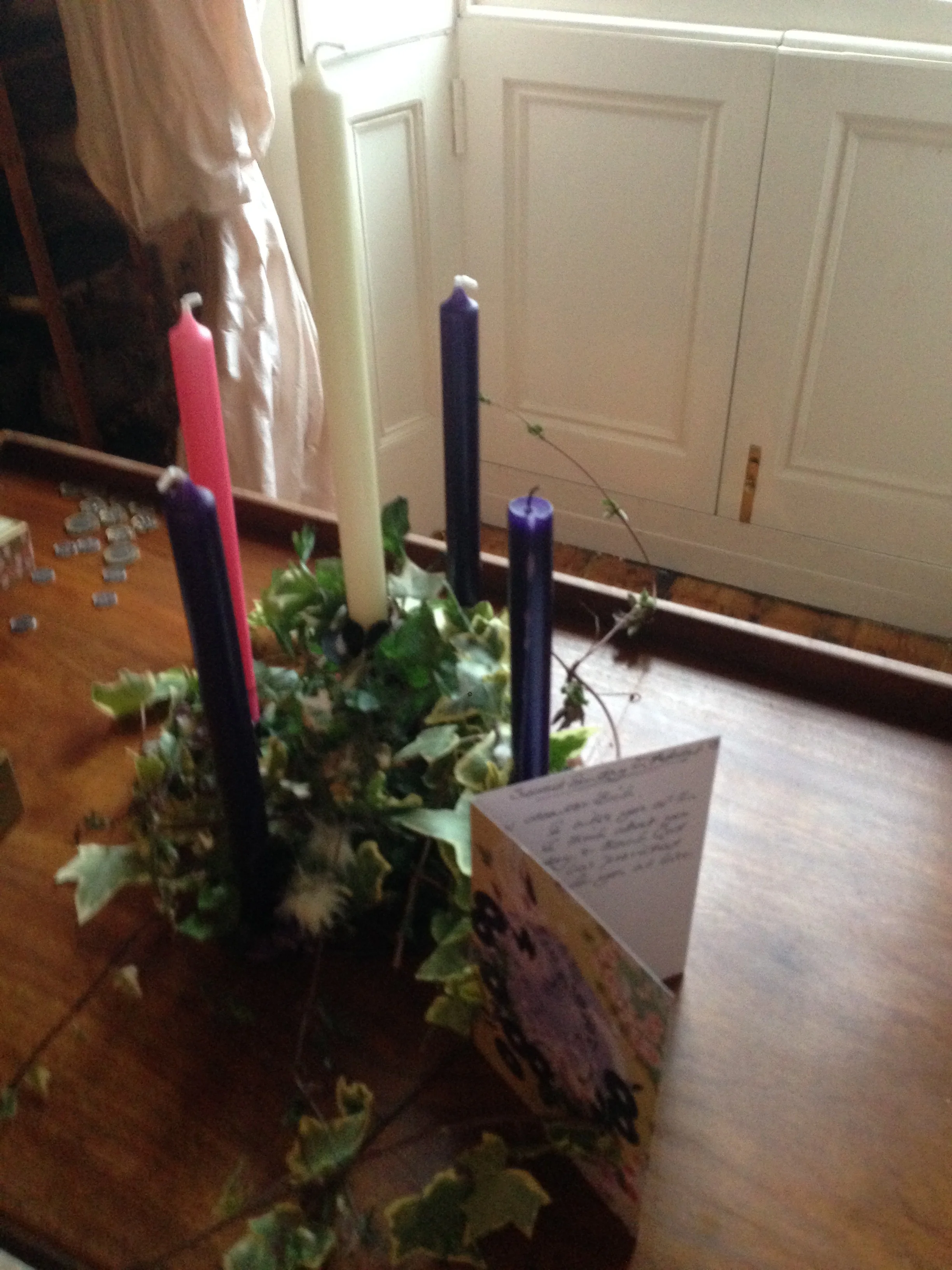
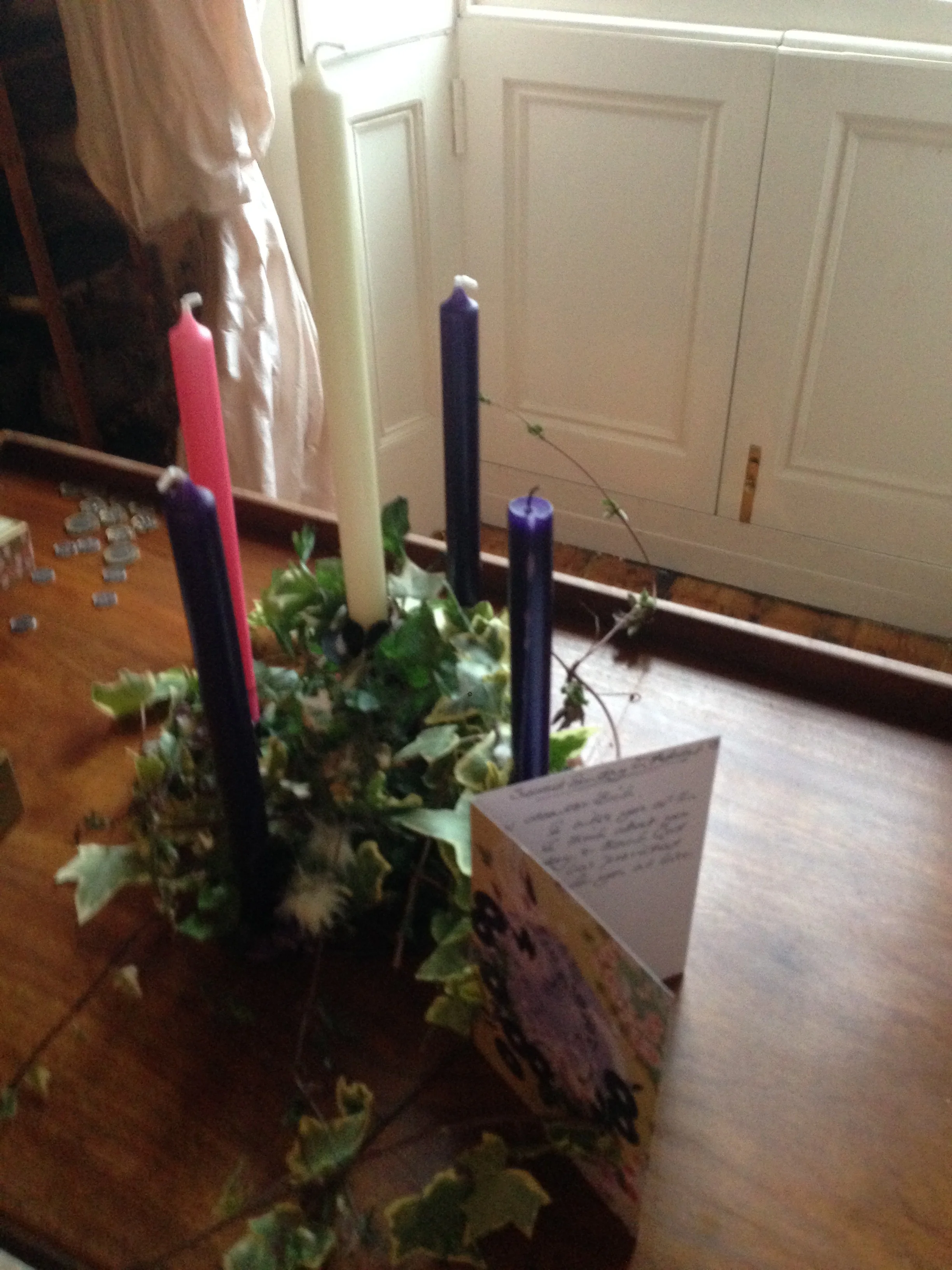
Second Sunday in Advent.

“My dearest Bink,

I miss you all the time.

I think about you every day, and can’t stop thanking God that He has provided treatment for you at last...

...”


What else can I say?

I don’t miss her nearly as much – or perhaps, nearly as painfully – as when she was far more absent. That dreadful Christmas five years ago when we didn’t know where she was.  Or seventeen years ago, when she was incarcerated in the Florence Nightingale Unit. Or that utterly fell and harrowing time twenty one years ago, almost to the day it must be, when we said goodbye to Bink in our hearts, forever...

I haven’t told you anything about that terrible thirty hours in December 1997, at the beginning of Bink’s illness.

Perhaps this is the week to do so.

It is where this story surely starts. And this is its anniversary.

(After all, what happened after the Trinity May Ball in 2007 can wait. Specially as I knew nothing about it until the following October.)

How we rejoiced when that was over…

Thank God He doesn’t show us the future.


But now, today, every morning, I wake amazed at the wonder that has happened this year. Even when I hear nothing from Bink at all, as now, and long to, can’t stop smiling at the miracle of it.

This is a good sort of missing. This is how you would miss one of your children climbing Everest, or touring Australia with a new show, or lecturing in the US and too busy to ring home.

The is the missing of knowing she is achieving what she needs to achieve, and going where she has to go, and healing wounds which have wept for far, far too long.


I expect I will continue to miss her for a long time yet.

And if our prayers are answered, the Bink we said goodbye to in late October a few weeks ago will never really come home again. We are surely praying that it was a real and forever adieu, and not a farewell or good bye.

“...

“All my love, always,

“Ax”


PS And I have just been reminded by a comment from a reader that you can get my book less than half price on Kindle, just for a few days, until the (delayed) hardbacks are in the shops…

IMG_2909.JPG
December 09, 2018 /Anne Atkins
Comment
couple-41673_1280.jpg

Dresses and dances

December 08, 2018 by Anne Atkins

Midsummer 2007

In the Easter Term of Bink’s first year at Cambridge, Serena invited her to the Trinity College May Ball.

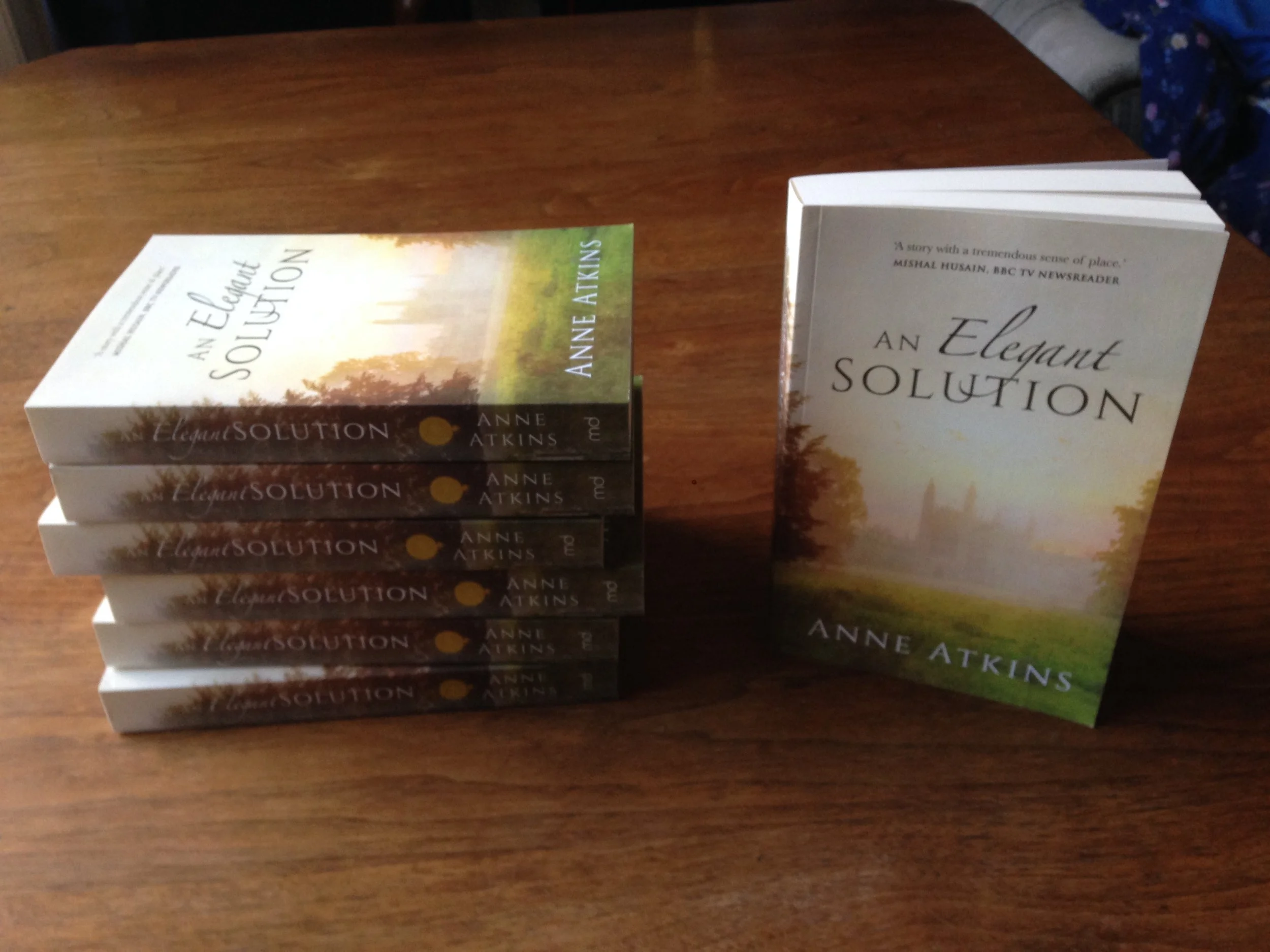
Trinity May Ball is (Serena told me the year she invited Shaun and me) the second best party in the world… as you will all realise when you buy my new novel – out now! – because it opens at the Trinity May Ball.

(I appreciate I have now lost 95% of my readership, off to find the best party in the world. Those few who remain, you have made the right choice. From memory, it’s in Versailles or somewhere equally tacky. And the second best party, like so many second-bests, is miles better. Or perhaps you’ve all just scarpered to go off and buy the best book in the world. For the best Christmas present in the world. Or should that be “second-best”…?)

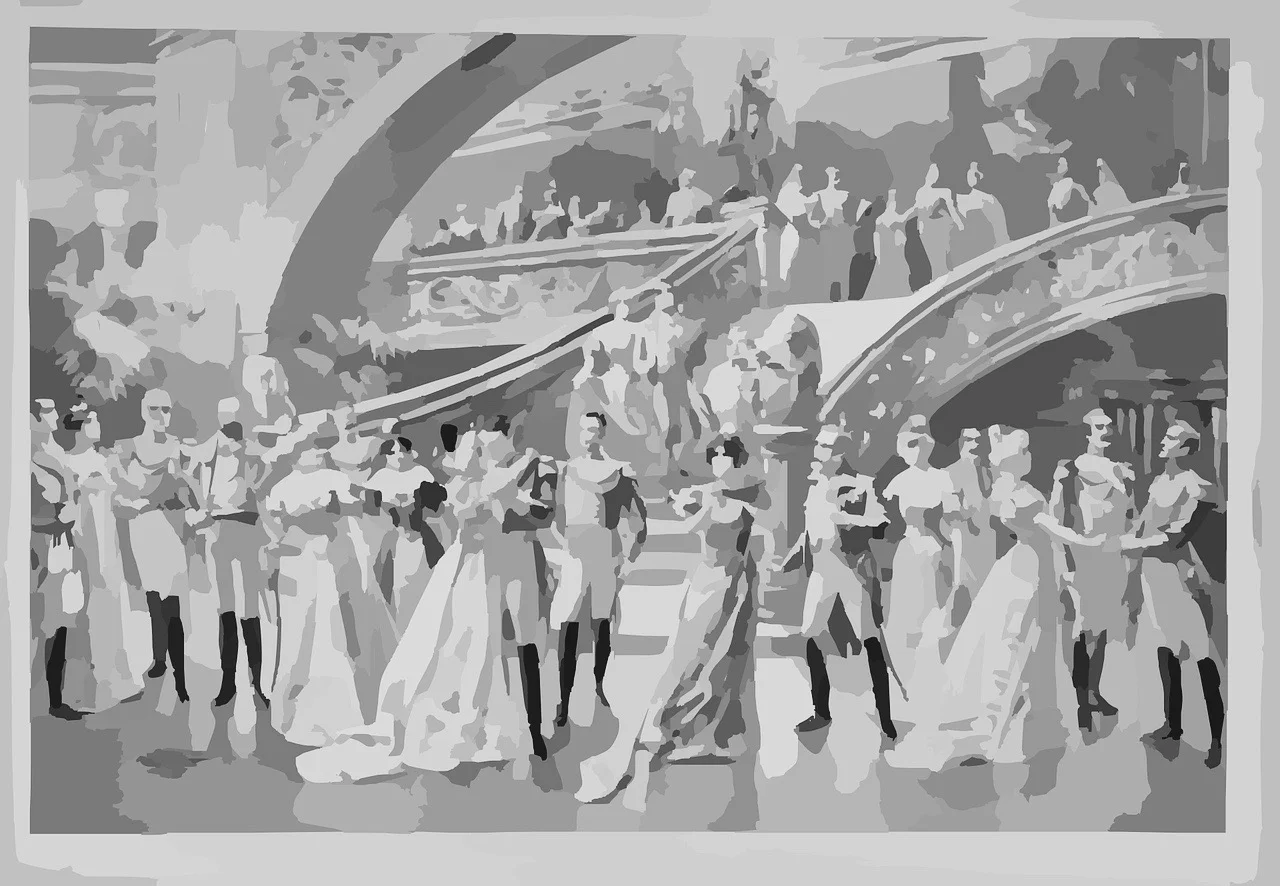
Anyway, earlier that summer I took Bink to choose a gown, in a gorgeous shop in Oxford’s Cowley Road which designed and made frocks to die for. We tussled between the sky-blue with the utterly stunning pinched waist and trailing train, and the simpler and even classier sea-blue shot silk.

We should have gone for the latter, really: it was a classic she could have worn for the rest of her life. But it was quite a bit more expensive. And hey! Bink was twenty two and hour-glass lovely... so we went with dramatic design.

Just as well. She has long lost everything she ever had from that era, so it probably wouldn’t have survived.

Other parents reading will understand…

In the selfishness of my own teens and twenties I could never even have imagined such vicarious joy. The exquisite pleasure of accompanying your daughters, as lovely as youth and springtime can be, to be dropped off at a ball... spending the evening luxuriating in the thought of their fun... wishing yourself an owl looking down from the branches of the trees... being so happy for someone else.

Is this what God feels, when we fall in love?

They came home a lifetime later the next morning, Bink’s train in several pieces, trodden and trampled while she was dancing.

What did I care? She was beautiful. And she had been dancing.

And other women reading will understand…

Bink had been ill from the age of eleven. She was now a young woman. Girls between ten and twenty learn an essential survival skill. We all have to. It seems that it’s very hard to teach it second hand.

My mother didn’t manage to pass it on to me. Nor I, it appears, to Bink.

When I was fourteen I went to my first proper dance. My friend Jennifer, a few years older, was having a really smart birthday party, and my mother helped me choose a long and lovely dress, as I had helped Bink.

A boy called Johnny invited me to dance. He was good looking, and charming, and about seventeen. I never got a chance to dance with anyone else. He spent the first half of the evening tonguing me and pawing me and making me very uncomfortable.

Eventually we were allowed to stop for a drink. And that was when Johnny made his critical mistake.

“I don’t understand,” he said. “You allow me to do anything I like.”

A lightbulb exploded over my head so loudly and blindingly I’m surprised it didn’t stop the whole party.

You mean... I don’t have to let you do all this creepy stuff? I have a choice?!

For the rest of the evening poor Johnny found himself dancing at arm’s length with the frostiest girl he’d ever met. 

I was happy. And free.

And had learnt the first module of the most important lesson in a girl’s survival.

A lesson in which, the longer it is postponed, the higher the stakes.

It was a while before I realised quite how vulnerable Bink was.

December 08, 2018 /Anne Atkins
Living with mental illness, Trinity First and Third May Ball
4 Comments
paradox-2953474_1920.jpg

Paradox

December 07, 2018 by Anne Atkins

Academic year 2006-7.

That first Michaelmas Term showed Bink at her deepest Binkness.

On 7th November 2007, just over a month after she started at Cambridge, my father was due to turn ninety years old.

The trouble Bink went to – whilst also getting to grips with a new and extremely intensive academic course – was simply stunning. I wouldn’t be surprised if she spent ten or twenty hours a week, for that first half of term, setting it up.

She consulted me as to who were my parents closest friends. She made contact with them all to find out when they were free. She did the same with everyone in the family, including cousins, to find when the most people could be available. One guest was particularly difficult, and Bink changed the date half a dozen times to accommodate everybody.

She then overcame the logistical hurdle of booking so many guests into college dinner: students were normally only allowed two or three guests each. She organised it all with the catering staff, so that her dozen or more could have two long tables and we could all sit together in one party. 

She paid for all this herself.

She liaised with her College Principal, to arrange for my father to meet her over drinks before dinner in the Common Room, along with other members of the academic staff she she thought he would like to talk to. I remember seeing a letter in her room from the Principal’s secretary, saying how much she was looking forward to meeting Bink’s family and particularly her father.

She devised a careful seating plan for dinner itself.

Finally, she wrote the invitations. By hand. On college card. Over and over again. Before she was satisfied that they were sufficiently symmetrical and contained all the right information and were beautiful enough.

The only thing I helped with – apart from providing numerous consultations, and fluff up a few cushions in her tiny bed-sitting room: guests were invited there first, before official drinks; as well as for coffee after dinner – was to ensure that the ridiculous little piano I’d had lugged into her room was properly tuned. One of the guests was the musician Sir David Willcocks, a friend of my father’s from university as well as colleague of many years’ standing.

The piano tuner was very nervous when I told him this, lest he didn’t get it right.

He really needn’t have worried. That piano provided quite enough excuses of its own.

As so many, many times before and since, I am struck by the paradox that is Bink – or has been since her early adolescence.

Mental illness is the most selfish sickness there is. You only have to have experienced a mild bout of depression to know that the first thing it does is turn you in on yourself. You become completely absorbed in your own sorrow. Blind to anything and everyone other than your own desperate need to survive and dogging, dreary pain.

Being as mentally ill as it is possible to be – and still continue to breathe – Bink is as capable of this as anyone else.

And yet this is not who she is. She gleams with the richest seams of pure golden kindness. No one else, in my father’s whole extended family of many capable people, bothered to arrange a ninetieth birthday party for him.

I think of other things she did in that first year at Cambridge. Providing a family close harmony group for the college garden party, for instance; as well as numerous other kindnesses, some too personal to mention.

All the while, covering the requirements to do respectably in the Cambridge English Tripos.

Whilst being very ill.

December 07, 2018 /Anne Atkins
Living with OCD
5 Comments

New beginnings

December 06, 2018 by Anne Atkins

Michaelmas 2006

That October, improved as she was by her treatment at the Bethlem Hospital (albeit not enough of it) Bink started at Cambridge University.

I felt so guilty that she hadn’t got into her college of choice – that she had funked her interview because she lost her medication; that she lost her medication because we were homeless; that we were homeless because Shaun and I had been so gullible in believing that a church and a vicar we had known so long would keep their promises – that I spent half the summer shopping for accessories to beautify her room. And half a week helping her settle in, and arranging them.

Throws and cushions, pictures and a clock, mugs and teapots. In co-ordinating blues and greys.

Her college had given her two rooms, because she still couldn’t share her bathroom with anyone else, which meant that she alone of all the students had both a sitting room and a bedroom. Which was presumably why I bought throws and cushions, to turn the second bed into a sofa.

Yet again as if I needed it, I am reminded how disability discriminates against all the others in the family. I didn’t spend a week helping Serena move in, when she had started a Cambridge a few years earlier, did I? I never bought her cushions and a throw for her room.

Nor Alex, come to think of it.

I was probably up to my eyes helping Bink with something else at the time...

I even bought her a piano, for a joke.

Ok, I realise this sounds a bit OTT. Put like that. It honestly did seem perfectly reasonable. At the time.

“Do you want us to bring a piano? Given that you’ve got two rooms?” (We had two pianos. We’d been given our upright for £25. When all four of them were doing piano practice straight after school it was handy to have two.)

“No,” Bink said. “There isn’t room.”

So I found a compact piano on eBay. Going for the proverbial song. So small it fitted in the car. An estate car. Boot of. Just.

And turned up with it. And put it in her room when she was out. With Alex’s help. And a few other blokes I grabbed because they were hanging around, as students do, looking as if they needed to help lift a solid iron-framed piano.

Like I said. For a joke.

Well I laughed a lot, anyway…

Now, come on: whatever the rest of the family still says, the only thing wrong with that piano, apart from that it was the sort you’d sell on eBay for a song, was that it only had three octaves.

Bits of Bach, lovely. If you’re not too particular on tuning.

Rachmaninov? Hmm. Bits missing.

Still, as I say, I laughed.

Because Bink was at a modern college, with modern security; and because she had a room on the ground floor, looking onto the garden; and because Bink seldom has a telephone clean enough to touch, so the porters couldn’t easily ring and ask her to verify a visitor... Because of all these things, Alex and Serena both found it far quicker and simpler to visit Bink through her window rather than bother with all the palaver of going round through the Porters’ Lodge. I even did it once or twice myself.

Which meant that sometimes one would be sitting in Bink’s room, or presumably she might be asleep in bed, and a great thump would appear from nowhere, as Alex dropped on to the floor like an extremely incompetently-noisy burglar.

Probably not quite the intended purpose of all that security at the Porters’ Lodge.

And although in truth she was still far too ill to have shared a bathroom, and every time I visited there was piles of washing up because despite her twelve weeks in the Bethlem she didn’t know how to do it, and the fact that she was still extremely vulnerable as was to be rather shockingly demonstrated before the year’s end, Bink seemed so much better to us, who had seen her so much worse, that it was almost as if she was living a normal undergraduate life.

December 06, 2018 /Anne Atkins
Living with OCD
Comment

Silence. And birdsong.

December 05, 2018 by Anne Atkins

Summer 2006

The theft of her case notwithstanding, that summer – when she received appropriate medical treatment for the first time in ten years of illness; six years diagnosed – saw Bink completely transformed.

And with Bink, of course, the rest of us.

She could eat without marigold gloves on. Help clear away a meal. Answer the telephone.

Accept hugs from members of her family.

And the day, home from the Royal Bethlem Hospital for the weekend, when she sat down and played the piano, I felt I had been reborn…

She found it very touching, and sad, to see how isolated others with OCD can become. All her fellow patients on the treatment programme with her – yes, I believe she said all – had lost any friends they ever had. Most of them, family members too.

Well, you would, wouldn’t you?

We couldn’t let go of our daughter, because your daughter is always your daughter. A sister, always a sister.

But a partner? Why would you stay with that? So mad. So unreasonable. So impossible to live with.

Was this the first time I heard Bink express her appreciation of how fortunate she was? That she had us there for her, always.

If you had no one waiting for you... willing you to get well... caring whether or not you did... In Bink’s case, emailing numerous friends to update them to pray for you... “What reason,” she asked poignantly, “would you ever have to get well?”

Whereas when Bink had been in for three days, her not-quite-three-yet sister Rosie rang full of indestructible childish hope, and asked, “Are you better now, Bink?”

Indeed, Rosie may have been more responsible than anyone else in the family for Bink’s improvement.

She told us how her therapist had persuaded her to touch the loo. He asked her to list her most longed-for ambitions, currently unattainable.

Number One on the list? “Taking Rosie swimming.”

So that was what he said, as he urged her to touch a loo seat.

“Think of swimming with your baby sister.”

Her desire was so strong that she did.

Bink also told us how dispiriting it was that you couldn’t be admitted until you were so ill it was almost impossible to get well again. And then not kept in for long enough to be well enough to leave.

How the patients she met now were often back in for the second, or third, or fourth time... Because they hadn’t been fully cured before, and had to deteriorate before they qualified to be referred to come back.

By the time Bink herself finished the 12-week programme I estimated she was a good half way better. Half her symptoms gone. Or all her symptoms reduced by half. (Or a combination of the two, to make up a mathematical half, just in case anyone as precise as Alex – or indeed my late mother – is reading this.)

And yes, of course she begged to be kept on for another 12 weeks, to get fully better. She had been told this could occasionally be made possible, if there was proven clinical need.

As so often in the course of Bink’s illness, I’m left wondering what clinical need could possibly have been more proven than Bink’s own.

She had obviously been very ill before admission. She had obviously improved enormously. And she obviously had a lot more improvement still to go.

I still now sometimes wonder how different our, and her (and the taxpayer’s wallet’s) life could have been, if her request hadn’t been rejected.

And the rest of us? When she came home for that first Easter, it was like the very beginning of the earth’s feeling the warmth of the sun after the darkest nights.

Remember when your children suddenly reached an age when you didn’t have to put poisons out of reach, or move valuable ornaments any more? Or your daughter’s Great Dane goes on holiday and you realise you can leave a cooked chicken out on the kitchen table while you turn your back for a few seconds, without a fortified safe around it which has been secured with multiple padlocks? Or your medical treatment starts to take effect, and you notice you've just spent half an hour without pain?

Or the rain stops, or the spring flowers start to sprout, or the guns go quiet on the Western Front... The damage they did will never be eradicated, but you can envisage the day when they won’t do any more.

You suddenly hear silence.

Silence, and birdsong.

December 05, 2018 /Anne Atkins
Royal Bethlem Hospital Anxiety Disorders Unit, Treatment for OCD
Comment
burglar-157142_1280.jpg

The futility of filching (II)

December 04, 2018 by Anne Atkins

Early Summer 2006, cont...

So, Bink found herself a seat on the train to Croydon, on her way back to the Royal Bethlem Hospital Anxiety Disorders Unit at the end of her second or third weekend at home, improving every week as she so wonderfully was.

Having muscled her absolutely ginormous suitcase, containing everything in the world she cared about, into the luggage space: favourite clothes; presents of sentimental value from us; books she was looking forward to; most valuable of all by far, the benefits form she had spent so many painful months filling in, which would shortly be worth a fortune to her…

A few years ago I was returning from giving away the prizes at a school Speech Day on the other side of London. It was after ten at night. I was biking home from the station. I don’t often dress smartly, but because I’d been the star-turn of the day, I had my silk tweed suit on; a hat which I’d had specially made to match my taupe suede boots; and my handbag and gloves, both of which I’d somehow miraculously managed to find in the same very-difficult-to-match taupe leather.

Being Cambridge-raised, I bicycle everywhere. Being Cambridge-raised, at a civilised and leisurely Cambridge pace. Not the screamingly scary lycra speed with which Ben could outstrip the HS2. And as I turned musingly into our street at slightly more than strolling tempo, a man appeared from nowhere, running alongside my bike.

Hello, I thought.

The CCTV later showed him, clocking me as just the easy target he was looking for in order to give chase. The police not very tactfully said, seeing this grainy, black-and-white, serenely hatted and booted person in a tweed suit, riding a sit-up-and-beg Pashley bike with an enormous basket, in a contemplative manner in the middle of the night: perhaps he thought I was older than I was.

And because I was such an easy target, before I’d had a chance to pass the time of day with him and ask if he’d like a cup of tea as my house was just around the corner, he made a grab for my bag. You got it. My matching leather bag which went with that very difficult shade of taupe. Which also contained my matching suede gloves, ditto.

You never know quite how you’ll react until you do.

I did.

I screamed and yelled so loudly I brought someone running from the next street, a good quarter of a mile away. In language which wouldn’t be allowed many hours after the watershed. Nor, come to think of it, in an exclusively male, particularly seedy and disreputable Rugby club.

Which I was broadcasting widely throughout the whole of Bedford. Perhaps this is the point at which to explain that I trained as an actor before I was a writer. The single most important thing you learn at actor-school is how to make your meaning clear, and very loud indeed. My meaning was pretty unmistakable. And I went on making it audible for quite a long time after the mugger had hot-foot it a heck of a lot faster than he had given chase.

Which was just as well.

Because I was so effing-and-blindingly-angry I would have smashed his head against the pavement and gone on jumping on it in my so-hard-to-match suede heels. I was still seething and shaking with rage long after the tardy British cops turned up and kept asking if I was all right and did I need to sit down or anything. And would I like counselling?

I was so furious I even overcame my usual prosopagnosia, thanks to which I often don’t recognise my own offspring in broad daylight, in order to give four pages of such detailed description – based on a a split second’s view during which I’d been cursing his head off – that they said they could have picked him out of a crowd of hundreds.

The reason for my rage?

Because. It. Was. So. Utterly. Pointless.

I understand some people have a lot less than I do. The very first time I ever had anything nicked (I left a very good heavy-duty household torch, supplied by my mother, outside my friend Griselda’s house during her Hallowe’en party to which we were instructed to bring a light) my mother said philosophically, “Someone probably needed it more than we do.”

I get that. I don’t want to be greedy. Some people may need what I’ve got, even more than I need it myself.

But he didn’t need my taupe handbag which matches my hat and boots, did he? Nor the taupe suede gloves in it.

I never carry money: I’m like the Queen. (Well, in that respect, anyway. It’s possible that there the similarity ends. Though I suspect we also share a fondness for matching-hat-and-gloves.)

I don’t even carry keys. I don’t carry anything, of any use to anyone else whatsoever. Maybe a delicate hankie, which he could have used if he was upset.

Which I got the impression he quite possibly was, given that our relationship ended even faster than it had begun, without even a goodbye.

I know exactly what would have happened next, if I’d given into his whim and handed over the item he so evidently coveted. He would have examined it in disgust, and thrown it over the next hedge. With my kid gloves in it. I would never have seen either item again and it would have taken me another ten years’ searching on eBay to have found such a good match.

And he would have gained. Absolutely. Nothing.

Except the gaol sentence he should and would have got, the detective assured me, if our laws about the use of CCTV footage on social media weren’t quite so squeamish.

(A similar thing happened last year. Someone who was working for us pinched the diamond earrings my aunt left me. And then rather foolishly bust up with the boyfriend who had egged her on to sell them. Who then shopped her to me. Which meant that all she got out of the operation were the drugs her boyfriend made her buy; a debt of several hundred quid at the pawn shop after the police recovered the same; and a lost job. She, too, would have got a custodial sentence – not her first – except that I wouldn’t press charges after her mum rang me in tears. I do know what it’s like, being a mum. Tough job, sometimes.

Now, if she’d used it to fund her own start-up, I could have seen some sense it in.)

The other thing that made me even angrier – a very great deal angrier, in fact – than the utterly futile inconvenience inflicted by my brief acquaintance’s chosen profession, is that I really could have been older and more vulnerable than I was, and quite badly physically hurt at being pulled off my bike, and even more mentally distressed by the experience, and possibly unable to leave the house for years afterwards out of fear.

Counselling or no.

I could have been someone like Bink, perhaps, who suffers from Anxiety Disorder and has enough to cope with already.

So back to the early summer of 2006.

The next time Bink noticed her suitcase, was as the train was pulling out of a random station in between Oxfordshire and Croydon, and she saw a bloke tugging it off the platform after him.

As with my mugging, she was able to give a very precise description, having seen him sitting across from her in the compartment. As with mine too, his features was caught very clearly on CCTV, as he was lugging Bink’s case. As with mine, there was absolutely nothing he took that could possibly have been of any use to him or anyone other than the owner of it.

To whom it was extremely valuable.

Not least because it contained three months’ work in the filling in of those blasted forms. Which took her even longer to do the second time around, because she was so distressed and demoralised.

Meaning that utterly pointless theft cost her close on a thousand pounds.

And all her favourite possessions.
December 04, 2018 /Anne Atkins
Disability Living Allowance
1 Comment

Benefits, bathrooms and burglaries (Part I)

December 03, 2018 by Anne Atkins

Early Summer 2006

I mentioned a week or two ago that, due to Bink’s having to turn down her first job in order to get hospital treatment, I had stumbled over her entitlement to financial help.

I’d never claimed benefits before, but the point of a welfare state is that when you can’t work through no fault of your own, you can get help from the rest of us. Which was how I discovered she was not eligible for Job Seeker’s Allowance, no: she was not seeking a job. But she should have been claiming Disability Living Allowance since she first got ill, at least five years earlier. And I, Carer’s Allowance, for my loss of income – which had been considerable.

“How could we have known this?” I was dismayed to hear of help we’d missed when we so needed it.

“Any professional your daughter ever came into contact with should have told you. Didn’t she have a GP? Or a therapist? Counsellor? Psychiatrist? Nurse? Any and all of them should have advised you: it’s part of their job.”

All the shrinks and quacks who had never done her any good. The consultant who referred her. The private therapist who went on to abuse her. The nurses in the Florence Nightingale Unit who lied to us about her being adult at sixteen, and said we couldn’t remove her.

Even our MP, called out when Bink went nuts while we were away...

Instead of locking her up and drugging her to the eyeballs and filling her days with pointless therapy, could have made a real, tangible and positive difference to our lives.

We could even have had a bathroom installed for her in our Vicarage, for a fraction of the damage it had cost the taxpayer to keep her in hospital for three months. And no damage to her at all.

The form Bink was required to fill in went on for over twenty pages. She agonised endlessly. Bink likes to get things right. “How long does it take me to get up? Do I need help in the night? Can I eat unaided?”

The benefits office sent someone to help her fill it in – without this, it would have been impossible – and after several visits over several months and a move from Cambridge to Oxfordshire, she finally had the forms completed, to claim the help she’d been eligible for, for so many years.

By now, she was coming home from the Royal Bethlem Hospital every weekend, changed a little more each time.

Never again quite as much as that first weekend, which stunned us all. But every week more, steady improvements. The blanket over the sky which had oppressed us for long, was beginning to lift and allow us to breathe.

Bink might be well enough for university in October after all…

After a two or three weekends home, she felt settled enough in the hospital to pack a huge suitcase of all the things she hadn’t taken before.

Favourite books. Clothes she was particularly fond of. The gorgeous tie-dyed sarong Serena had brought her from Thailand.

And of course, her over-twenty-pages-benefits-form, to be signed off by the hospital. She lugged her enormous case onto the train at Oxford and off again at Paddington. Up and down the escalators and on and off the tube. Next change, train for Croydon. Elbowing it into the luggage niche before settling herself for the journey.

Bink has never been very streetwise. She missed that vital part of adolescence when girls learn how to survive…

December 03, 2018 /Anne Atkins
Disability Living Allowance, Living with mental illness
2 Comments

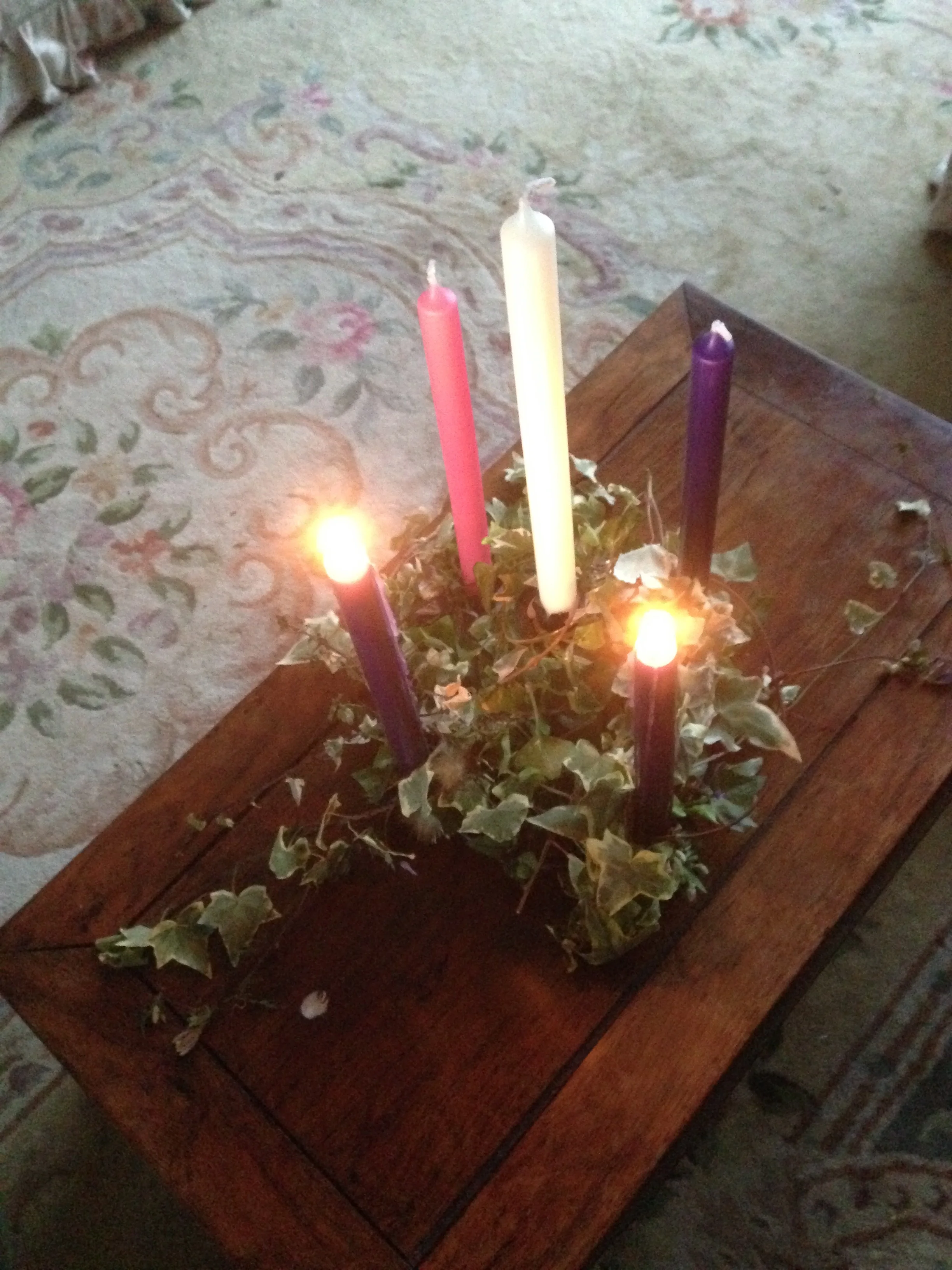
The days are surely coming, says the Lord

December 02, 2018 by Anne Atkins

First Sunday in Advent.

I realise, of course I do, that Advent is about something far bigger than my little concerns. 

None the less one of the things I love about the God I do love – as I understand it, anyway: given His attitude to little children, for instance – is that He cares about little things, just a bit, too.

(True, He often doesn’t seem to answer my little prayers. Correction: He almost never seems to. In any meaningful timeframe. To me. I expect I’ll understand this one day. When The Days are finally Come.)

Anyway, Advent is about waiting. And hoping. And being without Someone for a while.

A few Sundays back, I mentioned how good it can be not to hear news of a loved one.

Today I am reminded how good it is to be without someone, too.

(Here’s a guilty secret. We’re supposed to pray for the Lord to return quickly, right? I’m afraid I don’t. I hope He’ll take a really, really long time about it. For all that it’s a Vale of Tears down here, I’m very fond of this old world, and I’ll be extremely sad to see it go. 

When I was little, my mother tidied up my toy-cupboard, and threw away my awful bashed up dog-eared old Wobbly Man that had seen so many better days. I’m guessing it must been made of seriously heavy-duty papier-mâché, because it had that frayed, exhausted look only bio-degradable substances can do.

When I turned my cupboard inside-out looking for it and asked her where it had gone, she realised her mistake, apologised and bought me a brand new one. In shiny bright plastic.

I appreciated her love and kindness a lot more than that horrid new Wobbly Man.

I do know the New Heaven and New Earth isn’t going to be made of shiny new plastic. And I do know it will be better than this earth, really. Theoretically. I’m just not good at adjustment and moving on when I love something already... Apart from anything else, there’s going to be no marriage in the New Creation. How can that be any fun, eh?

I can’t help wondering whether He’s really thought this through...)

Anyway, Bink’s therapist rang a few days ago. I hadn’t spoken to Bink in ten days, the longest since she’d gone into the Priory.

Today, we are giving my father a small lunch party to celebrate his 101st birthday. Bink is invited, of course, and has now finished the bootcamp programme so technically could come home. But had already told me she didn’t think it would be wise.

Her therapist said, moreover, that it might be better if Bink didn’t come home for Christmas, either. That Bink herself had said so. And how impressed she was – they all are – that Bink is so committed to the programme, and how she has thrown herself into it with such complete dedication.

Which they have told us a number of times already.

(And which I could have told them she would, if anyone had offered her any treatment any time this last twenty years.)

“A lot of our patients,” the therapist continued, “know they’ve put their families through so much already, they decide they owe it to them to go home for Christmas. And it’s too soon and they fall off the wagon and lose it all...”

“Listen,” I said. “We’ve been without Bink for nearly two decades. Don’t you think we’d rather have another Christmas without her, to see the real Bink back?”

IMG_2897.JPG

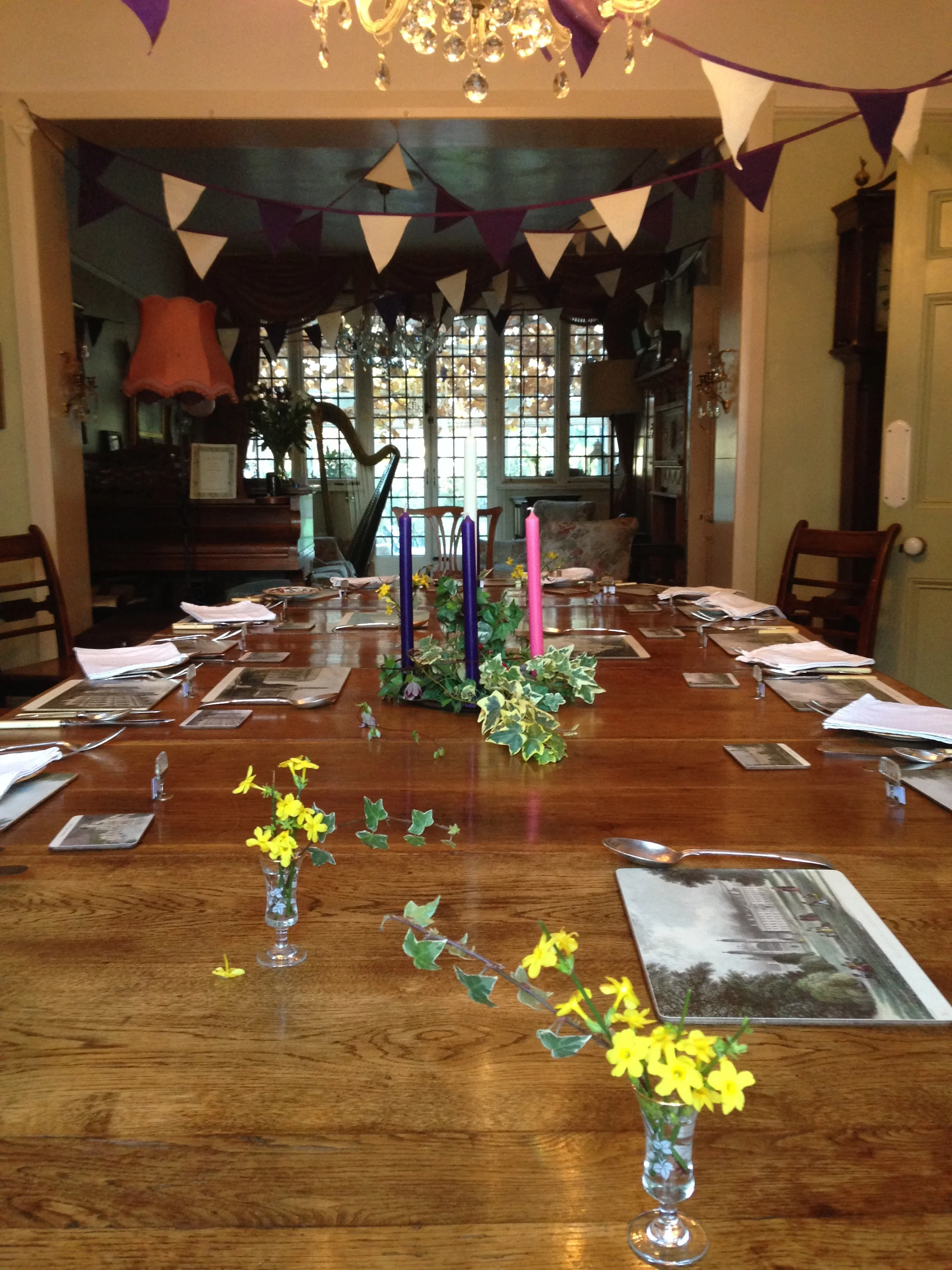
Last week, if you remember, I was looking forward to raising a glass of champagne with our wonderful, generous, exuberant friend Joanna who insisted on throwing a party to celebrate my new novel.

Now here’s a funny thing. Joanna gave the most wonderful party for me. She invited her friends and ours. She filled her fabulous Manor House with lovely people, just to raise a toast to my finally putting pen to paper again.

I went into the kitchen at the start of the evening, was offered a drink, and realised I was very slightly disappointed. There were no bubbles in the glass. I shrugged it off, deliriously happy as I was to be there anyway.

At the end of the evening when all the guests had gone and we sat relaxing in our pyjamas, I felt the same tiny little pang. I couldn’t suggest we open the bottle we’d brought Joanna as a present: that would be really rude. Then her husband came in with the whisky and we enjoyed that instead.

The next morning we drank gallons of tea, and every time I opened any of Joanna’s three fridges, row upon row upon row of foil-wrapped corks winked at me, and I sort of vaguely clocked that Joanna is still Joanna, and all her fridges are full of champagne so the sun has his hat on and all’s right with the world.

The really funny thing is that Serena went through all these thought processes, exactly the same as I did: very slight disappointment at no bubbles; deep shame at being so spoilt that she even had the thought; reassurance at noticing that Joanna’s fridge has all the right bottles in it anyway.

That evening, after we’d all got home, Joanna rang, hooting with self-deprecating laughter, having forgotten all the bottles of bubbly which she’d specially emptied all her fridges for three days earlier and lugged up from the cellar so they were lovely and properly chilled.

“Ah. We assumed that was your normal stock,” I explained.

“What?!” she said. “Don’t you think we eat anything?”

“Not really, no.” On her own frequent admission, Joanna is a lousy cook. “Why would you need food, if your fridge is full of champagne?”

There is a theological point to all this...

Advent is all about looking forward. See?

Not only have we now had five days’ laughter instead of champagne.

We also have a perfect excuse to go back and see Joanna again (perhaps even with Bink, one day soon?) and put all her stock to rights.

December 02, 2018 /Anne Atkins
Treatment for OCD, Addiction Treatment Programme
Comment

Spring shoots

December 01, 2018 by Anne Atkins

Easter 2006

For the first weekend of their twelve-week period of treatment in the Royal Bethlem Hospital Severe Anxieties Unit, patients were not allowed out.

Which meant that Bink’s first home leave, twelve and a half years ago, was on Maundy Thursday, for four days.

I can still feel my utter astonishment at the Bink who walked back into our little cottage, for that long Easter weekend, after just ten days of treatment.

She sat in chairs she had never been able to sit in. Drank out of glasses instead of mugs. Used the telephone.

It was like beginning to wake up after a long, tortured nightmare and daring to believe that this, after all, might be reality...

We didn’t all have to play musical chairs at the beginning of every meal, to work out where Bink could sit. Or dance a quadrille every time she wanted to get up.

I noticed with wide-eyed astonishment that she herself no longer had to dodge out of the way whenever I drew near; or make a firewall of several feet between us so I didn’t contaminate the air around my own daughter.

I hadn’t fully realised, until it stopped, how endemic this behaviour had become.

How demoralising had this been for me, month after month, year after year? That my own flesh and bone, whom I had given birth to in such a wash of pain and tears and blood twenty-one years earlier, was so revolted at the thought of merely brushing against her mother by mistake that she flinched away in terror.

I hadn’t been able to bear how hurtful it had been, until she didn’t any more.

She told us she had been tasked, in hospital, with washing up. Was this the first time in her life? I can’t remember her ever doing it before.

First she had simply had to do this for herself. Four plates, four mugs, a little cutlery.

One and a half hours.

Without gloves.

(Pretty extreme, I’d say. I won’t do this: washing-up without gloves. Your hands would end up like withered prunes for the rest of the day. Almost at the rubbing-faeces-on-your-face end of the spectrum, to my mind...)

Then she was put on the rota for the house, and washed up for five others. Two hours, with gloves.

She said this was pretty good going: some of them are up all night.

It was quietly noticeable that she could do a little to help. Not much, it was true. But at the end of a meal, instead of sitting incapable, she was able to carry a used plate into the little kitchen. Tidy away the salt. Remove some other item.

It was almost like starting to have four grown up children, rather than three and an invalid.

I could begin to imagine what life could be like...

Just think.

Bink had been asking for treatment for six agonisingly terrifying and lonely years. Since she had been fifteen. Begging, and longing, and so desperate for medical help that she took a token overdose aged sixteen, to get attention for her condition. And then attracted the wrong kind of attention altogether, which catapulted her into an extremely abusive hospital which brutally ended her schooling prematurely and made her addicted to destructive medication.

And yet the right kind of treatment had existed all along…

Which could have saved her over a quarter of her life. The rest of her family all that pain.

And – not that this compares in significance, though it does show the utter futility of the policy – saved the tax-payer, on Bink’s estimation, well over a million quid in subsequent piecemeal benefits and other stop-gap-aids to staying ill.

December 01, 2018 /Anne Atkins
Royal Bethlem Hospital Anxiety Disorders Unit, Treatment for OCD, Mental health treatment
Comment
blur-1867710_1920.jpg

Endurance

November 30, 2018 by Anne Atkins

Further prayer-email during Bethlem treatment.

‘Summer 2006.

‘You know what it's like if you have OCD. Or if you're lucky you don't.

‘One simple wash, which the rest of us probably execute at least twice a day without even thinking about it, becomes the most momentous event of your life. 

‘It is your first night performing solo in the West End... when you forget your lines. It is jumping out of a ’plane at thirty thousand feet, when you are terrified of heights. It is the day your fingernails are slowly pulled out by the Gestapo. It is also your visit to Buckingham Palace to collect your OBE.

‘It is all these, rolled into one.

‘And you are expected to perform this utterly exhausting and adrenaline-flooded ritual, not just once in your life like any of the rest of us with something so momentous, but on a regular basis.

If you can find the courage and energy and can face it in the few short hours of day which God gives for washing in.

‘Your laundry, even more apocalyptic.

‘So there they are, all in the same house, all with the same lunacy, all wanting to use the same one and only washing machine.

‘And Bink needed to wash her clothes.

‘But another inmate, Sue, had her clothes in the machine. So Bink had to wait, for the best part of the day, while Sue's wash went on and on and round and round and inside out and upside down – if she's anything like Bink, through the most aggressive, un-ecological, maximum boil programme available – before Bink could put her wash in in.

‘Who, naturally, would not dream of touching Sue’s laundry. Because if Sue is anything like Bink, touching her laundry could blow her out of orbit onto Mars.

‘Eventually and at last, Sue’s extremely over-washed laundry comes out of the washing machine and goes into the dryer.

‘Which means Bink can now put her clothes into the washing machine. Though she will of course have to wait for Sue herself to be present to take her clothes out of the dryer before she can dry hers.

‘Now… Jane was in the queue after Bink.

‘It's not difficult to follow! Concentrate:

‘Three women. All with washing obsessions. All living together. (If Sue is saner than Bink but madder than Jane, what is the name of the bus driver?)’

‘By the time Bink has also sent her long-suffering clothes through a zillion hour wash and is ready for Jane to use the washing machine, Sue has gone out.

‘Leaving her laundry in the dryer.

‘Bink can’t take her own wash out unless she puts it straight in the dryer. Without letting it touch the rubber sealant around the door, obviously. Because if it does, she would have to start all over again. 

‘But Sue’s clothes are in the dryer. And Jane and Bink don’t know what it will do to Sue if they move her wash. She could be all right... or it could just drive her over the cliff and away with the goblins. Even more away with the goblins than she is already.

‘So Jane and Bink stand looking at the machine, debating and deliberating for most of the evening, wondering what to do so they can move Bink’s wash and get on with Jane’s.

‘I picture them, hour after hour, like two cats transfixed by a goldfish in a bowl though with rather less to look at, staring at the tumble dryer and conferring and wondering whether they can take the huge risk of opening the door.’

[Bear in mind I wrote this is 2006. Now in 2018, science is beginning to realise there may be whole new undreamt of levels of terrifying tedium the human race can be forced to endure as punishment for a referendum.]

‘In the end they decide to go for it.

‘They don’t need to touch her wash. They will just inch open the door a crack and take a look inside. Not sure what it will achieve, but hey.

‘And if it freaks Sue out... well, at least she’s in a loony bin already so there won’t be far to go

‘Guess what they find?

‘One pair of knickers. One solitary pair.

‘Goodness only knows how many gallons of water and lashings of electricity and tubs of Persil and hour after hour of the planet’s resources have gone into exhausting that one little tiny pair of lady’s knickers.

‘Which presumably needs this treatment every time it’s worn.’

November 30, 2018 /Anne Atkins
Royal Bethlem Hospital Anxiety Disorders Unit, Treatment for OCD, Mental health treatment
4 Comments
bath-1299512_1280.jpg

Hygiene hazards and handsets

November 29, 2018 by Anne Atkins

Further prayer-email during Bink’s treatment in the Bethlem:

‘Summer 2006.

‘And what of Bink herself?

‘I knew something was up when I got a text message from her asking me to ring a landline. She was very precise. Not that day. Not the next.

‘The one after that.

‘She hasn't been able to use a normal telephone for as long as I can remember. Has she ever, in fact?’ [I’ve mentioned the time when she had to speak to a Cambridge Admissions Tutor from our borrowed house in Scotland, involving me in half a day’s cleaning of the handset and several days avoidance of the telephone myself.]

‘Not for years, as far as I recall.

‘In the early days of her illness, I could never understand why it was so impossible to rouse Bink by ringing home, if she was the only one in.

‘Serena gave her a mobile for Christmas two years ago, and it was five months before she was clean enough to take it out of the box...

‘Presumably it was going to take her two days to be ready for this momentous step.

‘Sure enough, when I rang at the appointed time, she came to the telephone. Actually picked up it up, and answered it. And used it, spoke down it, you know...

‘Imagine for a moment that your five year old picks up the car keys one day and successfully drives the car down the road to the garage. Or more to the point – because it is something you have dreamt of so long, though not consciously because you never believed could happen – your grown up paraplegic son gets out of his wheelchair and folds it up.

‘She told me her therapist had also made her touch a loo seat, and she was still around to tell the tale. This was one thing – having seen it done on The House of Obsessive Compulsives, the telly programme which told us of the treatment at the Bethlem – that she vowed she would never do, and still can’t quite believe she has.

‘She was allowed to wash her hands afterwards, though.

‘It’s good timing that she can use the payphone, because alas she has washed her mobile again.. This time possibly fatally.

‘I was surprised that they don't seem to watch more telly.

‘When Bink was in hospital last time, in the Florence Nightingale Unit, the tv was on all evening, every evening. All afternoon too. If they weren't in therapy, they were watching the box. It’s a shame they didn't watch more, really: it was a lot less damaging than the therapy. The only way to avoid being mesmerised by it was to take up smoking, which meant you were allowed outside. One of the many results of that particular stay – none of which was positive – was that Bink came out with an incurable addiction to The Simpsons. (You could hardly complain about the ciggies: smoking was almost the only sane thing you could do in there.)

‘But in the Acute Anxieties Unit of the Royal Bethlem, they don’t seem to watch telly at all.

‘The reason turns out to be beautifully simple.

‘“Someone washed the remote...”

‘On hearing this, Alex was very taken with the idea of a household full of people all with the same syndrome.

‘“How cool would that be,” he said, “to be in a house that is normal, but a different kind of normal.”

‘“Alex, it’s not normal,” I said. “The D in OCD stands for Disorder. They're ill. Asperger syndrome is different: thank goodness, they don’t yet shove Aspergic people in a nuthouse to ‘get better’...”

‘“Just think,” he continued, with a faraway light in his eyes.” (Warning: some readers may find this next sentence frightening or distressing.) “A whole house full of people thinking like me.”

‘(Actually, on unnecessarily honest reflection, he said, “A whole house full of spazzas thinking like me” – but I wanted to spare you Alex’s and Bink’s rather alarming levels of political incorrectness.)

‘“Like the Cambridge University Mathematics Department, you mean?”’

November 29, 2018 /Anne Atkins
Royal Bethlem Hospital Anxiety Disorders Unit, Treatment for OCD, Mental health treatment
Comment
fist-1148029_1920.jpg

Terror

November 28, 2018 by Anne Atkins

Further prayer-email during that long-ago, so-rare treatment Bink was at last given in the Bethlem Hospital Anxieties Disorders Unity. After five years (and an entire agonising adolescence) of waiting:

‘Summer 2006.

‘It's been quite an eye-opener for Bink, meeting people even worse off than she is.

‘Bob first got ill in 1980 (he’s 52 now) and was given treatment in the late ’80s. In those days the approach was harsher. He was made to smear his own faeces over himself.

‘And not allowed to wash it off.

‘Also, because he was frightened of broken glass, he was made to sleep with his bed full of it.

‘Surprise, surprise: he woke, badly cut.

‘Hard to imagine how this would make you less frightened of it, somehow. Or indeed more “normal”, if that’s something we’re aiming for: adjusted to every day life and able to function, anyway.

‘“Did it help?” I asked Bink, incredulous.

History didn’t relate.

‘Discouraging that Bob is back in for treatment. But Bink says he's leaving in a few days, a little better. For two years he couldn't leave his mother's house, at all.

‘Henry is also leaving. Unlike Bob, Henry has hardly improved at all.

‘When he came in his face was a terrible mess: probably rather like the whole of Bob’s body, after he’d been to bed with glass.

‘Henry can’t buy shaving cream.

‘Or indeed, toothpaste, soap, loo rolls, washing up liquid or any other basics you can think of.

‘Henry is frightened of shopping.

‘Sometimes, occasionally – I imagine like Bink with her washing – after many months of screwing himself up to it and going without, Henry can push himself to a point when he can face his fear. He will brave going into a shop. He will brace himself to fill his basket with all those essentials he has been without for many painful months. He controls his panic long enough to get to the check-out. He even succeeds in paying for it all.

Some people, I now know, have obsessions and compulsions around the dirt on money and can’t ever touch it. But Bink hasn’t reported this particular anxiety of Henry.

‘Something for Henry to be grateful for, at any rate.

‘Have succeeded at the monumental and life-changing task, Henry will then get out into the wide freedom of the open air, with all this hard won treasure which he needs in order to care for himself and not slice half his face off shaving.

‘Does he celebrate? Does he open the bubbly?

‘Does he even go home and enjoy the first safe shave in such a long time?

‘He does not.

‘He feels such overwhelming terror that he dumps it all in the nearest bin.

Still in all its new shopping bags.

‘Look on the bright side of Henry’s predicament.

‘Bink actually buys all her requirements. Which works out a lot more expensive even than Henry’s wasted shopping...’

November 28, 2018 /Anne Atkins
Royal Bethlem Hospital Anxiety Disorders Unit, Treatment for OCD, Mental health treatment
Comment
  • Newer
  • Older

Powered by Squarespace